Data Analysis of Facial Recognition Bypass Attempts in Online Dating
· 10 min read
The Data: Presentation Attack Rates in Identity Verification
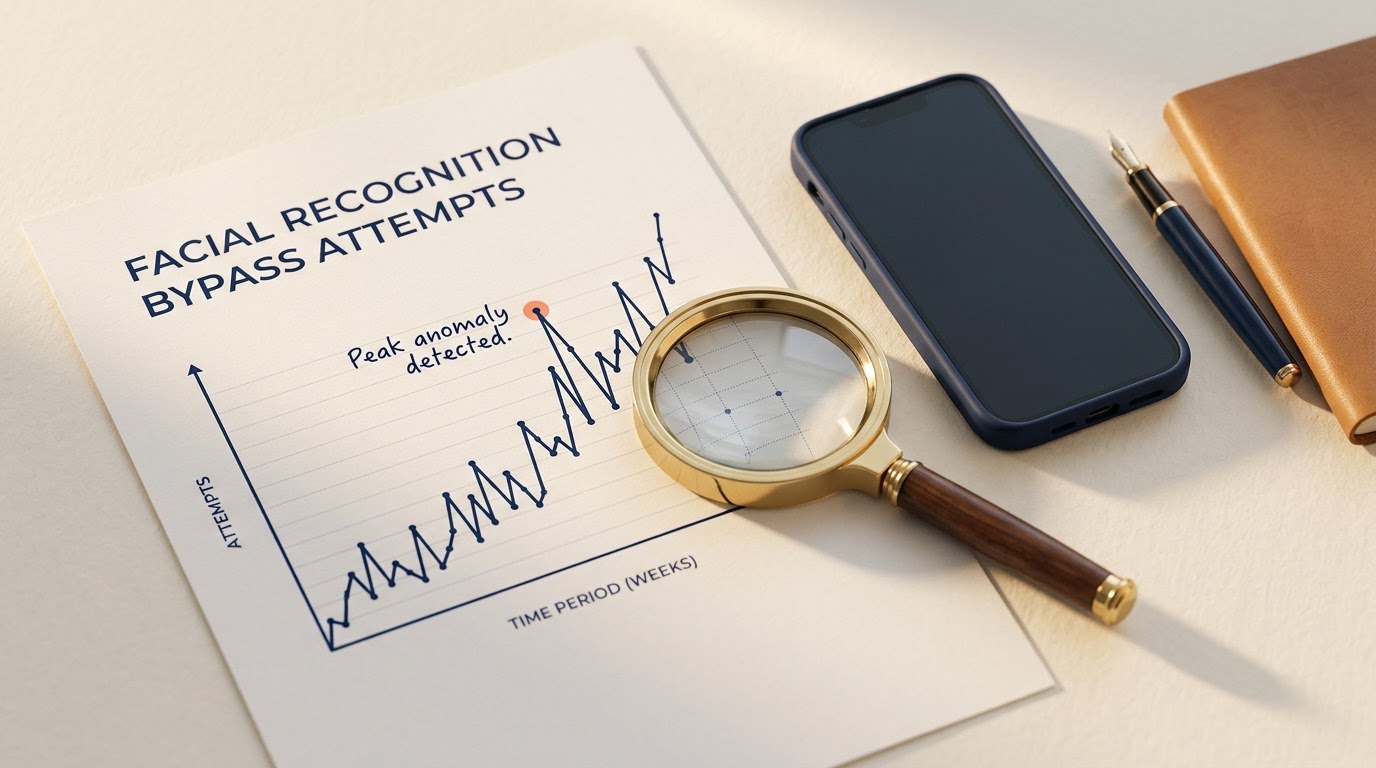
Facial recognition bypass attempts against online identity verification systems encompass five major presentation attack vectors, ranging from primitive 2D photo prints to virtual camera injections using generative AI. Recent security benchmark evaluations indicate that while basic physical spoofs fail against 80% to 90% of active liveness checks, direct media injection attacks achieve success rates between 15% and 35% against standard commercial verification pipelines.
The primary mechanism bad actors use to compromise dating platforms involves presentation attacks—methods designed to trick a biometric capture device using synthetic or stolen physical traits. Platforms historically relied on passive facial matching, where an uploaded photograph was cross-referenced against a government document. As platforms transitioned to mandatory selfie verification with basic liveness challenges (such as blinking or turning the head), threat actors evolved their tactics from simple photo displays to hardware-level software emulation.
The table below outlines the distribution, description, success probability, and primary detection challenges across the five dominant facial recognition bypass vectors observed across consumer identity verification systems between 2023 and 2026.
| Attack Vector | Technique Description | Estimated Success Rate (%) | Share of Attack Volume (%) | Primary Detection Indicator |
|---|---|---|---|---|
| Static 2D Print / Display Replay | High-resolution physical print or mobile display of victim facial photo held before device camera | 2% - 8% | 40% - 45% | Lack of surface depth map, planar reflections, edge boundary clipping |
| Digital Camera Injection | Direct interception of video feed at OS or driver level using pre-recorded or synthetic video streams | 15% - 35% | 30% - 35% | Virtual driver metadata, synthetic frame-timing regularity, missing sensor noise |
| Deepfake Video Synthesis | Real-time AI face swapping driven by neural networks trained on victim image repositories | 10% - 25% | 12% - 18% | Edge blending artifacts, irregular pupil dilation, boundary pixel smoothing |
| 3D Silicon Mask Spoofing | Custom-molded physical mask mimicking victim facial geometry and micro-textures | 5% - 12% | 3% - 6% | Thermal profile anomalies, fixed pupil diameter, unnatural skin reflectance |
| Hybrid Replay + Challenge Bypass | Synchronized playback programmed to respond dynamically to active liveness prompts | 8% - 18% | 4% - 8% | Latency inconsistencies during command shifts, frame dropping during movement |
Static 2D displays and high-resolution printouts continue to represent the largest overall volume of attacks due to their low barrier to entry. Script kiddies and low-level scammers frequently test thousands of stolen images against dating platform registration flows using basic automated scripts. However, modern active liveness checks—which analyze light reflection, micro-expressions, and three-dimensional depth mapping—easily filter out the vast majority of these low-complexity attempts.
In contrast, software-based digital camera injection represents the fastest-growing threat category. Rather than holding a physical image in front of an smartphone lens, fraudsters utilize emulator environments or custom Android/iOS operating system builds that bypass the physical camera sensor entirely. By routing custom synthetic video files directly into the software application's data intake pipeline, attackers eliminate physical lighting artifacts, glare, and depth map failures that typically trigger anti-spoofing flags.
Deepfake video synthesis builds upon injection tactics by creating fully dynamic, interactive facial models. Cybercriminals aggregate dozens of publicly available social media photos from a target identity, feed them into open-source face-swapping models, and generate real-time video feeds capable of performing custom actions on demand. When an automated verification system prompts the user to smile, turn left, or blink twice, the generative AI software executes the requested motion seamlessly, confusing standard liveness detection algorithms.
Attack Vectors: How Fraudsters Bypass Facial Biometrics
Fraudsters exploit vulnerabilities in identity verification pipelines primarily through presentation attacks at the hardware camera level and digital injection attacks within the software stream. By circumventing standard selfie matching and liveness challenges, threat actors deploy synthetic media to create verified badges on dating profiles, which establishes immediate trust with prospective victims before launching financial extraction schemes.
The technical architecture of facial verification relies on two main components: biometric face matching (comparing a live selfie against an ID document or baseline photo) and liveness detection (verifying that the sample comes from a living human present at the time of capture). Presentation attacks target the liveness detection layer. If an attacker successfully tricks the system into believing a live human is present, the subsequent face-matching algorithm simply validates that the synthetic output matches the target victim's photo.
To understand how automated fraud networks execute high-volume biometric bypass operations against dating applications, security researchers track a consistent multi-step lifecycle:
- Target Scraping and Facial Harvesting: Scammers harvest public photo galleries from social media profiles, public registries, or personal websites to assemble a comprehensive set of facial angles and lighting profiles.
- Synthetic Model Calibration and Liveness Scripting: The collected facial assets are loaded into generative neural networks to build a 3D digital rig or real-time face-swap mask capable of rendering realistic micro-movements.
- Channel Hijacking or Device Emulation: Attackers install virtual camera drivers or modified application runtimes on mobile device emulators, directing the dating app to accept internal media files instead of raw camera hardware input.
- Verification Execution and Badging: The automated script launches the application's verification routine, responds to physical gestures or prompt challenges using synthesized frame feeds, and secures a verified account badge.
Level 1 presentation attacks involve simple physical artifacts like printed paper masks or digital photos shown on secondary screens. Level 2 attacks introduce higher complexity, such as dynamic video playback on high-refresh-rate monitors, curved display screens, or custom-cut physical masks with cut-out eye holes allowing the scammer to blink behind the photo. Level 3 attacks—the most dangerous category—shift away from physical presentation entirely and focus on software-level manipulation, synthetic deepfakes, and OS-level stream manipulation.
Software injection tools have become widely available in underground cybercrime forums. These software packages allow non-technical threat actors to purchase pre-configured emulator packages equipped with virtual camera drivers. Once loaded, the user selects a target identity folder containing generated deepfake videos, clicks a button, and passes automated verification challenges across multiple dating and messaging applications in under two minutes.
Financial Impact and the Romance Fraud Pipeline
Biometric verification bypasses serve as the foundational infrastructure for modern romance fraud, enabling bad actors to establish authenticated profiles that lower victim guardrails. Once an unvetted account achieves verified status through a presentation attack, scammers execute long-term grooming strategies that culminate in fraudulent investment schemes, wire transfers, and peer-to-peer payment drains.
The economic damages resulting from unvetted and compromised dating profiles are staggering. FTC data shows romance scam losses exceeded $1.3 billion in 2024. These financial losses reflect only a fraction of total economic damage, as many victims choose not to report losses due to social stigma or emotional distress. FBI IC3 reports indicate that online impersonation and romance fraud resulted in over $650 million in reported losses in 2023. Furthermore, a 2024 AARP study found that roughly 25% of romance scam victims never reported the incident.
The presence of a verified checkmark or profile verification badge significantly amplifies victim trust. Dating platforms introduce verified badging systems to assure users that the person behind the profile matches their photos. However, when cybercriminal syndicates successfully execute facial recognition bypasses, that verification badge becomes a deceptive asset. Victims operating under the assumption that the platform has thoroughly authenticated the individual are far more likely to lower their natural skepticism regarding financial requests.
The monetization pipeline following a successful biometric bypass typically follows a structured, multi-week timeline:
Initial Contact and Profile Validation: The scammer matches with targets on mainstream dating platforms. The presence of a verified badge deflects early suspicion, enabling the bad actor to build rapport quickly without undergoing scrutiny.
Off-Platform Migration: Within several days of initial contact, the scammer coaxes the victim to transfer communications to end-to-end encrypted messaging channels such as WhatsApp, Signal, or Telegram. Moving off-platform isolates the victim from safety intervention automated moderation algorithms deployed by dating networks.
Financial Grooming and Investment Traps: Scammers deploy manufactured personal crises or present lucrative investment opportunities, frequently centered on fraudulent cryptocurrency trading platforms or foreign exchange markets. Because the victim believes the individual was identity-checked by the dating app, they demonstrate greater willingness to transfer funds.
Extraction and Account Laundering: Victim deposits are routed through peer-to-peer payment apps, wire transfers, or cryptocurrency wallets managed by money mules. Once funds are transferred, the scammer deletes the dating profile, abandons the messaging handle, and recycles the synthetic media setup to launch a new fake profile on another platform.
Demographics and Targeting Patterns in Biometric Spoofing
Targeting patterns in biometric facial bypass schemes demonstrate distinct demographic preferences focused on high-net-worth individuals, mature dating platform users, and individuals seeking international relationships. Cybercriminal groups tailor their synthetic profiles to match specific target demographics, deploying altered biometric profiles designed to appeal directly to targeted age brackets and socioeconomic groups.
Bureau of Justice Statistics reports show that over 23 million Americans experienced identity impersonation incidents in 2022. Impersonation targets span every adult age cohort, but the financial damage inflicted by synthetic profiles is heavily concentrated among older demographics with accumulated assets. Scammers create customized synthetic personas tailored specifically to appeal to victims aged 50 and above, who represent a disproportionately high percentage of total dollar losses in romance-related scams.
Federal Trade Commission statistics indicate that consumers lost more than $10 billion to fraud overall in 2023. Impersonation schemes—including synthetic dating profiles created via biometric bypasses—serve as a primary vector driving these non-delivery and investment fraud totals.
The operational hubs responsible for executing biometric spoofing attacks against dating platforms operate globally. Organized fraud syndicates based in Southeast Asia, Eastern Europe, and West Africa maintain specialized digital facilities known as click farms or scam compounds. These operations house hundreds of active device emulators running dedicated spoofing software designed to generate and verify dating profiles at scale.
These syndicates systematically categorize target markets by nation, language, and purchasing power. High-income regions including North America, Western Europe, and Australia are targeted with highly refined synthetic personas paired with native-sounding language models or human operators fluent in regional dialects. By combining generative AI text models with biometrically verified synthetic photos, cybercriminals create convincing, high-converting victim pipelines that operate with minimal human overhead during the initial outreach phase.
Methodology and Caveats
This data analysis synthesizes public safety disclosures, law enforcement reporting, threat intelligence assessments, and biometric benchmark evaluations published between 2020 and 2026. The figures highlight systemic trends in biometric spoofing, but limitations exist regarding unobserved bypasses and underreported fraud cases.
Publicly available dataset metrics reflect reported presentation attack detections captured by biometric software vendors and online platform telemetry. Consequently, these metrics undercount successful presentation attacks that passed through verification checks undetected. Additionally, financial loss metrics published by regulatory agencies such as the FTC and FBI IC3 depend entirely on voluntary consumer disclosures. Research indicates that true consumer losses from identity impersonation and romance fraud are estimated to be five to ten times higher than reported totals due to victim shame, lack of awareness, or hesitation to file official government complaints.
What This Means for You
Protecting yourself against biometric spoofing and fake dating profiles requires vigilance beyond platform badges and automated verification checkmarks. Because sophisticated injection attacks can occasionally grant verified status to illegitimate accounts, you should independently verify the identity of individuals you interact with online before establishing financial or high-stakes personal relationships.
Always insist on dynamic video calls where you ask the individual to perform spontaneous actions, such as waving an object or turning sideways, which forces real-time deepfakes to reveal visual rendering glitches. Avoid transferring money, sending digital gift cards, or joining investment platforms recommended by people you have only met online. When interacting with unfamiliar contacts online, running a TrustCheck through TrustMatch provides an extra layer of safety by validating core identity details before you meet in person or exchange funds.
Frequently asked
What is a presentation attack in facial verification?
A presentation attack occurs when a fraudster presents a fake biometric sample—such as a printed photograph, a screen recording, a 3D mask, or a deepfake video stream—to a camera or software pipeline to bypass facial recognition security checks on online platforms and mobile applications.
How do fraudsters use deepfakes to bypass identity checks?
Fraudsters use real-time generative software to overlay dynamic synthetic faces onto live video streams. By injecting this manipulated video directly into the device camera feed, attackers can pass static facial matching and complete interactive liveness challenges designed to verify human presence.
Why are facial recognition bypasses so dangerous on dating apps?
Bypassing facial verification allows bad actors to obtain verified profile badges using stolen identities. This verified status creates immediate, unearned trust with other users, making prospective victims significantly more vulnerable to subsequent romance scams, peer-to-peer payment fraud, and investment exploitation.
Can basic selfie verification detect synthetic AI video streams?
Basic selfie verification often fails against camera injection attacks because the verification system receives a clean digital signal that bypasses physical camera optical checks. Advanced liveness detection requires multi-frame behavioral prompts, optical surface depth checks, and hardware driver validation.
How can users protect themselves from fake verified dating profiles?
Users should request live video interactions with clear dynamic movements, avoid moving conversations off-platform immediately, and never transfer money or invest based on digital relationships. Conducting an independent identity check further helps confirm that a person matches their declared identity records.