How Fake Custom Furniture Deposit Scams Target Marketplace Buyers
· 10 min read
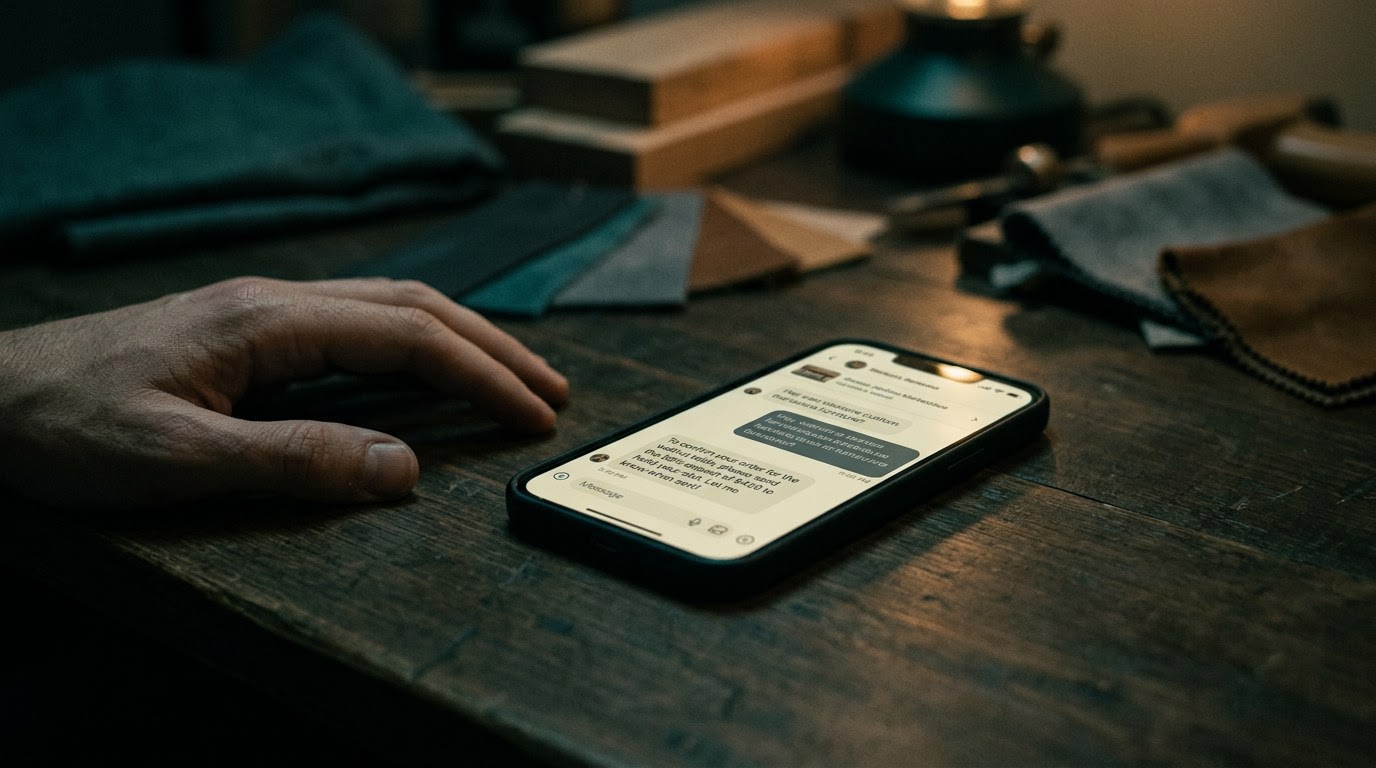
Fake custom furniture deposit scams represent a growing threat on digital marketplaces, tricking buyers into paying non-refundable upfront fees for hand-crafted tables, cabinets, and outdoor wood projects that do not exist. As of October 2026, victims report average losses between $300 and $1,500 per transaction, often sent directly via peer-to-peer digital payment apps. According to FTC reports, consumer losses from online shopping and non-delivery scams exceeded $390 million in 2024. This scam exploits the popularity of custom woodworking and artisanal home decor, leveraging stolen portfolio photos to build unearned trust before vanishing with the victim's money.
How the scam unfolds
How Fake Custom Furniture Deposit Scams Target Marketplace Buyers comes down to a calculated six-step playbook designed to exploit consumer desire for unique craftsmanship. The fraudster creates a convincing online profile using stolen photography of bespoke furniture, engages interested buyers with prompt consultation, and requests a substantial upfront deposit for raw materials. Once the deposit transfers via non-reversible channels, the scammer manufactures delays, provides fabricated progress photos or fake shipping details, and ultimately severs all communication once the victim presses for delivery.
-
Step 1: The High-Quality Portfolio Bait.
The fraudster sets up a detailed profile on Facebook Marketplace, Instagram, or Craigslist, advertising custom woodworking services such as hand-carved dining tables, live-edge walnut desks, or custom built-in cabinetry. To establish instant credibility, the scammer uploads high-resolution images stolen from legitimate custom furniture makers, boutique artisans, or Pinterest boards. A typical sequence begins when a buyer scrolling through local listings spots a gorgeous dining table priced slightly below commercial retail rates. The listing claims the builder operates a small local workshop and is taking custom orders for the upcoming season. The photos showcase intricate joinery, polished finishes, and workshop backgrounds that feel entirely authentic to an untrained eye.
-
Step 2: Rapid Engagement and Custom Quote Consultation.
When an interested buyer sends an inquiry, the scammer responds almost immediately with professional enthusiasm. The scammer asks detailed questions about dimensions, stain preferences, wood species, and hardware options to mimic the consultation process of a genuine artisan. One common pattern is that the scammer will offer helpful design suggestions, such as recommending a black epoxy river fill or a specific matte polyurethane finish, making the buyer feel like they are collaborating with a true master craftsman. The scammer provides a customized quote that appears reasonable—for instance, $1,200 for a solid oak dining table that would cost $2,500 in a retail showroom—creating a strong incentive for the buyer to lock in the deal quickly.
-
Step 3: The Upfront Material Deposit Request.
After agreeing on specifications and price, the scammer introduces the deposit requirement. The scammer explains that because custom furniture requires expensive raw lumber, resin, or specialized hardware, they need a 30% to 50% upfront deposit to purchase materials before work can begin. A typical sequence involves the fake builder sending a sleek, semi-professional invoice or simple contract generated through free online templates. The invoice clearly lists the project scope and states that work will commence within 48 hours of deposit receipt. By framing the deposit as a standard industry practice for custom trade work, the fraudster disarms the buyer's natural financial caution.
-
Step 4: The Pivot to Non-Reversible Payment Channels.
When it comes time to collect the funds, the scammer steers the buyer away from protected payment platforms. Although the listing may have originated on a platform with buyer protection, the scammer insists on using peer-to-peer payment services like Zelle, Venmo (specifically "Friends and Family"), Cash App, or wire transfers. The scammer often claims that commercial payment processors charge excessive transaction fees or hold funds for 30 days, which prevents them from buying the lumber immediately. If the buyer hesitates, the scammer reassures them by offering a digital copy of a driver's license or a fake business license—documents usually stolen from previous scam victims—to create a false sense of security.
-
Step 5: Artificial Delays and Staged Progress Updates.
Once the money is transferred, the scammer maintains the illusion of progress for several days or weeks to prevent the buyer from filing an immediate chargeback or police report. One common pattern is sending periodic status updates accompanied by generic workshop photos—such as stacks of raw lumber or a table top being sanded—stolen from woodworking forums or social media accounts. When the agreed completion deadline approaches, the scammer introduces calculated excuses for delays. Common excuses include unexpected supply chain slowdowns, illness, wood drying issues, or transit delays with local lumber yards. These stall tactics buy the scammer time to drain the receiving account and move on to new targets.
-
Step 6: The Final Phantom Delivery Fee or Silent Disappearance.
In the final stage, the scammer either attempts one last financial extraction or completely cuts ties. In many instances, the fraudster contacts the buyer claiming the furniture is completed and ready for delivery, but insists on an additional delivery or freight handling fee of $150 to $300 before loading the truck. If the buyer pays this secondary fee, the scammer vanishes immediately. If the buyer refuses or insists on paying upon physical delivery, the scammer blocks the buyer's phone number, deletes the social media profile, and removes the listing entirely. The buyer is left without their money, without the custom furniture, and with no direct way to contact the perpetrator.
Who gets targeted and why
Marketplace custom furniture deposit scams primarily target homeowners, apartment renovators, and design enthusiasts seeking bespoke home furnishings at reasonable prices. Victims are drawn in by the desire to support local trade artisans while saving money compared to commercial retail showrooms. Scammers exploit the psychological trust naturally associated with hand-crafted goods and custom trade work, where upfront material deposits are widely accepted as standard business practice.
The psychological hook of this scam relies heavily on three factors: perceived value, authority bias, and industry norms. Buyers seeking custom furniture often expect to pay a premium for bespoke items. When a scammer offers a custom piece at a moderate discount, the buyer feels they have discovered an exceptional deal. Furthermore, custom woodworking is one of the few consumer industries where asking for a 50% material deposit upfront is considered standard practice by legitimate builders. Scammers leverage this industry norm to make an inherently risky financial request seem completely routine.
A 2025 BBB study revealed that roughly 35% of social marketplace scam complaints involved fraudulent listings for custom home goods or handmade items. Victims spanning from young professionals furnishing their first homes to older retirees updating their living spaces fall victim because the scammer's communications sound educated and authentic. The fraudster often uses precise terminology—discussing moisture content, wood grain matching, mortise and tenon joinery, or oil-based finishes—which signals expertise and lulls buyers into lowering their defenses.
How to recognize it before money moves
Recognizing a custom furniture deposit scam requires evaluating seller behavior, verifying project photos, and analyzing payment requests before transferring any funds. Red flags include sellers refusing to meet in person at a physical workshop, demands for non-reversible payment methods, overly rapid response times combined with deep discounts, and reverse-image matches for portfolio photos across multiple distant geographic locations.
To evaluate whether a custom furniture offer is legitimate, ask yourself the following critical questions before sending a single dollar:
- Can the seller provide proof of a physical workshop location or allow a local walk-in visit? Legitimate custom woodworkers maintain real physical shops, shared maker spaces, or home garages where you can view raw materials or past work. If the seller refuses a brief visit or makes excuses about shop safety rules, be extremely cautious. Running a TrustCheck on the contact in week one catches most variants by verifying whether their identity details and business history match their claimed location.
- Do the portfolio photos appear on other websites or social media accounts under different names? Take the images from the listing and run a reverse image search using Google Lens or TinEye. If the exact table photo appears on a woodworker's blog in another state, a stock photo site, or an overseas furniture manufacturer's catalog, the listing is fraudulent.
- Is the seller insisting on non-protected peer-to-peer payment options? Legitimate craftspeople taking remote deposits accept credit cards, business checks, or buyer-protected invoice systems like PayPal Goods and Services. If the seller insists exclusively on Zelle, Venmo Friends and Family, Cash App, or wire transfers, treat it as an immediate dealbreaker.
- Is the price significantly lower than raw material costs? Hardwoods like black walnut, white oak, and specialty epoxy resins are expensive. If a seller quotes $600 for a massive 8-foot solid walnut dining table that would cost $900 in raw lumber alone, the offer is mathematically impossible for a real builder.
- Does the seller refuse to sign a clear written contract with verifiable business details? A genuine artisan will provide a contract listing their full legal name, registered business entity, physical address, phone number, estimated timeline, and exact cancellation terms. Scammers avoid contracts or send vague single-page receipts with missing business credentials.
What happens during each stage of a custom furniture deposit fraud
Understanding how a fake custom furniture deposit scam progresses allows buyers to identify deceptive tactics early and prevent financial loss. The breakdown below details what the scammer says at each phase versus the hidden reality occurring behind the scenes, highlighting how trust is built and manipulated throughout the transaction.
| Stage of the Scam | What the Scammer Says | What is Actually Happening |
|---|---|---|
| 1. Initial Contact & Quote | "I have a local shop and can build this exact custom dining table for you at a discounted rate if we start this week." | The scammer operates from a remote location using stolen photos from legitimate artisans to lure bargain-seeking buyers. |
| 2. Deposit Demand | "I need a 50% deposit via Zelle or Venmo right away so I can purchase the raw lumber from my supplier today." | The fraudster pushes for non-reversible payment channels to ensure you cannot recover your money once the scam is realized. |
| 3. Verification Shield | "Here is a copy of my driver's license and business registration so you know I am completely legitimate." | The scammer sends stolen identity documents belonging to a previous victim to build fake credibility and bypass skepticism. |
| 4. Staged Delays | "The wood is drying in the kiln, but I'll send you progress pictures of the sanding process early next week." | The scammer uses stock photos from online forums to buy time, allowing the deposit to settle while avoiding chargebacks. |
| 5. Phantom Delivery Fee | "The table is finished! Just send a $150 final freight delivery fee so my driver can load the truck." | The scammer makes one last cash grab before abandoning the fake profile and cutting off all contact permanently. |
If it's already happened
If you have lost money to a custom furniture deposit scam, taking immediate action within the first 72 hours gives you the highest chance of mitigating financial loss and helping law enforcement trace the fraudster. You must report the incident to payment providers, local police, and federal consumer protection agencies while securing your account details and gathering all communication records.
Follow these urgent steps immediately if you suspect you have been scammed:
- Contact your bank or payment app immediately. If you paid via Zelle, Venmo, Cash App, or wire transfer, call your bank's fraud department right away. Request a transaction dispute or fraud recall. While peer-to-peer transfers are difficult to reverse, notifying your institution immediately establishes an official fraud report. FBI IC3 data shows that peer-to-peer payment fraud and non-delivery scams accounted for more than $330 million in losses throughout 2023.
- File official reports with federal regulatory bodies. Report the details of the fraudulent transaction to the Federal Trade Commission at reportfraud.ftc.gov and to the FBI Internet Crime Complaint Center at ic3.gov. Be sure to include the scammer's payment handles, telephone numbers, listing URLs, and email addresses.
- Gather and preserve all evidence. Take screenshots of the marketplace listing, chat conversations, invoices, payment confirmations, and any image files shared by the fraudster. Save bank transaction numbers and profile links before the scammer deletes the listing or blocks your account.
- File a local police report. Visit your local police department and submit a report for theft by deception. Having an official police report number is often required by financial institutions when processing secondary fraud investigations or identity theft claims.
- Verify the scammer's details to prevent secondary extortion. Scammers frequently return under secondary aliases claiming to be recovery agents or private investigators who can retrieve your stolen money for an extra fee. In reality, a TrustCheck on the contact confirms the identity is fake, helping you avoid falling victim to secondary recovery scams. Protect your personal credit by monitoring your credit reports regularly or placing a fraud alert on your credit file if you shared sensitive identity documents during the transaction.
Frequently asked
Why do fake custom furniture sellers ask for deposits via peer-to-peer payment apps?
Fraudsters insist on peer-to-peer payment apps like Zelle, Venmo, or Cash App because these transfers behave like cash and offer virtually no buyer protection for goods and services. Once you authorize the transfer, the money moves instantly to the scammer's bank account, making it almost impossible for your bank to reverse the transaction after you realize the furniture does not exist.
Can I get my deposit money back if I was scammed on Facebook Marketplace?
Recovery depends on your payment method. If you paid through Facebook Marketplace checkout or a credit card, you can file a dispute and likely get a refund. However, if you sent funds outside the platform using non-reversible peer-to-peer payment apps, bank chargebacks are rarely granted. You should report the fraud immediately to your financial institution and local authorities to document the incident.
How can I verify that photos of custom furniture belong to the seller?
You can verify photos by performing a reverse image search using Google Lens or TinEye. Save the listing photos and upload them to the search engine to check if they appear on other woodworking websites, boutique furniture blogs, or stock photo repositories. If the image matches listings under a different name or location, the seller is using stolen imagery.
Is asking for a deposit standard practice for legitimate custom furniture woodworkers?
Yes, asking for a 30% to 50% material deposit is standard in custom woodworking to cover raw lumber and specialty materials. However, legitimate craftspeople provide formal written contracts, maintain physical workshops open to local visits, provide verifiable business credentials, and accept protected payment channels such as credit cards or PayPal Goods and Services rather than non-refundable transfer apps.
What should I do if a scammer sends me a copy of their driver's license?
Never assume a seller is legitimate just because they send a driver's license or business credential. Scammers routinely use stolen driver's licenses and fake business documents obtained from prior victim scams to build unearned trust. Verify identity through independent channels, check business registries, and avoid sending money to peer-to-peer accounts that do not match the legal name on the document.
More in Scams
- How Off-Platform Vacation Rental Deposit Scams Target Direct Bookers
October 17, 2026
- How Fake High-End Bicycle Deposit Scams Target Peer Buyers
October 15, 2026
- How Fake Fine Wine Provenance Certificates Scam Peer Collectors
October 12, 2026