How Local Pickup Chargeback Scams Rob Private Marketplace Sellers
· 10 min read
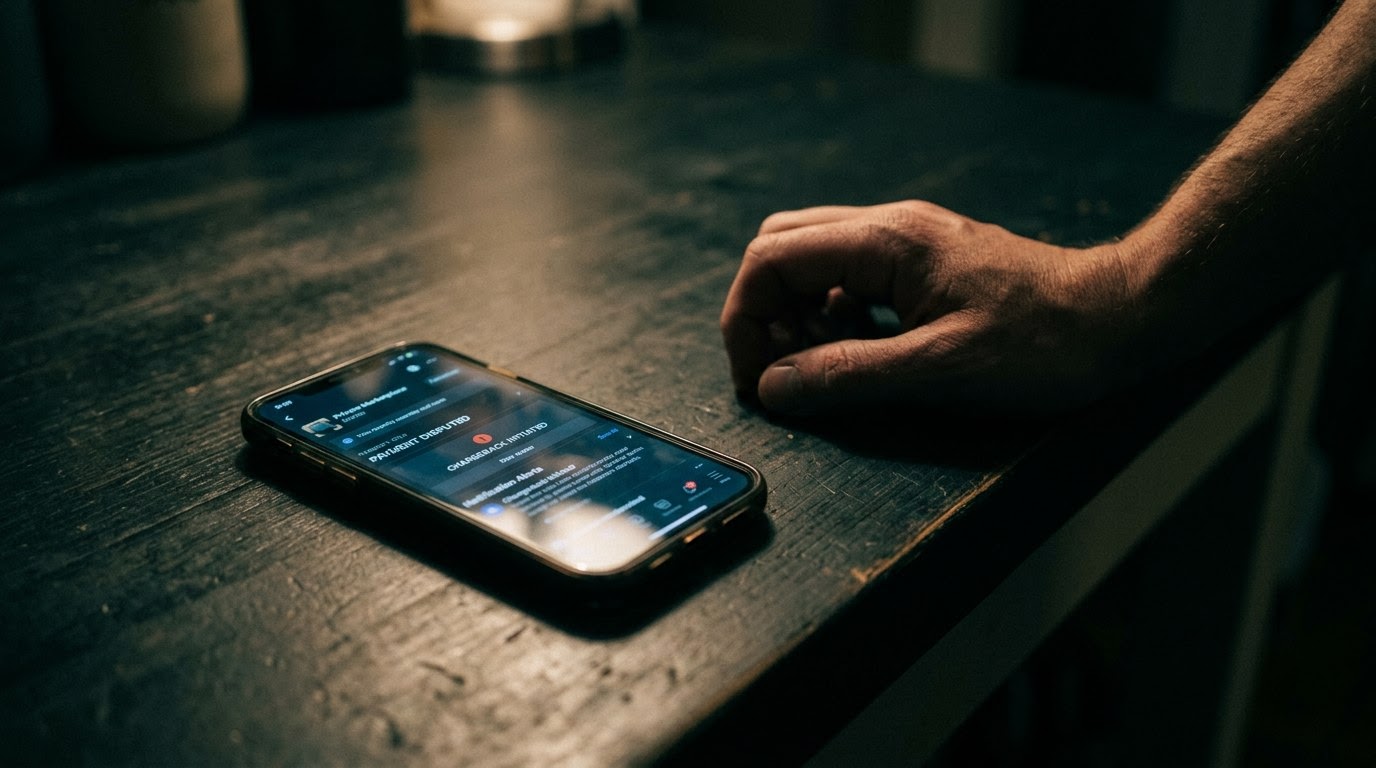
Understanding how local pickup chargeback scams rob private marketplace sellers starts with spotting the timing gap between a physical handoff and a bank dispute. As of November 2026, individual sellers typically lose between $400 and $2,500 per incident when selling phones, laptops, cameras, and designer goods on peer-to-peer platforms. FTC data shows consumers reported over $380 million in losses to online shopping and marketplace scams in 2023, while overall fraud losses surged by 25% to reach $12.5 billion in 2024. Because you hand over an item face-to-face without a shipping label, a dishonest buyer can drive away and convince a bank that the transfer was unauthorized or never fulfilled.
How the scam unfolds
The local pickup chargeback scam unfolds over a few hours or days, turning a routine neighborhood sale into a costly loss. A scammer targets your high-value listing, agrees to your asking price without haggling, and pushes to pay with a digital app or card-linked wallet at the meetup. Once you see a payment notification on your phone and hand over the item, the buyer leaves and files a bank dispute, leaving you without your item or your money.
A typical sequence follows seven predictable steps from the first direct message to the final bank clawback.
- The fast, agreeable first message. You list a $1,200 smartphone or a $900 mirrorless camera on a local marketplace app. Within an hour, a buyer messages you from a friendly profile with minimal history and offers your full asking price immediately. By skipping price negotiation and asking to meet the same evening, the buyer lowers your guard and sets a rushed tone.
- The last-minute push away from cash. Shortly before leaving to meet you, or after arriving at the meetup spot, the buyer claims their bank's ATM is down or capped. They ask to pay with Venmo, Zelle, Cash App, or PayPal instead. To reassure you, they promise to send the full amount right in front of you before touching the box.
- The rushed, distracted handoff location. The buyer insists on meeting at a busy gas station, a dimly lit grocery store corner, or a roadside curb while keeping their car engine running. They glance at your item for five seconds and keep up rapid small talk to break your focus. Social pressure pushes you to wrap up the exchange quickly so you do not appear overly suspicious.
- The manipulated funding method. Instead of sending money from an existing cash balance, the buyer funds the transfer using a stolen credit card, a compromised bank login, or a personal card with strong chargeback rights. In another common pattern, they quietly toggle a "Goods and Services" setting that grants them shipping-style buyer protection on an in-person exchange.
- The screen-flash confirmation and exit. Your phone chimes with an alert, or the buyer tilts their phone screen toward you displaying a green checkmark. Assuming the deal is final, you hand over the laptop, gaming console, or designer bag. The buyer thanks you, climbs into a vehicle parked out of security camera view, and drives away before you inspect the transaction receipt.
- The quiet dispute window. Nothing looks wrong for the next 24 hours to two weeks. One common pattern sees the seller transfer the funds to a checking account and spend them on bills, believing the transaction is settled. Meanwhile, the buyer—or the legitimate owner of a stolen card—contacts the card issuer to report fraud or claim the merchandise never arrived.
- The automated account clawback. Your payment app freezes your balance or pulls the full $900 to $2,500 straight back out of your linked bank account, often tacking on a chargeback fee. When you appeal, automated platform support asks for a shipping tracking number from USPS, UPS, or FedEx. Without carrier proof of delivery, the platform closes the case in the buyer's favor.
One common pattern involves a seller offloading a used electric bike for $1,400 outside a suburban hardware store. The buyer arrives in a rental SUV, claims their ATM capped daily withdrawals at $300, and sends the remaining $1,100 through a digital wallet linked to a credit card. Ten days later, the card issuer reverses the $1,100 charge as unauthorized, leaving the seller short both the bike and most of the cash.
These disputes exploit a structural blind spot in modern payment networks. According to the FBI, non-payment and non-delivery scams cost victims more than $300 million in 2023. Traditional chargeback rules were built to protect online shoppers from dishonest mail-order merchants, not to referee hand-to-hand trades between two local strangers.
| Stage of the scam | What the scammer says | What's actually happening |
|---|---|---|
| Initial contact | I can pick this up tonight and pay your full asking price right now. | The scammer skips haggling because they never intend to let you keep the funds. |
| Payment pivot | The ATM was out of order, so can I just send it on an app when I get there? | They are shifting the deal from final cash to a disputable card or stolen bank login. |
| At the meetup | I'm double-parked and running late, let me send it real quick. | Artificial urgency stops you from checking the sender's name or payment type. |
| Handoff confirmation | Look, it went through on my screen, check your notifications. | They used a spoofed confirmation screen, a stolen card, or a "Goods and Services" toggle. |
| Post-pickup delay | Thanks again, works great! | Polite follow-up messages buy time until you delete the listing and lose chat evidence. |
| The chargeback | Account deleted or user unavailable. | The buyer or real cardholder files a fraud claim, triggering an automated bank reversal. |
Who gets targeted and why
Scammers primarily target everyday private sellers aged 20 to 45 who list portable, high-resale electronics, cameras, and designer goods on local marketplaces. The psychological hook relies on social politeness and convenience: once a buyer shows up in person offering an instant app transfer, most sellers feel awkward refusing digital payment or questioning a stranger's identity face-to-face.
Fraudsters hunt for listings that signal personal urgency or financial pressure. Phrases such as "moving this weekend," "need gone today," or "price firm, no lowballs" tell scammers that you want a fast, frictionless handoff. BBB reporting indicates that online purchase scams represented more than 30% of all scam reports submitted in 2023, and in-person chargeback schemes thrive whenever sellers value speed over payment finality.
Product category matters just as much as seller mindset. Scammers rarely stage an elaborate pickup scheme for a $35 coffee table or used kitchenware. Instead, they seek compact items worth $400 to $2,500 that wipe clean and resell within a day, including unlocked smartphones, graphics cards, drones, luxury watches, and cordless power tool kits.
Casual sellers face the steepest risk because they assume physical presence guarantees an honest trade. If you only sell a few household items a year, a digital wallet notification feels identical to cash in hand. Scammers count on that assumption, knowing you will not realize a "completed" transfer can evaporate weeks later.
How to recognize it before money moves
You can recognize a local pickup chargeback scam before money moves by spotting mismatches across the buyer's profile, meetup behavior, and payment preferences. Genuine local buyers typically ask practical questions about item condition, negotiate mildly, and bring cash when requested. A scammer rushes past product details, dodges basic verification, and invents last-minute excuses to force a reversible digital transfer.
Before sharing your phone number or driving to a meetup spot, verify who sits behind the marketplace profile. Running a TrustMatch TrustCheck on the contact in week one of your listing—or the moment a buyer reaches out—catches most variants by flagging mismatched names, disposable VoIP numbers, and newly fabricated identities before you ever meet.
Ask yourself these five diagnostic questions while messaging a prospective buyer:
- Did the buyer agree to your full price without asking about wear, battery life, or accessories? Real buyers spending $800 on a used laptop ask whether the screen has scratches or if the charger works. Scammers ignore condition details because they plan to steal the item for free.
- Did they switch away from cash right before or during the meetup? A major warning sign is agreeing to cash in chat, then blaming an ATM limit, lost debit card, or bank outage once you are already standing outside.
- Does the name on the payment app differ from the name on their marketplace profile? If you messaged one name on the platform, yet the incoming transfer shows an unrelated person's name or a random business handle, the buyer is likely using a stolen account or a third-party victim.
- Are they avoiding a well-lit public spot with security cameras? Honest buyers welcome meeting inside a police station safe-exchange lobby or a bank branch. Scammers push for dark parking lots, apartment curbs, or busy highway exits where faces and license plates stay off video.
- Are they pressuring you to release the item based on a screenshot or "pending" status? Never trust a buyer's phone screen or an incoming email alert. Always open your own payment app independently and verify the status is fully settled rather than pending or under review.
To eliminate chargeback exposure completely, enforce a strict cash-only rule for any local pickup over $100 and meet inside a bank lobby where a teller can verify bills. If a buyer refuses cash at a public police exchange zone, end the conversation immediately.
Treating social marketplaces as casual friend networks creates avoidable risk. Federal Trade Commission data shows that scams initiated on social media platforms caused more than $1.4 billion in reported losses in 2023, making local chat threads a primary hunting ground for payment fraud. Walking away from a pushy buyer costs five minutes, whereas fighting a lost chargeback can cost thousands.
If it's already happened
If a buyer has already left with your item and triggered a chargeback, act within the first 72 hours to gather evidence and contest the dispute before automated deadlines close. Start by screenshotting every chat message, requesting nearby security camera footage, and filing official fraud reports. Moving fast proves to your bank and the payment platform that an in-person theft occurred rather than a shipping dispute.
Follow these steps during your first 72 hours after discovering a disputed payment or negative balance:
- Lock down your digital and physical evidence immediately. Screenshot the original marketplace listing, the buyer's profile URL, every message in the thread, and the payment receipt timestamp. If you met near a store or gas station, ask the manager right away to save exterior security footage before routine recording loops erase it.
- Confirm whether the buyer used a fabricated persona. Running a TrustMatch TrustCheck on the contact confirms the identity is fake or tied to a burner VoIP line, giving investigators clear documentation rather than a dead-end username.
- Submit a formal dispute response before the platform deadline. Most payment apps give you seven to ten days to contest a chargeback. Upload your chat logs proving the buyer chose a local pickup, photos of the item, and your police report number, explicitly stating that shipping was never part of the sale.
- File a police report where the handoff happened. Share the buyer's phone number, payment handle, vehicle description, and any camera leads with local law enforcement. An official police case number carries weight with bank fraud teams and helps pause collections on a negative wallet balance.
- Secure your personal accounts if you clicked any links. If the scammer sent a fake confirmation link or obtained your email and banking login, change your passwords, turn on app-based two-factor authentication, and place a free credit freeze with the major bureaus.
Submit federal fraud reports as soon as your evidence folder is ready. File a report with the Federal Trade Commission at reportfraud.ftc.gov and submit a complaint to the FBI Internet Crime Complaint Center at ic3.gov. Federal investigators track recurring payment handles, stolen card clusters, and burner phone numbers across state lines to dismantle organized local-pickup theft rings.
Frequently asked
Can a buyer really reverse a Venmo or Zelle payment after picking up an item in person?
Yes, a buyer can trigger a reversal even after a local pickup if they funded the payment with a stolen bank login, a stolen debit card, or a credit card chargeback. While instant bank transfers are hard to reverse for buyer's remorse, unauthorized transaction claims and Goods and Services disputes regularly pull funds back from private sellers.
Why do payment platforms side with scammers on local pickup chargebacks?
Payment platforms rely heavily on automated seller-protection rules designed for shipped e-commerce orders rather than face-to-face meetups. When a buyer or card issuer claims an item was never delivered, the platform demands a verifiable shipping tracking number from a major carrier. Because local sellers lack tracking proof, automated systems routinely close disputes in the buyer's favor.
What is the safest way to accept payment for a local marketplace sale?
Physical cash handed over inside a well-lit public location, such as a police department safe-exchange lobby or a bank branch, remains the safest payment method for local pickups. If the sale exceeds a few hundred dollars, meeting inside the buyer's bank lets a teller verify the cash or issue a cashier's check directly in front of you.
Should I accept a screenshot or email as proof that a buyer paid me?
No, you should never hand over an item based on a screenshot, a buyer's phone screen, or an incoming email notification. Scammers frequently use fake payment-confirmation generators and spoofed emails that mimic real payment apps. Always open your own payment app independently and verify that the funds show as fully settled before releasing your property.
What should I do first if a marketplace buyer files a chargeback against me?
Within the first 72 hours, screenshot the original listing, every chat message, and the buyer's profile, then ask nearby businesses to save any parking-lot security video. File a police report locally, submit official complaints to the FTC and FBI, and respond to the payment dispute before its deadline with clear documentation proving an in-person pickup occurred.
More in Scams
- How Celebrity Impersonation Romance Scams Exploit Trusting Fans
November 26, 2026
- How Fake Recovery Agents Target Romance Scam Victims With Refund Promises
November 21, 2026
- How Title Jumping Scams Trap Private Used Car Buyers
November 19, 2026