How Fake Fine Wine Provenance Certificates Scam Peer Collectors
· 9 min read
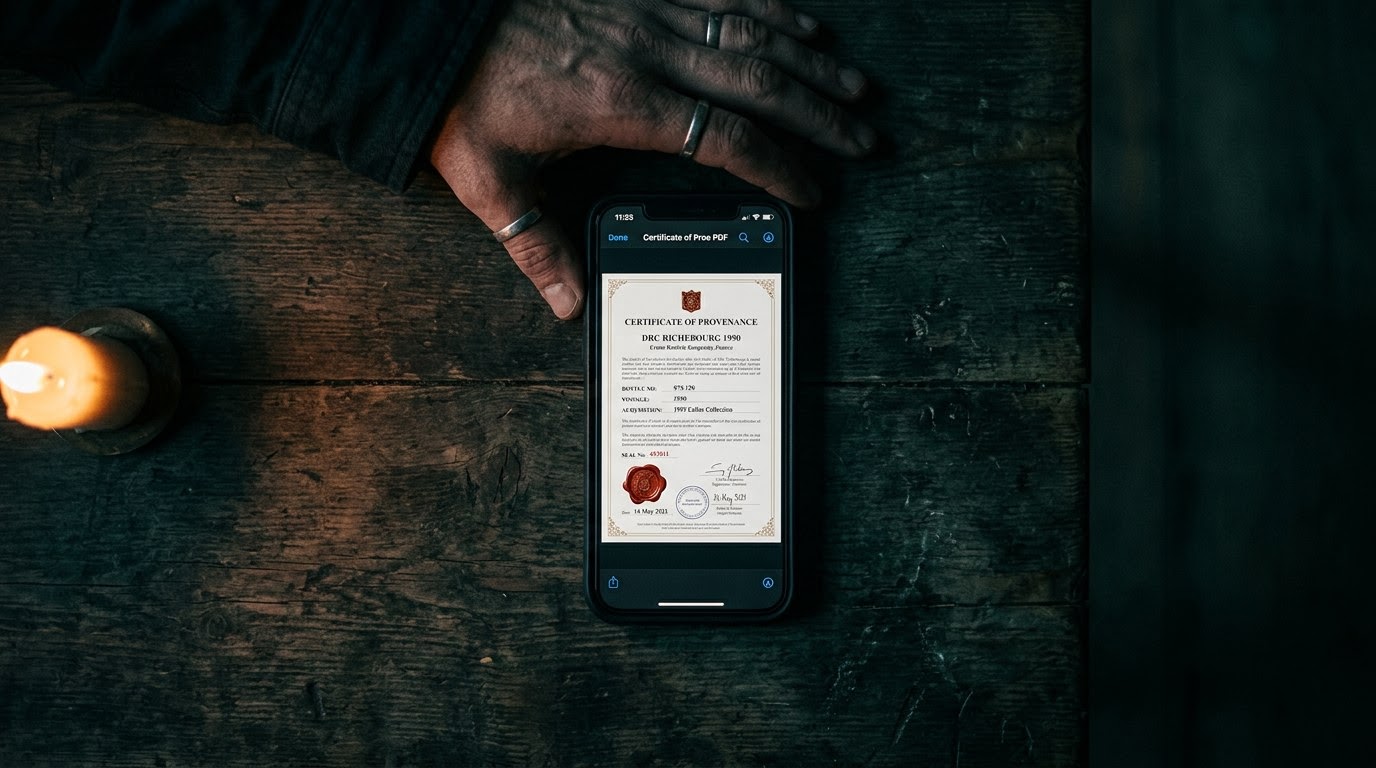
As of October 2026, peer-to-peer secondary market sales of rare vintage wines have increasingly become a primary target for sophisticated imposter fraud. The fake fine wine provenance certificate scam involves cybercriminals fabricating high-resolution digital documentation—such as bogus châteaux invoices, falsified cellar logbooks, and forged sommelier appraisal letters—to sell counterfeit or non-existent rare bottles to private collectors in social media groups. Victims typically face losses ranging from $2,500 to over $50,000 per transaction, depending on whether they are buying individual Grand Cru bottles or full original wooden cases. FBI data from 2024 indicates that online non-delivery scams and luxury goods fraud caused over $400 million in reported losses to private buyers. Understanding how fake fine wine provenance certificates scam peer collectors is essential for protecting your investment portfolio and personal capital.
How the Scam Unfolds
The fine wine provenance scam unfolds through a structured seven-stage playbook designed to build social trust before executing an untraceable financial transaction. Fraudsters infiltrate private collector communities, establish credible profiles, showcase stolen cellar images, present meticulously forged provenance documents, pressure buyers with artificial urgency, redirect payment to non-refundable channels, and disappear once funds clear. Recognizing this sequential playbook helps peer collectors identify fraudulent sellers before transferring capital.
To execute this fraud successfully, cybercriminals do not merely post an ad for an expensive bottle. They construct an elaborate apparatus of trust that mirrors the legitimate secondary wine trade. Below is the step-by-step sequence of how the playbook functions in practice.
- Group Infiltration and Sleeper Account Warming: The scammer joins private Facebook groups, wine-focused subreddits, or invite-only chat channels dedicated to fine wine trading. They do not sell immediately. Instead, they spend weeks posting knowledgeable comments about recent vintages, reacting to other members' cellar updates, and establishing a believable persona as an estate collector downsizing their personal cellar.
- Dicing the Hook with Phantom Allocations: The seller creates a post offering highly sought-after, allocation-only bottles—such as a 1982 Château Lafite Rothschild, a 2010 Domaine de la Romanée-Conti, or rare cult Napa Cabernet Sauvignon cases. The price is set just below current auction house estimates—cheap enough to look like a deal between peers, but high enough to maintain an aura of luxury and authenticity.
- Manufacturing High-Fidelity Provenance Documents: When a prospective buyer inquires about provenance, the scammer provides high-resolution PDF certificates. These documents include forged receipts from famous merchants, altered bonded warehouse storage records, fake certificates of authenticity from fictitious sommelier boards, and manipulated temperature-controlled storage logs.
- Social Proof Manipulation and Video Tricks: If asked for video or real-time photo proof, the scammer sends short, pre-recorded videos showing the bottle on a table next to a handwritten paper note bearing the buyer's name. They achieve this using digital video editing or by purchasing cheap empty vintage bottles, refilling them with low-grade wine, and re-sealing them with replica wax or foil capsules.
- Artificially Inducing Scarcity and Urgency: The scammer informs the buyer that two other group members are currently making offers. They claim they prefer to sell to the target because they "appreciate genuine collectors," but demand a deposit or full payment within two hours to hold the lot before shipping.
- Payment Diversion to Non-Refundable Channels: The fraudster rejects standard protected payment gateways or secure escrow services, claiming high processing fees or tax complications. They insist on peer-to-peer wire transfers, Zelle, cryptocurrency, or peer-to-peer payment apps marked under "Friends and Family" to eliminate buyer protection features.
- Ghosting, Stall Tactics, and Account Deletion: After receiving funds, the scammer provides a fake tracking number or claims the shipping company requires additional insurance fees due to temperature-controlled transit policies. Once the victim refuses further payments or discovers the tracking number is invalid, the scammer blocks the buyer and deletes their social media profile.
Understanding how the scammer transitions through each phase makes it easier to spot malicious intent before money transfers take place. The breakdown below details what the scammer says versus the underlying reality at each critical junction.
| Stage of the Scam | What the Scammer Says | What's Actually Happening |
|---|---|---|
| Initial Outreach | "I'm liquidating part of my private cellar to make room for my incoming fall allocations." | The scammer uses stolen photos from legitimate auction archives to simulate a high-end cellar inventory. |
| Provenance Verification | "Here is the original purchase invoice from the château agent and my bonded warehouse certificate." | The seller created a counterfeit PDF using graphics software, substituting store names and altering dates. |
| Price Negotiation | "I'll let this 3-pack go for $6,000 if you close today, because I'd rather avoid auction fees." | The fraudster sets a price below market value to induce psychological urgency and bypass cool-headed analysis. |
| Payment Request | "Please send payment via Zelle or PayPal Friends & Family to avoid commercial taxes on my personal collection." | The seller deliberately routes payment through non-refundable rails to prevent recovery or dispute chargebacks. |
| Post-Payment Delay | "The courier flagged the crate for specialized courier insurance. Send $500 more so it clears dispatch." | The scammer attempts an advance-fee extraction to squeeze final funds before severing contact completely. |
Who Gets Targeted and Why
Peer wine scams target intermediate to high-net-worth collectors active in private Facebook groups, Reddit subreddits, and specialized messaging forums. Fraudsters exploit the psychological hook of exclusivity—the desire to acquire rare allocations without paying commercial auction house premiums. Victims are selected because they trust community-vetted spaces and often rely on digital paperwork rather than physical inspection when purchasing remote vintage bottles.
The secondary market for fine wine relies heavily on reputation and historical record. When traditional auction houses charge seller commissions ranging from 10% to 22%, direct peer-to-peer trading becomes highly attractive to private buyers. Scammers capitalize on this desire for efficiency. A 2025 FTC report revealed that social media-based peer-to-peer commerce fraud increased by 35% year-over-year, driven largely by high-value collectible categories.
Collectors targeted by these schemes typically possess significant disposable income but may lack specialized technical tools to evaluate document metadata or verify remote physical assets. Scammers systematically exploit psychological vulnerabilities:
- Fear of Missing Out (FOMO): High-end wines are inherently scarce. When a seller offers a rare vintage that rarely appears on the open market, buyers feel pressured to act quickly before another enthusiast claims the bottle.
- In-Group Illusion of Safety: Joining a private, moderated collector group creates a false sense of security. Members assume that because an admin approved the seller's account, the individual must be legitimate.
- Paperwork Confirmation Bias: When presented with a multi-page document featuring official logos, watermarks, and stamp scans, buyers often assume the paperwork is genuine without verifying the issuing authority directly.
How to Recognize It Before Money Moves
You can recognize a fine wine provenance scam before money moves by auditing the digital footprint of the seller, analyzing invoice metadata, cross-referencing cellar photos, and insisting on verified escrow services. Asking specific diagnostic questions about document origin, payment routing, and seller identity exposes logical inconsistencies that scammers cannot easily satisfy, protecting your funds before any transaction takes place.
To insulate your wine acquisitions from counterfeit provenance fraud, evaluate every direct peer transaction against these critical technical and behavioral checks.
1. Does the Provenance Documentation Pass Metadata Inspection?
Authentic receipts from established wine merchants or bonded facilities are typically exported directly from enterprise inventory databases. Forged documents are usually compiled in consumer design tools like Photoshop or Canva. Download the PDF provenance sheet provided by the seller and check its document properties. If the metadata shows recent modification dates, consumer graphics software creation, or missing font embeds, the document is likely fraudulent.
2. Has the Seller Verified Their Real Identity Independent of Social Media?
A social media account with years of wine posts can still be a compromised profile or a purchased "aged" account. Running a TrustCheck on the contact in week one catches most variants of this impersonation scheme before any contract or payment negotiation begins. Never rely solely on group reputation, member endorsements, or profile join dates as proof of identity.
3. Do the Cellar Images Pass Reverse Image and EXIF Analysis?
Scammers regularly steal bottle photos from historical sales listings on Sotheby's, Christie's, or WineBid. Save the image files provided by the seller and run them through reverse image search engines. If the identical image appears on an auction website from three years ago, the seller does not possess the bottle. Furthermore, inspect the EXIF data of raw photographs; missing GPS coordinates or camera settings inconsistent with the seller's claimed location warrant immediate cancellation of the deal.
4. Is the Payment Structure Pushing You Outside Protected Rails?
Legitimate sellers trading multi-thousand-dollar assets understand the necessity of transaction security. Be immediate in declining deals if the seller refuses standard goods-and-services payment channels or accredited escrow platforms. Claims that "tax laws prevent using goods and services" are classic social engineering tactics used to strip you of fraud protection rights.
5. Is the Storage Facility or Château Able to Confirm the Serial Numbers?
Top-tier estates utilize specialized serial numbers, Pro proof bubbles, NFC tags, or engraved micro-codes on bottle glass. Ask the seller for the specific bottle serial number and contact the bonded warehouse or estate distributor directly. If the warehouse has no record of that specific lot or confirms the storage account belongs to a different individual, break off contact immediately.
If It's Already Happened
If you have fallen victim to a fake wine provenance scam, immediate action within the first 72 hours is critical to trace funds, freeze fraudulent accounts, and log legal reports. You must contact your bank’s wire fraud unit, report the incident to federal regulatory bodies, preserve all electronic communications, and document the seller’s real-world footprint for investigative authorities.
Time is the single most vital factor in recovering funds lost to online financial fraud. Execute the following recovery framework immediately upon discovering that a wine purchase was fraudulent.
Step 1: Contact Your Financial Institution's Fraud Department (Hours 0–24)
If you transferred funds via bank wire, call your financial institution immediately and ask for the Fraud or Fraudulent Wire Recall department. Request an emergency wire recall under SWIFT/Fedwire fraud response protocols. If you paid via a peer-to-peer app connected to a credit card, open an unauthorized transaction dispute with your issuing bank.
Step 2: Document and Freeze Evidence (Hours 24–48)
Do not delete your chat logs or block the scammer immediately if the account remains active. Take full-page screenshots of all social media conversations, trade posts, payment confirmations, and PDF documents. Ensure profile URLs, account handles, bank account numbers, Zelle email addresses, and cryptocurrency wallet hashes are captured in plain text.
Step 3: File Federal and Regulatory Reports (Hours 48–72)
Submit formal complaints to official law enforcement agencies that track internet fraud and financial crime:
- Federal Bureau of Investigation: File a detailed report at ic3.gov (Internet Crime Complaint Center). Include all wire routing codes, wallet addresses, and communications.
- Federal Trade Commission: Log the incident at reportfraud.ftc.gov to assist federal authorities in mapping broader imposter networks.
- State Attorney General: File a consumer protection complaint in both your home state and the state where the scammer claimed to reside or hold bank accounts.
Step 4: Verify the Offender's Identity for Legal Action
To pursue civil recovery or provide actionable intelligence to law enforcement, running a TrustCheck on the contact confirms the identity is fake or reveals connections to known fraud infrastructure. Presenting verified identity metrics to police investigators significantly improves the chances of active file opening compared to filing against an anonymous internet handle.
Step 5: Alert Group Administrators and Community Members
Notify the administrators of the private group where the interaction occurred. Provide them with sanitized evidence of the forged documents and payment accounts so they can remove the scammer and alert other collectors who might currently be negotiating for phantom inventory.
Frequently asked
What is a fake fine wine provenance certificate?
A fake fine wine provenance certificate is a forged digital or paper document created to misrepresent the origin, storage history, ownership, and authenticity of high-value vintage wines. Scammers use altered invoices, fake warehouse logs, and falsified sommelier inspection letters to sell counterfeit or non-existent bottles to private collectors.
How do fraudsters create convincing wine receipts and invoices?
Fraudsters use graphic design software to modify real invoices downloaded from wine auctions or legitimate merchants. They edit names, dates, bottle serial numbers, and prices while retaining official logos, typography, and watermarks to make counterfeit PDF documents appear genuine to unsuspecting peer buyers.
Why do scammers insist on peer-to-peer payment methods?
Scammers favor peer-to-peer applications, bank wire transfers, and cryptocurrency because these payment methods lack robust buyer protection features. Once money is transferred via wire or personal payment options, it transfers immediately, making it nearly impossible for victims to reverse the transaction or claim chargebacks.
Can reverse image searches identify counterfeit wine listings?
Yes, reverse image searches frequently expose fraudulent listings. Scammers often steal photos from past legitimate auction listings, online retail catalogs, or private collector blogs. Uploading the seller's bottle images into reverse search tools can reveal if the photos were lifted from historical web pages.
What should I do if I paid a scammer via bank wire?
If you paid via bank wire, contact your bank's fraud unit immediately and request a SWIFT or Fedwire recall. File an official internet crime report at ic3.gov within 72 hours, preserve all chat transcripts and forged documents, and submit a fraud report to the FTC.
More in Scams
- How Fake Camera Lens Swap Scams Target Marketplace Buyers
October 10, 2026
- How Fake Exotic Car Rental Deposit Scams Target Vacationers
October 8, 2026
- How Fake Moving Container Deposit Scams Target Relocating Homeowners
October 5, 2026