How Fake Land Plot Sale Deposits Target Rural Property Buyers
· 10 min read
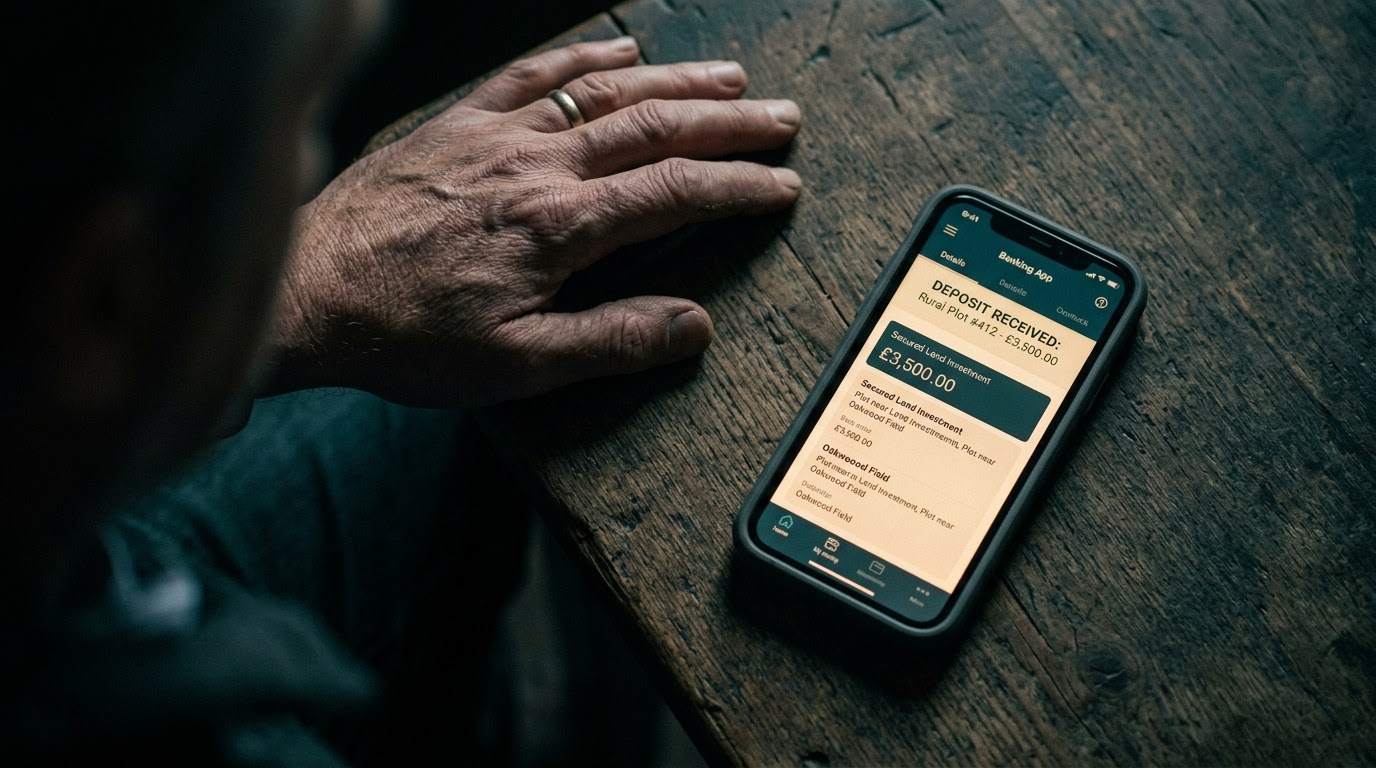
The fake vacant land plot deposit scam is an aggressive form of imposter fraud targeting hopeful rural property buyers across North America. As of September 2026, scammers increasingly leverage scraped GIS property records and social media marketplaces to post unrealistically cheap acreage listings. According to FTC reporting from 2025, real estate imposter scams and fake property listing fraud accounted for over $150 million in consumer losses. Scammers pretend to be out-of-state landowners selling off remote parcels quickly for cash. Before the prospective buyer discovers the property actually belongs to an uninvolved third party, the fraudster collects thousands of dollars in fake earnest money deposits and cuts off all communication.
How the Scam Unfolds Step-by-Step
Fake land plot sale deposit scams unfold through a calculated series of deception tactics where fraudsters identify unencumbered vacant land, clone listing details, and pose as the legitimate owner. The scammer builds trust by sending public property deeds and forged sale contracts, then creates artificial urgency around competing buyers. Once the victim wires earnest money directly to the fraudster or an accomplice, the seller cuts off communication and disappears.
- Property Scraping and Record Selection: The scammer searches county GIS mapping portals and public tax records to find vacant rural acreage that is free of mortgages or liens. They target properties owned by elderly individuals, out-of-state residents, or corporate entities that rarely inspect the physical land.
- Marketplace Listing Creation: Using stolen property photographs, topographical maps, and boundary diagrams, the fraudster creates fake sale posts on Facebook Marketplace, Craigslist, or obscure land auction sites. The property is priced roughly 30% to 50% below fair market value to generate immediate interest.
- Initial Contact and Credibility Building: When an interested buyer reaches out, the scammer responds promptly, using a fake name matching the actual property deed holder. They explain that they are selling quickly due to a family emergency, job relocation, or liquidating an inheritance.
- Document Fabrication and Fake Escrow Setup: To reassure the buyer, the scammer emails copies of legitimate tax records retrieved from public portals, alongside forged purchase contracts. They frequently urge the buyer to bypass traditional closing costs by using a fake private escrow agent or personal account for the deposit.
- Pressure and Deposit Demand: The fraudster claims multiple buyers are making cash offers that same day. They demand an immediate earnest deposit ranging from $2,000 to $10,000 via bank wire, Zelle, Venmo, or peer-to-peer transfer to lock in the contract.
- The Disappearance and Silent Discovery: Once the deposit lands in the scammer's bank account, the seller delays sending receipt documentation. Within 24 to 48 hours, the fake listing vanishes, phone lines are disconnected, and the buyer discovers the real owner had no knowledge of the transaction.
A typical sequence illustrates how smoothly this playbook executes. Consider a situation where a buyer searches online for five acres in a rural county. They discover a listing on a social media platform advertising a beautiful wooded plot for $18,000. The seller, operating under the name of the actual deed holder found in public records, claims to live two states away.
When the buyer asks to see the property, the seller encourages them to drive out and walk the land independently, taking advantage of the fact that vacant land has no physical structures, keys, or locks. Because the land is real and the address exists, the prospective buyer visits the site, falls in love with the parcel, and reports back that they want to proceed.
At this point, the fraudster sends a professional-looking digital sales contract generated from standard real estate templates. To make the transaction feel secure, the scammer includes a copy of the actual county tax bill and deed document, easily downloaded from public county clerk databases. The scammer insists that because the purchase price is low, using an expensive title company or real estate attorney is an unnecessary expense for both parties.
Instead, the seller instructs the buyer to wire a $3,500 earnest money deposit directly to a designated account, claiming it belongs to a closing attorney or private escrow coordinator. In reality, this account is controlled by a money mule or an overseas bank account. FBI IC3 data from 2024 indicated that real estate wire fraud incidents resulted in over $400 million in reported victim losses.
Once the funds are transferred, the scammer maintains communication just long enough for the wire to fully clear. They may send a fake receipt or claim that closing documents are being notarized. Soon after, the phone number is disconnected, social media accounts are deleted, and the buyer is left holding a fraudulent agreement.
| Stage of the Scam | What the Scammer Says | What's Actually Happening |
|---|---|---|
| First Contact | "I'm selling this land cheap because I moved out of state and just want to liquidate the property quickly." | The scammer lives nowhere near the property and scraped the actual owner's details from public county property tax websites. |
| Property Inspection | "Feel free to drive out and walk the property anytime. I don't need to be there since it's open acreage." | The scammer relies on vacant land having no locks or physical barriers so the victim sells themselves on the parcel. |
| Document Verification | "Here is the official deed and tax document showing I own the parcel outright with no liens." | The scammer downloaded publicly accessible deed records and forged a purchase contract using standard legal templates. |
| Deposit Request | "Wire the $3,000 deposit to my closing officer today so I can hold the property against two other cash buyers." | The scammer uses manufactured urgency to push the victim into sending non-refundable funds directly to a fraudulent account. |
| Post-Payment | "I received your wire. I'm finalizing the title transfer paperwork with my notary and will email it over shortly." | The scammer is buying time to move the stolen money through secondary accounts before severing all communication channels. |
Who Gets Targeted and Why
Fake land plot deposit scams target aspiring homesteaders, rural land buyers, and small investors looking for affordable acreage outside major metropolitan areas. Scammers capitalize on buyers who expect remote, unrepresented transactions when buying vacant land. The psychological hook relies on the fear of missing out on an remarkably underpriced plot, combined with the normal absence of physical structures or present sellers during rural land viewings.
Rural land transactions naturally differ from traditional residential housing sales. When buying a home, buyers expect walk-throughs, key exchanges, home inspections, and physical interactions with real estate agents. Vacant land, however, is frequently bought and sold remotely without an agent present on the dirt. Buyers are accustomed to driving to a pin location on a GPS map, walking the boundary lines independently, and executing paperwork via email.
Fraudsters intentionally exploit these structural norms. They specifically target buyers seeking affordable parcels under $50,000, where buyers are more likely to attempt a direct private sale to save on broker commissions and closing fees. A 2024 BBB study found that real estate and land scam victims lost a median of $3,500 per deposit incident.
The demographic profile of victims includes first-time rural buyers, off-grid enthusiasts, recreational hunters, and self-directed IRA investors looking to diversify into tangible property. These buyers often feel empowered by doing their own online research, which scammers exploit by feeding them public county documents that seem to validate the listing's legitimacy.
Psychologically, the scam creates intense urgency. The fraudster frames the low price as a limited-time opportunity caused by personal hardship, tax obligations, or a desire for a fast cash sale. Buyers feel compelled to act quickly before someone else buys the property, ignoring subtle red flags and agreeing to bypass formal escrow procedures.
How to Recognize It Before Money Moves
You can spot a fake land plot sale scam by identifying key behavioral and procedural red flags before sending money. Be alert if the seller resists using an independent, licensed title company or closing attorney, demands wire transfers or peer-to-peer app payments for deposits, or refuses to conduct verified identity checks. Real land sellers welcome independent title searches and formal escrow accounts to protect both parties.
To protect your funds during a private rural property transaction, evaluate the seller and the deal structure against these critical diagnostic questions:
1. Is the seller insisting on bypassing a licensed title company or closing attorney?
Legitimate real estate sales—even low-cost vacant land transactions—typically move through an independent title company or real estate attorney who holds earnest money in a dedicated escrow trust account. If a seller insists that using a title company takes too long or costs too much, or demands that earnest money be wired directly to an individual or personal account, stop immediately.
2. Does the seller's contact information match official public records?
Do not rely on deed documents provided directly by the seller via email or messenger. Instead, visit the county tax assessor or recorder of deeds website independently. Look up the Parcel Identification Number (PIN) and find the registered owner's mailing address. Call the phone number listed in public records or send a physical letter to the tax address to verify if the owner is actually selling the land. Running a TrustCheck on the contact in week one catches most variants by cross-referencing provided seller details against verified identity records and public profiles.
3. Is there extreme pressure to send earnest money via wire or instant transfer app?
Scammers rely on non-reversible payment channels like Zelle, wire transfers, cryptocurrency, or cashier's checks. They will create artificial competition by claiming another buyer is preparing an offer right now. Real sellers and reputable brokerages will provide a standard contract with reasonable inspection periods and escrow deposit timelines.
4. Has the seller refused to participate in live video verification or an in-person meeting?
While rural property sellers may reside out of state, legitimate owners are willing to join a video call, provide verifiable identification matching the deed, or communicate through licensed local representatives. If the seller offers excuses about broken cameras, poor cellular signal, or active military deployment overseas, treat the listing as highly suspicious.
If It's Already Happened
If you have already sent deposit funds to a fake land seller, immediate action within the first 24 to 72 hours is crucial to maximize financial recovery chances. You must contact your financial institution to initiate an emergency wire recall, file formal complaints with federal fraud databases, and report the incident to local county law enforcement where the property and bank accounts are located.
Discovering you have been targeted by a fraudulent land listing is distressing, but taking structured recovery steps immediately gives you the best chance of mitigating damages:
1. Contact Your Financial Institution Immediately
Call your bank's fraud department right away and request a wire recall or fraud reversal. Explain that you were the victim of wire fraud in a fake real estate transaction. FBI IC3 reports from 2024 indicated that early intervention within 72 hours significantly increases the recovery rate of fraudulent wire transfers through the Financial Fraud Kill Chain (FFKC) protocol.
2. File Official Reports with Federal Law Enforcement
Document every detail of the transaction, including bank details, email headers, chat logs, phone numbers, and forged contracts. Submit an incident report directly to the FBI's Internet Crime Complaint Center at ic3.gov. Additionally, submit a report to the Federal Trade Commission at reportfraud.ftc.gov. These reports generate official case numbers required by banks and law enforcement agencies. Running a TrustCheck on the contact confirms the identity is fake, giving you clear documentation of synthesized or stolen identity details to attach to your police and federal reports.
3. Report to County Sheriff and Clerk Offices
Contact the sheriff's office in the county where the property is located, as well as the jurisdiction where your bank account is held. Provide them with the parcel number and fake seller details. Alerting the local county clerk or recorder of deeds is also essential, as scammers often attempt to target multiple buyers using the exact same vacant plot parcel numbers.
4. Secure Your Personal Information and Monitor Credit
If you shared sensitive personal information—such as your driver's license, Social Security number, or bank routing details—during the contract phase, freeze your credit reports with Equifax, Experian, and TransUnion. Monitor your financial accounts for unauthorized activity and set up high-security alerts for all bank accounts.
Frequently asked
Why are fake vacant land plot deposit scams so common on social marketplaces?
Vacant land listings are ideal for scammers because parcels lack physical structures, keys, or on-site occupants. Scammers can easily scrape public county tax records, copy legitimate boundary maps, and post underpriced ads to trick buyers who expect to inspect open acreage on their own without an agent.
How do scammers obtain official tax deeds and parcel details?
Most county governments maintain public GIS mapping portals and online tax assessor databases. Anyone can look up parcel identification numbers, view deed record numbers, and download tax statements. Scammers steal these public documents to build fake trust when tricking unsuspecting land buyers.
Can an earnest money deposit be recovered after wiring it to a land seller?
Recovery depends on how quickly you act. If you contact your bank within 24 to 72 hours, the bank may initiate an emergency wire recall through law enforcement protocols. However, if the scammer transfers the money overseas or uses peer-to-peer apps, recovery becomes significantly harder.
How can I independently confirm who owns a vacant land plot?
You can confirm ownership by contacting the county recorder of deeds or tax assessor's office directly. Search the parcel identification number on the official county website, locate the owner's mailing address, and independently contact that owner rather than using phone numbers provided in online marketplace ads.
Should I ever pay an earnest money deposit via Zelle or peer-to-peer payment apps?
No. Legitimate real estate earnest deposits should only be deposited into verified trust or escrow accounts managed by licensed title companies or real estate attorneys. Peer-to-peer payment apps like Zelle or Venmo lack buyer protection for real estate transactions and make money recovery nearly impossible.
More in Scams
- How Fake Bar Tab Scams Exploit Victims During In-Person Dates
September 19, 2026
- How Fake Peer Boat Charter Deposit Scams Target Vacationers
September 17, 2026
- How Spoofed Bank Text Alerts Steal Access to Peer Payment Apps
September 14, 2026