How to Avoid Chargeback Scams When Selling Items on Local Marketplaces
· 9 min read
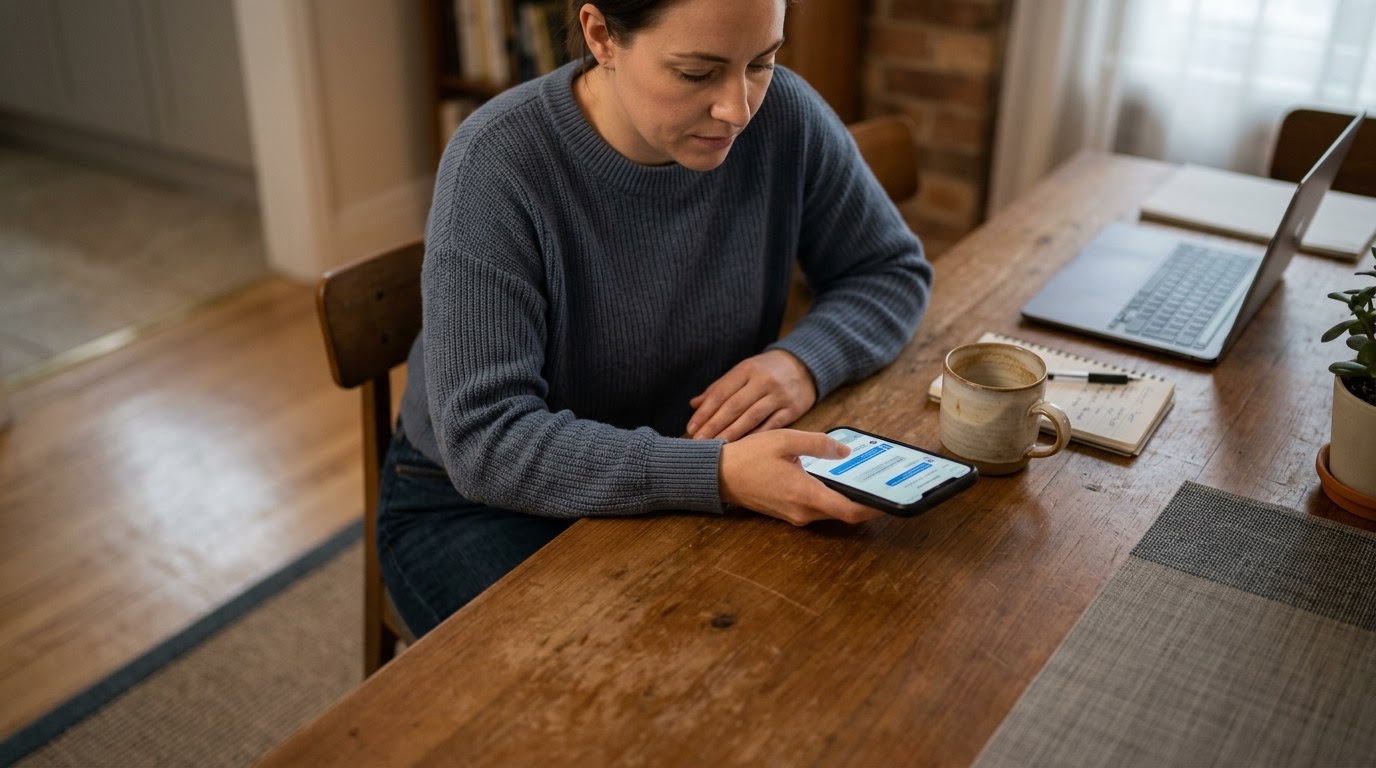
Selling unused items on local online marketplaces should be a simple way to earn extra cash and clear space in your home, but payment dispute fraud has changed the game for private sellers. When a fraudulent buyer targets your listing, they walk away with your valuable electronics or tools, leaving you with a negative account balance and no straightforward way to recover your funds. A chargeback scam happens when a buyer pays you through a mobile app or bank transfer, takes the item in person, and later contacts their bank to dispute the transaction as unauthorized. The financial loss lands squarely on you because standard payment apps rarely protect casual sellers against disputed transfers. Taking a moment to verify who you are dealing with protects your wallet, and running a TrustCheck takes 60 seconds and ties a name to a real phone, real email, and a real digital footprint.
Why Buyers Insist on P2P Apps with Limited Seller Protection
A buyer who refuses cash and insists on using a peer-to-peer payment app—a mobile application like Venmo, Zelle, or Cash App that transfers money directly between personal bank accounts—is often setting up a payment reversal. These platforms explicitly state in their terms of service that personal transactions do not include seller protection for physical goods. If the buyer files a dispute later, the app provider will pull the funds from your account.
When you list an item online, genuine buyers in your area usually carry cash or accept whatever reasonable payment method you specify. A scammer, however, will push aggressively for specific digital payment methods. They know that if they send money from a compromised account or use a credit card linked to their profile, they can call their card issuer or bank within 30 days to claim an unauthorized charge.
Consider the case of Marcus, a seller listing a gaming console for $450 on a local sales group. A buyer messaged Marcus, refusing to bring cash due to safety concerns and insisting on paying through a digital payment app upon arrival. Marcus agreed, met the buyer in a parking lot, confirmed the app showed the money in his balance, and handed over the console. Two weeks later, the app provider debited $450 from Marcus's linked bank account because the real account owner reported their login credentials had been stolen. Marcus lost both his gaming console and the money.
Why Fraudulent Buyers Send a Third Party for Item Pickup
A buyer who claims they cannot pick up the item themselves and insists on sending a relative, friend, courier, or mover is often creating distance to facilitate a bank dispute later. By ensuring they never meet you face-to-face, the person controlling the account can convincingly tell their bank or payment app that they never received the item and that their account was hijacked by an unknown party.
This tactic relies on emotional manipulation and logistics confusion. The scammer will sound enthusiastic, agree to your asking price without negotiating, and pay upfront via a digital transfer. They might claim they are purchasing the item as a birthday present for a family member or that their busy work schedule prevents them from coming in person.
For instance, Sarah listed a high-end camera for $1,200. A buyer messaged saying he was currently out of state on business but wanted to buy it for his sister who lived locally. He sent $1,200 via a peer-to-peer payment transfer and instructed Sarah to hand the camera to his sister in a grocery store parking lot. Sarah verified the money was in her digital wallet and completed the handoff. Five days later, the transaction was canceled by the sending bank as fraudulent financial activity. Because Sarah handed the camera to an unidentified third party without proof of recipient identity, she had no evidence to support a claim.
What a Brand-New Profile with Zero Marketplace History Indicates
A marketplace profile created within the last few days, possessing no public friends list, zero feedback reviews, and an empty activity timeline, is a clear sign of a temporary account. Fraudulent buyers regularly create disposable profiles—often referred to as burner accounts—to carry out unauthorized purchases without revealing their real identities or risking an established profile.
While everyone starts as a new user at some point, legitimate buyers with fresh profiles will typically understand your caution and accommodate safe transaction steps. Scammers operating burner accounts will press for immediate action, ignore questions about their account age, and push for quick digital payment handoffs before platform moderators detect and ban their account.
Imagine David, who listed a set of power tools for $600. He received an inquiry from an account that was created just two hours prior, featuring a stock photo of a landscape as the profile picture. The buyer made a full-price offer within minutes and asked to complete the payment immediately. When David asked why the profile was new and requested to speak over the phone, the buyer became evasive and demanded the item be held for digital payment. David declined the transaction, avoiding a classic burner account fraud attempt.
Why Buyers Overpay via Digital Transfer and Request a Refund
An overpayment scam occurs when a buyer transfers more money than the agreed sales price and asks you to refund the difference via cash or a separate payment app. The initial transfer is made using stolen funds or a fraudulent check deposit, which will eventually be canceled by the bank, while the refund you send comes directly out of your genuine account balance.
This scheme takes advantage of the delay between when a digital payment platform shows funds as available and when the underlying banking system officially settles the transaction. Sellers see the inflated balance in their digital wallet, assume the money is safe, and feel an obligation to return the extra money promptly.
Elena experienced this when selling a dining set for $300. The buyer sent a digital payment of $800, claiming it was an honest mistake made by their assistant. The buyer politely asked Elena to send back the $500 difference through a second app to cover the delivery driver's fee. Elena transferred the $500. Three days later, the initial $800 payment was identified as an account takeover—an unauthorized access event where a fraudster breaks into a user's bank account—and was entirely reversed. Elena lost the $500 she sent out of pocket plus the fees charged by her bank.
Why Scammers Quickly Move Communication Off the Platform
Scammers want to move you off the marketplace messaging system onto SMS text messages, third-party chat apps, or personal email as fast as possible. They do this to avoid the platform's automated detection tools, which scan messages for known scam patterns, external links, and suspicious payment requests.
Off-platform communication also deprives you of official support. Marketplace platforms keep logs of in-app chats, which can serve as evidence if a dispute arises. Once you leave the platform, the service provider loses visibility into the agreement, making it nearly impossible for their support staff to assist you if a buyer later claims you never delivered the item.
According to a 2024 Federal Trade Commission report, digital payment app fraud and scam complaints resulted in over $210 million in reported consumer losses. A significant portion of these losses originated from conversations that were intentionally migrated away from protected marketplace platforms to unmonitored text messaging channels.
How Chargebacks and Bank Disputes Work Against Private Sellers
A chargeback is a formal transaction reversal initiated by a card issuing bank or financial institution on behalf of a account holder. When a fraudster uses stolen debit card details, stolen bank logins, or compromised payment app accounts to pay for your item, the real account holder eventually discovers the fraudulent charge and reports it. The bank initiates a chargeback, which immediately clawbacks the funds from the receiving payment app.
Unlike commercial businesses that budget for chargeback costs and process payments through merchant accounts with formal dispute management tools, individual peer-to-peer accounts offer no leverage. Payment apps view casual sellers as private consumers, not registered businesses. When a chargeback hits a peer-to-peer service, the company typically deducts the disputed amount from your balance automatically, leaving your account negative if you have already withdrawn the cash.
The Better Business Bureau reported in 2025 that roughly 45% of peer-to-peer payment fraud cases involved compromised accounts used to buy physical goods locally. As of November 2026, banking regulations heavily favor financial account owners who suffer unauthorized identity theft, meaning the burden of loss almost always lands on the seller who accepted an unverified digital transfer.
Safe vs. Scam Buyer Behavior: A Side-by-Side Comparison
Distinguishing between an honest local buyer and an account-takeover scammer comes down to observing how they handle logistics, payment discussions, and personal identification. Honest buyers prioritize inspecting the item and negotiating a fair price, whereas fraudulent buyers focus heavily on non-refundable payment arrangements, third-party handoffs, and hasty transactions.
| Dimension | Safe Buyer Behavior | Scam Buyer Behavior |
|---|---|---|
| Payment Preference | Brings cash for local pickup or agrees to meet inside a bank branch for electronic transfers. | Insists on peer-to-peer payment apps, overpays unexpectedly, or offers digital checks. |
| Communication Channel | Keeps messages inside the marketplace app until a pickup location and time are finalized. | Demands your personal phone number, email address, or messaging app username immediately. |
| Account History | Has an established profile with visible activity, local friends, or historical ratings. | Uses a brand-new profile created recently with no friends, listings, or review history. |
| Pickup Logistics | Meets you in person at a public, well-lit location or local police safe-exchange zone. | Sends an unidentified third party, courier service, or family member to pick up the item. |
| Transaction Speed | Asks practical questions about item condition and arranges a convenient meeting time. | Pushes for immediate handoff, rushes the transaction, or ignores item condition details. |
What to do if you spot these signs
If a potential buyer displays any of these warning signs, you must stop the transaction flow immediately and establish strict security boundaries before proceeding. Following a structured set of safety steps keeps your physical items secure and ensures you do not fall victim to irreversible digital payment reversals.
- Decline non-cash payments for local pickups: Firmly state that you only accept paper cash for in-person pickups. If the buyer claims they cannot get cash, offer to meet them inside their bank branch where they can withdraw cash directly at the counter.
- Verify buyer identity before handoff: Run a TrustCheck to quickly verify the buyer's real name, email, and phone history before agreeing to hand over high-value items.
- Keep all conversations on the marketplace platform: Refuse requests to text, email, or chat on external applications. If the buyer refuses to communicate on the platform, cancel the sale and block the user.
- Choose a secure exchange location: Meet at a designated police station safe-exchange zone or a busy public location with high-definition surveillance cameras. Avoid inviting unknown buyers to your home or meeting in secluded parking lots.
- Document the handoff complete with receipts: Take a photo of the buyer with the item in the public meeting space and write a quick paper bill of sale that both parties sign, stating the item was inspected, accepted, and paid for in cash.
Trusting your gut feeling when a deal feels off is your best defense against complex marketplace scams. You do not need to become a fraud expert to protect your hard-earned money and personal safety during a sale. Taking 60 seconds to perform identity verification through TrustMatch gives you immediate clarity, letting you clear out your garage or sell your old laptop with total confidence.
Frequently asked
What is a chargeback scam on local marketplaces?
A chargeback scam happens when a buyer pays for an item using a digital app or credit card, takes the item in person, and then tells their bank the charge was unauthorized. The bank reverses the money, pulling it out of your account while the buyer keeps your item.
Why shouldn't I accept Venmo or Zelle for marketplace sales?
Peer-to-peer apps generally do not provide seller protection for personal transactions involving physical goods. If the sender used a hacked account or stolen card, the payment app will reverse the funds when the account owner reports the fraud, leaving you without cash or protection.
What should I do if a buyer overpays for an item?
Never refund an overpayment to a buyer via cash or a separate digital app. Overpayments are almost always made with stolen funds or fraudulent transfers that will be reversed later. Tell the buyer you are canceling the entire transaction and report the profile to the platform.
Are cash transactions completely safe for local selling?
Cash is the safest payment method for local marketplace sales because it cannot be digitally charged back. To stay safe, meet in a public location or bank lobby where you can verify the bills and complete the exchange under visible security cameras.
Can I dispute a payment app chargeback as a private seller?
Disputing a chargeback on a peer-to-peer app as an individual seller is very difficult. Because personal transfers lack seller protection, payment platforms usually side with the account owner's bank report of unauthorized activity, making proof of physical delivery insufficient to reverse the decision.
More in Safety
- How to Spot Fake Event Invitations Sent by Online Dating Matches
November 13, 2026
- What to Do When a Dating Match Takes Photos of You Without Permission
November 11, 2026
- What to Do When a Local Marketplace Seller Insists on Shipping
November 9, 2026