What to Do When a Dating Match Takes Photos of You Without Permission
· 9 min read
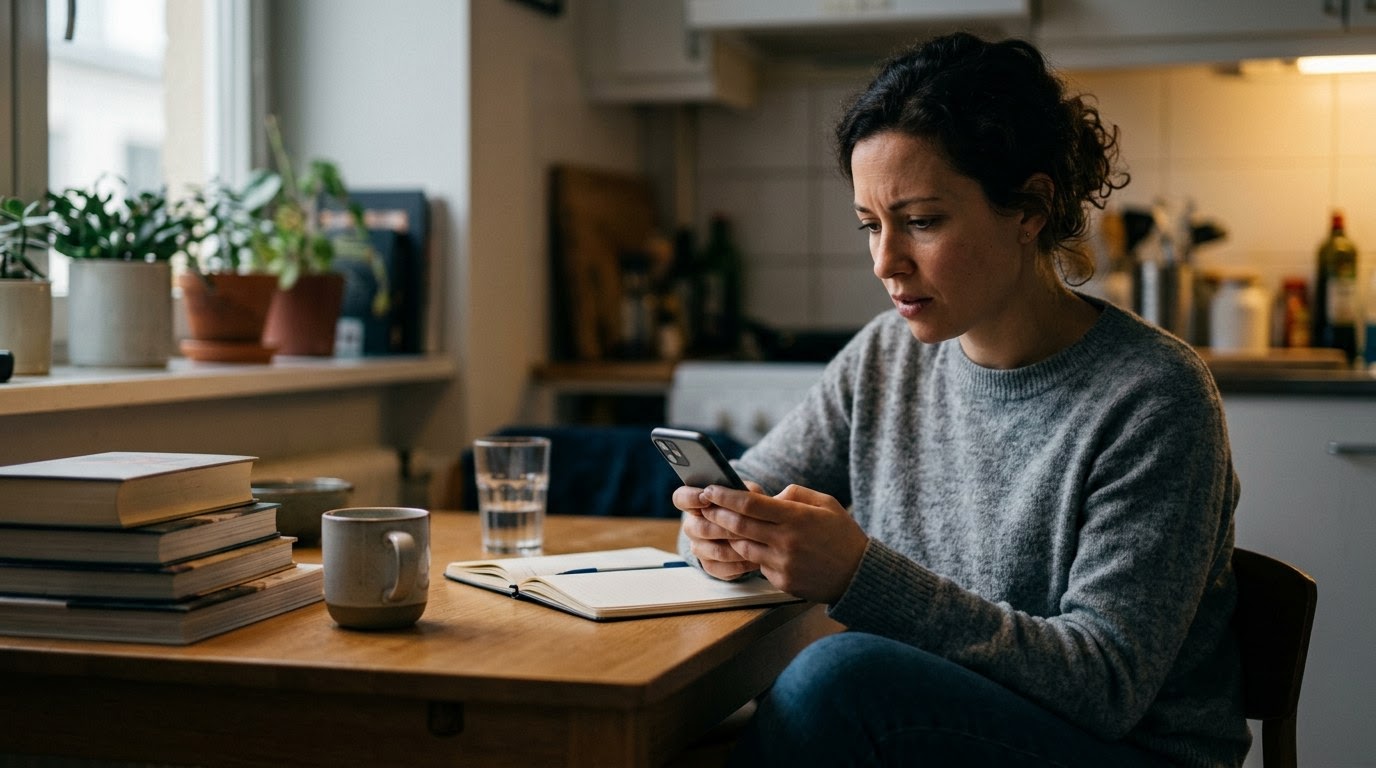
You sit down for coffee or drinks with someone you met on an app, and midway through the conversation, you notice their phone angled directly at you. Maybe you hear a quiet camera shutter, or maybe they awkwardly hold their device up while pretending to scroll through a text. That sudden, sinking feeling in your stomach is worth paying attention to. When a dating match takes your photo without asking, they cross an immediate personal boundary. While some people are simply oblivious to modern digital etiquette, others harvest imagery for catfishing—creating a fake online persona to deceive others—or for extortion and doxxing, which means publishing your private personal details online without your consent. Getting this situation wrong can lead to emotional distress, persistent harassment, or compromised digital accounts. Before you get deeper into a relationship with someone who makes you feel uneasy, running a TrustCheck takes 60 seconds and ties a name to a real phone, real email, and a real digital footprint.
The Subtle Phone Angle: Taking Sneaky Snaps Across the Table
When a date subtly angles their phone to capture images of you without your knowledge, it usually means they are trying to record your appearance while avoiding a direct conversation about consent. This behavior often points to a lack of respect for personal space, or in worse cases, an intent to use your image for unauthorized online profiles. Pay attention if their phone rests propped against a cup or stays pointed at your chest height during dinner.
Consider what happened to Sarah during a dinner meeting in Chicago. As of November 2026, Sarah had been chatting with a match for two weeks before meeting at a local restaurant. Halfway through their meal, she noticed his phone was propped against a salt shaker with the front camera pointed directly at her face. Every time she shifted in her seat, he adjusted the phone's position. When she asked if he was taking a video, he quickly turned the phone screen-down and claimed he was just checking work messages. Trusting her gut, Sarah cut the date short. She later discovered that predatory users often record candid videos during dates to take screenshots for online forum rating threads or fake social media profiles.
Taking covert photos across a table removes your agency. In a healthy dating dynamic, a match will always ask before snapping a picture, giving you the choice to opt out without feeling pressured or uncomfortable.
The Excessive Memory Push: Aggressive Demands for Unfiltered Photos
An aggressive demand for photos on a date usually signals that your match is focused on collecting visual content rather than building a genuine human connection. If someone insists on filming videos of you eating, holding your hand up for close-up shots, or taking multiple candid photos despite your clear discomfort, they are overriding your boundaries for their own motives. Scammers often look for natural, candid photos of real people to make fake dating profiles look authentic.
Take the experience of Marcus, who met a match for a casual coffee date. Throughout the hour-long meetup, his date repeatedly pulled out her phone, insisting on taking close-up photos of him smiling, walking, and holding his coffee cup. When Marcus gently said he was camera-shy and preferred not to have his photo taken, she laughed it off and took three more shots. She insisted she just wanted to "keep memories" of their first meeting. Days later, Marcus found out from a friend that his candid coffee photos were being used in a regional catfishing account across multiple messaging apps. The match was using his real-time candid photos to prove to other victims that "he" was a real person living locally.
A legitimate match will respect a simple "I prefer not to be on camera today." When someone ignores that boundary, they show you that their desire for your image matters more than your comfort.
Capturing Identifiable Details: Focusing on Cars, Houses, or Badges
If a dating match photos your license plate, work ID badge, apartment building entry, or personal belongings, they are gathering sensitive private information. This pattern goes far beyond standard dating photos and moves into surveillance. Capturing unique identifiers allows someone to locate your workplace, discover your home address, or run unauthorized reverse searches on your private life.
Elena experienced this firsthand after inviting a match to meet her outside her apartment complex before walking to a nearby bistro. While she was grabbing her jacket from her car trunk, she noticed him standing near the back bumper, holding his phone up to snap a clear shot of her license plate and parking pass sticker. When she confronted him, he claimed he was just taking a photo of a "cool bumper sticker." Uncomfortable with the evasive answer, Elena cancelled the walk and went straight back inside her apartment. By capturing her license plate, he could have paid for online records to find her full legal name, registration details, and prior home addresses.
There is never a legitimate safety or social reason for a first date to secretly photograph your private vehicle, workplace credentials, or home door number. Treat any deliberate capturing of personal property identifiers as a major security red flag.
Refusing or Deflecting When Asked to Delete Images
When you ask a match to delete a photo taken without your permission, their reaction tells you everything you need to know about their integrity. A respectful person apologizes immediately and deletes the image in front of you, including purging it from their phone's recently deleted folder. A bad actor will become defensive, minimize your concern, accuse you of being paranoid, or flatly refuse to delete the file.
A 2024 FBI report revealed that romance scams and associated online extortion cases resulted in more than $1.3 billion in reported losses. Many of these extortion tactics rely on unauthorized personal images combined with coercive social pressure. When a match refuses to delete a photo, they maintain leverage over your privacy that you did not agree to give them.
Common deflection tactics include saying things like, "You're overreacting," "I already sent it to my mom to show her how cute you are," or "It's a free country, I can take photos in public." None of these excuses change the reality: your personal image belongs to you, and a refusal to delete it shows a concerning lack of respect for your bodily autonomy and safety.
Why Dating Scammers and Stalkers Secretly Collect Your Photos
Understanding why someone takes secret photos helps demystify the behavior and removes any self-doubt about enforcing your boundaries. Scammers, catfish, and stalkers do not capture covert imagery by accident; they do it because real human photos carry high monetary and social value in digital fraud circles.
Here are the primary motives behind unauthorized dating photos:
- Catfish Profile Creation: High-resolution, candid photos taken from multiple angles allow scammers to build convincing fake profiles on dating apps and social networks.
- Sextortion and Blackmail: Extorting money or favors by threatening to release private, modified, or compromising images. Scammers sometimes crop unauthorized photos into explicit scenes using digital editing tools.
- Doxxing and Harassment: Publishing private personal details online without your consent to invite harassment from online groups or anonymous trolls.
- Verification Scams: Using photos of your face to bypass simple facial-recognition checks on secondary communications apps or social platforms.
- Identity Impersonation: Matching your facial photos with public data to impersonate you to your friends, family, or professional contacts.
According to a 2025 FTC dataset, reported incidents of online identity theft and personal photo misuse jumped by 18% in a single year. The risk is not hypothetical. Protecting your image rights is an essential part of maintaining your personal security in modern dating.
Legal Boundaries and Digital Privacy Rights on Dates
Navigating photo privacy requires understanding the difference between public spaces and private expectations. Legally, the context of where a photo is taken plays a significant role in what rights you have, but personal boundary enforcement does not require a court of law.
In most jurisdictions, people have a lower expectation of privacy in fully public places like city parks or open sidewalks. However, inside private businesses, restaurants, personal vehicles, and residential spaces, you maintain a strong expectation of privacy. Furthermore, taking covert photos for commercial gain, impersonation, harassment, or non-consensual explicit editing violates specific privacy laws, civil codes, and platform terms of service across North America and Europe.
You do not need to prove a legal violation to protect yourself on a date. If someone's photo-taking behavior makes you feel unsafe or disrespected, you have absolute authority to end the date, revoke access to your social profiles, and cut off communication immediately.
| Dimension | Safe Match Behavior | Scam or Red-Flag Behavior |
|---|---|---|
| Photo Consent | Asks politely before taking any picture and respects a "no." | Takes photos covertly, uses hidden angles, or snaps pictures despite objections. |
| Reaction to Boundaries | Apologizes immediately and deletes photos if you express discomfort. | Gets angry, gaslights, calls you paranoid, or refuses to open their photo gallery. |
| Targeted Details | Focuses on shared memories, scenery, or mutual poses with permission. | Sneaks photos of license plates, house numbers, work IDs, or financial items. |
| Digital Footprint | Has verifiable online profiles that match their real-life identity details. | Has zero online history, unlinked social media, or uses obviously stolen images. |
| Personal Inquiries | Asks standard conversation questions about your interests and hobbies. | Pry into your financial status, living arrangements, home security, or daily routine. |
What to do if you spot these signs
If you realize your dating match is secretly snapping photos of you or recording you without your permission, follow these concrete steps to protect your personal privacy and safety immediately.
- State your boundary clearly and directly. Look your match in the eye and say calmly: "I noticed you taking photos of me. I am not comfortable being photographed without my permission. Please delete those photos right now." Keep your voice steady and non-confrontational, but leave no room for debate.
- Observe their reaction and check their recently deleted folder. A trustworthy person will apologize and show you their gallery screen while deleting the images. Remind them to permanently delete the files from their phone's trash folder, as modern smartphones keep deleted items for 30 days unless manually purged.
- Run an identity check using TrustMatch to verify their profile. If their phone behavior left you feeling suspicious about their identity, verify who you are actually dealing with by running a TrustCheck on their contact information. Confirming that their phone number and name tie back to a real digital footprint helps ensure you aren't dealing with a career catfischer or professional scammer.
- Exit the date safely and quietly. If the individual becomes hostile, defensive, or refuses to delete the photos, do not escalate the argument. Excuse yourself to the restroom or state clearly that you need to leave. Walk to a populated, well-lit area, and do not let them follow you to your car or home.
- Block their accounts and perform a reverse image search. Once you are safe, block their phone number and dating app profile. Run a reverse image search on any photos they sent you previously to see if their profile pictures belong to someone else. Report the profile to the dating platform's safety team, explaining that the user was secretly photographing you without consent.
Your safety and peace of mind always come first. You never owe anyone a second chance when they cross clear privacy boundaries on a first date. Trusting your instincts is the most reliable tool you have for staying safe online and off. When your instincts tell you something is off, take a moment to run a TrustCheck and confirm you are dealing with a real, transparent person before continuing the conversation.
Frequently asked
Is it illegal for a date to take my photo without permission?
It depends on the location and context. Taking photos in private spaces like apartments or private venues often violates privacy laws. Even in public spaces where photo laws are looser, using your photos for harassment, doxxing, or catfishing is illegal. Regardless of legal technicalities, taking covert photos on a date is a serious personal boundary violation.
What should I do if my match refuses to delete the photos they took?
Do not escalate the argument or put yourself in physical danger. Excuse yourself calmly, leave the venue, and head to a safe, well-lit location. Once you are safe, report the user to the dating platform, block their contact information, and secure your personal social media accounts.
How can scammers use candid photos taken during a date?
Scammers use candid photos to build convincing fake profiles, execute catfishing schemes, or bypass basic identity checks on secondary platforms. Candid pictures look authentic to other potential victims, making them valuable assets for fraud rings and identity thieves seeking realistic social media profiles.
How do I know if my photos are being used online by a scammer?
You can perform a reverse image search by uploading your photos to search engines like Google Images, TinEye, or specialized face-recognition search tools. If your image appears on unfamiliar social media profiles, dating sites, or online forums under a different name, report those profiles immediately.
Should I report a date to the dating app for taking secret photos?
Yes. Dating apps strictly prohibit predatory behavior, harassment, and non-consensual photo recording. Reporting the user helps the platform investigate their account, ban their profile, and protect other users from potential catfishing, extortion, or privacy invasion.
More in Safety
- How to Spot Fake Event Invitations Sent by Online Dating Matches
November 13, 2026
- What to Do When a Local Marketplace Seller Insists on Shipping
November 9, 2026
- How to Handle Marketplace Buyers Who Send Third Party Pickup Drivers
November 6, 2026