How to Handle Online Matches Who Request Verification Codes
· 10 min read
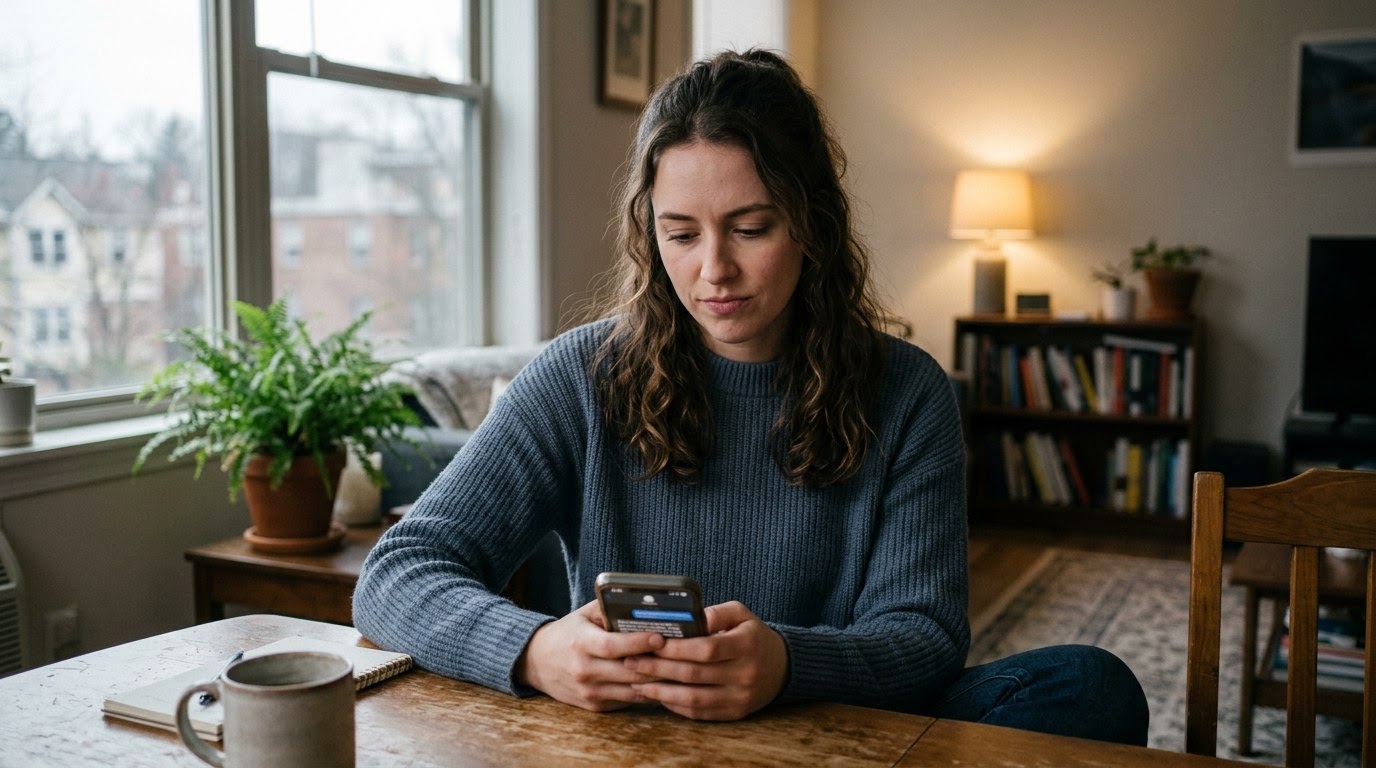
You meet someone intriguing on a dating app or online marketplace, and the conversation flows smoothly until they suddenly ask you to send them a code sent to your phone. This maneuver is almost always an account takeover attempt designed to compromise your digital accounts, drain your funds, or steal your identity. Falling for this tactic can cost you full access to your social media, email, or messaging profiles within minutes, leaving you financially exposed and emotionally shaken. Knowing how to handle online matches who request verification codes starts with recognizing that legitimate contacts will never ask you to act as an authentication middleman, and running a TrustCheck takes 60 seconds and ties a name to a real phone, real email, and a real digital footprint.
They Claim They Need a Code to Prove You Are a Real Person
When an online match claims they need you to receive a text code to prove you are not a bot, they are attempting to trick you into authorizing an action on your own account. Legitimate apps do not require users to verify each other through third-party SMS codes. For example, Marcus met Sarah on a dating platform, and after two hours of chatting, Sarah sent a six-digit code to his cell phone asking him to read it back so she could verify he was real. Marcus sent the code, and within seconds, he was permanently locked out of his personal email address.
This tactic plays on your desire to establish trust early in a relationship. The scammer knows that safety is a major priority for online dating users, so they frame their malicious request as a reasonable safety measure. By flipping the script and acting like the cautious party, they bypass your natural defenses. You feel compelled to cooperate because you want to show you have nothing to hide and that you respect their safety boundaries.
In reality, the code sent to your phone is a One-Time Password (OTP) generated by an online service where you already have an account, or where the scammer is trying to create one under your phone number. Common targets include banking portals, social media accounts, and secondary email providers. When you read that code back to them, you hand them the master key to bypass your two-factor authentication defense. Two-factor authentication is a security feature that requires two separate forms of identification before granting access to an account.
As of August 2026, account hijacking through social engineering remains one of the primary tactics used by fraud syndicates to target online daters. FTC report data from 2024 revealed that reported losses from imposter and scam verification requests reached over $1.1 billion nationwide. Once a scammer accesses your account using a verification code, they quickly change the associated recovery email and phone number, effectively cutting off your ability to restore access.
They Ask You to Forward a Google Voice or Text Verification Code
A match requesting a code from Google Voice or an SMS gateway is trying to tie a virtual phone number to your actual cell phone line. Scammers use this method to generate anonymous numbers for illegal activities while leaving you legally liable for their actions. Consider Elena, who posted an item on a local marketplace and received a message from a buyer who insisted on sending a verification code to ensure she was genuine. Elena provided the code, unknowingly allowing the scammer to set up a Google Voice account linked directly to her wireless contract.
Google Voice and similar VoIP (Voice over Internet Protocol) services require a physical phone number to register a new account. VoIP is a technology that allows users to make voice calls using a broadband internet connection instead of a regular phone line. Scammers constantly need new, non-traceable phone numbers to carry out romance scams, marketplace fraud, and phishing campaigns. Because platforms block virtual numbers from self-registering without verification, scammers rely on unsuspecting victims to supply real wireless numbers.
When you share that verification code, the scammer successfully links their newly created Google Voice number to your actual mobile carrier profile. From that point forward, they can place calls and send texts anywhere in the world while using a virtual number anchored to your real identity. If law enforcement investigates fraudulent activity tied to that virtual number, the trail leads straight to your personal wireless billing record.
Reclaiming your number from a secondary service scam requires immediately contacting the service provider to unlink your mobile number. You must register for a new account with that specific service using your real phone number, which automatically reclaims your number from the unauthorized profile. However, preventing the issue by recognizing the red flag early remains your best line of defense.
They Send You an External Verification Link from an Unfamiliar Site
If a match sends a web link leading to a third-party site claiming to offer romance safety verification or ID checks, you are facing a credentials phishing trap. These sites look authentic but are designed solely to capture your full name, credit card details, and personal phone number. Take David, who connected with an attractive woman on a social application. She insisted he register on a safety portal by paying a one-dollar authorization fee before meeting. David entered his card details, only to discover $500 in unauthorized recurring charges on his statement days later.
Phishing is a cybercrime where targets are contacted by email, telephone, or text message by someone posing as a legitimate institution to lure individuals into providing sensitive data. Fake verification portals often use domain names that sound legitimate, combining words like safe, meet, verify, or date. Scammers invest time crafting professional-looking homepages featuring fake customer testimonials, security badges, and professional typography to reduce your skepticism.
Once you click the link provided by your match, the page asks you to create a profile by entering sensitive information. This frequently includes your full legal name, date of birth, home address, social security number, and payment card details under the guise of paying a nominal identity check fee. The site processes no actual identity check; instead, it harvests your credentials and sells them on illicit internet forums or uses them to drain your bank accounts.
No legitimate dating match or casual seller will ever mandate that you register on an obscure, third-party verification platform before conversing or meeting. Authentic identity safety tools never force you to expose your financial information to an unverified third party selected by a stranger. Recognizing these fake portal links prevents identity theft before it starts.
They Claim Their Account Is Locked and Need Your Phone Number to Fix It
When an online acquaintance claims they are locked out of their profile and need to send an emergency recovery code to your phone, they are actively attempting to hack your existing account. Scammers exploit your empathy by manufacturing an urgent, frustrating technical emergency. For example, Chloe received a message from a new match claiming his account was glitching and that he had listed her phone number as an emergency contact. He asked her to forward the prompt code he sent. Chloe forwarded it and instantly lost access to her Instagram account.
This manipulative technique relies heavily on artificial urgency. Scammers know that when people believe someone is in distress or experiencing a stressful inconvenience, their critical thinking skills decrease. They present a smooth, plausible explanation: their phone was lost, their account was compromised, or the platform requires a friend's phone number to complete account recovery steps.
What is actually taking place behind the scenes is simple: the scammer entered your username or email address into the standard "Forgot Password" tool on a major platform like Instagram, Facebook, Snapchat, or WhatsApp. The platform then generates an authentic password reset link or six-digit SMS code and sends it to the account holder—which is you. The scammer cannot see this code because it goes straight to your device.
By convincing you that the incoming code belongs to them or was meant to help them regain access, they trick you into delivering the final piece of data required to take over your profile. Once inside, they alter the password, turn on two-factor authentication tied to their own device, and begin messaging your friends and family requesting emergency money transfers.
They Ask for a Code Right After Moving the Conversation Off-App
A match who immediately urges you to move off a dating app to text or WhatsApp, followed quickly by a verification request, is executing a classic account takeover workflow. Scammers prefer off-platform messaging because built-in dating app security algorithms continuously scan chat logs for malicious patterns. James matched with a profile on a major dating service, and within three messages, the match requested his personal phone number. Moments after texting her, James received a verification code prompt and a request to forward it immediately.
Mainstream dating applications employ sophisticated automated safety controls designed to protect users. These algorithms detect trigger phrases, suspicious link sharing, rapid copy-pasting of identical messages, and unusual login locations. To evade detection and account suspension, scammers prioritize moving you off the monitored app onto unmonitored SMS channels, Telegram, or WhatsApp as fast as possible.
Once the conversation leaves the safe environment of the dating app, the security guardrails vanish. The scammer no longer worries about getting banned by moderation teams while attempting an account hijack. They hit you with the verification code request shortly after switching apps while the conversational momentum is high and your trust feels active.
Moving off-app is not inherently dangerous when dealing with genuine matches, but the timing matters significantly. When a request to leave the platform occurs within the first few exchanges—especially when tied to phone number requests or system codes—it signals a systematic script designed to bypass safety features.
Comparing Safe vs. Scam Communication Patterns
Distinguishing between genuine romantic interest and a calculated security exploitation attempt comes down to observing behavioral patterns over time. Honest online matches respect your privacy, communicate at a natural human pace, and never make technical demands. Review the operational differences detailed in the table below to help evaluate your current interaction.
| Dimension | Safe Behavior | Scam Behavior |
|---|---|---|
| Response Time | Natural, realistic gaps reflecting daily work and social life. | Instant replies around the clock, followed by intense, urgent code requests. |
| Verification Requests | Relies on built-in app verification badges or voluntary video calls. | Demands SMS codes, Google Voice links, or payment on obscure websites. |
| Platform Movement | Willing to stay on the main dating app until trust is established. | Pushes aggressively to leave the app within the first few text exchanges. |
| Reaction to Boundaries | Respects your refusal to share codes or links without pressure. | Becomes angry, defensive, guilt-tripping, or immediately cuts contact. |
| Money and Security Topics | Focuses on common interests, shared hobbies, and personal stories. | Introduces technical issues, emergency recovery codes, or financial sites early. |
What to Do If You Spot These Signs
If you encounter any of these red flags during an online interaction, take fast, methodical action to protect your personal information and personal accounts. Follow these steps immediately to neutralize the threat and secure your digital footprint.
- Never share the code and cease communication. Do not respond to requests for one-time passwords, login codes, or external link clicks. Block the profile across all platforms immediately without engaging in further debate.
- Verify the person independently. Run a TrustCheck on the person's phone number or name before continuing communication to ensure their online identity matches real-world records.
- Audit and secure your vulnerable accounts. If you accidentally disclosed a code, immediately open the target platform, trigger a password reset, and revoke all active logged-in sessions across unknown devices.
- Report the fraudulent account to the platform. File an official abuse report on the dating app or social media platform where you first connected, providing screenshots of the code request to protect other users.
- Place a freeze on your identity credentials. If you entered sensitive financial details on a fake verification website, contact your bank to replace compromised cards and consider placing a credit freeze with major reporting bureaus.
Trusting Your Instincts Keeps You Safe
It is completely normal to feel uncertain when an online conversation takes an unexpected technical turn, but trusting your hesitation is your best line of defense. Scammers count on speed, confusion, and politeness to carry out account takeovers, but you always have the right to slow things down or walk away entirely. No identity check can guarantee a safe transaction. A TrustCheck tells you whether the details someone gave you are consistent with one real identity — the judgement, and the risk, stay with you.
Frequently asked
Why do scammers ask for verification codes?
Scammers ask for verification codes to bypass two-factor authentication on your existing online accounts or to register new services using your personal phone number. By acquiring the code sent to your device, they can reset your passwords, take over your social media profiles, or set up virtual phone lines under your legal identity.
What should I do if I already gave a verification code to a match?
If you shared a code, immediately log into the affected service and change your password. Force a logout on all other active devices through your account settings and enable authenticator-app-based two-factor authentication. If you are locked out, contact the customer support team of that service right away to initiate identity recovery.
Can someone hack my phone just by sending me a text code?
Simply receiving an automated verification text code will not hack your phone. The security risk only occurs if you forward that code, read it aloud, or type it into a suspicious website sent by the scammer. As long as the code remains private on your device, your account stays secure.
How can I safely verify if an online match is real?
You can verify an online match safely by requesting a live video call through the dating application or using reputable independent identity verification services. Real matches will never require you to pay money on unknown third-party websites or ask you to forward security text codes to prove your identity.
What is a Google Voice verification scam?
A Google Voice verification scam occurs when a fraudster uses your personal phone number to create a virtual Google Voice number for themselves. They trigger a registration code to your cell phone and convince you to share it, allowing them to make untraceable calls while linking the account to your real identity.
More in Safety
- How to Avoid Paying Deposit Scams When Renting Equipment Privately
September 23, 2026
- How to Safely Plan Outdoor First Dates With Online Matches
September 21, 2026
- What to Do When an Online Match Asks for Your Driver License
September 18, 2026