How to Protect Your Privacy When Sharing Social Media With Online Matches
· 8 min read
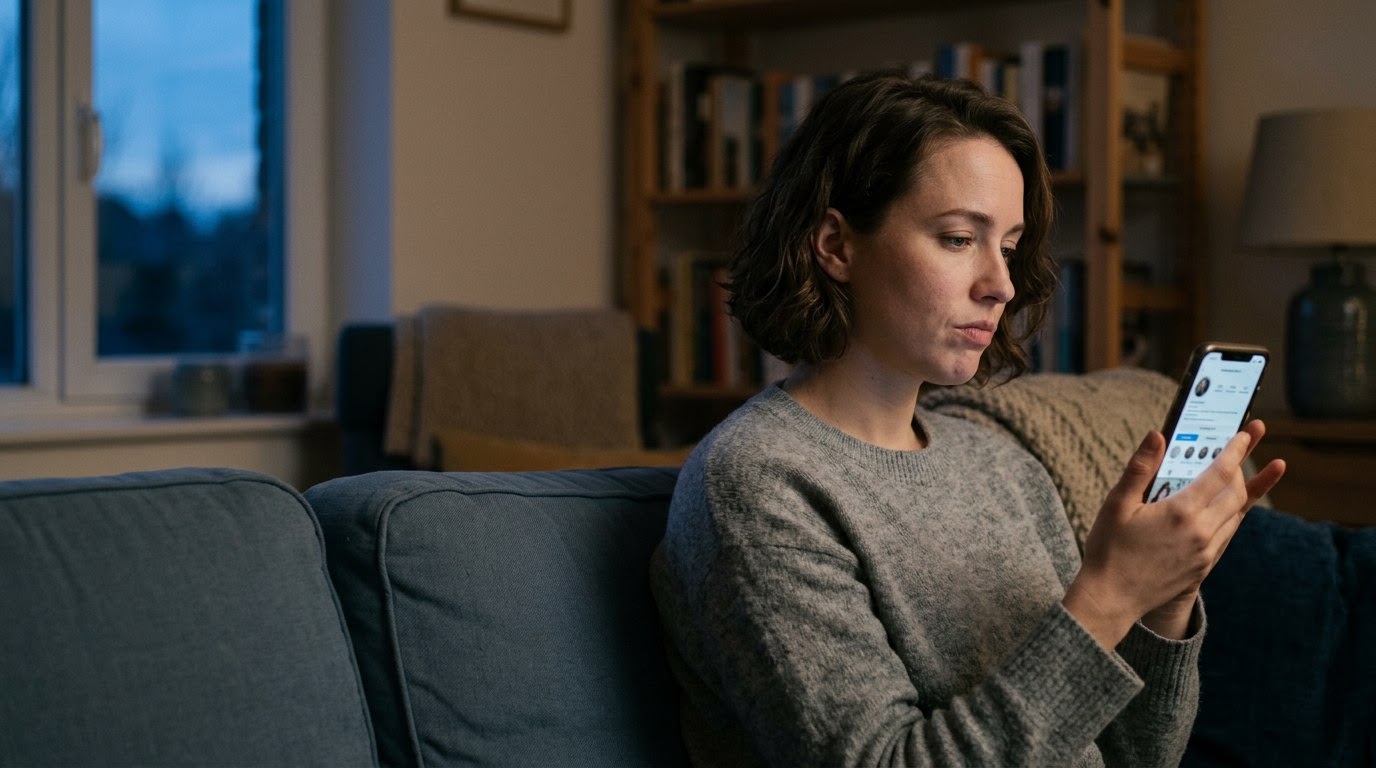
You meet someone online, the conversation flows easily, and within a few messages, they ask for your Instagram handle or Facebook profile. It feels like a natural step toward building trust, but sharing your social media profiles too early can open the door to targeted manipulation. When a scammer gets access to your public profiles, they gain a roadmap of your life, including where you work, who your friends are, and what your daily routine looks like. Getting this wrong can lead to costly consequences, ranging from stolen identity details to emotional manipulation and financial loss. Protecting your personal boundaries does not mean being overly paranoid; it simply means keeping your private life safe until you know who you are actually talking to, and running a TrustCheck takes 60 seconds and ties a name to a real phone, real email, and a real digital footprint.
Why Online Matches Ask for Your Social Profiles Right Away
When an online match asks for your social media handles almost immediately, it is often a tactic to extract personal information before establishing genuine trust. Scammers analyze your public photos, friends list, and tagged locations to construct a detailed personal profile. This technique, known as open-source intelligence—the practice of collecting publicly available data to analyze a target—allows them to tailor their conversation to your exact interests and vulnerabilities.
Most real connections move at a reasonable pace. Someone who respects your boundaries will not press you for off-platform contact details within the first few messages. However, scammers push to move off dating platforms quickly because internal monitoring systems flag suspicious keywords or account behavior. Moving to social media or direct messaging gets them out of the platform's safety checks.
Consider a composite example: Sarah matched with someone named David on a dating app. Within ten minutes, David asked for her Instagram handle, claiming he rarely checked the dating app. Once she shared it, David browsed her posts from the past three years. He noticed her love for golden retrievers, her weekend hiking spots, and her favorite local coffee shop. The next morning, he sent her messages pretending to share those exact hobbies, creating a rapid, artificial feeling of compatibility.
According to FTC data published in 2024, social media scams resulted in total reported consumer losses exceeding $1.4 billion.
How Scammers Turn Your Daily Posts Into Manipulation
Scammers use social engineering—manipulating individuals into revealing confidential information through trust and psychological leverage—by mapping out your daily routine and sentimental connections. When you share details about your pets, favorite spots, or family members, a scammer feeds those elements back into conversation to create an artificial sense of intimacy. They make you feel like you share identical hobbies or life experiences, effectively lowering your natural skepticism.
When your social profile is completely public, every photo tells a story about your financial status, living arrangement, and personal values. A picture of your car, a snapshot from your workplace, or a post celebrating a promotion gives a fraudster valuable context. They use this information to estimate what kind of money requests you might accept or what stories will resonate with you.
Take the case of Marcus, who shared his public profile with an online match. Marcus frequently posted about caring for his elderly mother. The match quickly adapted their persona, talking at length about their own supposed experience caring for a sick relative. Weeks later, the match claimed an urgent medical bill had come up and asked Marcus for financial help. Because the emotional connection felt so real and familiar, Marcus felt compelled to help before realizing the story was entirely manufactured.
Which Social Media Details Put Your Privacy at Highest Risk
The most dangerous details to leave public on social media include real-time location tags, visible birth dates, employer names, and family tags. Geotags—data embedded in photos that reveals the exact geographical coordinates of where a picture was taken—tell strangers where you live, work, and spend weekends. Combining these details makes it easy for fraudulent actors to answer common security questions or locate your physical whereabouts without your consent.
When you share your social media handles, you are not just sharing recent photos. You are giving an unknown person access to years of archived data. Here are the specific items scammers look for when browsing your profile:
- Full name and birth date: Used to track down public records or breach account security questions.
- Workplace check-ins: Used to verify income level or construct believable workplace impersonation stories.
- Pet names and childhood memories: Frequently used to guess passwords or security answers.
- Tagged family members: Provides secondary targets for impersonation or extortion schemes.
A 2025 BBB study revealed that over 35% of online fraud reports involved scammers harvesting personal information from public profiles.
How Impostors Use Your Public Photos for Profile Cloning
Profile cloning occurs when a malicious actor saves your public photos, copies your bio details, and sets up a fake account under your name or a slight variation of it. They use your real network to message your friends, claiming you are locked out of your main account or in urgent financial distress. Keeping your profile public gives bad actors high-resolution images and context needed to execute convincing impersonation scams.
Once a scammer clones your profile, they can reach out to your close friends or followers under the guise of an emergency. Because the account displays your real photos and personal details, your acquaintances are far more likely to trust the message. This puts your reputation and your personal network at risk.
For example, Elena shared her Instagram handle with a match on a private sales group. Two days later, the match blocked her, copied all her public photos, and created a duplicate account under a slightly misspelled username. The cloned account began messaging Elena's followers, offering fake investments and asking for quick money transfers. Elena only discovered the scam after several friends reached out directly to ask if she was okay.
Why Scammers Map Out Your Friends and Family Network
Network mapping involves analyzing your public followers and tagged friends to identify the most influential or vulnerable people in your circle. Scammers target these contacts to build credibility or exploit personal relationships. If a scammer knows your sibling's name or your best friend's recent vacation spot, they can drop those names in casual conversation, tricking you into believing they belong to your social circle.
By studying who comments on your photos and who you interact with most frequently, a scammer builds an organizational chart of your personal life. They learn who you trust, who you rely on for advice, and who might be easily manipulated. If you mention a friend by name, the scammer can quickly cross-reference their profile to find shared stories or insider details that make their claims sound authentic.
Data from a 2025 FBI internet crime report showed that personal data breach incidents affected more than 50,000 victims of online identity schemes.
How to Adjust Your Privacy Settings Before Sharing Social Handles
Protecting your privacy starts with auditing your visibility settings across all active accounts before giving a handle to a new contact. Limit photo visibility to confirmed friends, disable location services on social apps, and turn off search engine indexing. Search engine indexing is when search platforms scan and archive your public profile data, making your social media pages searchable through a simple web query.
Before you hand over your handle, take five minutes to review what a total stranger can see. Set your posts to "Friends Only" or create a restricted list for new acquaintances. Remove your phone number and email address from the public view section of your profiles, as these identifiers make it easy for scammers to run cross-platform identity traces on you.
Comparing Safe Behaviors vs. Scam Behaviors
Recognizing the difference between a normal online match and a scammer collecting your data comes down to watching how they interact with your personal boundaries. Use this table to compare common behaviors:
| Dimension | Safe Match Behavior | Scam / Suspicious Behavior |
|---|---|---|
| Pace of Off-Platform Moving | Respects chatting on the app until a mutual comfort level is established over days or weeks. | Demands your phone number, social handles, or off-app chat within the first few messages. |
| Requests for Personal Info | Asks general questions about hobbies, work, or favorite movies without pressing for specifics. | Asks about exact workplaces, pet names, daily schedules, or financial history early on. |
| Use of Your Shared Details | Listens naturally and responds with their own genuine life stories over time. | Mirrors your exact background, interests, and struggles immediately after reading your profile. |
| Willingness to Video Chat | Agrees to a brief live video call before meeting in person or sharing private channels. | Makes repeated excuses (broken camera, poor connection, military duty) to avoid video verification. |
| Reaction to Privacy Boundaries | Understands completely when you choose to keep your social profiles private initially. | Becomes defensive, guilt-trips you, or claims you lack trust when you decline to share handles. |
What to do if you spot these signs
- Pause and keep the conversation on the primary platform: Refuse to move to secondary messaging apps or social channels until you feel entirely comfortable.
- Audit and lock down your profile privacy settings: Switch your accounts to private, hide your friends list, and remove location tags from past photos.
- Verify their digital footprint directly: Before sending money, meeting up, or sharing private details, running a TrustCheck takes 60 seconds and ties a name to a real phone, real email, and a real digital footprint.
- Conduct a reverse image check on their pictures: Save their profile photos and search them across search engines to ensure they are not stolen from an influencer or actor.
- Block and report suspicious profiles immediately: If the person pushes your boundaries, demands financial help, or acts aggressively when questioned, cut off contact and alert platform moderators.
Trusting your gut is always valid when connecting with someone online. You never owe an online stranger immediate access to your personal life, friends list, or daily routine. Taking a quick pause to protect your privacy and run an identity check lets you explore new relationships with clarity, confidence, and peace of mind.
Frequently asked
Why do online scammers want my Instagram or Facebook handle so quickly?
Scammers ask for social handles early to extract personal information through open-source intelligence. They use your photos, location tags, and friend lists to customize manipulation tactics, pass safety filters on dating apps, and map out your network before you spot their true intentions.
Is it safe to share a secondary social media account with an online match?
Sharing a secondary account is safer than sharing your primary profile, provided the secondary account does not contain personal details, tagged family members, or location data. However, verifying their real identity first remains the safest approach before granting any access.
What is social engineering in the context of online dating safety?
Social engineering is the psychological manipulation of individuals into revealing private information or transferring funds. Scammers harvest details from your public posts—such as past trauma, pet names, or favorite places—and feed them back to you to quickly build artificial trust and intimacy.
How can I tell if my social media photos are being used in a cloned profile?
You can check for cloned profiles by running a reverse image search on your main profile pictures periodically. Additionally, search your full name and common variations on social platforms to see if accounts using your photos and bio details have been set up without your knowledge.
What should I do if an online match gets angry when I refuse to share my social media?
If a match becomes hostile, defensive, or guilt-trips you for setting privacy boundaries, block them immediately. Genuine connections respect your safety choices. Pressuring you for off-platform contact details is a major red flag for social engineering tactics.