What to Do When an Online Match Sends Money to Your Account
· 10 min read
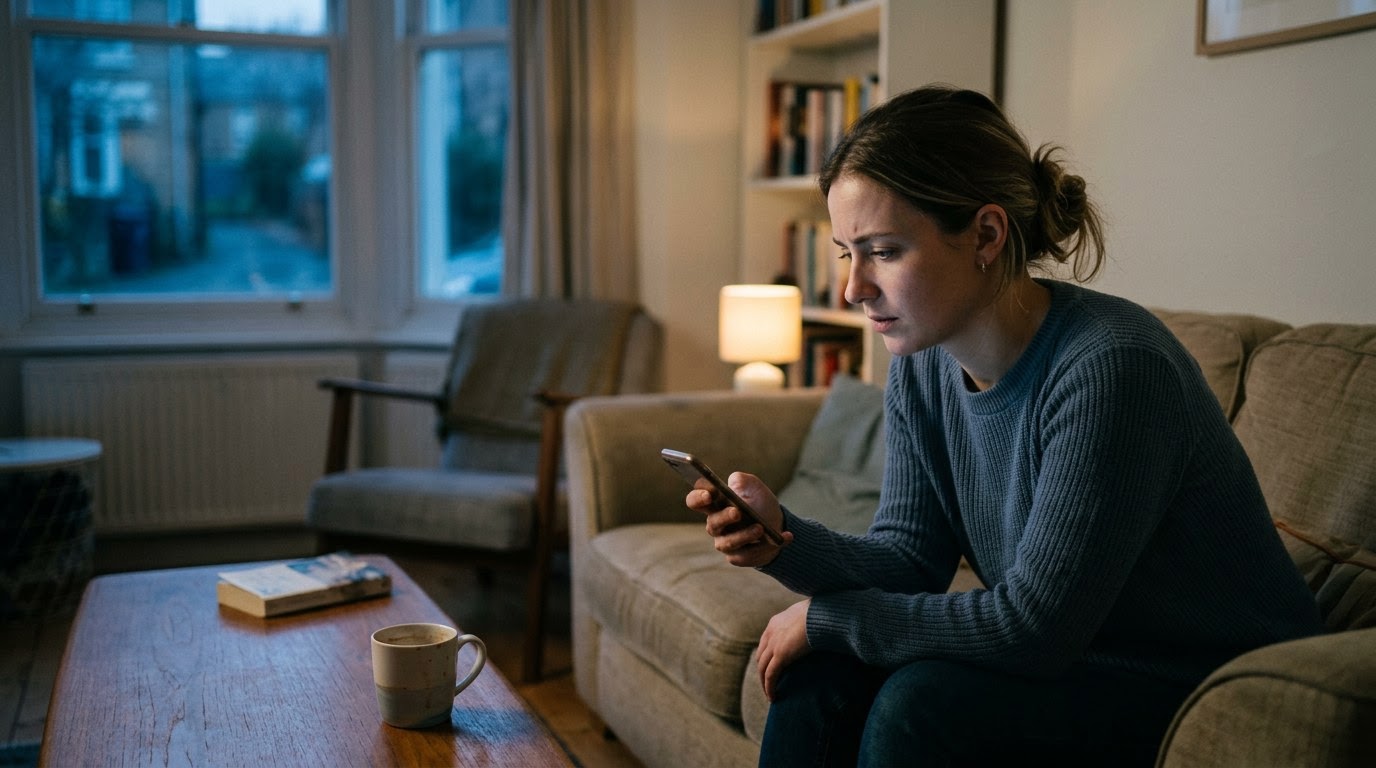
What to Do When an Online Match Sends Money to Your Account Unsolicited
When an online match sends unexpected money to your account, you should freeze the funds immediately and notify your bank's fraud department. This behavior usually indicates a money mule scam, where bad actors use your account to process stolen funds from other victims. Do not send any money back directly to your match, as the original incoming transfer will eventually be reversed, leaving you responsible for the deficit.
Receiving an unexpected financial transfer from a new match rarely represents a genuine romantic gesture. Criminals rely on building fast emotional connections so that you let your guard down when money enters the picture. They often frame the transfer as an advance payment, a gift, or a convenience for an upcoming meeting. In reality, they are using you as a money mule—someone who transfers stolen or illicit funds on behalf of a criminal—to move money across accounts and make tracing the original theft nearly impossible.
According to FBI reports published in 2024, victims lost over $1.3 billion to romance scams, with thousands unknowingly acting as money mules. Once illicit money touches your account, the clock starts ticking. If you spend the cash or forward it elsewhere, your financial institution will still hold you legally and financially accountable once the original victim reports the fraud.
Consider Sarah, who met a man on a dating app who claimed to be a civil engineer working on an overseas contract. After three weeks of daily messaging, he told Sarah he was sending $2,500 to her checking account so she could hold it for his upcoming flight back to the states. Sarah saw the money appear in her available balance and felt her trust was justified. Two days later, her match urgently asked her to wire $2,000 of those funds to an overseas equipment vendor via a peer-to-peer payment apps, which are digital platforms like Venmo or Cash App that transfer funds directly between personal bank accounts. Sarah sent the wire. A week later, Sarah's bank alerted her that the initial $2,500 deposit came from a hacked business account. The bank reversed the deposit, drawing $2,000 directly out of Sarah's personal savings to cover the money she had forwarded.
Why Scammers Ask You to Forward Funds to a Third Party
Scammers ask you to forward money to a third party because it breaks the trail between their crime and their personal identity. By using your legitimate bank account as a temporary stop, the scammer ensures that law enforcement and fraud investigators trace the stolen funds directly to you rather than to them. This tactic shifts the criminal liability for laundering money onto your shoulders while allowing the perpetrator to collect clean, untraceable cash.
When money lands in your bank account, the sender might ask you to transfer a portion of it to a relative, a business associate, or a logistics company. They often cite complicated excuses: their primary account is locked due to travel, their local bank lacks international transfer services, or they need help paying for emergency medical bills. The underlying goal remains constant. The scammer wants you to convert a temporary, reversible deposit into an permanent wire transfer or cash transaction that cannot be recalled.
A 2024 BBB study highlighted that over 65% of romance scam victims were asked to move money on behalf of someone they had never met in person. When you agree to move money for a stranger, you become an active link in a criminal chain. Even if you acted without criminal intent, financial institutions may close your accounts, report you to risk-management databases, and deny you future banking services.
Marcus experienced this trap firsthand after connecting with a self-described art dealer online. The match promised to pay Marcus a weekly stipend for managing administrative tasks, starting with a $3,000 mobile check deposit into Marcus's personal account. The sender instructed Marcus to keep $500 as his first payment and immediately use the remaining $2,500 to purchase electronic gift cards for "gallery supplies." Marcus bought the digital gift cards and emailed the claim codes to his match. Four business days later, the origin bank identified the deposited check as a fraudulent draft drawn on a compromised corporate account. Marcus's bank removed the full $3,000 from his account, leaving him with a negative balance and a permanent flag for financial risk.
The Fake Check and Mobile Deposit Reversal Trap
The fake check trap relies on bank processing delays to trick you into spending money before a fraudulent deposit officially fails. Federal regulations require banks to make funds from deposited checks available within a few business days, but verifying the check's authenticity can take several weeks. Scammers exploit this window by asking you to send back a portion of the funds right away, knowing that when the check inevitably bounces, your bank will deduct the full amount from your personal account.
Many people assume that because funds show up as "available balance" in their banking app, the money is fully cleared and safe to use. This is a dangerous misconception. Banks provide access to funds during the float period, which is the multi-day lag between when a check appears in your balance and when the paying bank actually releases the funds. If the check turns out to be fake, altered, or drawn on an account with insufficient funds, the bank initiates a chargeback, which occurs when a bank forcibly removes disputed or fraudulent funds from an account, leaving you with a negative balance.
Federal Trade Commission data reveals that bank transfer and wire fraud accounted for over $300 million in reported consumer losses in 2023. Understanding that an available balance is not the same as a settled deposit is critical when interacting with anyone you met online.
Elena fell victim to this timing gap when an online match claimed he accidentally overpaid her for shared travel plans. He sent a digital image of a check for $4,000 instead of the agreed-upon $400. He apologized profusely for the mistake and begged her to wire the $3,600 difference back to his personal assistant immediately to cover an urgent family expense. Wanting to be helpful, Elena wired $3,600 from her account that afternoon. Ten days later, the paying bank rejected the check image as a forgery. Elena’s bank charged back the entire $4,000, leaving her account balance severely overdrawn.
Using Your Personal Account for Alleged Business Transactions
If an online match asks to process client payments, payroll, or business contracts through your personal checking account, they are attempting to engage you in corporate money laundering. Legitimate businesses maintain commercial bank accounts, registered tax credentials, and dedicated merchant services. Asking an online dating partner to handle corporate transactions is a clear indicator that the funds are tied to wire fraud, stolen credit cards, or illegal commerce.
Scammers build elaborate false identities as foreign investors, international traders, or independent contractors who face sudden banking hurdles. They frame their request to use your personal account as a temporary business favor. They might offer you a commission or percentage of each transaction to make the offer appealing. As of October 2026, law enforcement agencies actively monitor online platforms for illegal transfer schemes, and using personal checking accounts for unauthorized corporate funds can prompt immediate criminal investigations.
Allowing an online acquaintance to route business transactions through your personal account breaches your account holder agreement with your bank. Banks use automated monitoring systems to detect sudden spikes in transaction volume or transfers from unfamiliar corporate entities. If your account shows patterns consistent with illicit routing, your bank will freeze all your assets, terminate your account relationship, and report the activity to national law enforcement registries.
Requests to Convert Cash into Cryptocurrency or Gift Cards
When a match instructs you to withdraw cash from your account and deposit it into a cryptocurrency ATM or purchase gift cards, they are executing a rapid liquidity conversion. Cryptocurrencies and gift card codes provide instant, anonymous transactions that bypass traditional banking controls. Once you complete the conversion and hand over the keys or codes, the money is permanently unrecoverable, leaving you to handle the financial deficit with your financial institution alone.
Liquidity conversion is the process of turning bank deposits into untraceable financial assets. Scammers prefer cryptocurrency kiosks and retail gift cards because these media operate outside the traditional bank recovery systems. If a bank reverses an incoming fraudulent deposit, you cannot reverse a cryptocurrency transfer or cancel a redeemed gift card.
No legitimate romantic partner, employer, or government entity will ever ask you to settle debts, transfer funds, or process payments using gift cards or physical Bitcoin kiosks. The moment an online contact directs you to cash out funds and visit a physical kiosk or retail store, you are dealing with a structured scam designed to extract non-refundable value from your hands before your bank detects the fraud.
| Dimension | Safe Online Match Behavior | Money Mule Scam Behavior |
|---|---|---|
| Financial Interactions | Keeps finances separate; never asks to deposit, transfer, or hold funds. | Sends unsolicited checks, direct deposits, or wires into your personal account. |
| Request Urgency | Discusses plans calmly without demanding immediate financial actions. | Creates high-pressure emergencies requiring instant wires or cash withdrawals. |
| Proof of Identity | Willingly shares verifiable real-world contact details and meets in person. | Uses photos of models, vague jobs, and refuses verifiable identity checks. |
| Account Usage | Uses their own personal or business bank accounts for all money matters. | Asks to process third-party client payments or payroll through your account. |
| Payment Methods | Uses standard, traceable payment methods for shared dating expenses. | Insists on gift cards, wire transfers, or cryptocurrency kiosks to move money. |
What to Do If You Spot These Signs
- Stop all communications and do not move the money. Cut off contact with the individual immediately across all platforms. Do not touch, send, or transfer any portion of the funds sitting in your account, even if the person becomes aggressive, threatening, or emotional.
- Notify your bank's fraud department right away. Call your bank directly using the phone number listed on the back of your debit card. Inform them that an unknown or suspicious sender deposited funds into your account and that you suspect it may be part of a transfer fraud scheme. Request that they isolate the funds while they conduct a formal investigation.
- Perform identity verification to confirm who you were speaking to. Protect yourself from future impersonation by checking the credentials of the person behind the screen. Use an independent verification service: run a TrustCheck to verify your match's identity details and ensure their real name matches the contact information they gave you.
- File reports with official authorities. Submit a detailed report to regulatory bodies. File a report with the Federal Trade Commission at ReportFraud.ftc.gov and contact the FBI's Internet Crime Complaint Center at IC3.gov. Include all message logs, account numbers, and transfer receipts.
- Secure your financial accounts and credit profiles. Change all your online banking passwords, enable multi-factor authentication, and monitor your bank statements closely. Consider placing a free fraud alert on your credit reports through Equifax, Experian, or TransUnion to prevent unauthorized accounts from being opened in your name.
Trusting your instinct when something feels off about an online match is your best defense against complex financial schemes. You never owe an online stranger immediate trust, access to your bank account, or financial favors. Taking a proactive approach to identity verification allows you to confirm who you are dealing with before risks develop. TrustMatch provides a clear, zero-pressure way to verify an identity before money ever enters the conversation, helping you build genuine online relationships with complete peace of mind.
Frequently asked
What should I do if an online match deposits money into my account?
Do not spend, transfer, or send any of the money back. Contact your bank's fraud department immediately to report the unsolicited deposit. Tell them you suspect a scam so they can freeze the funds and protect your account from chargebacks.
Can I get in legal trouble if I accidentally move stolen money for a scammer?
Yes. Even if you did not know the money was stolen, acting as a money mule can lead to account closures, financial liability for the full amount, damaged credit, and potential investigation by law enforcement for participating in money laundering schemes.
Why does my bank account show available funds if the check is fake?
Federal banking laws require banks to make check deposits available quickly, often within a few business days. However, confirming that a check is genuine can take several weeks. If the check bounces later, the bank will deduct the full amount from your account.
How do scammers profit from sending me money first?
Scammers send fake checks, stolen transfers, or compromised wire deposits that initially look real. They then convince you to send clean cash, gift cards, or crypto back to them before your bank discovers the original deposit was fraudulent and reverses it.
Should I send the money back to the person who deposited it?
No. Never send money back directly to the match via wire, Zelle, Venmo, or cash. When the initial deposit is inevitably identified as fraudulent, your bank will reverse it, leaving you responsible for both the reversal and any money you sent.