How to Safely Buy a Used Horse Trailer From a Private Seller
· 10 min read
1. Run a TrustCheck on the seller
Verify the seller's true identity before making travel plans or discussing financial holds. Enter the seller's first name along with their phone number or email address into TrustMatch to generate a comprehensive TrustScore and safety verdict in under a minute. This initial lookup confirms whether the seller is using authentic contact details or displaying high-risk behavioral indicators associated with digital marketplace fraud schemes.
Online trailer marketplaces are prime targets for remote scammers who clone real listings from other states and lower the asking price to force quick sales. FTC data shows online vehicle listing scam losses exceeded $120 million in 2024. Fraudsters typically claim they must sell the trailer urgently due to military deployment, relocation, or a family emergency, insisting on a $500 to $1,000 holding deposit via untraceable payment channels.
By executing an identity verification check early, you validate that the seller's contact details match a real individual with an established digital footprint. If the phone number routes to a temporary Voice over IP (VOIP) line or the email address was created hours prior, halt the transaction. Establishing seller accountability upfront prevents financial losses before you waste fuel, time, or deposit money on a fake listing.
2. Demand a live video walkthrough before traveling
Require a live five-minute video call to view the trailer in real time before driving to the seller's location or transferring holding money. Instruct the seller to walk around the trailer, open the side access doors, drop the tailgate, and point the camera directly at the Vehicle Identification Number plate attached to the tongue. A real owner possessing a genuine trailer will accommodate this simple request without hesitation.
Scammers operating stolen listing images will offer numerous excuses to avoid a live video call. They often claim the trailer is located at a secure storage depot, that their phone camera is broken, or that bad cellular service prevents video calling. Treat every refusal as a definitive signal that the seller does not possess the physical equipment.
During the video call, direct the seller to demonstrate specific mechanical features. Ask them to operate the interior chest bars, open the escape doors, lift a section of the rubber floor mats, and turn on the running lights using a tow vehicle connection. Requesting these real-time physical actions guarantees the video feed is live and not pre-recorded media taken from an authentic seller's account.
3. Cross-reference the VIN across three physical locations
Locate and match the 17-digit Vehicle Identification Number across the frame, the manufacturer data plate, and the paper title document. Check the metal frame near the front coupler or tongue area, where the VIN is permanently stamped into the steel or aluminum chassis. Reject any trailer where the stamped numbers show signs of grinding, alteration, fresh paint patches, or mismatching paperwork digits.
On standard bumper-pull trailers, the primary VIN stamp is usually found on the top or side rail of the A-frame tongue near the jack. On gooseneck models, check the underside of the gooseneck frame structure or inside the front dressing room door frame. Locate the federal certification decal or riveted aluminum manufacturer tag, which lists the Gross Vehicle Weight Rating (GVWR), axle weight limits, and manufacturing date alongside the VIN.
Carefully compare every single character across all three sources. Standardized 17-digit VINs apply to all trailers manufactured after 1981. If you encounter a trailer with missing digits, fresh grinding marks on the frame rail, fresh spray paint covering the coupler area, or misaligned numbers stamped over older markings, do not proceed. Stolen trailers are frequently repainted and fitted with fraudulent data plates to deceive unsuspecting private buyers.
4. Verify paper title ownership and lien status
Examine the physical paper title document in person to confirm that the seller's government identification exactly matches the printed legal owner name. Request a lien release document if the title lists a bank or financial institution as a lienholder, ensuring no outstanding debt remains attached to the vehicle. Never accept bill-of-sale arrangements without a clear, signable title in hand during the physical transaction.
Request that the seller send a high-resolution photo of the physical paper title prior to your trip, masking sensitive personal identification numbers if necessary. Check the document for watermarks, state seals, and official state agency signatures to confirm authenticity. Be cautious of titles stamped with words like "Salvage," "Rebuilt," "Junk," or "Bonded," as these designations dramatically impact structural safety and towing insurance coverage.
When you meet in person, compare the seller's driver's license directly to the title owner's name and address. If the seller claims to be selling the trailer on behalf of a relative, friend, or employer, require the official named owner to attend the signing or provide notarized power-of-attorney documentation. Buying a trailer from an party who is not the legal title holder leaves you exposed to repossession, law enforcement impoundment, and an inability to legally register the trailer at your state motor vehicle department.
5. Perform a comprehensive floor frame and axle inspection
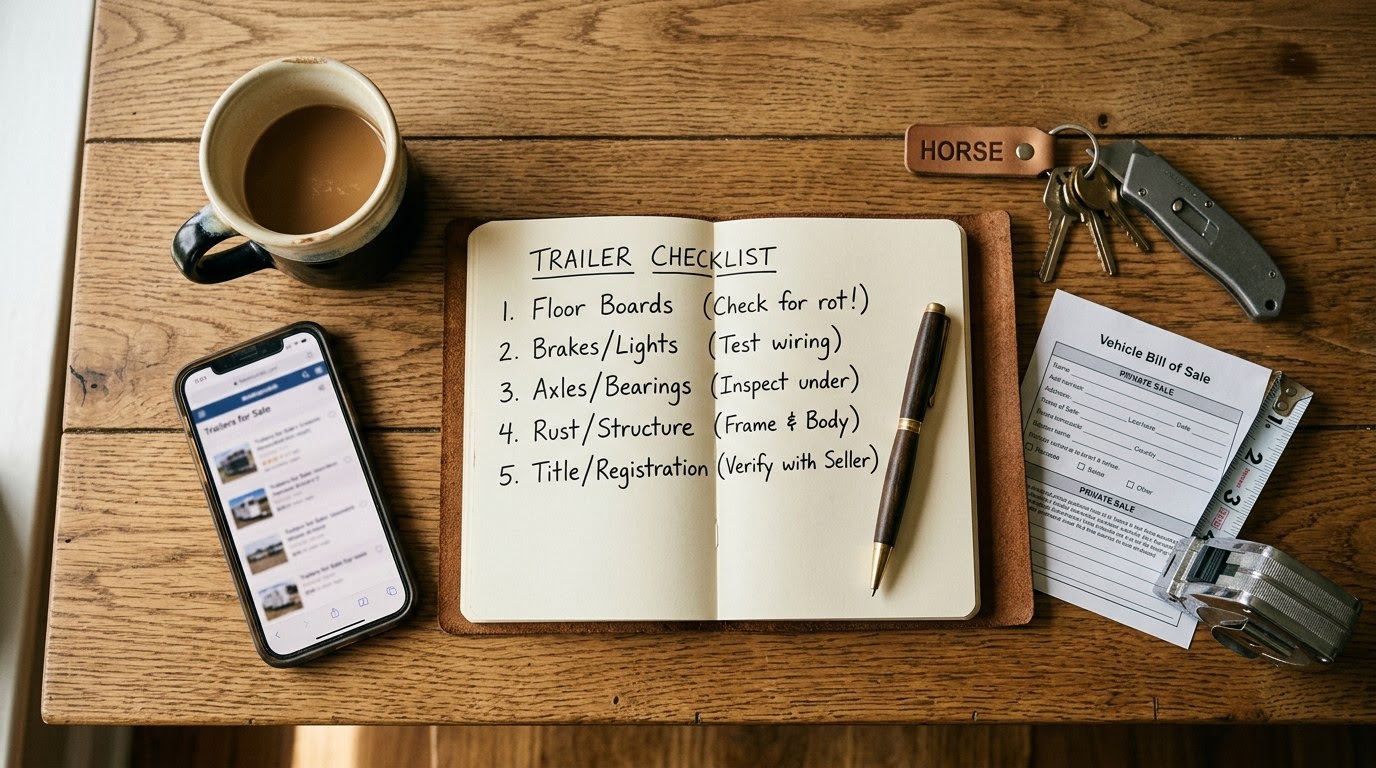
Inspect the structural integrity of the floorboards, aluminum frame welds, suspension, and braking system prior to finalizing payment terms. Pull up the rubber stall mats to check for wood rot or aluminum pitting caused by urine exposure and moisture accumulation over time. Verify that the leaf springs, electric brakes, and tires show even wear and remain fully operational for animal safety.
Horse urine is highly corrosive to both pressure-treated lumber and structural aluminum. On wooden floors, look for soft spots, dark fungal rot, or crumbling timber around the outer frame edges where urine pools. On aluminum floors, inspect for white powdery oxidation, deep pitting, or holes that weaken the deck. Crawl underneath the trailer with a flashlight to verify that the cross-members supporting the floorboards are structurally sound and free from major rust perforations or cracked welds.
Examine the running gear thoroughly. Check the brake backing plates for leaking grease seals, test the emergency break-away battery system, inspect the 7-way electrical wiring harness for exposed wires, and read the tire date codes on the sidewalls. Trailer tires older than six years require immediate replacement, regardless of remaining tread depth, due to internal structural degradation that risks catastrophic blowouts on the highway while hauling live animals.
6. Transfer funds through verified traced channels
Complete the financial transaction using traceable bank wire transfers, cashier's checks inside a bank branch, or secure escrow services rather than untraceable cash apps. Refuse requests for payment via wire transfers to overseas accounts, digital gift cards, or untraceable third-party logistics agents claiming to hold the trailer in storage. Finalize the payment only after confirming all registration documents match.
The safest place to execute a private trailer purchase is inside the seller's or buyer's local bank branch. Meeting at a bank provides a secure environment with surveillance cameras, professional tellers, and public notary services. Hand over the certified cashier's check or complete a direct bank-to-bank wire transfer only after you have completed the physical inspection and verified the title signatures.
Avoid carrying large sums of physical cash to remote meeting spots or private residences. Never pay via peer-to-peer applications like Zelle, Venmo, or Cash App for vehicle purchases, as these platforms explicitly exclude buyer protection guarantees for private motor vehicle sales. If a seller insists on receiving wire transfers through untraceable money transfer agents before permitting a physical inspection, break off contact immediately.
7. Verification matrix for private trailer purchases
Use this comprehensive verification matrix to systematically evaluate each key aspect of a private horse trailer sale before committing financial resources. Compare the physical inspection steps against expected documentation criteria and immediate red flag triggers to determine whether a transaction is safe to proceed. Taking a methodical approach guarantees that hidden structural defects or ownership disputes are identified well before money changes hands.
| Step | What to verify | Red flag if missing |
|---|---|---|
| Seller Identity | Name, phone number, and location verified via TrustMatch | Seller uses VOIP number, burner account, or refuses identity check |
| Live Video Inspection | Real-time walkthrough showing tongue VIN plate and operating lights | Seller claims trailer is unavailable for live video due to travel or storage |
| VIN Consistency | Stamped frame VIN matches aluminum manufacturer tag and paper title | Grinded metal frame, missing data plate, or mismatched numbers |
| Title & Ownership | Original paper title with seller's name and no active bank liens | Bill of sale only, title under third party's name, or unreleased liens |
| Structural Integrity | Sound floorboards under rubber mats, uncracked welds, clean frame | Rotten pine boards, oxidized aluminum floor holes, cracked welds |
| Payment Delivery | In-person bank cashier's check or physical branch transfer | Demands upfront gift cards, wire transfer, or peer-to-peer app deposit |
Apply this matrix systematically throughout your negotiations. If a seller passes five stages but fails the title verification stage, do not rationalize the risk. Halting a transaction at the first unresolvable red flag saves thousands of dollars and protects you from acquiring stolen or unsafe equipment.
8. Red flags during this process
Recognize immediate danger signs during negotiations to avoid falling victim to sophisticated vehicle listing scams and fraudulent paperwork. High-risk indicators usually manifest when sellers push for rapid upfront deposits, refuse real-time communication, or present titles with mismatched contact details. Terminate communication immediately if a seller exhibits aggressive pressure tactics or changes meeting arrangements to remote, unsafe environments.
Watch for listings priced far below reasonable market value, such as a late-model aluminum slant-load trailer listed for a fraction of its standard resale price. Scammers use unrealistically low prices to create artificial urgency and tempt buyers into bypassing standard verification routines. They often claim multiple buyers are offering cash and demand a quick digital deposit to hold the trailer.
Be alert to pressure tactics involving third-party delivery services. Scammers often propose fake escrow systems, claiming "eBay Motors" or an independent shipping carrier will hold your funds safely while delivering the trailer for a risk-free trial period. Real private sales occur directly between the buyer and seller, in person, with physical title transfer taking place at the moment of payment exchange.
Pay close attention to physical red flags during the onsite walkthrough. If a seller refuses to let you lift the rubber stall mats, forbids you from inspecting under the frame, or claims they lost the keys to the tack room, walk away. Legitimate horse owners understand the vital importance of trailer floor safety and structural soundness, and they welcome thorough buyer inspections.
9. Quick checklist for private horse trailer transactions
Follow this sequential summary checklist to maintain complete operational security from your initial online message down to final hookup and tow-away. Executing these steps in strict numerical order prevents common buyer oversights, secures your financial deposit, and ensures legal trailer transfer. Complete every action item before signing any bill of sale or handing over funds to a private individual.
- Run an identity verification check on TrustMatch using the seller's name and contact details.
- Conduct a live 5-minute video call to view the trailer and read the physical VIN plate on camera.
- Inspect the physical paper title document and verify that the owner's name matches the seller's government ID.
- Lift all stall rubber mats to thoroughly check floorboards and frame cross-members for corrosion or rot.
- Compare the stamped tongue VIN, data decal VIN, and title document VIN for total 17-digit agreement.
- Complete payment via bank cashier's check inside a local branch and execute the official title transfer.
Using TrustMatch before meeting gives you peace of mind throughout the transaction. These steps protect you and respect a real person without conducting unwarranted surveillance.
Frequently asked
What should I do if a private seller refuses to pull up trailer floor mats?
Never complete a horse trailer transaction if a seller refuses to let you lift the rubber floor mats. Rotten wood or oxidized aluminum underneath mats creates fatal trailering hazards for horses. Legitimate sellers understand floor inspections are mandatory safety checks. Walk away from any deal where structural visibility is restricted.
Can I safely buy a used horse trailer without a title?
Avoid buying horse trailers on a bill of sale alone unless your specific state does not title light utility trailers and you can verify clear historical registration. Un-titled trailers frequently carry unpaid bank liens, stolen vehicle reports, or back-taxes. Always demand a clear physical title that matches the seller's legal government identification.
How do I verify a trailer VIN if the frame plate is rusted or missing?
Locate the VIN stamped directly into the steel or aluminum tongue frame near the coupler if the stamped plate is degraded. If both the plate and stamped frame numbers are illegible, contact the trailer manufacturer with the seller's registration details or decline the purchase. Unreadable VINs prevent proper state licensing and insurance coverage.
Is paying a deposit via Zelle or Venmo safe when holding a horse trailer?
Do not send deposit payments through peer-to-peer payment apps to private sellers you have not met in person. Zelle, Venmo, and Cash App lack buyer protection policies for vehicle purchases. Scammers routinely publish fake listings, collect initial digital deposits, and disappear. Use bank cashier's checks or verified in-person escrow services instead.
How does TrustMatch help verify private vehicle sellers?
TrustMatch validates a seller's true name and contact details in under a minute using basic inputs like a phone number or email address. This check detects high-risk digital patterns, VOIP numbers, and fraudulent identities before you send deposit money or drive to an remote inspection location, keeping your transactions secure.
More in Guide
- How to Safely Buy Used Heavy Equipment From a Private Seller Online
October 16, 2026
- How to Safely Buy a Used Snowmobile From a Private Seller
October 14, 2026
- How to Safely Use Apple Cash for Transactions With Private Sellers
October 11, 2026