How to Safely Buy Secondhand Luxury Goods From Private Sellers Online
· 10 min read
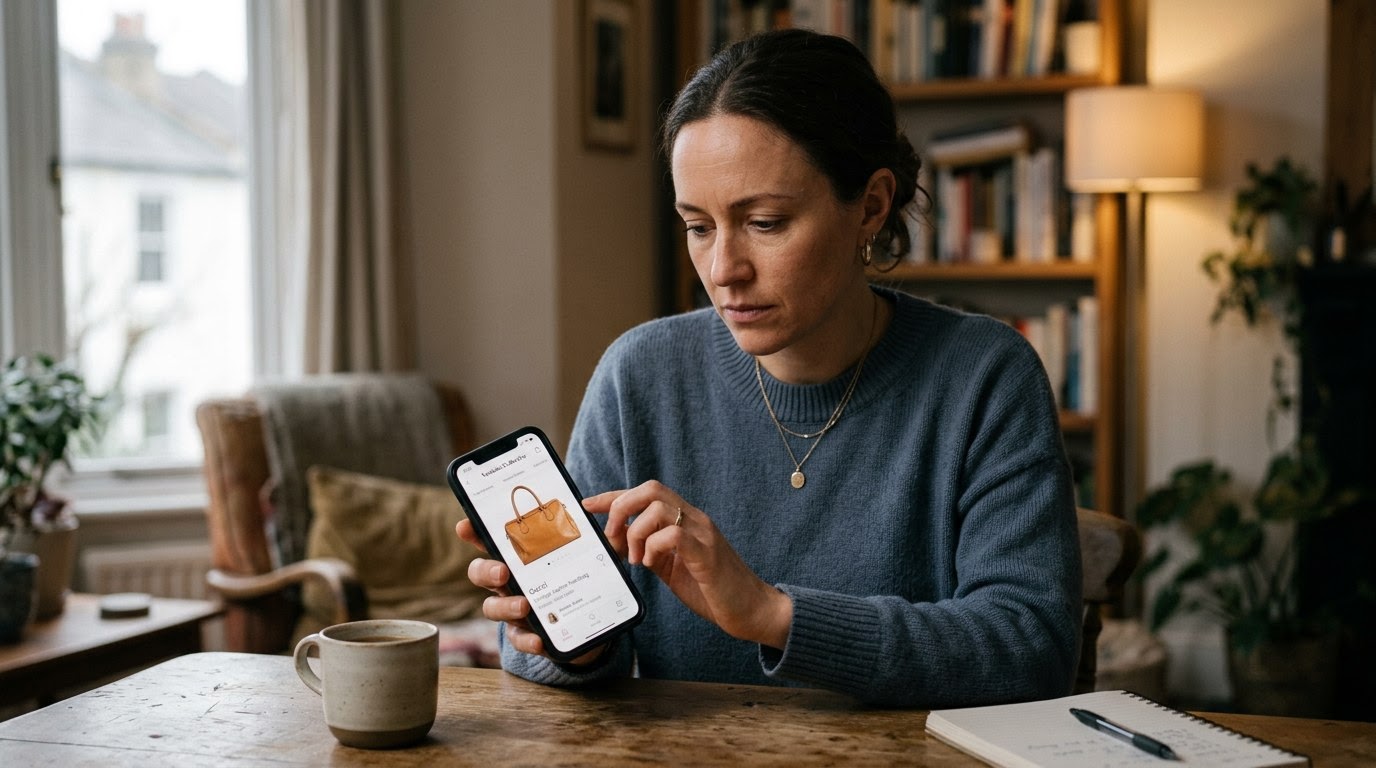
Buying pre-owned designer handbags, Swiss timepieces, or high-end apparel directly from private sellers can save you thousands of dollars, but it also opens the door to sophisticated private sales scams. As of August 2026, scammers frequently clone high-value listings, fabricate paper certificates, and route unsuspecting buyers into fake payment platforms. Falling for these schemes costs victims both their savings and their peace of mind when a promised luxury piece turns out to be a cheap counterfeit or a complete ghost listing. Before you send money or arrange a physical meetup with an online stranger, running a TrustCheck takes 60 seconds and ties a name to a real phone, real email, and a real digital footprint.
The Seller Insists on Using an Unfamiliar Third-Party Escrow Service
This behavior involves a seller refusing standard payment protections and instead directing you to a custom escrow website—a fake intermediary platform designed to steal your funds without holding any real assets. Scammers use lookalike web domains to give buyers a false sense of security while pocketing the money immediately. For instance, when Sarah tried to purchase a pre-owned Chanel flap bag on a private forum, the seller refused major payment options and sent a link to "SecureLuxuryVault-Escrow.com," which disappeared with her $3,200 payment shortly after transfer.
Fake escrow services remain one of the most financially damaging tactics in high-end secondary sales. The seller often claims that using a specialized escrow service (a third-party system that holds payment until both buyer and seller agree the conditions are met) protects both parties equally. In reality, the scammer owns the domain or uses a turnkey phishing site built to look like a licensed financial institution.
To detect this tactic, analyze the web address before entering any information or authorizing payments. Scammers frequently register these domain names just days prior to listing expensive items. You can check WHOIS registration data (publicly available record files showing when a web domain was created and who owns it) to verify if the payment portal has an established operational history. If a seller refuses established escrow services like Escrow.com or major marketplace buyer protections, step away from the purchase.
A legitimate private seller understands why buyers are cautious. They will not throw a fit when you suggest using recognized payment platforms with buyer dispute systems. When someone gets aggressive about using an obscure payment site, they are prioritizing their payout mechanism over your transaction security.
The Authentication Certificate Looks Real But Lacks Verifiable Serial Details
This red flag occurs when a seller provides digital photos of paper receipts, brand cards, or third-party authentication documents that cannot be cross-referenced with the issuing authority. Fake documentation is manufactured en masse to make counterfeit luxury goods appear legitimate to casual buyers. For example, Marcus negotiated a deal for a Rolex Submariner where the seller supplied a crisp PDF certificate from an unknown evaluation company, but contacting the original jeweler revealed the serial number belonged to a completely different reference watch.
Scammers know that modern luxury buyers ask for paperwork, so they adapt by creating believable digital certificates. They frequently reuse high-resolution photos stolen from legitimate sales listings or purchase counterfeit brand cards alongside replica watches and designer leather goods. Simply holding a piece of paper or showing a printed card does not prove that the item in the seller's hands is authentic.
Always insist on serial number registration checks (an official database lookup process managed by brand manufacturers or recognized authenticators to confirm item identity). Genuine sellers will gladly provide clear, close-up images showing the engraved serial number matching the physical documentation. Furthermore, examine image metadata (hidden digital information attached to photo files that records camera settings and creation timestamps) to ensure the photos were taken recently by the person listing the item, rather than downloaded from a vintage watch forum.
When in doubt, offer to pay an accredited third-party authenticator to review the piece in person or evaluate high-resolution photos. Authenticators examine microscopic details like font engraving depth, leather grain alignment, and movement frequency. If a seller claims they do not have time for an authentication step, you should treat the listing as a counterfeit risk.
The Seller Refuses a Live Video Handover or Unique Proof-of-Possession Photos
This behavior occurs when a seller makes excuses to avoid proving they physically own the luxury item right now. Scammers who operate using stolen images cannot produce custom photos on demand or participate in real-time video calls. For example, Elena expressed interest in a vintage Hermès Birkin bag listed at a fair market rate, but whenever she asked for a tagged photo or brief video call, the seller claimed their phone camera was broken and offered pre-recorded clips instead.
Demanding tagged photos (photographs of the luxury item placed directly next to a handwritten note with your name and today's date) is a standard safety rule for high-value peer-to-peer commerce. If a seller hesitates or sends photos with obvious digital alterations, you are almost certainly dealing with a ghost listing where the physical item does not exist.
A brief video call provides immediate proof of possession while letting you inspect fine details like stitching, hardware weight, and logo placement in neutral lighting. You can also run a reverse image search (a digital lookup technique that scans the web to find identical copies of an uploaded photo) on every image in the listing. According to Federal Trade Commission data from 2024, online shopping fraud accounted for over $392 million in reported consumer losses, largely driven by deceptive listings on social platforms and private forums.
Pay close attention to how the seller responds to simple confirmation requests. Honest private sellers wanting to complete a multi-thousand-dollar sale expect prospective buyers to ask for proof. Sellers who act offended or try to guilt you for taking security measures are showing you exactly who they are.
The Deal Pushes You Away From Platform Protections to Direct Peer-to-Peer Payments
This pattern involves a seller attempting to move the financial transaction off a regulated platform toward irreversible payment channels. Sellers offer lower prices or claim platform fees are too high if you send money via wire transfer or fee-free payment apps. For example, David agreed to purchase a designer jacket on an online marketplace, but the seller promised a $300 discount if he completed the deal through a non-refundable peer-to-peer payment app outside the system.
Off-platform payment coercion strips away all dispute rights and purchase protection guarantees. Scammers prefer peer-to-peer payment apps (digital transfer tools designed for sending funds between trusted friends rather than commercial purchases) because transfers are instant and nearly impossible to reverse once claimed.
Legitimate sellers operating in good faith factor transaction processing fees into their asking price. When a seller insists on friends-and-family payment transfers, wire transfers, or cryptocurrency payments, they are knowingly asking you to assume 100% of the financial risk. A 2023 Better Business Bureau report indicated that over 45% of online marketplace scam victims reported losing money on high-value luxury or electronics listings when coerced away from protected payment channels.
Never bypass platform protections for a discount. The small amount saved on fees never offsets the complete loss of your purchase amount if the seller sends an empty box or vanishes into thin air. If a transaction starts on a specific marketplace, keep both the communication and the payment inside that system.
The Physical Meetup Spot Keeps Changing to an Unsecured or Isolated Location
This safety risk occurs when a seller initially agrees to meet in a safe public spot but systematically changes the time and place to an isolated area right before the exchange. Scammers use this tactic to increase buyer vulnerability, pressuring you to accept counterfeit items quickly or setting up a physical robbery. For example, Maya arranged to inspect a Cartier bracelet at a busy bank branch, but the seller texted minutes before, claiming they were stuck in traffic and demanding to meet in an empty parking garage across town instead.
In-person transactions for high-end luxury goods require strict adherence to safety protocols. When carrying significant cash or taking possession of expensive designer items, controlling the physical environment is critical for your safety.
Always insist on neutral, heavily monitored exchange zones such as police station lobbies, bank lobbies, or authorized brand boutiques where staff can assist with physical inspection. If a seller resists public meetups, suggests secluded residential areas, or repeatedly shifts locations at the last minute, cancel the meeting immediately. Never prioritize convenience over physical safety when dealing with high-value assets.
Bring a companion whenever you do an in-person exchange for luxury goods. Having a second pair of eyes deters opportunistic crime and gives you unbiased feedback during the inspection process. If the seller objects to you bringing someone along, treat that objection as a major security flag.
The Seller Uses Urgent Scarcity Tactics and Rapid Price Drops
This manipulative tactic involves a seller inventing fake competing offers or slashing prices dramatically to induce panic and force an immediate deposit. Scammers build artificial pressure so you rush through verification checks without doing proper due diligence. For instance, Julian inquired about a Patek Philippe watch, and the seller immediately claimed two other buyers were making offers, promising to hold the watch only if Julian transferred a $500 non-refundable deposit within 15 minutes.
Urgency tactics work by overriding your logical decision-making process. When you feel you might miss out on a rare designer piece or an unbelievable price discount, your brain is tempted to ignore subtle red flags that would otherwise prompt caution.
Real private sellers who own valuable goods know their market value and rarely cut prices by 50% without explanation or demand instant deposits from strangers. If a seller pressures you with tight deadlines or claims multiple people are vying for the item right now, take a step back. High-value luxury purchasing should move at your pace, allowing ample time for complete identity checks and product verification.
Remember that another great piece will always come along on the secondary market. Sacrificing your verification process to beat an arbitrary countdown clock is almost always a losing proposition.
Comparing Safe Sellers vs. High-Risk Scam Behaviors
| Dimension | Safe Private Seller | High-Risk Scam Behavior |
|---|---|---|
| Payment Method | Agrees to protected payment platforms or verified escrow with buyer recourse. | Insists on non-refundable peer-to-peer apps, wire transfers, or unknown escrow links. |
| Proof of Possession | Provides tagged photos with your name and today's date, or conducts a live video call. | Offers excuses, reuses stock imagery, or provides pre-recorded low-quality video clips. |
| Documentation | Shares clear serial numbers and allows independent verification with jewelers or brands. | Presents generic PDF certificates, altered digital cards, or hides serial identifiers. |
| Meetup Protocol | Meets inside police station lobbies, bank branches, or brand boutiques during day hours. | Changes locations last minute to secluded areas, private residences, or dark parking lots. |
| Identity Transparency | Maintains consistent contact info matching a real, verifiable digital footprint. | Operates newly created social profiles, hidden phone numbers, or disposable emails. |
What to do if you spot these signs
- Pause the transaction immediately: Stop all money transfers and refuse to send initial holding deposits, no matter how persuasive or urgent the seller sounds.
- Run an identity check: Running a TrustCheck early narrows the question to one thing: whether the details you were given describe a real, consistent identity. Plenty of scams are run by people using their own names, so treat the result as evidence about the details, not a verdict on the person.
- Request independent authentication: Require that the item undergo third-party verification through an established jeweler, physical brand boutique, or accredited luxury authentication service before funds clear.
- Report suspicious listings: File a report with the marketplace platform where you met the seller, and submit detailed reports to fraud prevention bodies like the Better Business Bureau or Federal Trade Commission.
Protecting Yourself on the Secondary Market
Trusting your gut is your single best line of defense when evaluating private online transactions. If a deal feels too good to be true or a seller behaves evasively when you ask for basic proof, listen to that internal warning signal. Verifying who you are dealing with before meeting or transferring funds takes seconds and saves you from devastating financial loss. Remember that running a TrustCheck gives you quick clarity before you hand over your hard-earned cash, empowering you to collect designer pieces safely and confidently.
Frequently asked
How can I tell if a luxury authentication certificate is real?
Genuine luxury authentication certificates display verifiable serial numbers that match official manufacturer registry databases or accredited third-party appraisal records. You should contact the issuing authority directly using official contact information rather than phone numbers listed on the paper. Avoid sellers who only provide static photos or digital copies without allowing independent serial validation.
Are peer-to-peer payment apps safe for buying luxury items privately?
Peer-to-peer payment apps are intended for transfers between known friends and family, offer no buyer protection against fraud, and make funds non-refundable once claimed. For high-value purchases from private sellers, use payment platforms with explicit commercial purchase protections or licensed escrow services that hold funds until you confirm receipt and authenticity.
What is a tagged photo and why is it necessary?
A tagged photo is a physical photograph of the luxury item placed directly next to a handwritten paper note showing your name, the seller's account name, and today's date. This proves the seller physically possesses the exact item right now, rather than re-using stolen images from old online listings or competitor websites.
Where is the safest place to meet a private seller in person?
The safest places for in-person luxury exchanges are police department lobbies, bank lobbies, or authorized luxury brand boutiques. Bank lobbies offer security cameras and financial teller access to verify cash, while brand boutiques or specialized jewelers can assist in evaluating item authenticity before money changes hands.
What should I do if a seller demands a deposit to hold an item?
Do not send non-refundable deposits to unverified private sellers. Scammers frequently request small holding fees to secure fake listings before disappearing completely. Insist on completing verification checks first, or arrange a protected payment where funds are held safely by an independent party until physical inspection is complete.