How to Spot AI Voice Cloning Scams in Online Dating Relationships
· 10 min read
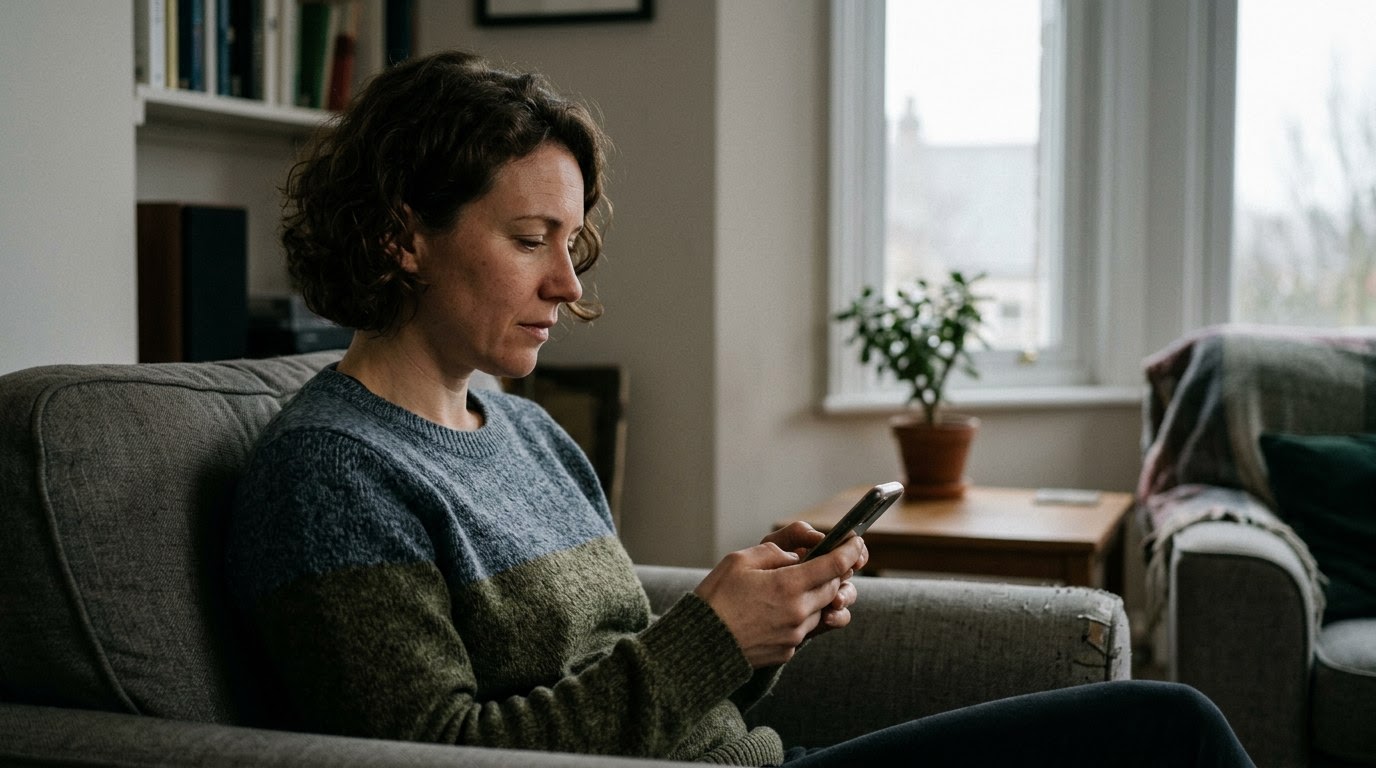
You meet someone on a dating app or social platform who seems attentive, charming, and deeply invested in getting to know you. As of August 2026, bad actors increasingly use AI voice cloning—computer software that analyzes brief audio samples of a real person to generate entirely new spoken sentences—to build false trust with online matches. Falling for this kind of deception brings heavy emotional distress and significant financial heartbreak when a synthesized voice suddenly requests urgent money for a fabricated crisis. According to FTC reports from 2024, romance scams cost consumers over $1.3 billion in direct financial losses. If something feels off during your voice calls or audio notes, running a TrustCheck takes 60 seconds and ties a name to a real phone, real email, and a real digital footprint.
How Unnatural Pauses and Audio Latency Reveal Voice Cloning
Unnatural pauses and unusual audio latency—the short delay between when you finish speaking and when the other person responds—occur because artificial intelligence software needs processing time to analyze incoming sound and generate synthetic speech. Real human conversation flows naturally with subtle overlaps, whereas cloned audio features dead silence while the software renders a reply. If your match hesitates predictably for two or three seconds before answering basic questions, you are likely hearing a computer model generating audio in real time.
When you talk to a real person, speech has a natural rhythm. Humans use quick verbal fillers like "um," "yeah," or quiet breaths while thinking. AI voice tools struggle with these spontaneous micro-interactions. Instead, they produce a distinct pattern: you ask a question, there is total audio silence for a uniform delay, and then a perfectly formed sentence begins without any ambient mouth noise or intake of breath.
Consider a composite scenario involving Sarah, who met a man named "Marcus" on a dating platform. Marcus claimed to be a civil engineer working on an overseas project. Whenever Sarah called Marcus, he sounded articulate and warm, but every time she asked a question, a strict three-second pause occurred before he spoke. Marcus claimed the delay was due to satellite internet on his job site. In reality, the scammer was typing Sarah's questions into a text-to-speech voice generator, which took several seconds to render the cloned audio file and transmit it back through the call stream.
Why Background Sound Cut-Offs Signal Synthetic Audio
Background sound cut-offs and audio glitches happen when AI voice tools attempt to reproduce environmental noise from small audio training clips. Real phone calls carry constant background sound, such as air conditioning, street traffic, or room reverberation. Cloned voice calls often drop to total digital silence the second the person stops speaking, creating a stark audio vacuum that signals synthetic sound software isolating a voice track.
Voice cloning engines typically extract voice samples from clean video or audio recordings, stripping away background sound to isolate the speaker's vocal tone. When the algorithm generates new sentences, it often outputs pure speech without ambient sound. To compensate, some scammers mix in a background noise loop, like artificial cafe sound or fake airport announcements. However, these sound loops often glitch, repeat on a brief loop, or abruptly drop out mid-sentence when the audio software resets.
Take the example of David, who had been messaging "Elena" for three weeks. Elena sent frequent 30-second voice notes describing her day. David noticed that during every voice note, quiet coffee shop music played in the background. However, the music froze and restarted at the exact same point in every single audio message, and the background noise vanished completely during the final two seconds of her speech. This repeating sound glitch revealed that the audio notes were pre-rendered files produced by a voice generator rather than live recordings taken in a real cafe.
How Avoidance of Live Video Calls Points to Voice Impersonation
Persistent excuses to avoid live interactive video calls are the most common secondary sign of voice cloning scams because matching synthesized audio to real-time facial movements requires heavy technical setups. Scammers freely send high-quality audio clips or brief voice notes, but they dodge live video requests by citing broken webcams, strict job protocols, or poor cellular connections. When a match talks on audio for hours but vanishes when video is requested, they are hiding a voice clone.
Generating a realistic voice clone requires only a few seconds of clean audio captured from social media videos or public speeches. Creating a realistic, real-time deepfake video that aligns perfectly with synthesized audio during an interactive call is far more difficult. Because of this technical barrier, scammers push targets toward voice calls or short audio messages, where they can control the delivery without exposing visual mismatches.
A 2024 AARP study revealed that nearly 30% of adults surveyed encountered voice impersonation attempts, often linked to romance or family emergency fraud schemes. Consider Rachel, who believed she was dating a marine biologist named "Julian." Julian was always happy to send long, affectionate voice messages and occasional ten-second phone calls. But whenever Rachel suggested a FaceTime or Zoom video chat, Julian claimed his military research contract banned video transmissions due to operational security. He was willing to use voice, but video was perpetually impossible. Julian was using a cloned voice created from a real marine researcher's public educational videos.
Why Scripted Emergency Audio Requests Are Red Flags
Scripted emergency audio requests combined with urgent cash demands rely on deliberate emotional pressure to prevent you from analyzing suspicious voice quality. Scammers pre-generate high-emotion voice notes using cloning tools, manufacturing sudden crises like customs delays, medical emergencies, or passport confiscations to request immediate wire transfers or gift cards. Hearing a familiar, distress-filled voice bypasses your logical critical thinking, making the scam highly persuasive unless you test the audio authenticity.
Emergencies create panic. Scammers exploit this psychological reaction because a frightened person focuses on the panic rather than the subtle audio artifacts in the call. They often send a brief, panicked voice message saying, "I lost my wallet at the airport and they won't let me board, please talk to my representative," followed immediately by text messages containing wire instructions. The voice note establishes belief, while the texts execute the theft.
Think of Mark, who received an frantic voice note from a woman he had been dating online for two months. Her voice sounded breathless and tearful, explaining that her car had broken down on a remote highway and she needed $800 sent via a digital wallet for an emergency tow. Mark almost sent the money immediately. But when he called the number back and insisted on speaking live to verify her exact location, the call dropped, and he received an automated text message claiming her microphone was suddenly broken. The frantic voice note was a generic pre-rendered audio file designed to trigger an immediate financial transfer.
Recognizing Monotone Intonation and Flat Speech Cadence
Monotone intonation and flat emotional cadence occur because voice synthesis software frequently fails to reproduce subtle human vocal dynamics, like laughing mid-sentence or dropping to a soft whisper. While modern voice cloning models accurately replicate pitch and accent, they struggle with genuine emotional inflection. If your online match expresses intense affection or desperate urgency while speaking in a flat, mechanical tone, you are likely hearing an algorithm trying to mimic human feelings.
Human speech is full of micro-expressions. We raise our pitch at the end of a question, soften our voice when sharing a secret, and speed up our cadence when excited. AI voice clones, especially budget software used by common cybercriminals, tend to maintain a consistent pitch and pacing across every sentence. The voice may sound like the person, but the underlying emotional energy feels empty or disconnected from the words being spoken.
Pay close attention to how your match handles shifting moods during a single conversation. If they tell a humorous story, does their voice actually sound amused, or does it sound like a news anchor reading a script? If they claim to be deeply in love with you, does their tone match that intimacy, or does it sound identical to their explanation of what they had for lunch? When the emotional delivery stays completely flat across completely different topics, synthetic audio is usually involved.
How Spontaneous Questions Unmask Automated Voice Models
Failure to answer spontaneous personal questions happens because scammers using generative voice cloning often rely on pre-written text prompts or pre-recorded audio files. When you interrupt their routine script by asking an unexpected, real-time question—such as describing a specific local landmark, performing a specific spoken task, or recalling a small detail from yesterday's text chat—the voice clone stalls or provides a generic reply that ignores your request.
Text-to-speech voice generators require the scammer to type your response into a control panel, generate the file, and stream it back. If you ask a fast, unpredictable question, the operator cannot type fast enough to keep up with a natural conversational flow. They will often ignore your question completely, change the subject abruptly, or claim they did not hear you clear enough.
You can easily test a suspicious voice call by introducing a simple, live verification phrase. Ask the speaker to say three random, unrelated words out loud, like "blue banana sky," or ask them what color shirt you told them you were wearing earlier that morning. A real human will laugh and repeat the phrase effortlessly. An operator relying on pre-recorded audio clips or slow text processing will dodge the request, make an excuse, or freeze up entirely.
Comparing Safe Interactions with AI Voice Cloning Indicators
Understanding the clear differences between authentic communication and synthetic voice manipulation helps you protect yourself during online dating. The table below outlines key behavioral and audio dimensions to monitor when communicating with someone you met online.
| Dimension | Safe Communication | AI Voice Cloning Scam |
|---|---|---|
| Live Interaction | Agrees to live video calls naturally without constant technical excuses. | Sends audio notes readily but constantly refuses live interactive video. |
| Audio Quality | Natural speech cadence, vocal breath, and continuous ambient noise. | Unnatural pauses, robotic tones, dead silence delays, or audio glitches. |
| Response Speed | Replies naturally with human overlapping and immediate answers. | Consistent multi-second delays before speaking simple answers. |
| Spontaneity | Easily answers surprise questions or repeats random phrases on demand. | Ignores spontaneous prompts, changes the subject, or stalls completely. |
| Financial Topic | Focuses on mutual connection without bringing up cash or financial crises. | Uses high-emotion voice notes to demand urgent money, gift cards, or crypto. |
What to do if you spot these signs
- Stop all financial transactions immediately. Never send money, cryptocurrency, or gift cards to someone you have only spoken with online or over voice calls, regardless of how convincing or emotional their voice sounds.
- Run an independent identity verification check. Use TrustMatch to run a fast identity check on your match's name, phone number, or email address to confirm if their digital details match a real, verified individual.
- Demand a live, simple video call verification. Ask your match to jump on a basic video chat and perform a live gesture, such as waving or holding up two fingers. If they refuse or offer excuses, cut off contact.
- Perform a live phrase test during voice calls. Ask the person to immediately repeat a random sentence out loud, like "green apple bicycle." A real person can do this in one second; a text-to-speech operator cannot.
- Report the suspicious profile and protect your accounts. Report the fraudulent account to the dating platform, block the phone number, and report the incident to consumer safety organizations like the FTC or FBI IC3.
Trusting Your Gut When Online Connections Feel Off
It is completely normal to want to see the best in someone you are connecting with online, but your intuition is your most reliable defense against modern voice cloning tools. FBI data from 2025 showed that online profile impersonations accounted for over $1 billion in fraud claims, proving how widespread synthetic fraud has become. If an audio note sounds robotic, if a call delay feels suspicious, or if someone consistently avoids appearing live on camera, trust your instincts. Taking a quick moment to verify a match with TrustMatch takes 60 seconds and gives you absolute peace of mind before you invest your heart or money in a new relationship.
Frequently asked
What is AI voice cloning in romance scams?
AI voice cloning uses software to analyze short audio clips of a real person and generate new, synthetic speech. Scammers use this technology during online dating relationships to create realistic voice messages or live call audio, making targets believe they are communicating with an authentic match.
How can you tell if a voice note is made by AI?
Look for unnatural delays before speech begins, robotic or monotone vocal inflection, sound glitches, and background noise that abruptly drops off into absolute silence when the person stops speaking. AI voice notes also lack natural breathing sounds and human vocal subtle expressions.
Why do voice clones delay before answering questions?
Voice synthesis tools require computer processing time to take input text, render synthetic audio, and stream it through a call platform. This technical lag creates a predictable two-to-four-second silence after you ask a question before the synthetic voice begins speaking.
How can I test if a match is using a cloned voice?
Ask your match to perform a quick, spontaneous spoken request during a live call, like repeating three random words or answering a specific question about your earlier text messages. Operators using pre-recorded files or text-to-speech generators cannot respond quickly or naturally.
What should I do if I suspect an online match is fake?
Stop all communications immediately and do not transfer any funds or share personal financial details. Request a live video call to verify identity, check their details against public records using an identity verification service, and report suspicious profiles to the dating platform.