How to Spot Fake Dating Safety Verification Site Scams
· 9 min read
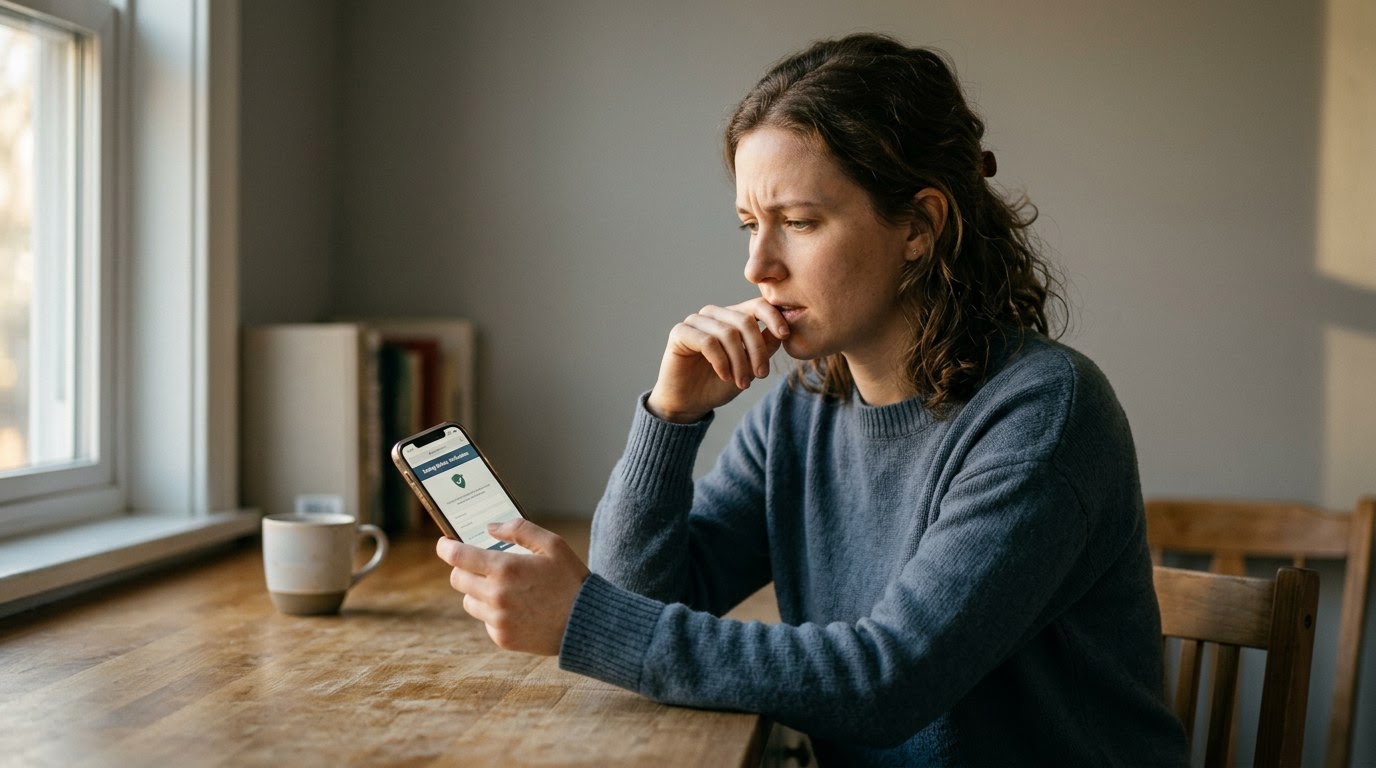
Meeting someone new online should bring excitement, not anxiety about your physical or financial security. Unfortunately, scammers frequently weaponize genuine safety concerns by tricking daters into visiting fake verification websites that phish for sensitive personal data and credit card details. Falling victim to these tactics can result in unauthorized monthly bank charges, identity theft, or emotional distress. When you suspect a match is not who they claim to be, running a TrustCheck takes 60 seconds and ties a name to a real phone, real email, and a real digital footprint before you decide to meet or share details.
1. The Match Insists You Register on a Specific Unknown Safety Portal
How to spot fake dating safety verification site scams begins when a match refuses to meet unless you complete a profile on an obscure, third-party link they provide. Scammers claim these sites conduct a "quick background check" or "safety clearance" to protect them during dates. In reality, the link directs you to a phony portal designed to capture payment details or personal data.
When you chat with someone on a dating app, safety should always be a mutual priority. However, established dating platforms already include reporting tools, photo verification, and built-in safety features. A match who insists that you click an external link to verify your identity on a site you have never heard of is diverting you away from platform security controls. These fake verification sites are often cheap web pages created with simple templates designed to mirror legitimate identity protection tools.
Consider the experience of Mark, a software technician who met a profile named "Elena" on a popular dating application. After three days of warm conversation, Mark suggested meeting at a local coffee shop. Elena agreed in principle but immediately sent a link to a website named "SafeDate-Pass-Verify.com." She claimed that as a single woman, her personal policy required every date to complete a free security pass on that specific website before she would share her location. When Mark suggested meeting in a busy public space instead, Elena insisted that the portal was non-negotiable and refused further conversation until he completed the registration.
2. The Verification Site Demands Credit Card Information for a Free Check
If a safety verification site claims to be free but requires you to enter credit card details to "verify your age" or "process a $1 processing fee," you are dealing with a financial phishing scam. Scammers use this tactic to enroll victims in unauthorized recurring subscription billing plans or sell stolen card numbers directly on dark web marketplaces.
Legitimate safety tools do not ask for payment card information under the guise of an age check or identity confirmation. Once you input your card number, CVV code, and billing address into a fraudulent portal, the site operators can execute unauthorized transactions immediately. Many of these sites operate under dark-pattern subscription agreements tucked away in unreadable text, charging your card anywhere from $49 to $99 every month until you cancel the card entirely.
Federal Trade Commission data shows romance scam losses exceeded $1.3 billion in 2024. A large portion of these financial losses originates from phishing sites that masquerade as routine verification systems or membership portals.
David encountered this pattern after connecting with a match who sent him a link to "MeetGuard-Security.org." The site displayed fake trust badges and claimed the security evaluation cost zero dollars. However, upon filling out his name, the site prompted him to enter a valid credit card to cover a "refundable $1.95 age-verification pre-authorization." Trusting the process, David entered his card details. Within forty-eight hours, his bank alerted him to a $79.99 recurring charge from an offshore merchant, while his online match vanished and deleted their dating profile.
3. The Match Shifts the Conversation Off-Platform Immediately Before Sending the Link
Scammers routinely pressure you to move off the dating app onto encrypted messaging platforms like WhatsApp, Telegram, or text messaging right before dropping a verification link. They do this because mainstream dating apps actively scan internal chats for malicious web addresses, external payment links, and repetitive scam scripts.
By moving the chat to SMS or an external messaging app, the scammer bypasses automated moderation filters. Once off-platform, they feel free to send suspicious links without risking an immediate account suspension on the dating app. If a match gets defensive or overly eager to move off the app within the first few messages, treat it as a deliberate tactical move to evade safety algorithms.
Pay close attention to how quickly the shift happens. Scammers often use automated bots or scripts that send a few generic pleasantries followed immediately by a request for your cell phone number. Once on SMS, they launch the verification link scheme. Staying on the main app until you have established basic trust provides an extra layer of protection, as the dating app's internal filters will frequently flag and ban these accounts before you can click a malicious URL.
4. The Website Domain Was Registered Days Ago and Lacks Legal Terms
Fake safety verification websites almost always have brand-new domain names, generic extensions, and incomplete legal documentation. A domain name is the web address you type into your browser, such as example.com. Scammers register dozens of these disposable web addresses every month, abandoning them as soon as security software flags them as malicious phishing links.
You can identify these sites by looking closely at the web address. They often end in uncommon extensions like .xyz, .top, .site, or .live, or use slightly misspelled variations of real words. Furthermore, fake verification sites rarely possess functional privacy policies, real terms of service, or legitimate corporate contact information. If you click on their "Contact Us" or "Privacy Policy" links, they often reload the same page, display broken formatting, or point to blank text windows.
Sarah was asked by a match to sign up on "DateSafe-ID-Check.live" prior to a dinner date. Suspicious of the strange domain extension, Sarah searched the site's domain registration record using an online WHOIS database tool. She discovered that the website had been registered only four days prior through an anonymous overseas proxy. Additionally, the footer of the site contained non-clickable logos of security companies. Recognizing that a legitimate enterprise security business would not exist on a four-day-old anonymous domain, Sarah blocked the contact.
5. The Verification Process Requires Your Social Security Number or Full Driver's License Upload
A verification site that asks for highly sensitive personally identifiable information, such as your Social Security number, passport photo, or an unredacted driver's license upload, is executing an identity theft harvest. Scammers gather these high-value data points to open fraudulent credit cards, take out loans, or sell complete identity packages online.
Identity verification for peer-to-peer interactions does not require sharing your national identification numbers or unredacted government documents with unknown web forms. Phishing sites construct convincing upload forms that mimic legitimate banking or security portals. They trick you into thinking that uploading a photo of your driver's license is standard procedure for date safety.
Once identity thieves obtain a digital copy of your driver's license alongside your full name, phone number, and address, they have everything required to execute synthetic identity fraud. They can take over existing accounts, request replacement credit cards, or bypass security checks at financial institutions. Never upload government identification documents to a web portal linked directly to you by a stranger online.
6. The Match Expresses Urgent Emotional Pressure or Disappointment If You Hesitate
When you question the validity of a safety verification website or refuse to enter your details, scammers shift to emotional manipulation. They turn the tables by accusing you of not caring about their safety, being untrustworthy, or wasting their time, exploiting your empathy to bypass your rational hesitation.
This psychological tactic relies on reversing the victim dynamic. Instead of addressing your reasonable safety concerns about an unknown link, the scammer makes you feel guilty for being cautious. They might say things like, "If you really wanted to meet me, you would do this 30-second check," or "I guess my physical safety doesn't matter to you."
Real people who value safety will respect your boundaries. A genuine match will happily agree to alternative safety measures, such as meeting in a crowded coffee shop during daylight hours, having a brief video call beforehand, or choosing a mutual location. If a contact responds to your reasonable caution with anger, guilt trips, or sudden block threats, they are executing a deliberate manipulation script.
Comparing Safe Verification Habits vs. Scam Tactics
Understanding the clear contrast between healthy safety practices and scam patterns helps you navigate online dating with confidence. Review the comparison below to quickly spot suspicious behavior.
| Dimension | Safe & Genuine Behavior | Scam Red Flag Behavior |
|---|---|---|
| Link Sharing | Suggests public meeting spots or stays within app messaging tools. | Insists on clicking an external link to register on an unknown site. |
| Payment Requests | Never asks for credit card info, fees, or age-verification deposits. | Demands credit card details for a "free" or low-cost check. |
| Personal Data | Exchanges standard conversational details (hobbies, basic area). | Demands sensitive IDs, Social Security numbers, or home addresses. |
| Communication Channel | Willingly chats on established app platforms until trust is built. | Pushes rapidly to off-platform channels like SMS or Telegram. |
| Response to Boundaries | Respects your caution and agrees to public meetings or video calls. | Uses guilt, anger, or urgency if you refuse to use their link. |
What to do if you spot these signs
- Stop all interaction immediately and do not click provided links. Close any web pages the match sent you, clear your browser cache, and refrain from entering any personal or financial information into external forms.
- Verify the person independently using safe tools. Instead of relying on links sent by a stranger, use TrustMatch to run a TrustCheck on their provided phone number, email address, or name to confirm their digital footprint securely.
- Report and block the profile on the dating app. Submit a detailed report to the app moderation team explaining that the user is distributing off-platform phishing links, then block the account to prevent further messaging.
- Protect your financial accounts if details were entered. If you already entered credit card details on a suspicious site, contact your bank immediately to freeze the card, dispute unauthorized charges, and request a replacement card.
- Monitor your identity and credit reports. If you uploaded government IDs or sensitive information, place a fraud alert or credit freeze with major credit bureaus (Equifax, Experian, TransUnion) to prevent fraudulent accounts from being opened in your name.
Trusting your gut is one of your best security assets when meeting people online. If a request feels unusual, persistent, or financially intrusive, stepping back to double-check their details is smart self-care. Identity verification should bring peace of mind, not hidden fees or stolen data. Whenever you feel unsure about a match, TrustMatch lets you verify who you are talking to in 60 seconds so you can date with confidence and control.
Frequently asked
What is a fake dating safety verification scam?
A fake dating safety verification scam occurs when an online match asks you to register on an unfamiliar safety website before meeting in person. These fake portals exist solely to steal your credit card details or gather personal information for identity theft.
Why do fake verification sites ask for a credit card for a free check?
Scammers claim credit card details are needed for age verification or a refundable processing fee. In reality, they use your card info to enroll you in expensive monthly subscription traps or drain your account directly.
Is it safe to upload a driver's license to a dating verification site?
No, you should never upload government identification to an unverified third-party website sent by a stranger. Scammers use driver's license photos and Social Security numbers to execute identity theft and open fraudulent accounts.
How can I tell if a safety verification link is legitimate?
Legitimate tools do not require payment details for peer-to-peer safety checks. Check the domain age using a WHOIS lookup; if the site was created recently or uses unusual extensions like .xyz or .site, it is likely fraudulent.
What should I do if I already entered my credit card on a scam site?
Contact your bank immediately to freeze your payment card and request a replacement. Monitor your account statements for unauthorized charges and report the fraudulent transaction to your credit card issuer.