How to Use Burner Phone Numbers Safely When Online Dating
· 11 min read
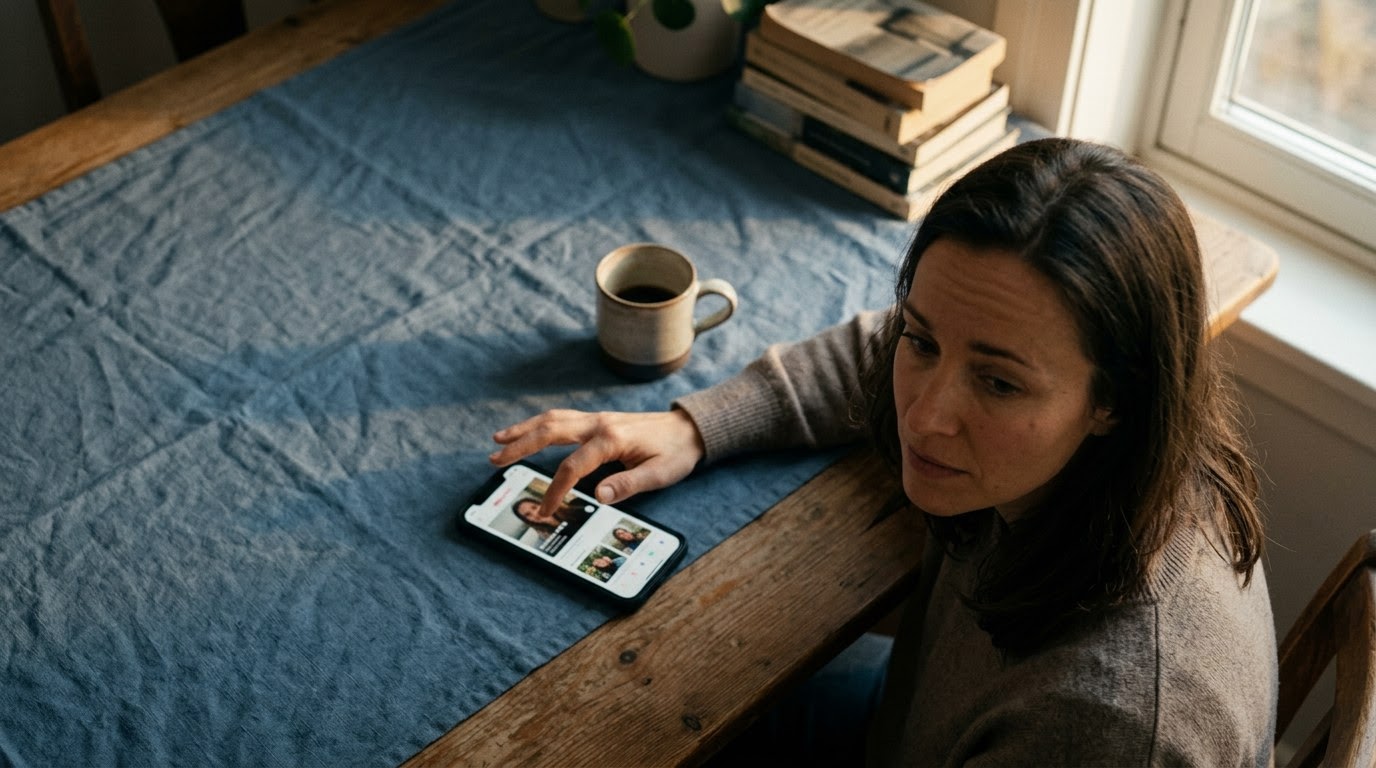
When you start chatting with someone new on a dating app, moving off the platform feels like a natural milestone. But handing over your primary phone number too soon exposes you to far more than unwanted text messages. Today, a standard ten-digit cell number acts as a digital master key that can unlock your home street address, employer, relatives, and public records through automated data broker websites. When matches misuse this information, the emotional toll of harassment or the financial cost of a targeted scam can be devastating. Protecting yourself does not mean you have to be paranoid; it simply means keeping your core identity safe while you figure out who is on the other end of the screen. Before taking significant steps or sharing intimate details, running a TrustCheck takes 60 seconds and ties a name to a real phone, real email, and a real digital footprint.
How Reverse Phone Lookups Put Your Personal Data at Risk
A primary phone number serves as your unique identifier across banking, social media, and commercial databases. When you share your real phone number with an online dating match, anyone can run a reverse lookup search—a web search that uses a phone number to discover the owner's legal identity—for a few dollars or even for free. Within seconds, a stranger can discover your full legal name, home street address, relatives, financial history, and satellite photos of your residence. Using a burner phone number blocks this data trail completely, giving you total control over your private life.
Most people do not realize how deeply connected their cell number is to their physical safety. When you register for online accounts, order delivery, or sign a lease, your primary phone number gets indexed by data aggregators. These commercial sites compile public records into searchable profiles. If an online contact has your primary line, they do not need to be a skilled hacker to find out where you live or where your kids go to school. They simply plug your ten digits into a search box.
Using a virtual number—a secondary telephone number routed through an internet app rather than a physical SIM card—creates a deliberate protective wall. If a date turns out to be possessive, aggressive, or dishonest, you can disconnect that virtual line with a single tap. Your real phone number, home address, and personal accounts remain completely untouched.
According to FTC data released in 2025, romance scams caused reported financial losses exceeding $1.1 billion in a single year, with many schemes starting via initial text messaging outreach.
Signal 1: They Pressure You to Move Off the Dating App Immediately
When an online dating match insists on taking your conversation off the dating app within the first few messages, it usually signals an effort to bypass platform safety monitoring. Scammers and bad actors want your direct phone number early so they can run reverse identity searches, send unmonitored links, or archive your profile before the app bans them. A safe contact will happily continue chatting inside the app until you both feel comfortable sharing secondary contact details.
Dating platforms invest heavily in automated moderation tools that scan for known scam scripts, financial requests, and abusive language. When a scammer gets you onto direct SMS or text messaging, those protective filters vanish. Furthermore, once they have your primary number, they can cross-reference your personal details against social media accounts to see if you are a lucrative target for financial fraud.
If you tell a match that you prefer to stay on the app a bit longer or offer them a virtual phone number instead, pay close attention to their reaction. A respectful person will understand and agree without hesitation. A manipulator will often try to make you feel guilty, calling you "distrustful" or claiming they are "never on this app anyway." That pushback is a major red flag.
Sarah matched with "David" on a popular dating app. Within three short messages, David claimed he was deleting his profile because he had finally found what he was looking for, and he asked for Sarah's personal cell number. When Sarah provided a secondary VoIP number instead, David became defensive, demanding her real number so they could use Apple iMessage. When Sarah stood firm, David blocked her. His urgency was not about romance; he wanted her primary number to run a lookup before she could evaluate his profile.
Signal 2: Their Phone Number Shows Carrier or Location Mismatches
A phone number's area code and carrier type reveal critical clues about whether a contact is who they claim to be. If your match claims to be a local business owner living in your town, but their text messages come from a non-fixed VoIP service—a temporary internet-based phone line that is not tied to a physical address—or an area code across the country, it indicates potential identity deception. While people do move and keep old area codes, a total mismatch between their story, location, and phone carrier often points to offshore scam operations or fake profiles.
Scammers operating overseas frequently buy bulk virtual numbers with area codes matching major Western cities. This allows them to pretend they are living just down the street from you. However, these virtual lines often leave clear technical signatures. If a text message takes unusually long to deliver, exhibits strange formatting, or fails to connect when you dial it directly, you are likely dealing with an automated forwarding system.
You do not need to be a technical expert to spot these patterns. Pay attention to local knowledge and timing. If someone claims to live in your city but does not know basic landmarks, or if their texting habits align perfectly with a timezone eight hours away, their phone setup is likely masking their true location.
Mark met "Elena," who claimed to be an interior designer residing in downtown Austin, Texas. After exchanging texts for two days, Mark noticed her phone number belonged to a virtual web carrier registered in California with no associated mobile cellular network. When asked about the discrepancy, Elena claimed her design firm assigned her a remote internet line. However, her complete inability to discuss local Austin neighborhoods revealed she was actually operating out of an overseas call center using cheap virtual routing.
Signal 3: Refusing Voice Calls or Moving to Encrypted Messaging Apps
If an online match eagerly exchanges texts on a secondary app but repeatedly makes excuses to avoid a quick voice call or video chat, they are likely hiding their true voice, age, gender, or physical location. Scammers frequently try to push you onto platforms like WhatsApp, Telegram, or Signal because those channels offer end-to-end encryption—a security system where only the sender and recipient can read messages—and fewer account identity checks. Refusing a brief, two-minute phone call on your virtual line is one of the clearest signs that someone is manipulating their identity.
Texting allows a fraudster to run multiple conversations simultaneously using translation software, pre-written scripts, and AI-generated text. A live phone call disrupts that script entirely. On a voice call, you can immediately hear background noise, accent variations, hesitation, and tone of voice. A fraudster posing as a young local student will struggle to maintain that persona during an unscripted phone conversation.
When you offer your virtual phone number for a quick phone chat before meeting up, watch how they respond. If they suddenly claim their microphone is broken, their camera is damaged, or their job prohibits voice calls, take a step back. Everyone has two minutes for a quick phone hello before investing time in a real-life date.
Priya chatted with "Julian" for two weeks. Whenever Priya called the secondary phone number Julian gave her, the line rang endlessly or went straight to a generic, automated voicemail. Julian insisted he was too busy with executive meetings for voice calls, yet he sent dozens of long text messages every hour. He pressured Priya to switch to Telegram for better privacy. When Priya stood firm on staying on her virtual phone line until they spoke out loud, Julian vanished and deleted his profile.
Signal 4: Using Your Details for Unwanted Background Searches or Stalking
Giving out your primary phone number allows toxic matches or obsessive individuals to track your daily movements, locate your workplace, or contact your family members if a date goes poorly or if you decline a second meeting. Unsolicited lookup harassment occurs when a match drops specific details about your life—like your home street address, vehicle type, or a relative's name—that you never shared during conversation. Using a virtual phone number keeps your physical residence and personal circle completely invisible.
In the world of online security, this practice is known as OSINT or open-source intelligence—gathering publicly available data from web records to build a detailed profile on a target. While safety-conscious singles often use public searches to protect themselves, abusive individuals use those same tools to intimidate, control, or monitor their targets.
When you use a dedicated virtual line for dating, any attempts at running reverse lookups on that number turn up empty or show an unlisted internet carrier. This creates a critical layer of friction. If an online contact displays possessive behavior, attempts to show up at your workplace, or sends troubling messages, blocking their virtual number cuts off their line of communication entirely without forcing you to change your primary cell phone number.
A 2024 AARP study found that roughly 25% of online dating users reported experiencing intrusive online research or unsolicited contact from matches using private personal details.
Comparing Safe Dating Communication vs. High-Risk Scams
Understanding the difference between healthy communication habits and high-risk scam patterns helps you maintain your boundaries without feeling cynical. The following table highlights key behaviors to watch for when exchanging phone numbers with an online match.
| Dimension | Safe & Respectful Behavior | High-Risk / Scam Behavior |
|---|---|---|
| Off-App Transition | Happy to stay on the dating app until both parties feel comfortable moving to text. | Demands your phone number immediately within the first few messages. |
| Virtual Number Reaction | Accepts your virtual or burner number without complaint or interrogation. | Gets angry, insists on your primary cell number, or demands iMessage. |
| Voice & Video Calls | Agrees to a brief voice call or video chat before meeting in person. | Makes constant excuses to avoid live voice or video calls while texting continuously. |
| Messaging Channels | Uses standard text messaging or your preferred app without pushback. | Pushes heavily for encrypted, unmonitored messaging apps like Telegram or Signal. |
| Personal Boundaries | Respects your privacy and asks normal, organic questions about your day. | Drops unprompted personal facts about your address, workplace, or family members. |
Step-by-Step Guide: How to Use Burner Phone Numbers Safely When Online Dating
Setting up a virtual phone number is quick, inexpensive, and easy to manage right alongside your standard mobile apps. By following a structured approach, you can communicate freely with new dating contacts without putting your primary digital identity at risk.
First, choose a reputable virtual number provider. Services like Google Voice offer free VoIP numbers tied to a secondary Google account. Dedicated privacy applications like Burner, Cloaked, or Phoner allow you to create disposable lines that can be burned—permanently deleted—with a single button if a contact becomes problematic. Download the app, select an area code near your region, and test sending a text message to a trusted friend to ensure notifications are working properly.
Second, keep this secondary line strictly dedicated to online dating and public interactions. Never link your burner phone number to your primary bank accounts, personal social media profiles, or password recovery systems. Keeping this number isolated ensures that if the number is ever exposed or spammed, your core accounts remain completely secure.
Third, use your virtual line for both text messages and initial phone calls. Most modern virtual number apps support high-quality voice calls directly over Wi-Fi or mobile data. Before meeting anyone in person, schedule a brief three-minute phone chat through your virtual app. This quick interaction verifies that their voice matches their age, persona, and stated background.
Finally, know when it is safe to transition to your primary phone number. You do not need to keep a match on a virtual line forever. Once you have met in person several times, verified their identity, and established mutual trust, you can choose to share your primary number. Until then, your burner line remains your best personal firewall.
What to do if you spot these signs
- Keep all messaging and calls strictly confined to your virtual phone line or the original dating app interface, ignoring any aggressive pushes to switch channels.
- Run an identity check through TrustMatch to verify their name against their stated phone number and location before meeting in person.
- Perform a reverse image search on their profile photos to confirm those images are not stolen from an influencer, model, or stock photo library.
- Cut off communication completely and block their profile across all platforms if they disrespect your boundaries, demand money, or display volatile behavior.
Trusting your gut when something feels off in online dating is not overly cautious—it is smart personal security. You deserve to explore new relationships without sacrificing your privacy, safety, or peace of mind. Using a virtual phone number gives you space to evaluate a match on your own terms. Taking 60 seconds to run a TrustCheck gives you total clarity so you can move forward with confidence.
Frequently asked
What is a burner phone number and how does it work?
A burner or virtual phone number is a secondary telephone line provided through a mobile app rather than a physical SIM card. It routes incoming texts and voice calls directly to your smartphone while keeping your primary cell number hidden from the recipient.
Can someone find my real name from a virtual phone number?
No. Reputable virtual phone apps do not publish your personal identity, home address, or credit card details to public reverse lookup directories. Searching a virtual number typically returns only the name of the internet carrier.
Is it rude to give a dating match a burner number?
Not at all. Practicing basic digital privacy is a standard and sensible boundary when dating online. Anyone who truly respects your personal safety will have no issue texting or calling a secondary virtual line.
How do I know if a match is using a fake phone number?
Look for carrier mismatches, such as a local match whose number traces to a non-fixed VoIP service or an out-of-state area code. Constant excuses to avoid live voice calls or video chats also indicate a fake setup.
When is it safe to share my primary phone number with a date?
It is best to wait until you have met in person at least once or twice, confirmed their real identity, and established mutual trust. Until you feel completely comfortable, keep all communication on your virtual line.
More in Safety
- What to Do When an Online Match Asks for Your Driver License
September 18, 2026
- What to Do When a Dating Match Asks for Wi-Fi Access
September 16, 2026
- What to Do If an Online Match Asks for Your Workplace Location
September 14, 2026