Statistical Analysis of Fake Professional Profiles on Online Dating Services
· 7 min read
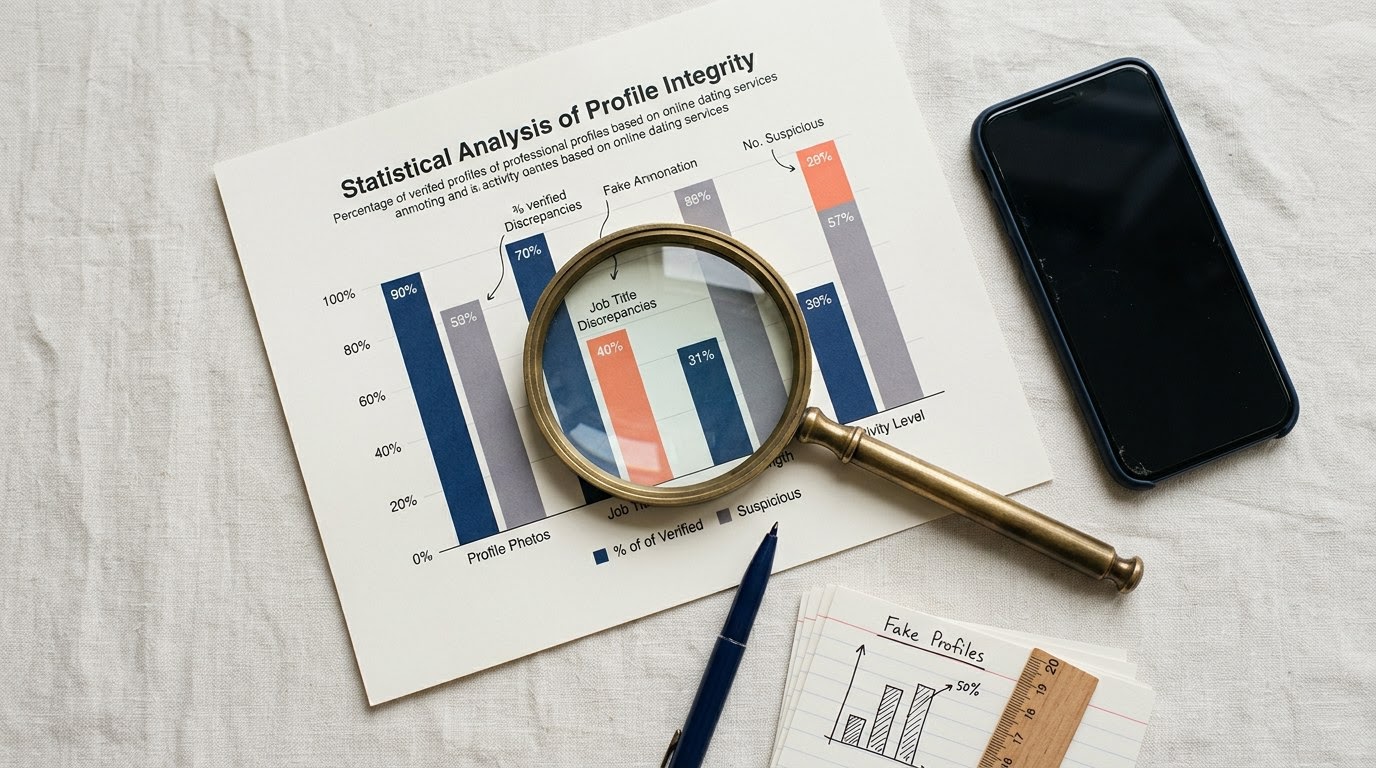
The data: Prevalence and financial impact of falsified executive profiles
What does statistical reporting reveal about the prevalence and financial damage of fake professional profiles on dating services? Public data from federal law enforcement and consumer protection agencies confirms that romance fraud involving falsified professional credentials yields the highest median financial losses of any consumer scam category. Fraudsters construct elaborate executive personas to project wealth and competence, persuading victims to transfer capital into fraudulent platforms under the guise of shared financial growth.
To evaluate how falsified professional personas impact victim loss trajectories, researchers analyze reported incidents across primary consumer protection databases. A 2024 AARP study found that roughly 70% of investment romance scam victims were initially contacted through online dating platforms or social networks. The table below outlines key statistical metrics associated with the most common professional identity vectors deployed in these schemes.
| Claimed Persona / Role | Primary Identity Indicators | Target Demographic | Estimated Loss Range per Victim | Primary Data Source |
|---|---|---|---|---|
| Tech Executive / C-Suite Founder | Stolen corporate headshots, fake startup websites, verified social badges | Adults aged 35–54 | $40,000 – $120,000 | FTC (2024) |
| Offshore Wealth Manager / Trader | Screenshots of portfolio gains, luxury travel media, technical market jargon | Adults aged 40–65 | $75,000 – $250,000 | FBI IC3 (2024) |
| Biotech / Engineering Consultant | Patented project claims, international travel schedules, academic titles | Adults aged 50+ | $30,000 – $95,000 | BBB (2023) |
| Venture Capitalist / Angel Investor | Private equity jargon, high-value asset photos, exclusive deal access offers | High-income adults aged 30–50 | $100,000 – $500,000+ | AARP (2024) |
The architecture of a falsified executive profile relies on high-trust signaling mechanisms. Fraudsters rarely create identities from scratch; instead, they harvest public imagery from real professionals operating in non-competing geographic markets. Stolen photos of foreign executives, private wealth managers, or lifestyle influencers are paired with fabricated professional histories on dating apps. These details are carefully selected to project stability, high earnings, and intellectual rigor.
Unlike traditional romance scams that rely on immediate hardship narratives—such as sudden medical emergencies or stranded travel logistics—executive romance scams reverse the economic dynamic. The perpetrator never asks for personal financial support. Instead, they position themselves as a financially prosperous peer willing to mentor the victim in wealth generation. This inversion lowers victim defenses, transforming traditional skepticism into professional interest and romantic attachment.
Statistical trends indicate that fraudsters favor industries characterized by high volatility and rapid asset growth, such as private equity, decentralised finance, and foreign exchange trading. By claiming expertise in complex financial instruments, the scammer creates an asymmetrical information dynamic where the victim feels compelled to rely on the scammer's guidance when evaluating fraudulent investment opportunities.
Demographics and targeting patterns in investment-based romance scams
Who is most frequently targeted by fraudsters deploying falsified professional credentials on dating services? Analysis of law enforcement datasets indicates that mid-career and older adults possessing liquid assets and retirement savings represent the primary targets. Scammers conduct detailed demographic screening, deliberately matching with educated professionals whose social signals suggest financial stability and familiarity with commercial investments.
Perpetrators execute targeted campaigns by analyzing victim profiles for specific vulnerability markers. Single, divorced, or widowed individuals who display professional accomplishments in their own profiles are frequently selected. The scammer's persona is calibrated to match or slightly exceed the victim's social standing, fostering a sense of peer-level validation.
Demographic reports from consumer advocacy organizations reveal distinct vulnerability patterns across age brackets. While younger app users (aged 18–29) encounter higher absolute volumes of fraudulent matches, older demographics (aged 50 and above) suffer disproportionately higher financial losses per incident. Scammers recognize that older targets often possess accessible home equity, pension disbursements, or accumulated investment portfolios.
The psychological progression from initial match to financial extraction follows a structured, multi-phase operational funnel designed to minimize suspicion at every stage:
- Profile Match and Identity Anchoring: The scammer establishes initial contact on a mainstream dating service, presenting a polished profile with executive titles, high-end photography, and detailed industry descriptions.
- Off-Platform Communication Migration: Within hours or days of matching, the scammer urges the target to transfer conversations to encrypted messaging applications, citing corporate privacy concerns or personal preference.
- Demonstration of Financial Capability: During routine casual conversation, the scammer casually mentions ongoing investment trades, sharing fabricated screenshots of high-margin capital gains or luxury purchases funded by investments.
- Onboarding to Controlled Investment Platforms: The scammer offers to guide the victim through a small, low-risk transaction on a custom trading portal, providing artificial early profits to secure total financial commitment.
This operational sequence relies heavily on social engineering rather than technical intrusion. By the time the investment proposal is made, the victim perceives the perpetrator not as a stranger from a dating service, but as a legitimate romantic partner and trusted professional advisor. The social proof generated by the falsified executive identity suppresses critical evaluation of the underlying financial platform.
Payment rails and financial vectors used by falsified professional profiles
Which financial channels and payment rails do perpetrators utilize to extract capital once executive trust is established? Data from financial regulatory monitoring shows that cryptocurrency transfers and international wire transfers dominate monetary extraction channels in investment romance scams. Scammers direct targets to deposit funds into fake trading interfaces or liquidity pools, concealing fund transfers behind decentralized protocols and shell entities.
The transition from romantic conversation to financial transaction is executed under the guise of an exclusive investment opportunity. Scammers frequently deploy custom-built web applications or modified mobile software that mimics legitimate brokerage dashboards. FBI reports from 2024 indicate that cryptocurrency-related romance scams accounted for over $2.5 billion in total victim losses. These custom dashboards display real-time market data alongside inflated asset balances, creating the illusion that the victim's capital is generating extraordinary yields.
Federal Reserve reports in 2025 highlighted that wire transfers and cryptocurrency payments comprised over 80% of high-dollar fraud settlements related to impersonation. Fraudsters systematically drain victim assets by encouraging compound investments. When a victim requests a withdrawal, the fake trading platform enforces artificial administrative fees, tax liabilities, or compliance deposits, extracting additional capital until the victim realizes the system is fraudulent.
The speed with which capital is moved out of domestic jurisdiction creates severe recovery challenges for legal authorities. Cryptocurrency transfers are routed through automated mixing services or decentralized bridges within minutes of receipt. Similarly, traditional banking wires are directed to international accounts managed by money mule networks operating across multiple regulatory jurisdictions, effectively severing the audit trail before formal fraud reports can be filed.
Furthermore, fraudsters increasingly exploit decentralized finance protocols to add layers of technical complexity. Victims are instructed to purchase standard stablecoins on regulated domestic exchanges before transferring those assets to external, non-custodial wallet addresses controlled by the scam organization. This multi-step transfer process bypasses standard automated fraud detection filters deployed by traditional consumer banks.
Methodology and caveats
This statistical analysis synthesizes consumer complaint records, law enforcement threat assessments, and victim surveys published between 2020 and 2026. Official figures from agencies like the Federal Trade Commission and the Federal Bureau of Investigation capture self-reported incidents and confirmed financial transfers. However, these figures undercount total harm because many victims do not report losses due to emotional trauma, social stigma, or fear of professional embarrassment. According to Bureau of Justice Statistics data from 2023, fewer than 15% of identity theft and impersonation victims report the crime to law enforcement. Consequently, total nationwide losses from investment romance scams are estimated to be substantially higher than published reporting baselines.
What this means for you
When interacting with new matches on online dating services or social discovery applications, maintaining rigorous identity verification practices is essential before establishing emotional intimacy or discussing personal finances. Be cautious of matches who claim extraordinary investment success, display curated luxury lifestyles, or push to move conversations to private messaging platforms quickly. Before trusting an individual who claims C-suite or investment credentials, perform an independent identity check to confirm their professional details match legitimate enterprise records. Conducting a TrustCheck on new digital contacts provides immediate clarity regarding whether a profile represents a real individual or a manufactured fraud persona, protecting your financial independence and personal security.
Frequently asked
How do fraudsters create fake executive profiles on dating services?
Fraudsters harvest public photos, social media posts, and professional details from real executives operating in distant markets. They combine these assets with stolen corporate logos and fabricated investor titles to construct authentic-looking profiles designed to project high economic status and professional authority.
What are the primary signs of an investment-based romance scam?
Key indicators include rapid requests to communicate off the dating app, unsolicited claims of trading success, invitations to participate in exclusive cryptocurrency or foreign exchange opportunities, and resistance to in-person meetings or live video calls.
Why do investment romance scams cause higher financial losses than other frauds?
Unlike traditional scams that request small emergency funds, investment romance schemes persuade targets to transfer life savings, home equity, or retirement funds into fake platforms under the impression that the money remains accessible and is generating high compound returns.
Can stolen funds from cryptocurrency dating scams be recovered?
Fund recovery is extremely difficult once cryptocurrency leaves regulated domestic exchanges. Perpetrators rapidly transfer assets through unhosted wallets, mixing protocols, and foreign cash-out services, making law enforcement seizure challenging without immediate reporting.
How can dating app users verify a match's executive identity?
Users should cross-reference profile photos using reverse-image lookups, verify corporate affiliations through official company directories, insist on real-time video interactions, and avoid conducting financial transactions or joining investment platforms recommended by digital acquaintances.