Warning Signs an Online Match Is Isolating You From Friends and Family
· 11 min read
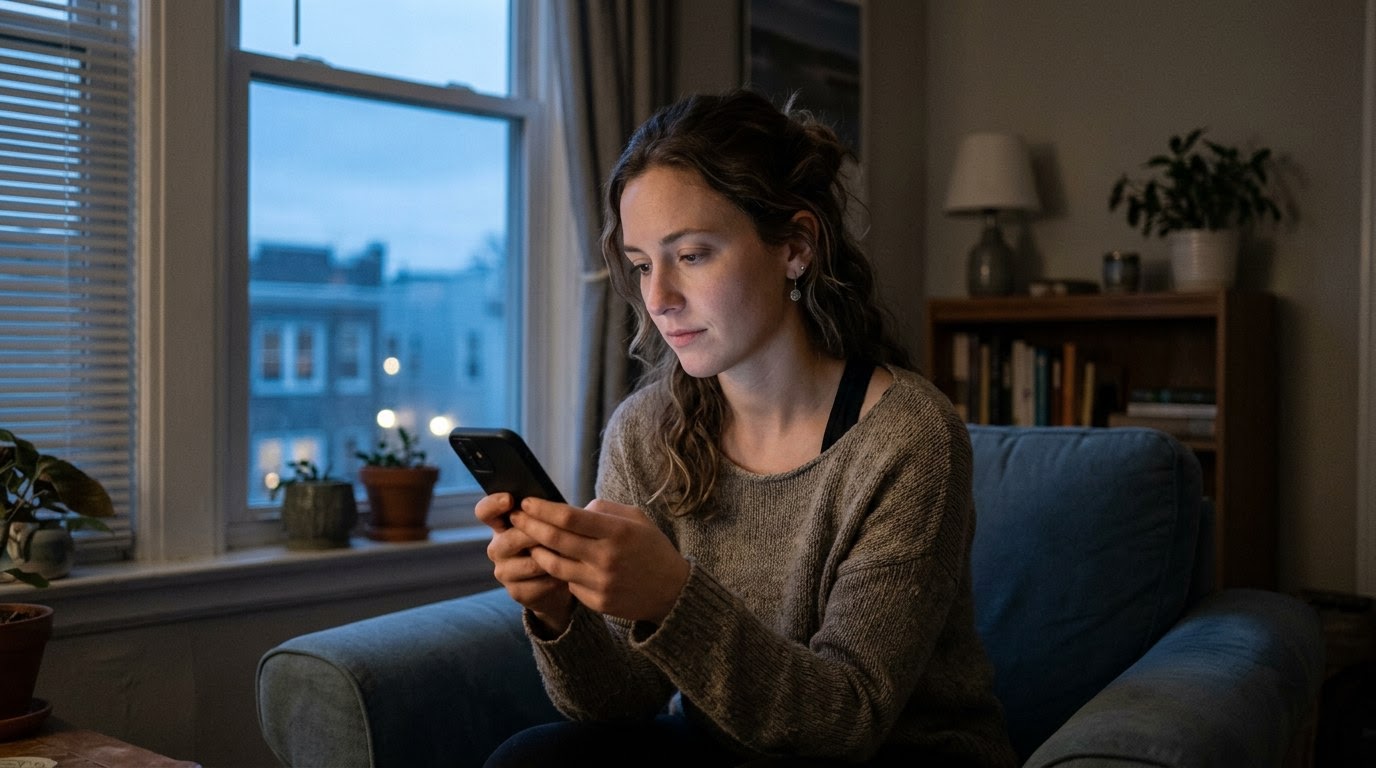
When you meet someone online who feels like your perfect match, it is easy to get swept up in the excitement. But when an online romantic interest slowly begins driving a wedge between you and the people who care about you, you are likely looking at a deliberate psychological tactic known as social isolation. Romance scammers use emotional manipulation to cut off your reality checks—the friends and family members who might spot red flags before you do—making you far more vulnerable to eventual financial demands and coercive control. The emotional toll of realizing a relationship was built on deception can be devastating, and the financial cost is often severe. Protecting yourself starts with grounding your trust in verifiable facts; running a TrustCheck takes 60 seconds and ties a name to a real phone, real email, and a real digital footprint.
They demand your constant attention and create artificial urgencies
Demanding constant attention is a manipulation tactic where an online match creates endless emergencies or persistent messaging demands to occupy all your time. This behavior aims to exhaust your mental bandwidth so you have no space left to speak with loved ones or evaluate the relationship objectively. For example, Sarah matched with a man named David who claimed to be an offshore engineer; within two weeks, David texted her continuously from morning to night, growing hostile whenever she took longer than ten minutes to reply.
In healthy relationships, both people maintain their personal lives, hobbies, and independent social connections. A scammer, however, treats your independent time as a direct threat to their control. They will often use love bombing—an overwhelming flood of romantic affection, grand compliments, and premature promises of a shared future—to keep your attention permanently glued to your phone screen.
When you are constantly responding to ping after ping, your nervous system remains in a high-alert state. You miss Sunday dinners with your siblings, stop attending your weekly exercise class, and ignore phone calls from long-time friends. Over time, your physical world shrinks down to a single messaging app. By keeping you occupied every waking hour, the scammer prevents you from talking through your daily life with people who know you best and would notice suspicious changes in your behavior.
This constant stream of communication also serves to build rapid, artificial intimacy. When someone is messaging you from the moment you wake up to the moment you go to sleep, you start feeling as though you have known them for years. Scammers rely on this false sense of deep familiarity to make you feel guilty for pulling away, effectively turning your own empathy into a barrier that separates you from your real-world support network.
They criticize your friends and family under the guise of protecting you
This signal occurs when your online partner subtly disparages your loved ones, convincing you that your friends or family do not truly care about your happiness. The scammer positions themselves as your sole champion while planting seeds of doubt about everyone else in your life. For instance, Mark met a woman online who repeatedly told him that his sister was overbearing and toxic simply because his sister asked polite questions about where the online match lived and worked.
The language used in this phase is rarely aggressive at first. Rather than launching outright attacks on your family, the person might say things like, "I just hate how your friends take advantage of your generosity," or "Your brother seems so negative about us because he doesn't want to see you truly happy." This subtle undermining causes you to re-evaluate healthy relationships through a distorted, defensive lens.
As you start absorbing these comments, you naturally pull back from your support network to avoid conflict. You might stop sharing updates about your life with your best friend or decide not to invite family over as often. FTC data from 2024 revealed that romance scams resulted in reported losses exceeding $1.1 billion, a figure driven heavily by manipulators who successfully severed victims from grounded financial advice. Once your trusted friends are pushed aside, you lose the grounded perspectives that help keep you safe from financial exploitation.
Notice how your partner responds when you bring up advice your family gave you. A genuine partner welcomes the input of people who love you and respects your existing relationships. A scammer will treat any outside perspective as a personal insult or an attack on the relationship, gradually convincing you that you can only trust them.
They insist on moving conversations to private or encrypted platforms immediately
Moving off-platform is when an online match urgently pressures you to switch from a secure dating site or social network to an unmonitored messaging application. Dating apps feature safety tools, reporting mechanisms, and automated scam filters that bad actors desperately want to bypass. For example, Elena had been chatting with a match for only two hours when he claimed his dating app profile was glitching and insisted they switch immediately to Telegram, deleting his original profile shortly afterward.
Scammers push for private channels because messaging platforms like WhatsApp, Telegram, or SMS offer end-to-end encryption—a technical process where only the sender and recipient can read the messages, hiding content from platform moderators. While encryption is crucial for genuine personal privacy, scammers exploit it to prevent dating sites from detecting fraudulent text patterns, fake profile pictures, or suspicious links.
Once you are isolated on a direct messaging line, the scammer can operate free from platform warning banners and community safety checks. They might also ask you to delete your dating profile entirely, framing it as a romantic commitment to your new connection. In reality, deleting your profile prevents other users from reporting the scammer or leaving public reviews, leaving you completely off the grid without safety features protecting you.
If someone gets defensive or angry when you prefer to stay on the main app until you meet in person, pay close attention. Legitimate matches understand dating safety and will respect your boundaries. Scammers view safety boundaries as obstacles and will push aggressively to get you into a space where no one else can monitor their behavior.
They frame your loved ones as jealous or unsupportive of your happiness
Framing loved ones as jealous involves convincing you that any skepticism from friends or family stems from envy rather than genuine concern. When a family member asks basic questions about your match's background, the scammer reframes those healthy questions as malicious attacks on your joy. For example, when James told his online girlfriend that his daughter had concerns about her financial distress stories, the girlfriend claimed his daughter was trying to sabotage his newfound fulfillment out of jealousy.
This strategy relies on creating an "us against the world" narrative. By making you feel like you and your online partner are a united front defending your love against cynical outsiders, the scammer creates an emotional bond built on shared adversity. You begin to treat legitimate questions from your family as personal slights against your judgment, closing off communication channels that could otherwise keep you secure.
As of August 2026, social engineering tactics have become increasingly sophisticated, making emotional manipulation harder to spot at first glance. When you adopt the mindset that your family is against your relationship, you stop disclosing details about your partner. You conceal financial gifts, unexpected wire requests, or personal stress. This code of silence ensures that no one in your inner circle can intervene when subtle red flags escalate into overt requests for money or sensitive account access.
It is worth stepping back and looking at your history with your family and friends. If these people have consistently supported you through life's ups and downs, it is highly unlikely they suddenly turned malicious. Their hesitation is usually a protective instinct reacting to inconsistencies you might be too emotionally invested to see clearly.
They induce guilt whenever you spend time away from your phone
Guilt induction is a pattern where an online match reacts with hurt, anger, or exaggerated emotional suffering whenever you participate in offline activities without them. They use emotional guilt to make you feel directly responsible for their mental state whenever you step away. For instance, Karen went to a three-hour birthday lunch with her daughter and returned to find thirty frantic messages from her match, who accused her of abandoning him during a severe emotional crisis.
This dynamic slowly trains you to modify your real-world behavior to avoid their dramatic reactions. You find yourself checking your phone under the dining table, shortening outings with friends, or turning down weekend invitations altogether. The stress of managing their extreme reactions drains your energy and makes socializing with others feel exhausting rather than enjoyable.
Over time, staying home and staring at your phone feels like the path of least resistance. You begin turning down invitations before your match even has a chance to complain. This self-imposed isolation is precisely what the bad actor wants. Once your physical world shrinks to the perimeter of your smartphone, you become entirely dependent on the scammer for companionship, emotional validation, and daily routine.
Healthy relationships encourage you to enjoy your life, spend time with loved ones, and pursue your interests. If taking a few hours to recharge or connect with friends results in guilt trips, silent treatments, or manufactured emergencies, you are experiencing coercive control designed to keep you isolated.
They enforce strict secrecy around your relationship and shared stories
Strict secrecy occurs when an online match asks you to keep the existence of the relationship, their profession, or their personal life stories a complete secret from everyone you know. They often claim their high-profile job, security clearance, or complicated family drama requires total confidentiality. For example, Robert began dating an online match who claimed to be an undercover diplomat; she repeatedly warned him that sharing her name or photo with anyone would put her physical safety at risk.
Secrecy is the single most effective tool a scammer has to prevent exposure. By convincing you that keeping quiet is a matter of trust, safety, or romance, they shield their fabricated persona from basic external verification. When a relationship is kept secret, no one in your life can perform a casual search, ask helpful questions, or notice logical gaps in the scammer's story.
According to an FBI report from 2023, cybercrime victims reported romance and confidence scheme losses of over $650 million, with extreme secrecy highlighted as a common factor in prolonged scams. Scammers know that if a trusted friend hears that an undercover diplomat needs emergency travel funds, that friend will immediately identify the fraud. Secrecy keeps you trapped in a closed loop where the scammer's word is your only source of truth.
When someone genuinely cares about you, they are excited to be part of your life and open to meeting the people who matter to you. Requests for total privacy, hidden identities, or unrecorded phone calls are major warnings that the person on the other end of the screen is hiding something significant.
Comparing safe online matches versus scammer behavioral patterns
To help you evaluate your current interaction, compare your online match's behavior against these common patterns. Identifying these differences early can help you regain control and protect your emotional and financial safety.
| Dimension | Safe & Genuine Behavior | Isolating Scammer Behavior |
|---|---|---|
| Response Expectations | Respects your schedule, work hours, and offline activities without demanding instant replies. | Demands immediate answers, sending dozens of messages or inducing guilt if you are away. |
| Reaction to Family | Encourages your relationships with loved ones and listens respectfully to their feedback. | Criticizes your family, claims they are jealous, and urges you to pull away from them. |
| Communication Choice | Willing to stay on dating platforms or use verified video calls until trust is established. | Pressures you immediately to move to unmonitored encrypted messaging apps like Telegram. |
| Privacy & Secrecy | Open about their life, verifiable online, and happy for you to share your joy with friends. | Demands strict confidentiality, claiming high-security jobs or sensitive drama requires silence. |
| Money & Help Topics | Maintains financial independence and never asks for money, gift cards, or crypto investments. | Creates sudden financial emergencies, asking for urgent funds once you are isolated from friends. |
What to do if you spot these signs
- Pause all communication and slow down the pace. Take a deliberate step back from your phone. Give yourself twenty-four hours without replying to create mental space and break the cycle of high-pressure urgency.
- Verify their details independently. Run an identity verification check using TrustMatch to see if their provided phone number, email address, and real name align with an authentic digital footprint.
- Talk to a trusted real-world contact. Call a long-time friend, family member, or trusted neighbor. Share the full details of your online interactions without leaving anything out or editing the story to protect your match.
- Perform a reverse image search. Take their profile photos and upload them to a search engine to verify if the pictures belong to a public figure, a stock photo repository, or an unrelated social media profile.
- Document everything and report suspicious accounts. Save screenshots of text exchanges, profile pages, and any requests for money. Report the account to the dating platform, your bank if money was exchanged, and official regulatory agencies like the FBI Internet Crime Complaint Center.
Trusting your gut is a powerful protective instinct, and recognizing these emotional patterns is the first step in keeping yourself safe. Real love and genuine connections never require you to sacrifice your relationships with family and friends or keep quiet in the shadows. If something feels off in your online relationship, taking a step back to verify facts brings immediate clarity and peace of mind. Running a TrustCheck gives you the clear, verified facts you need to protect your heart, your support system, and your bank account.
Frequently asked
Why do romance scammers want to isolate you from your family?
Scammers isolate you to remove reality checks and external advice. When you are disconnected from friends and family, there is no one to point out inconsistencies, red flags, or financial risks, making it far easier for the manipulator to exploit you.
What is love bombing and how does it relate to social isolation?
Love bombing involves overwhelming you with excessive affection, constant compliments, and premature commitment promises. Scammers use it to fast-track emotional intimacy, occupy all your free time, and make you feel guilty for prioritizing offline relationships over them.
How can I tell if my online match is using fake profile pictures?
You can save their profile photos and perform a reverse image search online. If the images appear under different names, belong to a known model or public figure, or show up on stock photo sites, you are dealing with a fake identity.
Is it normal for an online match to refuse video calls?
No. While someone may occasionally be camera-shy, a persistent refusal to do live video calls—often using excuses like broken cameras, poor military connections, or strict security jobs—is a major red flag indicating a stolen or fake identity.
What should I do if I have already sent money to an online match?
Immediately stop all financial transactions and cut off communication. Contact your bank or financial institution right away to report fraud and attempt a chargeback, then file a report with local law enforcement and the FBI Internet Crime Complaint Center.