Warning Signs an Online Match Is Using a Synthetic Identity
· 10 min read
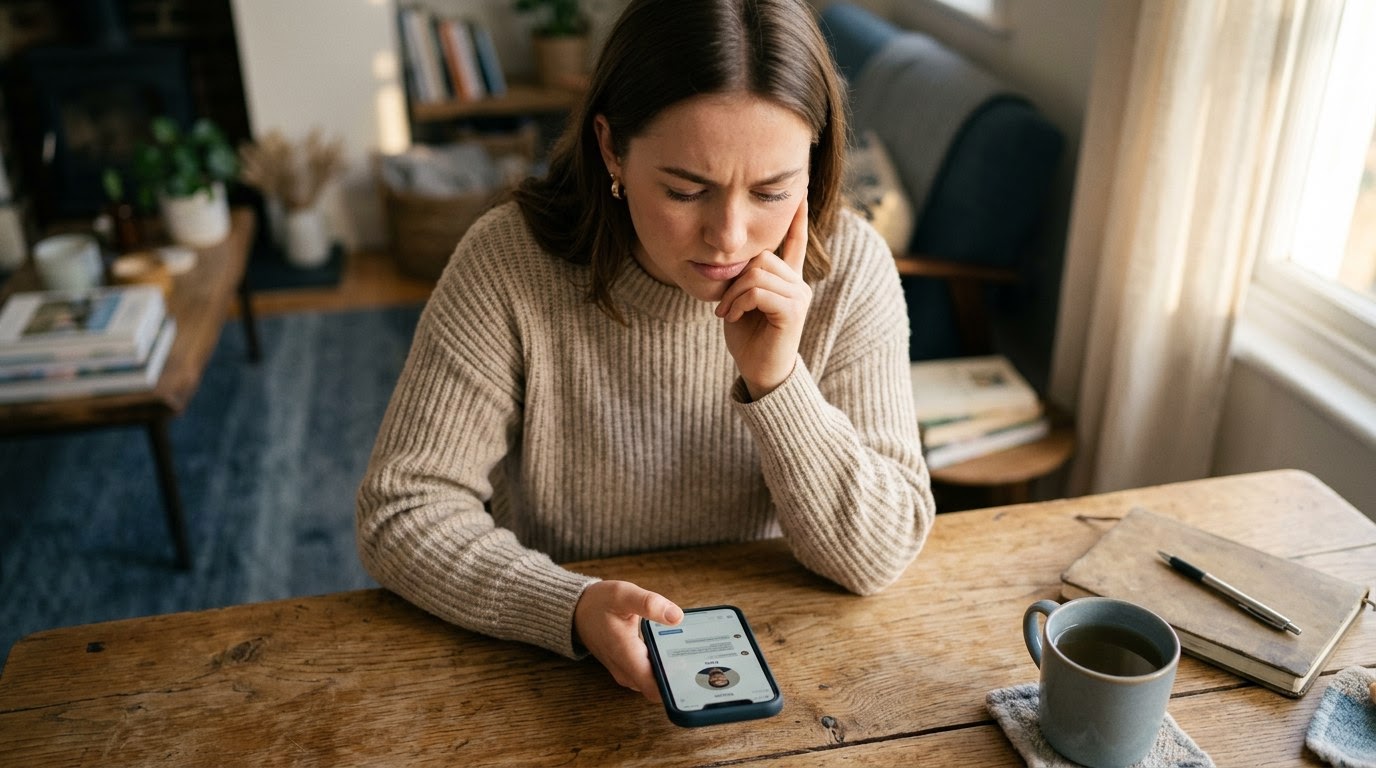
When you meet someone online, you expect to interact with a genuine person sharing authentic life experiences. However, modern scammers often deploy a synthetic identity—a composite profile built by stitching together stolen personal data like a real Social Security number with fake names, dates of birth, and fabricated photos—to gain your trust. As of October 2026, these artificially crafted profiles are increasingly common on dating sites, social networks, and online marketplaces. Falling for a synthetic identity can lead to devastating emotional deception, privacy breaches, and significant financial losses. FTC data from 2024 shows romance and fraud scams involving synthetic identities led to over $1.3 billion in reported losses. If something about your new contact feels slightly off, running a TrustCheck takes 60 seconds and ties a name to a real phone, real email, and a real digital footprint.
Warning Signs an Online Match Is Using a Synthetic Identity: A Fragmented Digital Footprint Across Social Platforms
A fragmented digital footprint across social platforms occurs when an online profile exists in isolation or shows inconsistent history across different networks. In synthetic identity scams, fraudsters create accounts on short notice, leaving a sparse trail without organic interactions, tag history, or long-term friendships. When an online match has a polished profile on one app but zero verifiable history elsewhere, it strongly indicates that the persona was fabricated recently to target unsuspecting individuals.
When a real person uses the internet, they leave behind an organic digital footprint, which is the trail of data and online account histories a person leaves behind across the internet. Over years of browsing, chatting, and posting, genuine users connect with coworkers, family members, local businesses, and old school friends. Their profiles feature tagged photos from public events, casual comments from acquaintances, and a timeline that naturally evolves over several years.
Synthetic profiles, by contrast, lack depth. A scammer might build a pristine profile on a single dating platform using high-resolution images purchased from a stock library or generated by artificial intelligence. However, when you look for them on professional networks, local directory listings, or major social media networks, their footprint evaporates. Alternatively, you might find matching accounts created only a few weeks ago with identical bios and zero mutual connections or comment history.
Consider the experience of a community member named Mark. He connected with a profile claiming to be an independent consultant who had lived in Chicago for a decade. The photos looked authentic and relaxed. However, when Mark searched for the match's professional presence, he found a brand-new social media account with three followers and no listed employment history. A deeper look revealed that the name had no registered utility records, public notices, or digital presence in Illinois prior to the previous month. The profile was a complete synthetic creation designed to simulate an established professional.
High Credit Scores and Solid Documentation Paired with Zero Real-World Connections
Scammers using synthetic identity tactics often nurture fake credit profiles and synthetic records over months or years, establishing what appears to be flawless financial credibility on paper. However, this manufactured documentation lacks authentic real-world connections, such as long-term residential history, local ties, or shared social circles. If an online match shares detailed credentials or financial standing that seem impeccably clean yet completely disconnected from verified human relationships, you are likely dealing with a synthetic profile.
Synthetic identity creation is unique because perpetrators intentionally cultivate the fake persona to appear trustworthy to automated systems. An Experian report in 2025 estimated that synthetic identity fraud remains the fastest-growing form of financial crime, costing billions annually across various online sectors. Scammers often combine a real child's or deceased person's identification number with a brand-new name, slowly applying for small credit lines or online accounts to build a synthetic credit file.
When interacting with you, the fraudster might boast about their financial stability, share screenshots of high-value accounts, or present official-looking documents to prove their legitimacy. They use this apparent financial security to lower your defenses before asking for temporary assistance, wire transfers, or investment participation. The red flag isn't just the money discussion; it is the stark contrast between their supposed high-status credentials and their total absence from municipal records, public directory listings, or real-life community groups.
For example, Elena matched with a man claiming to be a successful regional contractor building high-end homes. He sent scanned copies of business licenses and bank statements to prove his credibility during their initial discussions about moving in together. Yet, when Elena searched local business registries and state licensing boards, the license number belonged to an entirely different enterprise operating in another state. The scammer had grafted legitimate license numbers onto a synthetic persona, using fake paperwork to build unearned trust.
Consistent Excuses to Avoid Video Calls, In-Person Meetups, or Voice Verification
Refusing live video calls, voice conversations, or local meetups is a classic warning sign that an online match is hiding their true identity. Synthetic identity operators rely on static photos, stolen imagery, or text-based communication because real-time video exposure immediately breaks the illusion of their manufactured persona. If your match consistently blames technical glitches, remote work assignments, or sudden personal emergencies whenever you suggest a live interaction, they are likely protecting a fake identity.
While remote communication is normal when meeting people online, genuine matches are usually eager to establish trust through live voice or video interactions once a mutual connection develops. Synthetic scammers, on the other hand, actively avoid live video because their physical appearance, voice, age, or gender will not match the persona they have carefully constructed online.
Even with advances in real-time camera filters and digital manipulation, scammers struggle to maintain video quality during interactive conversations. As a result, they rely on a script of convenient excuses. Common patterns include claims of working on secure military bases, managing offshore oil rigs, undergoing emergency medical treatment, or suffering from perpetually broken front-facing cameras.
Take the example of David, who talked with an online match for six weeks. The match sent dozens of high-quality photos documenting her daily routine, from morning coffee to weekend hikes. However, every time David attempted a video call, the connection was abruptly dropped, or the match claimed her phone mic was malfunctioning. When David insisted on a brief video wave before planning a weekend dinner, the match became defensive, accusing him of lacking faith in their relationship. This refusal to verify identity through a simple 15-second video interaction is a major signal of synthetic impersonation.
Their Life Story Contains Mismatched Details, Odd Chronologies, or Recycled Content
Mismatched biographical details occur when a scammer forgets the specific lies, dates, or backstories assigned to a synthetic persona. Because synthetic identities blend fragments of real data with made-up narratives, fraudsters frequently make narrative errors, such as misstating where they grew up, contradicting past employment dates, or sharing stories copied from other online sources. If your match's personal background shifts during casual conversation, you are observing a clear indicator of a fake profile.
Maintaining a synthetic persona requires managing a complex web of lies. Scammers often manage multiple synthetic profiles simultaneously, making it difficult for them to keep their fake histories consistent across different chat threads. You might notice subtle discrepancies that do not align with normal human memory.
For instance, your match might claim to have graduated from a specific university in 2015, but later mention living in another country during those same years. They might recount a childhood memory situated in a specific town, only to confuse key geographic details later on. Additionally, performing a text search on emotional anecdotes or romantic declarations sent by the match often reveals that the exact phrasing was lifted directly from scam scripts or public blogs.
Consider Sarah, who met an online match claiming to be a native of Seattle who relocated to Texas for work. Over several conversations, the match mentioned graduating from a high school in Miami, described growing up in coastal California, and claimed he did not know how to drive in rain. When Sarah pointed out these geographic contradictions, the match gave convoluted explanations, claiming his family moved constantly. A closer review showed he was mixing up background details from different synthetic profiles he was operating at the same time.
Rapid Escalation of Emotional Intimacy Combined with Financial Inquiries
Rapid emotional escalation combined with early inquiries about your financial situation is a primary behavioral marker of a synthetic identity scam. Synthetic operators use fast-tracked romance, intense compliments, and declarations of love to create emotional dependency before you have time to critically evaluate their claims. Once an emotional bond is established, they shift the focus toward your savings, investment habits, or emergency financial assistance.
Authentic relationships develop organically over time through shared experiences and gradual trust building. Synthetic identity scammers cannot afford to wait months to build genuine trust, as fake accounts are constantly at risk of being flagged or banned by platform moderators. Therefore, they accelerate the emotional timeline rapidly.
Within days or weeks of contacting you, a synthetic match may call you pet names, talk about long-term future plans, or claim they have never felt such a deep connection with anyone else. This rapid intimacy creates a psychological shield; once you care about the person, your natural skepticism drops. Shortly after establishing this intense dynamic, the conversation subtly shifts to financial matters. They might ask probing questions about your income, offer lucrative crypto investment opportunities, or describe an urgent financial crisis requiring temporary wire transfers.
For instance, James matched with someone who declared deep affection after just four days of texting. Before they had even spoken on the phone, the match began asking about James's retirement plans and suggested he transfer funds into an exclusive digital asset platform managed by her associate. When James expressed caution, the match framed his hesitation as a betrayal of their emotional connection. This manipulation tactic is designed to force fast financial actions before the target conducts an identity check.
Comparing Safe Online Matches vs. Synthetic Profiles
Understanding the difference between an authentic online contact and a synthetic identity comes down to evaluating real-world consistency, communication habits, and transparency. While safe online matches welcome identity verification and maintain connected digital histories, synthetic profiles exhibit isolated accounts, defensive behaviors, and inconsistent stories. The comparative breakdown below highlights five key operational dimensions to help you evaluate whether an online match is genuine or artificially fabricated.
| Dimension | Safe Online Match | Synthetic Profile |
|---|---|---|
| Digital Footprint | Multi-year presence across social, professional, or public records with organic interactions. | Isolated or newly created accounts with sparse history, artificial photos, and missing public records. |
| Verification Willingness | Happy to video chat, send quick voice notes, or meet in public after initial rapport. | Refuses live video calls or meetups, citing constant technical issues or remote locations. |
| Details & Consistency | Consistent personal timeline, logical location history, and verifiable local background. | Contradictory dates, shifting life stories, and recycled script phrases in text chats. |
| Emotional Progression | Gradual growth of trust over time, respecting personal boundaries and safety checks. | Aggressive emotional bonding within days, framing caution as a lack of trust. |
| Financial Behavior | Keeps personal finance private and never asks for money, crypto, or account access. | Probes into your finances, suggests investments, or requests emergency financial aid. |
What to Do If You Spot These Signs
If you recognize warning signs that an online match is using a synthetic identity, taking swift and structured protective steps is essential to protect your personal safety and finances. You should pause private communication, verify the individual's claims using independent public data, and report suspicious profiles to the hosting platform. Taking methodical action ensures you cut off potential manipulation before any financial or personal harm occurs.
- Pause communication and step back: Take a break from messaging the person. Disengaging emotionally gives you space to assess their behavior rationally without feeling pressured by urgent messages or romantic claims.
- Run an independent identity check: Use a trusted online verification service to confirm whether their details match real records. Running a TrustCheck allows you to verify if their name connects to a real phone number, physical address, and established digital footprint within seconds.
- Conduct a reverse image search: Save profile photos sent by your match and run them through reverse image search engines. Look for matches on stock photo sites, model portfolios, or social accounts belonging to entirely different individuals.
- Refuse all financial requests: Never send money, cryptocurrency, gift cards, or personal account details to someone you have not met and verified in person, regardless of how convincing their story sounds.
- Report and block the profile: Report the account to the safety team of the app or platform where you met. Once reported, block their phone number and social profiles to prevent further contact.
Building online connections requires a balanced approach between remaining open to new people and protecting your personal boundaries. Trusting your gut when something feels off is not paranoia; it is a healthy protective instinct developed through life experience. If a match's story seems inconsistent or their online presence appears paper-thin, taking a quick step to verify their identity gives you clear peace of mind. Running a TrustCheck is a simple 60-second action that brings real clarity to your online interactions, allowing you to build safe, genuine connections with confidence.
Frequently asked
What is a synthetic identity in online dating?
A synthetic identity is a fabricated profile created by blending real stolen personal information, such as social security numbers, with fake names, photos, and contact details. Scammers build these complex profiles to appear credible on dating apps and social platforms while hiding their true real-world identity from targets.
How do scammers create realistic synthetic profiles?
Scammers generate realistic synthetic profiles by purchasing stolen personal data from data breaches, combining it with synthetic credit records, and using AI-generated or stolen photos. They often establish basic accounts across several services over time to mimic an authentic user's online habits and bypass security filters.
Why do synthetic identity scammers avoid video calls?
Scammers avoid video calls because live camera interactions instantly reveal that their real age, gender, appearance, or location does not match their online persona. Even with modern digital camera filters, real-time video chat makes it extremely difficult for a scammer to maintain a synthetic profile's false illusion.
Can a reverse image search catch a synthetic identity?
Reverse image searches can frequently catch synthetic identities if the scammer used photos stolen from public social media accounts, modeling sites, or stock libraries. However, if the scammer used artificial intelligence to generate unique synthetic photos, reverse image searches may not find exact matches, requiring further verification.
What should I do if an online match asks for money?
Never send money, cryptocurrency, or personal financial information to an online match you have not met and verified in person. Immediate financial requests combined with fast emotional intimacy are severe scam indicators. Disengage from the conversation, run an independent identity verification check, and report the account immediately.
More in Safety
- How to Spot Fake Event Invitations Sent by Online Dating Matches
November 13, 2026
- What to Do When a Dating Match Takes Photos of You Without Permission
November 11, 2026
- What to Do When a Local Marketplace Seller Insists on Shipping
November 9, 2026