What to Do When a Dating Match Asks to Text Immediately
· 11 min read
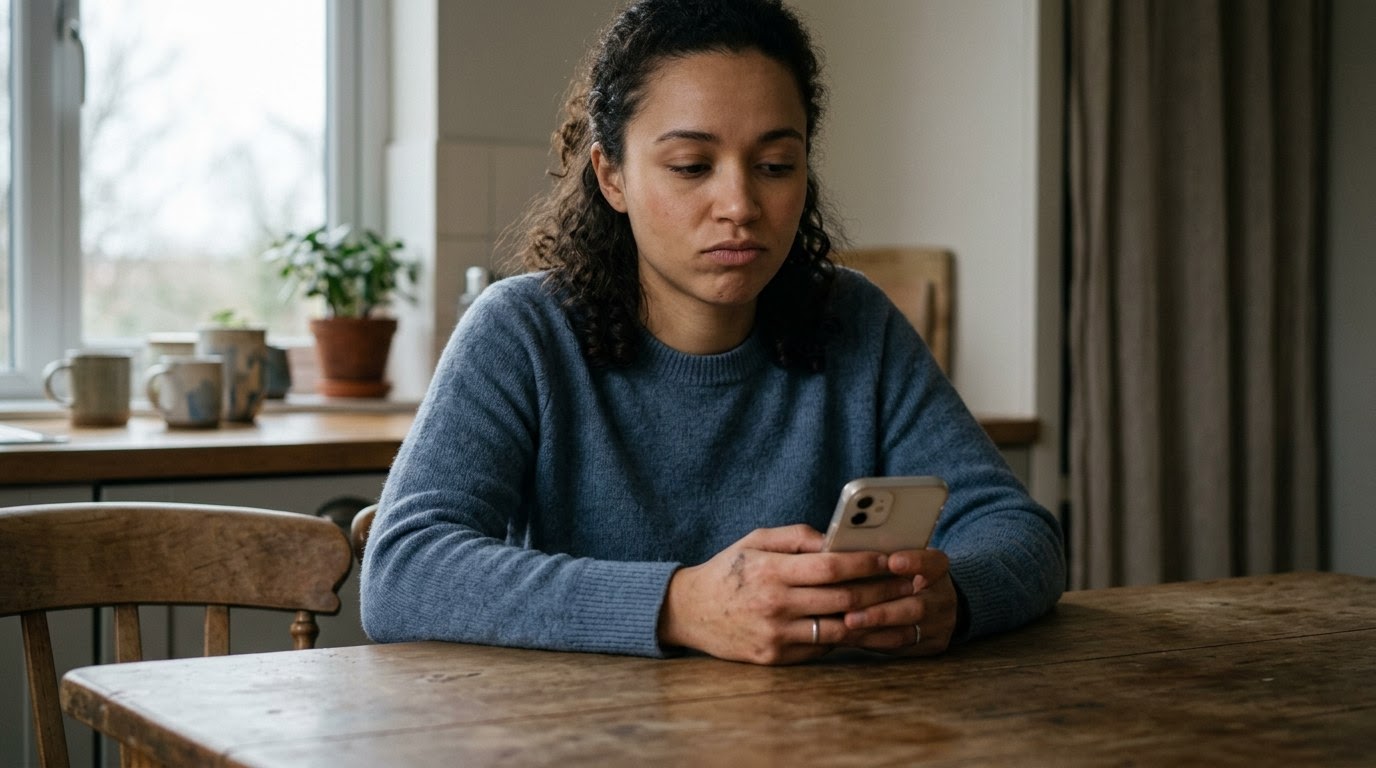
You matched with someone engaging, but within three messages, they ask for your mobile phone number or urge you to switch to WhatsApp, Telegram, or Google Chat. This tactic, known as off-platform steering, is the single most consistent pattern used by romance scammers and identity bad actors to bypass safety filters. Slipping up can lead to relentless phone spam, identity theft, or financial extortion once an unknown contact accesses your primary contact details. Before handing over your personal number, running a TrustCheck takes 60 seconds and ties a name to a real phone, real email, and a real digital footprint. As of August 2026, automated scripts on dating applications have made quick off-platform steering the primary warning sign for safe online communication.
Why Do Dating Matches Ask to Text Immediately?
When a dating match asks to text immediately, it usually means they want to move communication away from the dating platform's moderation tools before their profile gets flagged or banned. Dating apps use automated filters to detect scam scripts, fake images, and suspicious links. By shifting to SMS, WhatsApp, or Telegram, the match removes those safety protections, gains direct access to your phone number, and secures an unmonitored line to build trust or launch financial solicitations.
When someone pushes you off an app right away, they are executing a deliberate shift. Dating apps invest heavily in developing automated text analysis and pattern-matching tools. These moderation systems scan for stolen images, recycled pick-up lines, financial requests, and suspicious external links. If an untrustworthy user sends identical copy-pasted messages to fifty different matches in ten minutes, the platform's security algorithms lock their account automatically. Moving you to external text messaging insulates them from that risk. Once you switch to direct texting, they can take their time without worrying about their profile disappearing from the platform overnight.
Consider a realistic example. Maya matched with "Julian," who claimed to be a civil engineer working on a local infrastructure project. His profile appeared authentic, but his third message read, "I rarely log into this app because my work schedule is hectic. Text my direct cell so we do not lose touch." Maya texted him immediately. Within forty-eight hours, Julian's profile on the dating app was suspended for suspicious activity. Because they had already moved to direct mobile texting, Julian maintained his connection with Maya and eventually attempted to pitch her on a fraudulent cryptocurrency investment platform. Had Maya stayed on the app, the platform's immediate suspension would have alerted her to the danger before any financial discussion occurred.
Red Flag Signal: They Claim They Are Deleting the App Today
A match claiming they are deleting their dating profile immediately usually aims to create fake intimacy and force a quick transition to private messaging. Scammers use this psychological trick to make you feel special while simultaneously hiding the fact that their profile is about to be banned by platform administrators. It creates urgency, removes your ability to review their profile details later, and forces you onto unmonitored channels before you have time to evaluate their authenticity.
This tactic plays directly on your fear of missing out on a promise of connection. You might think, "They like me so much they are quitting the app," which triggers an emotional rush. In practice, fraudsters manage dozens of fake accounts simultaneously across multiple dating platforms. These accounts face constant reports from vigilant users and customer support teams. Declaring that they are leaving the app gives them a convenient cover story for why their profile suddenly vanishes an hour later. It also prevents you from taking screenshots of their profile photos, biography, or declared location to run a reverse search.
Look at how this unfolded for David, who matched with "Chloe." After just four casual messages about favorite weekend activities, Chloe declared, "I hate this app and I feel a distinct connection with you. I am deleting my profile tonight. Here is my cell number—text me so we stay connected!" David gave her his personal phone number. By the following morning, Chloe's dating profile was gone. David assumed she deleted it out of genuine interest in him, but three other users had actually reported her profile for identity fraud. Unshackled from app moderation, "Chloe" began steering their daily text conversations toward urgent requests for financial assistance.
In 2025, BBB research indicated that over 40% of romance scam incidents began on mainstream dating platforms before moving to encrypted text channels.
Red Flag Signal: They Refuse Video Calls or In-App Voice Chat
Refusing simple in-app video or audio verification usually indicates that the person's real identity, age, gender, or appearance does not match their profile photos. Almost all modern dating applications offer built-in video and voice features that do not reveal your phone number. When a match insists on texting outside the app but repeatedly creates excuses to avoid a quick 30-second live video call, they are protecting a stolen identity or hiding behind an artificial intelligence voice filter.
Modern online scammers rely on stolen photos from foreign influencers, actors, or public social media accounts. While they can maintain a plausible text conversation using translation tools or pre-scripted dialogue, they cannot easily fake a smooth, real-time video conversation without exposing their actual appearance. They will routinely offer reasonable-sounding excuses: poor cellular connectivity, working on an isolated site, severe camera shyness, a broken phone lens, or strict workplace security policies.
Consider Rachel's experience. She matched with "Mark," who claimed to be a maritime logistics consultant. Mark sent long, affectionate messages throughout the day and texted photos of his alleged work trips. When Rachel tapped the dating app's built-in video feature to say a quick hello, Mark declined the incoming call instantly. He texted back immediately, claiming his remote connection did not support live video feed, and urged her to download Telegram instead. When Rachel insisted on a quick 30-second live video check before sharing her personal phone number, Mark became defensive and accused her of questioning his integrity. Rachel held her ground and blocked him; subsequent reverse image searches revealed that Mark's profile pictures belonged to a regional fitness coach who had no knowledge of the profile.
According to FTC reports from 2024, online romance scam victims reported total losses exceeding $1.3 billion in a single year.
Red Flag Signal: They Overwhelm You With Excessive Early Affection
Rapid, intense emotional declarations from an online match within hours or days of connecting—often called love-bombing—are designed to lower your psychological defenses and speed up the push off-platform. Scammers use overwhelming praise, pet names, and grand claims of fate to make standard safety precautions feel cold or distrustful. This rapid manipulation creates an artificial emotional bond, driving you to share contact details and financial information before you notice logical inconsistencies in their story.
Healthy emotional connections take time to grow through shared experiences, open conversations, and real-life consistency. Love-bombing intentionally skips these natural developmental steps. A fraudulent contact will send morning and evening text messages filled with deep affection, address you with pet names on day two, and discuss future holidays or shared living arrangements within the first week. By filling your day with constant attention, they establish a sense of psychological obligation. When they request your private mobile phone number or an encrypted messaging handle, saying no suddenly feels like breaking a rare bond.
Consider the case of Thomas, who met "Sophia" online. Within twenty-four hours of matching, Sophia sent detailed text messages explaining how she had never felt such an instant soul connection with anyone. She referred to him as "my love" and begged for his direct mobile phone number so they could stay in constant touch throughout the workday. Flattered by the intense focus, Thomas handed over his phone number. Over the next ten days, Sophia leveraged that direct connection to isolate him from his friends' objective advice, ultimately requesting gift cards to help cover an unexpected medical emergency.
Red Flag Signal: Their Digital Footprint Is Completely Empty or Contradictory
An online match with zero digital footprint, inconsistent location details, or unverified social media profiles strongly suggests a synthetic identity created specifically for fraud. Real people leave digital traces over time, including linked profiles, local business interactions, professional network listings, or public records. When a match pushes to text immediately but cannot provide verifiable details about their career, location, or full name, they are masking a throwaway account designed to harvest numbers or money.
Building a convincing false persona requires continuous effort, and most bad actors create shallow, disposable profiles that collapse under basic examination. A scammer might claim to hold an executive role at a prominent local firm, yet a simple search on professional networks shows no record of employment. They might claim to reside in your city, but their text messages reveal a surprising ignorance of basic local details, such as main streets, current weather conditions, or recognizable landmarks.
Elena experienced this when she matched with "Derek," who claimed to work as an architect in her city. Within five minutes of matching, Derek urged her to text his cell phone because he was leaving for a site visit. Before texting, Elena asked for his firm's full name or his business handle on social platforms. Derek responded evasively, asserting that he maintained a complete zero-digital footprint due to high-profile clients. When Elena checked his phone number against public directory registers, the number resolved to an unassigned VoIP (Voice over Internet Protocol) burner line provided by an offshore internet service.
What Your Phone Number Actually Exposes to an Online Match
Sharing your phone number reveals significantly more than just a line for text messages; it acts as a primary master key to your digital identity. With your cell phone number, bad actors can reverse-lookup your full legal name, current physical address, family members, previous locations, and linked social media accounts. Scammers use this gathered personal data to execute targeted SIM-swapping attacks, social engineering fraud, or extortion campaigns once you leave the safety of a regulated dating platform.
Many online searchers treat sharing a mobile cell number as a harmless gesture. However, in modern data broker databases, your phone number serves as a central index key. By running a standard phone number through public lookup tools, anyone can pull up home addresses, property ownership history, registered family members, and connected online usernames. This detailed background information gives a fraudster everything required to craft highly convincing social engineering pitches.
Access to your primary phone number opens the door to targeted phishing attempts and account takeover schemes. Bad actors can send fraudulent text messages pretending to be your personal bank, delivery service, or tax authority. In extreme cases, sophisticated bad actors attempt SIM-swapping—contacting mobile phone carriers while impersonating you and convincing customer support representatives to transfer your phone number to a new SIM card. Once they capture control of your cell number, they intercept two-factor authentication security codes to compromise your private bank accounts and email profiles.
Comparing Safe Online Dating Habits vs. Scam Tactics
Recognizing the difference between genuine interest and strategic manipulation comes down to observing how a match respects your boundaries, time, and personal security preferences. A safe match values your comfort level and will gladly remain on the dating platform until trust is earned through consistent, verified interactions.
| Behavioral Dimension | Safe Match Behavior | Scam / Unsafe Behavior |
|---|---|---|
| Response to Boundaries | Respects your decision to stay on the app; agrees without argument. | Gets defensive, guilt-trips you, or pressures you to share your cell number. |
| Platform Preference | Willing to stay on the dating app until after a voice/video call or first meeting. | Demands moving to SMS, WhatsApp, or Telegram within 1 to 5 messages. |
| Identity Verification | Agrees to quick in-app video calls or provides verifiable social/professional details. | Makes repeated excuses (broken camera, poor signal) to avoid live video calls. |
| Emotional Velocity | Paces communication naturally; builds trust gradually over days and weeks. | Love-bombs immediately with extreme affection, pet names, and claims of fate. |
| Financial & Personal Topics | Focuses on shared hobbies, local interests, weekend plans, and light conversation. | Introduces crypto, investment opportunities, unexpected emergencies, or money requests. |
What to do if you spot these signs
If an online dating match presses you to text immediately or exhibits any of these behavior patterns, take these step-by-step actions to protect your privacy and retain control over your personal communication:
- Enforce an On-App Communication Boundary: State clearly that you prefer to keep all messaging inside the dating app until you have completed a live video call or met safely in person. Watch how they react. A safe, genuine individual will accept this boundary without hesitation, while a fraudster will often argue, pressure you, or go silent.
- Request an In-App Video Call: Use the dating application's built-in audio or video calling tools to verify that your match matches their profile pictures. You do not need to have a long conversation—a quick 30-second live check is sufficient to confirm their identity and ensure you are not interacting with stolen photos or an automated system.
- Run an Identity Check: Before giving out your cell number or full name, run an independent identity check; running a TrustCheck helps you verify whether their reported name matches their real phone number and digital footprint before you share yours. Cross-referencing basic details ensures you are dealing with a real individual rather than a disposable persona.
- Use a Secondary Google Voice Number: If you decide to transition off the dating platform before meeting in person, share a secondary internet phone number (such as Google Voice) rather than your primary cell number. A secondary number provides a safe layer of separation, protecting your main phone line from public data lookups and unwanted marketing spam.
- Block and Report Suspicious Accounts: If the person refuses to accept your boundaries, threatens to stop talking unless you text, or exhibits erratic behavior, block them immediately. Report their profile directly to the dating platform's safety team so administrators can investigate and protect other users from potential fraud.
Trusting your intuition is not paranoid; it is standard digital safety. A genuine dating match will never penalize you for taking care of your personal privacy or taking reasonable precautions before meeting in person. If someone gets angry, guilt-trips you, or cuts off contact because you prefer to stay on the dating app until after a video call, they have handed you valuable clarity. Taking a quick minute to run a TrustCheck can give you peace of mind before you send that first text message, ensuring you stay in total control of your online interactions.
Frequently asked
What should I say if a dating match asks for my phone number immediately?
Politely inform them that you prefer staying on the dating app until you have completed a quick video call or met in person. A legitimate person will respect your decision without arguing. If they react with anger, guilt, or pressure, treat it as a strong signal of untrustworthiness and disconnect immediately.
Why is sharing my personal cell phone number risky?
Sharing your personal cell number gives an online match access to public lookup directories. Someone with your phone number can often find your full legal name, current residential address, family contacts, and social media handles. Scammers use this information to build psychological profiles, conduct impersonation attempts, or send targeted phishing texts.
Why do scammers insist on moving to WhatsApp or Telegram?
Encrypted messaging applications like WhatsApp, Telegram, or Signal do not monitor user conversations for dating fraud or financial scams. Scammers prefer these platforms because once they lure you off the dating app, the original dating platform cannot protect you, log their messages, or suspend their access to your personal inbox.
How can I safely verify a dating match's identity online?
To safely verify a match's identity before giving out your number, request a quick 30-second video call using the dating app's built-in call feature. You can also ask for their full name or business website and check whether their reported identity aligns with verified public digital records.
What should I do if I already gave my number to a suspicious match?
If you shared your phone number with someone who turned out to be a scammer, block their number across all devices immediately. Report their profile on the dating app where you met, monitor your bank accounts for unexpected activity, and refrain from answering suspicious text messages or phone calls from unknown numbers.
More in Safety
- How to Safely Plan Outdoor First Dates With Online Matches
September 21, 2026
- What to Do When an Online Match Asks for Your Driver License
September 18, 2026
- What to Do When a Dating Match Asks for Wi-Fi Access
September 16, 2026