How Fake Coin Grading Slab Scams Target Peer Numismatic Collectors
· 11 min read
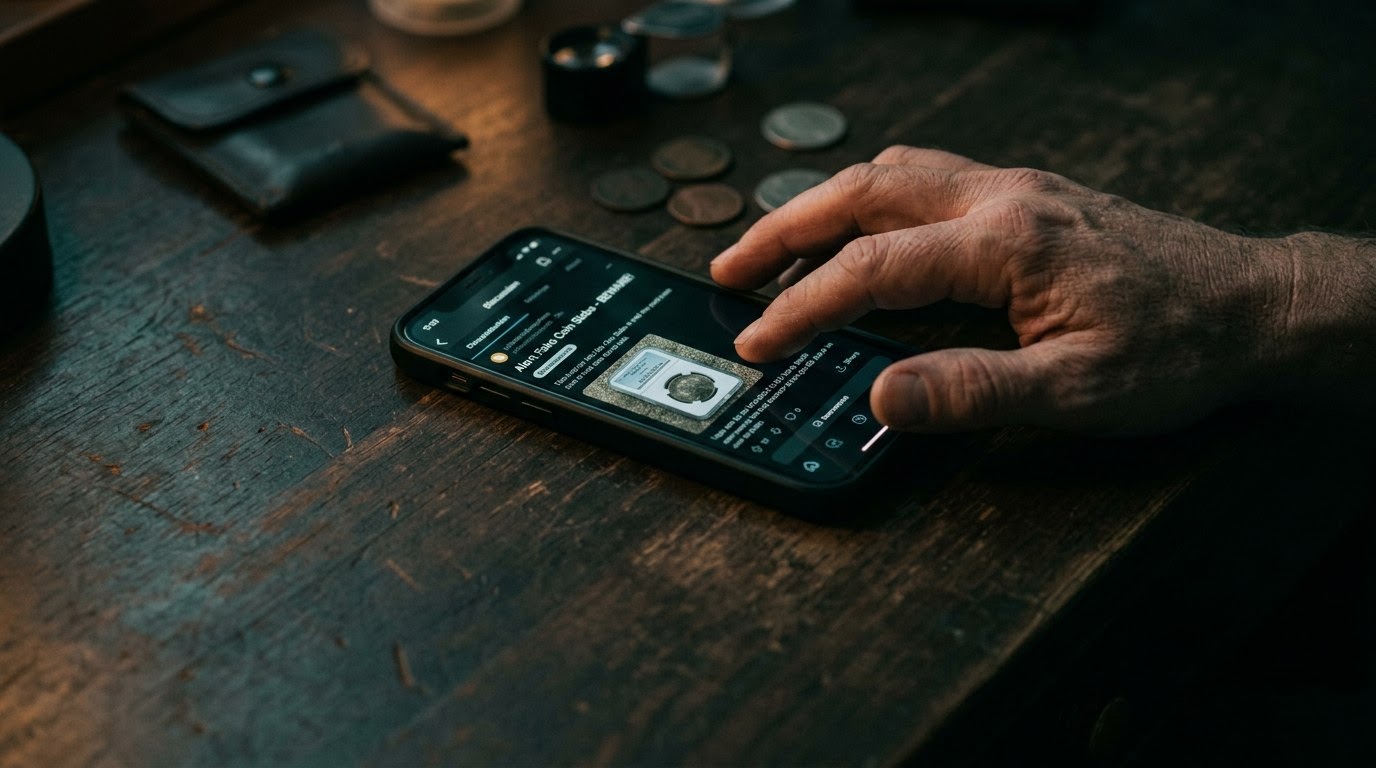
Counterfeit coin slab fraud occurs when fraudsters replace genuine, high-grade rare coins inside certified plastic holders—or replicate entire professional grading slabs—to fleece peer numismatic collectors out of thousands of dollars per transaction. Losses typically range between $1,500 and $25,000 per fake coin, depending on whether the fraud involved high-grade Morgan silver dollars, Pre-1933 gold coins, or rare key-date copper pieces. According to Federal Trade Commission statistics from 2024, imposter and trade-based fraud resulted in more than $2.7 billion in total consumer losses, driven significantly by high-value peer-to-peer marketplace sales. As of November 2026, the rise of sophisticated overseas plastic molding and high-resolution laser printing has made fake coin grading slabs one of the fastest-growing threats facing private coin buyers.
How Fake Coin Grading Slab Scams Target Peer Numismatic Collectors Step-by-Step
How fake coin grading slab scams target peer numismatic collectors involves a structured, multi-phase manipulation. Fraudsters acquire authentic certification numbers, construct high-quality counterfeit plastic holders or tamper with original slabs, and list the altered items on secondary peer platforms. By exploiting visual trust in major grading services like PCGS or NGC, the scammer maneuvers the buyer into making non-refundable electronic payments or cash handoffs before the holder's subtle physical discrepancies or cloned serial numbers can be thoroughly audited.
The operational playbook relies on structural vulnerabilities in peer-to-peer numismatic sales. Because private collectors frequently buy, sell, and trade rare coins without secondary dealer mediation, fraudsters construct compelling traps designed to bypass standard scrutiny. The following six-step breakdown illustrates how a typical fake coin grading slab transaction unfolds from initial preparation to the final getaway.
-
Serial Number Harvesting and Database Scraping:
The scammer begins by browsing legitimate auction archives, professional dealer inventory listings, and public numismatic registries. They search for highly desirable key-date coins—such as an 1893-S Morgan Silver Dollar in MS63 or a 1907 High Relief Saint-Gaudens Double Eagle in MS64. The scammer steals the certification number, exact weight details, grade, and high-resolution digital imaging from authentic slabs certified by the Professional Coin Grading Service (PCGS) or Numismatic Guaranty Company (NGC).
-
Fabrication and Physical Slab Tampering:
Armed with real certification data, the fraudster acquires cheap, high-precision counterfeit plastic holders produced overseas or uses a technique called "crack-out re-welding." In crack-out manipulation, the fraudster carefully opens a genuine, lower-grade slab or a common-date slab using sonic heating tools. They remove the original coin, replace it with a silver-plated base-metal replica or a heavily polished low-grade specimen, insert a forged paper insert matching the cloned cert number, and re-weld the outer plastic shell using ultrasonic plastic bonders.
-
Secondary Market Seeding and Direct Peer Outreach:
The fraudster creates synthetic online profiles across peer-to-peer channels, including Facebook Marketplace, Craigslist, Reddit numismatic subreddits, and specialized coin forum classifieds. To build instant credibility, they steal the photos of genuine coins from past auctions or upload filtered photos of the counterfeit slab. They price the coin approximately 15% to 25% below current Numismatic Consumer Price Index guide values. This "sweet spot" pricing is high enough to appear credible, yet low enough to trigger buying urgency among active collectors.
-
Establishing Psychological Control and Disarming Suspicion:
When a target collector expresses interest, one common pattern is for the seller to invent a plausible personal back-story. The scammer claims they inherited an uncle's estate, need urgent cash for a medical bill, or are downsizing a long-held family hoard. When the target runs the certification number on the official grading service app, the serial number comes back as active and valid. Because the database confirms that the cert number exists and matches the date and grade on the slab label, the buyer's primary verification check passes, disarming their normal skepticism.
-
Forcing Immediate, Non-Refundable Payment:
Once the victim agrees to purchase, the scammer insists on non-reversible payment channels or cash-in-hand peer meetups. For remote transactions, the seller demands payment via peer-to-peer wire services, cryptocurrency, or non-commercial payment methods like Zelle or Venmo "Friends and Family." If the trade occurs in person, the scammer selects a neutral, low-light location such as a coffee shop parking lot or a busy gas station. They press the buyer to complete the cash swap quickly, citing personal time constraints or claiming another buyer is waiting in line.
-
The Post-Transaction Disappearance and Evidence Audit:
After receiving the funds, the scammer deletes their online profile, disconnects the burner phone number, and blocks the victim. The buyer usually discovers the fraud days or weeks later. A typical sequence involves the collector showing the piece to a local coin shop owner, attempting to cross-verify the coin under high-magnification jewelers' loupes, or submitting the item to a grading service for re-encapsulation. The victim then learns that the plastic holder lacks security holograms, the coin inside is off-weight or made of nickel-copper alloy, and the serial number belongs to a genuine coin sitting safely in a museum or private vault across the country.
Who Gets Targeted in Numismatic Coin Slab Fraud and Why
Fake coin grading slab scams primarily target mid-level peer numismatic collectors, vintage gold investors, and secondary market traders aged 35 to 65. Scammers exploit the psychological reliance on third-party grading authority, leveraging the collector's fear of missing out on below-market key-date coins. Buyers trust the plastic shell and printed serial number, leading them to bypass standard physical verification steps during peer-to-peer cash meetups or private online exchanges.
Secondary market numismatic trading relies heavily on standardized, third-party encapsulation. When a coin is sealed inside an airtight, tamper-evident acrylic holder by an industry-standard grading service, buyers traditionally assume the coin’s authenticity and grade are guaranteed. Scammers recognize that this reliance creates a massive psychological blind spot. Rather than trying to trick a buyer with a raw, unslabbed counterfeit coin—which invites immediate physical inspection, weighing, and metallurgical testing—scammers use the slab as an optical shield.
Targeted demographics fall into three distinct categories:
1. The Intermediate Peer Collector: Collectors who have graduated from basic album sets to certified rare coins often seek out peer sales to avoid paying the 15% to 20% commission markups charged by major auction houses and established brick-and-mortar coin shops. They understand grading terminology and know how to use certification lookup apps, but they lack the forensic equipment needed to spot subtle label font variations or ultrasonic weld seam anomalies.
2. The Bullion and Precious Metals Investor: Investors seeking physical gold and silver hedge assets frequently purchase pre-1933 U.S. gold coinage ($5, $10, and $20 Liberty and Indian heads) or Morgan and Peace silver dollars. Because these buyers prioritize metal content and liquid grade values, they are particularly vulnerable to cloned slab holders containing gold-plated tungsten or silver-plated copper substitutes.
3. Estate Liquidation Hunters: Opportunistic buyers browsing local classifieds or estate sales are drawn to story-driven sellers offering "unexamined estate collections." Scammers exploit the buyer's eagerness to uncover an underpriced rarity, using urgency to rush the transaction before the target can perform a side-by-side photo comparison against official database archives.
How Stage-by-Stage Signals Reveal a Counterfeit Coin Slab
Identifying counterfeit coin grading slabs requires evaluating specific indicators at every stage of the transaction. Early signals include mismatched font typography, missing micro-printing, altered plastic seams, and high-value coins priced just below market average. By comparing seller behavior and physical slab characteristics across each phase of contact, collectors can spot fraudulent setups before committing funds.
A 2023 Federal Bureau of Investigation IC3 report documented that non-delivery and direct marketplace fraud accounted for over $330 million in reported victim damages. Understanding how a fake slab transaction progresses allows collectors to analyze the conversation and physical product simultaneously. The table below illustrates what a scammer says at each stage compared to the physical and technical reality occurring behind the scenes.
| Stage of the Scam | What the Scammer Says | What's Actually Happening |
|---|---|---|
| Initial Listing | "Rare key-date coin priced low for quick sale. Inheritance liquidating, cert verified on official app." | The seller scraped a real cert number from a past auction listing and paired it with a cheap, counterfeit plastic shell. |
| Initial Contact | "I have three other buyers messaging me right now, but I can hold it for you if you pay today." | The scammer creates artificial urgency to prevent you from conducting detailed serial number photo matching. |
| Payment Request | "I only take Zelle or Venmo Friends and Family because I don't want to pay reporting fees." | The scammer forces you into irreversible payment rails that lack buyer protection and refund mechanisms. |
| Physical Meeting | "Don't take it out of the protective sleeve, it scratches the acrylic. I'm in a hurry, cash only." | The seller prevents you from feeling the weight, checking the plastic edges, or inspecting the hologram under direct light. |
| Post-Sale Verification | "The phone number you reached is no longer in service. Profile deactivated." | The scammer burns their temporary digital identity and launders the stolen funds immediately. |
How to Recognize Fake Coin Grading Slabs Before Money Moves
Recognizing a fake coin grading slab before money moves relies on verifying the physical holder, cross-referencing grading database records, and auditing the seller's true identity. Key checks include inspecting the slab’s outer seam under magnification, checking high-resolution database photos against the physical coin in hand, and refusing irreversible payment methods. Verifying the individual behind the listing ensures you do not trade cash for sophisticated counterfeits.
To keep your numismatic capital safe during private, peer-to-peer transactions, evaluate every prospective purchase using critical pattern-recognition questions. Never rely solely on a text search of the certification number on a mobile app.
1. Does the physical slab match the official database photo in every micro-detail?
Major grading services like PCGS (Secure/Gold Shield) and NGC maintain high-resolution reference photographs in their online verification databases. When looking at a slab, zoom in on unique diagnostic marks on the coin itself: tiny contact marks, toning patterns, die cracks, or planchet flaws. If the database image shows a tiny scratch near the eagle's wing on a silver dollar, but the coin in front of you lacks that scratch, you are looking at a fake coin inside a cloned slab shell.
2. Are the slab's fonts, placement, and plastic welds structurally correct?
Counterfeit slabs often display subtle typographic errors. Examine the printed label under magnification. Authentic grading labels use proprietary fonts, precise kerning, and clear micro-printing or watermarks. Fake labels frequently display slightly thicker font weights, blurry barcode lines, or misaligned serial numbers. Furthermore, inspect the perimeter edge of the clear acrylic. Authentic slabs are ultrasonically welded, leaving a uniform, clear border. Tampered or counterfeit slabs often show cloudy glue smears, stress cracks, or uneven frosted seams along the edges where the shell was pried open and re-sealed.
3. Is the seller's online or physical identity verifiable?
Scammers operate behind anonymous burner profiles, recently created social media accounts, or stolen profile images. Before agreeing to meet or send money, insist on verifying who you are dealing with. Running a TrustCheck on the contact in week one catches most variants by verifying the seller's true identity before you arrange an in-person exchange or wire funds. If a seller refuses to verify their name or insists on total anonymity while selling a $5,000 gold coin, walk away immediately.
4. Does the weight and metallic signature match specifications?
Always carry a digital scale capable of measuring to 0.01 grams and a strong neodymium magnet when conducting in-person peer trades. While you cannot weigh a coin outside its slab without breaking encapsulation, you can weigh the entire slab assembly. Authentic PCGS and NGC slabs have consistent, standardized weight ranges. If a slab containing a Morgan Silver Dollar feels unusually light, or if a gold coin holder responds to a high-powered magnet, the enclosed metal is a counterfeit base alloy like brass, lead, or copper-nickel.
A 2025 Better Business Bureau study revealed that nearly 35% of high-value peer-to-peer collectible trades involved unauthorized sellers using spoofed identities. Incorporating physical and digital identity verification into your purchasing routine eliminates the vast majority of fake slab threats.
What to Do If You Have Already Purchased a Fake Coin Slab
If you suspect you purchased a fake coin grading slab, act immediately within the first 72 hours to preserve evidence and attempt financial recovery. Document all correspondence, photograph the coin holder under direct light, file reports with federal fraud databases, and notify your financial institution or local law enforcement. Prompt reporting maximizes the likelihood of freezing illicit transfers and assists investigators in tracking organized counterfeit networks.
Discovering that a newly acquired rare coin is enclosed in a counterfeit slab is frustrating, but taking systematic action increases your chances of holding the fraudster accountable and recovering your funds.
Immediate Actions within the First 72 Hours
Time is critical when responding to peer-to-peer market fraud. Execute the following recovery steps without delay:
1. Secure Physical and Digital Evidence: Place the fake slab inside a clean plastic bag without altering its condition. High-resolution photographs should be taken of the front, back, label, barcode, and outer seams under direct white light. Take complete screenshots of the online advertisement, full seller profile details, platform message logs, bank transfer receipts, and any phone text exchanges.
2. Contact Your Payment Provider or Bank: If you paid via wire transfer, credit card, or commercial peer-to-peer platform, contact your financial institution's fraud department immediately. State explicitly that you were victimized by counterfeit goods fraud involving identity spoofing. Request a transaction recall or file a formal chargeback dispute.
3. Verify Identity and Confirm Fraud Details: If you suspect you have been defrauded, performing a TrustCheck on the contact confirms the identity is fake, giving you vital documentation to share with law enforcement. Having verified details about the seller's burner accounts or real identity trail substantially strengthens your formal police report.
4. File Formal Federal and Local Reports: Submit comprehensive fraud reports to official regulatory and law enforcement bodies:
- Federal Trade Commission: File an official complaint at reportfraud.ftc.gov to alert federal consumer protection authorities.
- FBI Internet Crime Complaint Center: Submit a detailed cyber fraud filing at ic3.gov, especially if the deal originated online or involved interstate wire transfers.
- Anti-Counterfeiting Educational Foundation (ACEF): Contact the ACEF Task Force. This non-profit organization works directly with law enforcement agencies to track and apprehend coin counterfeiters and fake slab distributors.
- Local Police Department: File a formal police report for theft by deception. Obtain a physical police report number, which is required by banks and insurance carriers when processing fraud claims.
By remaining vigilant, cross-referencing grading photos, demanding identity verification, and acting swiftly if a transaction goes wrong, peer numismatic collectors can protect their investments and ensure the hobby remains safe and enjoyable.
Frequently asked
What is a fake coin grading slab?
A fake coin grading slab is a counterfeit or tampered plastic coin holder designed to mimic authentic third-party grading services like PCGS or NGC. Scammers use cloned certification numbers and counterfeit labels to pass off low-grade, damaged, or base-metal fake coins as high-grade rare specimens.
How can I verify if a coin slab is authentic?
Compare the physical coin in hand directly against the high-resolution photograph stored in the grading service's official online database. Look closely at unique contact marks, toning patterns, font kerning on the label, and plastic ultrasonic weld seams along the slab's outer edges.
Why do scammers use real certification numbers on fake slabs?
Scammers steal active certification numbers from legitimate auction archives so that when a potential buyer searches the number on an official grading app, the database confirms the date, mint mark, and grade exist, creating a false sense of security.
Can coin grading companies reimburse me if I buy a fake slab?
Grading services like PCGS and NGC offer authenticity guarantees only for genuine coins enclosed inside authentic, untampered holders. They do not cover losses resulting from counterfeit plastic holders, crack-out tamperings, or forged labels created by third-party fraudsters.
What should I do if a private seller refuses identity verification?
If a private seller refuses to verify their identity or insists on irreversible non-protected payment methods like cash meetups in low-light areas or non-commercial digital transfers, cancel the transaction immediately. Legitimate sellers operating in peer markets readily cooperate with identity checks.