How Fake Event Parking Reservation Scams Target Drivers Near Stadiums
· 10 min read
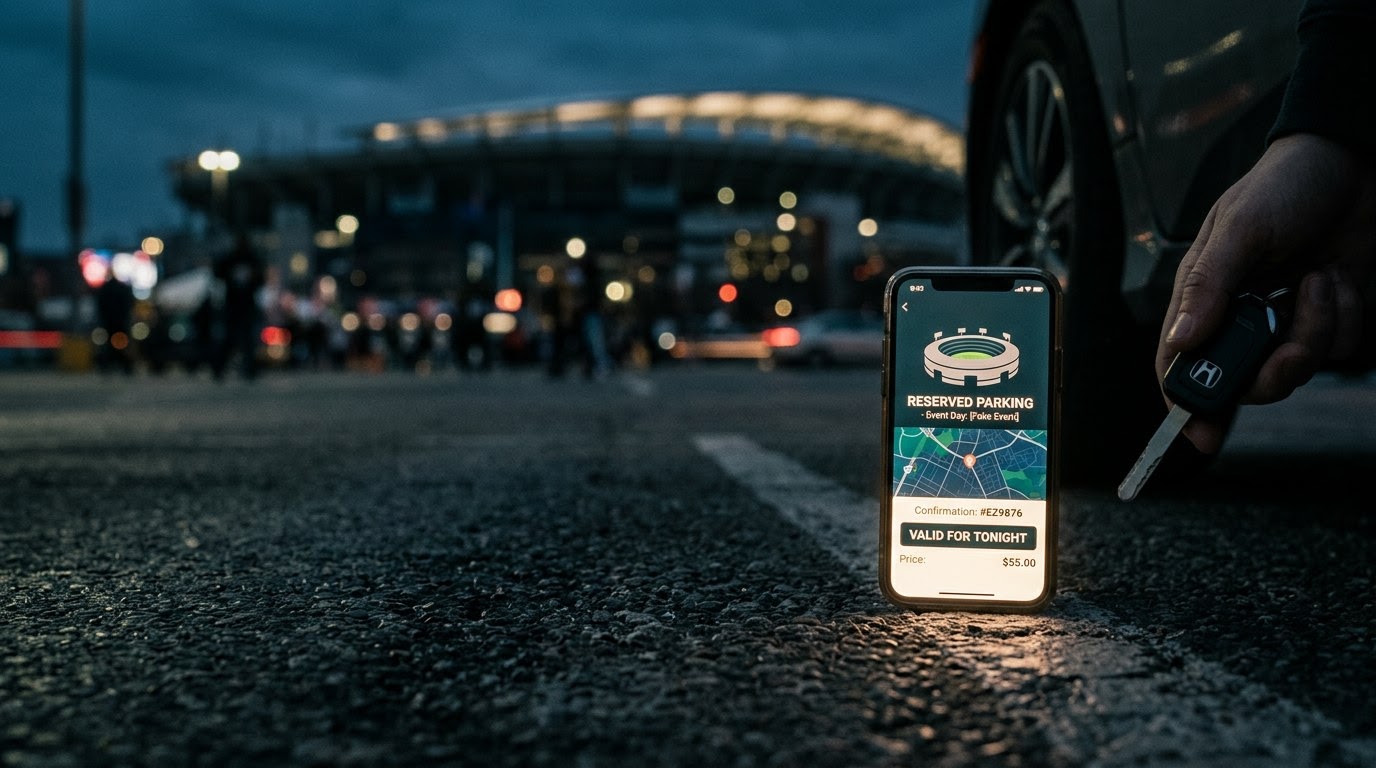
The fake event parking reservation scam targets drivers seeking spots near sold-out stadiums, concerts, and arenas, convincing them to pay in advance for non-existent digital parking passes. Average losses range from $50 to $300 per driver for the pass itself, plus unexpected drive-up fees or towing costs when the ticket turns out to be invalid at the gate. As of August 2026, Federal Trade Commission data from 2025 shows that online venue service impersonation reports increased by 34% nationwide as fraudsters shifted toward digital wallet passes and fake QR codes.
How Fake Event Parking Reservation Scams Target Drivers Near Stadiums
Understanding how fake event parking reservation scams target drivers near stadiums requires examining the end-to-end playbook criminals use to exploit high-demand events. Fraudsters launch counterfeit booking sites, post fake listings on social media marketplaces, and push targets toward non-refundable peer-to-peer payment apps. By generating believable QR codes or fake mobile wallet passes, scammers ensure drivers only discover the fraud when venue parking attendants reject their entry at the garage gate.
The operational playbook relies on speed, urgency, and convincing visual counterfeits. A typical sequence begins weeks before a championship game or stadium tour, but the trap snaps tight in the final hours before kickoff or showtime. Here is how the scam unfolds step by step from initial contact to the final realization at the venue gate.
- Scrapers Identify High-Demand Events: Automated tools and scam operators monitor primary ticketing outlets to flag sold-out stadium games, playoff matches, and major musical performances. Whenever official venue parking garages show zero availability, scammers know drivers will turn to secondary search engines and classified ads.
- Deployment of Counterfeit Portals and Listings: Fraudsters purchase lookalike web domains that mimic official stadium partners like SpotHero, ParkWhiz, or the venue's own site. Simultaneously, they place urgent classified listings on platforms like Facebook Marketplace, Craigslist, and Reddit claiming to sell reserved, non-refundable season-ticket holder parking spots.
- Intercepting Frantic Drivers: A driver preparing for an upcoming show searches online for "stadium parking passes near me" or clicks a sponsored link on social media. The listing promises a prime, covered parking space located two blocks from the main gates at a price slightly below peak drive-up rates.
- Directing Buyers to Non-Reversible Payment Channels: When the buyer reaches out, the scammer claims they cannot accept standard credit cards due to high processing fees or app hold periods. They demand payment through Zelle, Cash App, Venmo, or digital gift cards, insisting that the spot will be given to another buyer within ten minutes if funds are not transferred immediately.
- Issuing Counterfeit Digital Assets: Once payment is confirmed, the seller sends an email attachment containing a PDF or texts a link to add a pass to Apple Wallet or Google Wallet. The pass displays legitimate venue branding, official disclaimers, a realistic garage zone name, and a generated QR code designed to look completely authentic to the naked eye.
- Gate Rejection and Disappearance: The driver arrives at the stadium parking lot entrance thirty minutes before the event starts. When the parking attendant scans the digital barcode, the handheld scanner returns an invalid read error or shows the code was already used. When the driver attempts to call or message the seller from the idling lane, the phone number is disconnected and the listing has been deleted.
A typical sequence involves scammers deploying high-resolution graphics copied directly from genuine parking management portals. They pull real lot names, gate numbers, and entry instructions from venue maps to make their fake PDFs look official. In many instances, one common pattern is for a single fraudulent QR code to be resold to dozens of different drivers for the exact same event. The first driver to arrive at the garage might accidentally gain entry if the code was duplicated from a legitimate pass, but every subsequent driver holding that duplicate pass is turned away at the barrier.
A 2024 Better Business Bureau report found that individual losses from fake ticketing and parking reservation scams averaged $250 per incident. Beyond the direct financial loss, targets face intense logistics failures. Drivers find themselves stuck in heavy event traffic with idling vehicles, no valid parking permit, and full garages surrounding the venue, forcing them to pay emergency drive-up fees that often exceed $100 or miss the start of the event entirely.
Who Gets Targeted and Why
Stadium parking scams primarily target out-of-town fans, families attending major arena shows, and last-minute ticket buyers who face severe time constraints and limited local knowledge. Scammers exploit the psychological pressure of missing event kickoffs or gate openings, leveraging artificial urgency and manufactured scarcity. This high-stress environment causes even cautious consumers to bypass standard security checks and accept non-traditional payment methods.
The victim profile spans across diverse demographics, but the common denominator is logistical vulnerability. Out-of-town visitors driving into an unfamiliar metropolitan area are particularly vulnerable because they lack knowledge of local parking options and public transit alternatives. When faced with dense city traffic and strict event schedules, these drivers prioritize securing a guaranteed space over verifying seller credentials.
Fraudsters exploit distinct psychological hooks to bypass critical thinking:
Manufactured Scarcity: By emphasizing that all official venue lots are completely full, the scammer creates a perception that their listing represents the final remaining parking option within walking distance.
Time-Pressure Hijacking: Scammers establish aggressive deadlines, telling buyers that three other people are currently messaging them for the same spot. This forces the victim to send money before analyzing website URLs or double-checking ticket transfer protocols.
Authority Impersonation: Using stolen stadium logos, official venue map overlays, and formal invoice phrasing builds immediate trust. Targets assume a document carrying official trademarks must be legitimate.
| Stage of the Scam | What the Scammer Says | What's Actually Happening |
|---|---|---|
| First Contact | "I have a VIP reserved garage pass for tonight's game. My season ticket lot spot is open because I can't attend." | The scammer does not own a parking pass and is using stolen venue photos to list non-existent spots on multiple classified boards simultaneously. |
| Payment Request | "Send payment via Zelle or Cash App right now to secure the hold. Official apps charge too many seller fees." | The scammer forces you onto non-reversible payment rails where buyer protection does not apply to non-delivery of goods. |
| Pass Delivery | "Here is your official digital pass PDF with the scan barcode. Just show this QR code to the attendant at Lot C." | The seller sends a fake or duplicated graphic file containing a random or expired barcode that will fail live venue scanner validation. |
| Gate Entry Attempt | "Sorry, the scanner isn't reading that or it says invalid code." (Said by the actual lot attendant) | Your pass is recognized as counterfeit or a duplicate by the stadium system, leaving you stranded without a valid space. |
| Post-Event Follow-up | [Number disconnected, social media profile deleted, email inbox bouncing messages.] | The scammer has laundered the peer-to-peer funds through mule accounts and cut off all communication channels. |
How to Recognize It Before Money Moves
Recognizing a fake parking pass scam before sending funds requires evaluating seller communication, payment demands, and distribution channels against standard industry practices. Legitimate parking operators and secondary sellers transfer passes directly through verified ticketing platforms rather than emailing static PDFs or requesting peer-to-peer app transfers. Asking critical verification questions before executing a transaction protects your funds and secures real venue access.
Protecting your money and your event schedule requires checking every digital interaction against known fraud signals. Before transferring funds to anyone offering a parking reservation, run through these essential diagnostic questions:
1. Is the seller demanding payment through non-reversible peer-to-peer apps?
Legitimate parking platforms like SpotHero, ParkWhiz, and official stadium web portals process transactions using credit cards or secure digital wallets that offer fraud protection. If a seller insists on Zelle, Cash App, Venmo, wire transfers, or gift cards, stop the transaction immediately. Peer-to-peer transfers are designed for sending money between trusted friends, not purchasing goods from strangers.
2. Is the parking pass being delivered as a static PDF or image file instead of an in-app transfer?
Modern venues use dynamic barcode technology that updates every few seconds to prevent screenshot duplication. If a seller emails you a simple PNG, JPG, or static PDF file containing a barcode, there is a high probability the image is fake or has been sold to multiple drivers. Legitimate passes are typically transferred directly inside official apps like Ticketmaster, SeatGeek, or dedicated parking vendor platforms.
3. Does the domain URL match the official venue or authorized partner?
Scammers often set up domain names that look nearly identical to legitimate services, such as adding extra hyphens or changing domain extensions (e.g., `stadium-parking-passes.net` instead of the official venue website). Always check the web browser address bar. Look for spelling variations, newly registered domains, or websites that lack secure SSL indicators.
4. Is the price significantly lower than street-level market rates for a sold-out event?
If every parking lot within a mile of the venue is charging $80 for drive-up parking, but a private online seller offers a premier garage spot right next to the stadium entrance for $30, exercise extreme caution. Fraudsters set prices low enough to entice impulse buys while remaining high enough to yield a quick profit.
5. Has the seller verified their digital identity on secondary channels?
When purchasing parking passes from individuals on social networks, check the account's creation date, activity history, and profile details. Brand new accounts with locked profiles, no past activity, and default avatar photos are primary red flags for scam operations. Running a TrustCheck on the seller or domain contact early in your interaction catches most fake parking pass operations by flagging mismatched identity records and burner contact details.
If It's Already Happened
Taking action within the first 72 hours of falling victim to a fake parking pass scam maximizes your chances of financial recovery and prevents secondary identity theft. Drivers should immediately file dispute claims with their payment providers, document all seller correspondence, and submit formal incident reports to federal regulatory bodies. Prompt reporting alerts payment networks to fraudulent recipient accounts and creates an official record for law enforcement.
If you arrive at a venue gate and discover your parking pass is counterfeit, follow these recovery and mitigation procedures step by step:
Step 1: Secure Alternate Parking and Preserve All Evidence
Prioritize vehicle safety first. Pay for a legitimate spot or use an authorized off-site garage to avoid receiving parking tickets or getting towed. Do not delete any text messages, emails, digital wallet files, or social media chats with the scammer. Take screenshots of the listing, the payment confirmation page, the seller's profile details, and the full transaction history showing account handles or phone numbers.
Step 2: Contact Your Financial Institution Immediately
Call your bank or credit card issuer right away. If you paid via credit card, request an immediate chargeback based on non-delivery of services and fraud. If you sent funds via Zelle, Cash App, or Venmo, report the specific transaction to the app's fraud department. While peer-to-peer services rarely guarantee refunds for authorized payments, reporting the recipient account helps flag the scammer's bank account for closure.
Step 3: Document the Identity of the Contact
Gather every piece of communication data available, including email headers, phone numbers, cash tag handles, and profile URLs. A TrustCheck can tell you whether the details you were given trace back to a consistent identity, which is worth writing down for your own record of what happened. It cannot confirm that someone is a scammer, it will not tell you who was really behind the profile, and it is not evidence. Report the incident to your bank, to the platform where you met, and to the FTC at reportfraud.ftc.gov.
Step 4: Report the Scam to Official Regulatory Bodies
Submitting details to federal reporting databases helps law enforcement map organized fraud rings and shut down counterfeit web domains. FBI IC3 data published in 2024 showed that non-delivery and online marketplace fraud accounted for over $350 million in total consumer losses.
File official reports with the following agencies:
• Federal Trade Commission: Submit a detailed fraud claim at reportfraud.ftc.gov to alert federal consumer protection investigators.
• FBI Internet Crime Complaint Center: Log the digital transaction details at ic3.gov, including payment handles and fake pass download URLs.
• State Attorney General: File a complaint with the consumer protection division in the state where the venue is located.
• Venue Management: Inform the stadium guest services department about the fake pass. Venues track counterfeit passes to warn other fans and adjust security protocols at garage entrances.
Step 5: Monitor Your Accounts and Freeze Credit if Personal Data Was Exposed
If you entered payment card details or personal information on a counterfeit booking website, contact credit bureaus immediately. Place a fraud alert or credit freeze on your files with Equifax, Experian, and TransUnion to prevent scammers from opening unauthorized accounts using your credentials.
Frequently asked
What happens if I buy a fake stadium parking pass?
If you buy a fake stadium parking pass, the venue's scanner will reject the barcode at the gate. You will be denied entry to the garage, leaving you stranded in event traffic. You must pay drive-up rates at another lot or risk towing, while losing the money sent to the scammer.
Can I get my money back from Zelle or Cash App if I was scammed?
Getting refunds from peer-to-peer payment apps is difficult because these services treat transfers as authorized cash transactions. However, you should immediately report the fraud to the app provider and your bank. In some cases, banks will reverse charges if account takeover or explicit payment authorization fraud occurred.
How can I tell if a digital parking pass is real or fake?
Real digital parking passes are transferred directly inside verified apps like Ticketmaster, SeatGeek, SpotHero, or ParkWhiz, featuring dynamic barcodes that update automatically. Fake passes are often sent as static PDF files, screenshots, or images containing simple fixed QR codes that fail scanner validation at the venue gate.
Are third-party parking reservation sites safe to use?
Established third-party platforms like SpotHero and ParkWhiz are safe when accessed through their official mobile apps or verified websites. Danger arises when purchasing passes from individual sellers on social media marketplaces, classified sites, or unverified lookalike web domains mimicking legitimate parking operators.
Where should I report a fake parking reservation scam?
Report fake parking reservation scams immediately to the Federal Trade Commission at reportfraud.ftc.gov and the FBI Internet Crime Complaint Center at ic3.gov. Additionally, notify your bank, the payment app used, the social media platform where the listing appeared, and the stadium guest services department.
More in Scams
- How Fake Fine Wine Provenance Certificates Scam Peer Collectors
October 12, 2026
- How Fake Camera Lens Swap Scams Target Marketplace Buyers
October 10, 2026
- How Fake Exotic Car Rental Deposit Scams Target Vacationers
October 8, 2026