How Fake Safety Escort Service Scams Target Solo Online Daters
· 10 min read
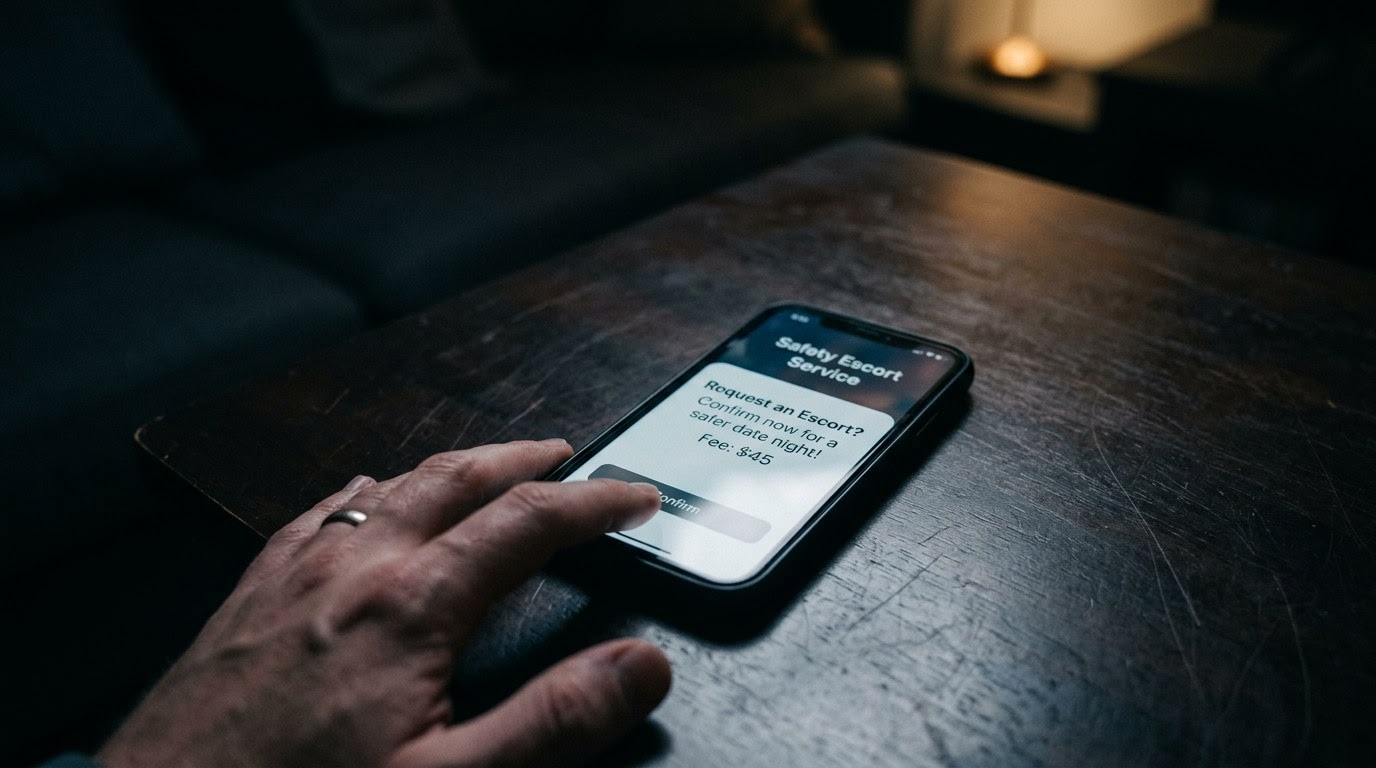
The fake safety escort service scam targets cautious daters on modern matching platforms, luring targets into paying fraudulent registration fees that typically range from $50 to over $3,000. As of August 2026, cybercriminals increasingly exploit personal security concerns by directing targets to fake identity validation and date-monitoring websites. The FBI IC3 reported that online dating impersonation and romance fraud losses exceeded $1.3 billion in 2024. This rising scam model converts a dater's reasonable safety precautions into an engine for credit card theft, unauthorized recurring subscriptions, and direct blackmail.
How Fake Safety Escort Service Scams Target Solo Online Daters
How fake safety escort service scams target solo online daters involves creating a false sense of security through high-pressure emotional manipulation, coercing targets into purchasing fraudulent date-monitoring memberships before meeting in person. Scammers profile safety-conscious daters, build fast intimacy, and insist on mandatory third-party safety badges. Once the dater enters their credit card into the fake safety site, criminals steal financial credentials, trigger unauthorized recurring fees, or demand escalating payments under threat of public exposure.
To understand the mechanics of this threat, consider a typical sequence: a target matches with an attractive, responsive profile on a major dating app or social network. The interaction feels genuine, filled with fast-paced conversation, shared interests, and enthusiastic planning for an in-person meetup. However, beneath the friendly banter lies a engineered process engineered to extract financial data.
- The Initial Match and Rapid Emotional Escalation: The scammer creates a highly polished profile using stolen photos of attractive individuals. They quickly move to establish deep emotional rapport. They ask detailed personal questions, compliment the target lavishly, and suggest meeting for a drink or coffee within 24 to 48 hours. This aggressive acceleration reduces the target's evaluation window.
- The Sudden Transition to Off-Platform Messaging: Before introducing the scam mechanics, the fraudster convinces the target to move off the dating platform onto encrypted messaging applications or SMS. FTC data indicates that imposter scam reports grew by 15% from 2023 to 2025, with dating-related payment scams accounting for significant consumer losses. Moving off-platform isolates the victim from the moderation and security algorithms of legitimate dating services.
- The Mandatory "Safety Escort" or "Verification" Requirement: Hours before the scheduled date, the scammer expresses hesitation. They claim to have had a bad past experience—such as a stalker, a dangerous encounter, or a past assault—and insist they cannot meet unless the target registers with a specific "safety escort," "date-monitoring," or "safety verification" service. They present this demand as a simple, non-negotiable boundary for their physical safety.
- The Fake Registration Portal and Credential Capture: The scammer sends a hyperlink to a fake website that mirrors professional security platforms. The domain often includes terms like "safe-date," "verifyme," "escort-guard," or "meet-pass." The site promises a fast, zero-cost or nominal $2 identity verification check. When the target signs up, the payment gateway captures full credit card numbers, card verification values (CVV), billing addresses, and personal identification info.
- Hidden Subscriptions, Failed Transactions, and Escalating Demands: Upon submitting payment information, the site typically returns a fake error message, such as "Card Declined" or "System Error: Verification Pending." The scammer then claims the process failed and urges the target to try a second credit card or pay a higher "refundable security deposit" ranging from $250 to $1,000. In reality, the site enrols the victim into automatic monthly recurring billing subscriptions while harvesting their banking details.
- Threat of Exposure, Blackmail, or Silent Abandonment: If the target realizes the fraud and stops responding, the scammer pivots to coercion. They may claim that an off-duty security guard or "safety escort" was already dispatched and demand payment for the escort's time. In extreme cases, the scammer threatens to post the victim's phone number, photos, or workplace details online, branding them as an unsafe dater or predator unless a payment is wired immediately.
One common pattern is the "agency supervisor" tactic. If a target hesitates to register, a second phone number contacts the target claiming to be the "dispatch manager" or "chief safety officer" of the escort service. This pretended authority figure informs the target that refusing to complete registration violates municipal safety rules or personal safety protocols, creating artificial legal pressure. The target, caught off guard and eager to demonstrate good intentions, succumbs to the demand.
Another composite example involves the fake subscription trap. A user enters their billing information for a supposed $1.99 identity verification fee. Small print hidden at the bottom of the spoofed site converts this trial into a weekly charge of $99.99. Because the site is operated by international shell networks, victims often discover thousands of dollars in fraudulent transactions before their financial institution flags the activity.
Who Gets Targeted and Why
The primary targets of fake safety escort service scams are safety-conscious solo daters, individuals exploring new dating platforms, and members of vulnerable communities who prioritize risk reduction. Scammers exploit the target's sense of duty, empathy, and fear of causing harm or discomfort to their date. By framing the safety check as a reasonable boundary, criminals weaponize the victim's conscientiousness against them, making refusal feel disrespectful or dangerous.
Fraud networks build detailed psychological profiles of their victims based on dating app activity. They specifically target users who display traits of high empathy, social responsibility, and risk aversion. When an individual receives a message stating, "I want to meet you, but I need to make sure you aren't a violent offender," their natural reaction as a responsible person is to comply to prove their trustworthiness.
Daters within the LGBTQ+ community, individuals seeking discrete casual encounters, and newly single daters are frequently targeted. Scammers recognize that individuals in these categories may be less likely to discuss their dating activities with friends or family, reducing the chance that an outside voice will intervene before money moves. The fear of social stigma or outed privacy creates an environment where targets yield to unreasonable financial requests.
Furthermore, scammers leverage the current cultural emphasis on personal safety during first dates. Because media coverage frequently advises solo daters to share locations and inform friends before meeting strangers, scammers co-opt this legitimate advice. They cloak fraudulent paywalls in the language of corporate risk management and personal empowerment, making the scam look like a modern safety standard.
How to Recognize Fake Escort and Safety Scams Before Money Moves
Recognizing a fake escort or safety service scam before money moves requires spotting mandatory third-party link requests, upfront credit card demands, and resistance to standard video calls. Legitimate safety precautions rely on mutual consent, public meeting places, and personal emergency contacts, never paid third-party monitoring badges. If a match insists you enter financial credentials onto an unfamiliar domain before grabbing coffee, you are interacting with a fraudulent script designed for financial extraction.
To protect your wallet and personal identity, evaluate potential matches and unusual requests by asking yourself these critical operational questions:
- Is the match demanding a specific paid third-party service? Legitimate daters might ask to meet in a well-lit public restaurant or share their phone location with a friend. They will never force you to register on an external website or enter payment card data to prove you are safe.
- Did the safety request appear right before the scheduled meeting? Scammers intentionally hold back the safety badge requirement until hours or minutes before a date. This creates time pressure, counting on your reluctance to cancel plans after investing effort into getting ready.
- Does the recommended verification site lack verified ownership details? Fake safety portals usually have brand-new domain registrations, broken external links, generic stock images, and no valid customer support numbers or registered business addresses.
- Is the contact refusing live video calls or voice chats? Fraudsters operating scam syndicates regularly refuse direct video calls on platform services like FaceTime or WhatsApp, offering excuses such as broken cameras, poor cellular reception, or company privacy rules.
- Has the match transitioned the conversation away from the main dating app immediately? Scammers move targets off safety-monitored apps rapidly to prevent platform security tools from flagging illicit registration links and malicious URLs.
Before clicking any external verification links or sharing sensitive personal data, evaluate the person behind the screen. Running a TrustCheck early narrows the question to one thing: whether the details you were given describe a real, consistent identity. Plenty of scams are run by people using their own names, so treat the result as evidence about the details, not a verdict on the person.
Remember that real safety tools do not charge prospective dates for clearance. Real safety is established through transparent interaction, mutual respect, public meeting choices, and independent verification—not by putting your credit card into an unverified webpage.
Deconstructing the Playbook: Signals vs Realities
Deconstructing the scam playbook requires contrasting the reassuring phrases used by fraudsters against their actual technical and financial objectives. Scammers frame their demands as protective safety measures, but their underlying mechanisms are designed to bypass fraud detection and capture sensitive financial tokens. Analyzing these tactical scripts helps daters identify criminal pretexts in real time and break the cycle of manipulation before financial compromise occurs.
The table below highlights the discrepancies between what scammers say during the interaction and what is actually happening behind the scenes on their servers:
| Stage of the Scam | What the Scammer Says | What's Actually Happening |
|---|---|---|
| Initial Pitch | "I was harassed on a date last month, so I require all my matches to register with my date-monitoring company first." | The scammer manufactures a fake history of trauma to trigger your empathy, lower your defenses, and make refusal feel cruel. |
| Link Delivery | "Just go to this official link, fill out the safety form, and pay the $2 processing fee so my agent approves our date." | You are sent to a malicious phishing landing page configured to grab your payment card details, full legal name, and home address. |
| Payment Failure | "The system says your card was declined. You need to enter a second card or pay the $300 deposit to activate the escort badge." | The site successfully recorded your initial card details and is now attempting to drain additional credit lines or force larger transfers. |
| Supervisor Call | "This is Agent Smith from SafeGuard Services. Your date is waiting, but you must remit $500 for emergency escort coverage." | An accomplice or the same scammer using a voice modifier calls to create artificial institutional authority and force compliance. |
| Extortion Threat | "If you don't pay the dispatch fee right now, we will report your details to local police and post your profile as a predator." | The fraudster pivots directly from romantic manipulation to criminal extortion once they realize you will not pay voluntarily. |
By studying these stage transitions, you can immediately spot the conversion point where a friendly social interaction turns into a structured robbery. Never let fear or artificial deadlines override your technical precautions.
If It's Already Happened: Immediate Recovery Steps
If you have already submitted financial details or paid a fake safety escort service, immediate action in the first 72 hours can minimize financial damage and protect your identity. You must contact your bank to freeze compromised cards, dispute unauthorized charges, and report the incident to consumer protection databases. Prompt reporting to authorities disrupts criminal networks and helps financial institutions block fraudulent merchant accounts before additional billing cycles take effect.
Take the following decisive recovery steps if you have engaged with a fake safety website or sent money to a fraudulent contact:
- Freeze and Replace Compromised Payment Cards: Contact your credit card issuers and banking institutions immediately. Inform them that your card credentials were stolen by a fraudulent web portal. Request new card numbers and ask the bank to block all recurring authorization tokens associated with the fraudulent merchant.
- Place a Fraud Alert on Your Credit Reports: Because these malicious websites collect full names, addresses, phone numbers, and payment details, your identity is at risk for secondary identity theft. Place a free fraud alert or credit freeze on your files with Equifax, Experian, and TransUnion.
- Document All Evidence and Communications: Take complete screenshots of all chat logs, text messages, phone call histories, dating app profiles, website URLs, and electronic receipts. Do not delete the conversation, as this data contains critical technical evidence like IP addresses and routing numbers.
- Report the Fraud to Official Government Agencies: File an official report with the FTC at reportfraud.ftc.gov and submit an internet crime complaint to the FBI at ic3.gov. A 2024 BBB study found that over 60% of scam victims did not report their financial loss to law enforcement due to embarrassment. Filing these reports builds international case records that assist law enforcement in dismantling illicit payment gateways.
- Check the Contact Details and Lock Down Your Accounts: After the fact, a TrustCheck tells you only whether the contact details held together as one identity. That is context, not evidence, and investigators will not treat it as documentation. Report what happened to your bank and to the FTC at reportfraud.ftc.gov, and keep your own records of the messages and payments. Afterwards, block the scammer across all phone numbers, social media accounts, and chat apps.
Do not yield to threats of exposure or extortion. Fraud networks depend on intimidation to extort additional funds, but they rarely execute their threats once communication channels are severed and financial accounts are frozen. Disengage completely, rely on your law enforcement reports, and allow your financial institution to handle card recovery.
Frequently asked
What is a fake safety escort service scam?
It is a dating fraud scheme where a scammer refuses to meet in person unless you pay a fee or enter credit card information on a fraudulent third-party date-monitoring or safety verification website.
Why do scammers demand money for safety badges?
Scammers use safety badges as a pretext to steal credit card details, enroll victims in unauthorized recurring subscriptions, or extort large sums through fake safety escort clearance fees before vanishing.
Are any online dating safety badges legitimate?
Legitimate safety features are built directly into official dating apps at no extra charge. Any match demanding you visit an external paid website for safety clearance before meeting is executing a scam script.
What should I do if I gave my credit card to a fake site?
Contact your bank immediately to freeze the card, cancel recurring billing agreements, and request replacement cards. Document all chat logs and website URLs, then report the fraud to government authorities.
How can I prevent falling for date verification scams?
Never enter payment information on external websites sent by matches. Keep initial conversations on the dating app, insist on live video calls before meeting, and verify your match's identity independently early on.
More in Scams
- How Fake Fine Wine Provenance Certificates Scam Peer Collectors
October 12, 2026
- How Fake Camera Lens Swap Scams Target Marketplace Buyers
October 10, 2026
- How Fake Exotic Car Rental Deposit Scams Target Vacationers
October 8, 2026