How Fake Test Drive Deposit Scams Target Private E-Bike Sellers
· 11 min read
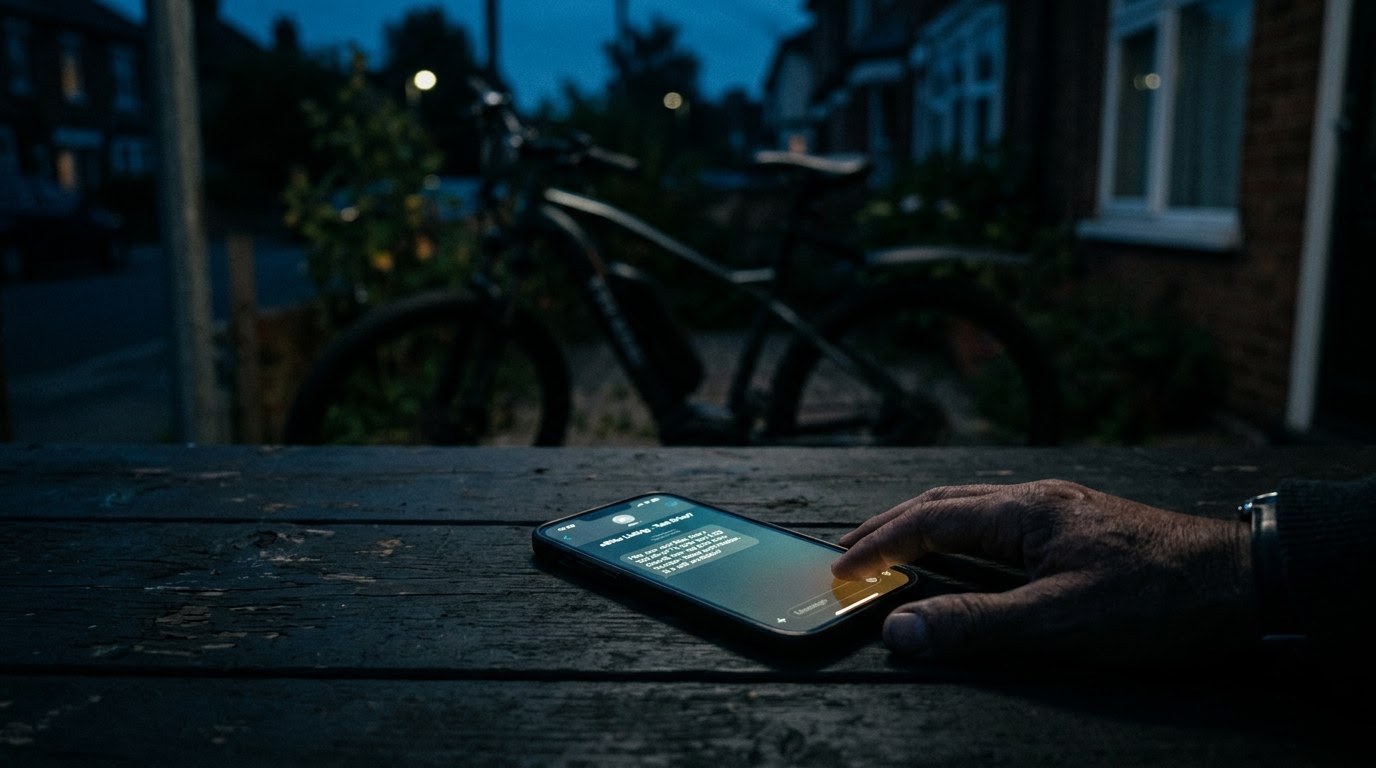
As of August 2026, private marketplace sales of high-value electric bicycles have reached record levels, creating an attractive target for specialized thieves. The fake test drive deposit scam involves a perpetrator contacting a seller, arranging an in-person meeting, providing fraudulent digital or physical collateral, and riding away on the e-bike under the guise of taking a brief test ride. Victims typically suffer losses between $1,500 and $5,000, leaving them with worthless tokens or pending digital transactions that never clear. Federal Bureau of Investigation data indicates that peer-to-peer marketplace fraud and property theft complaints resulted in over $415 million in reported losses during 2024. This trend underscores the importance of recognizing how thieves manipulate trust during local peer-to-peer transactions.
How the Scam Unfolds
The fake test drive deposit scam unfolds through a structured playbook where a scammer contacts a seller on a local marketplace, builds quick rapport, and arranges an in-person meeting. Upon arrival, the buyer presents fraudulent collateral—such as spoofed payment app confirmation screens, non-functioning vehicle key fobs, or worthless digital tokens—to reassure the seller. Once the seller grants permission for a quick test drive around the block, the scammer rides off and disappears.
A typical sequence involves specific operational phases designed to strip property from attentive sellers:
- The First Contact and Express Interest: A buyer reaches out within hours of an e-bike listing going live on Facebook Marketplace, OfferUp, or Craigslist. They ask minimal technical questions about the battery health or mileage, focusing instead on moving quickly to an in-person transaction. They present themselves as enthusiastic, motivated buyers ready to pay full asking price without haggling.
- The Collateral Strategy Proposal: Prior to meeting, the buyer proactively offers a solution for the seller's security. They claim they will leave their car keys, a modern smartphone, or initiate a pending payment hold via a peer-to-peer payment app while they test ride the bike. This proactive gesture lowers the seller's defense mechanisms by making the buyer appear conscientious.
- Selecting an Exploitable Meeting Location: The scammer suggests meeting in an open area adjacent to high-speed arterial roads, multi-exit parking structures, or near public transit hubs. They rarely agree to meet directly at a home address or inside a police department safe trade zone. They typically arrive on foot, via rideshare, or park their vehicle out of view down the street.
- The Visual Payment Illusion or Collateral Hand-off: At the meetup, the buyer inspects the e-bike briefly before pulling out their phone or handing over an object. One common pattern is showing the seller a polished graphic on a phone screen displaying a pending Zelle transfer or escrow hold. Alternatively, they hand over a weighted luxury car key fob or an unverified digital wallet token. In reality, the app screen is a pre-rendered image generator, and the car key fob is a cheap, hollow shell purchased online.
- The Unchaperoned Test Drive Request: Feeling secured by the physical fob or screen image, the seller allows the buyer to sit on the e-bike and adjust the saddle. The scammer asks to ride just down the street and back to check throttle response and pedal-assist levels. They avoid leaving a physical driver's license or government photo identification, offering the fake collateral instead.
- The Vanishing Act and Rapid Block: Once aboard the e-bike, the scammer engages the highest pedal-assist tier or full throttle, accelerating away. Instead of turning around at the end of the block, they turn the corner into an alley or onto an arterial street where an accomplice awaits with a van, or they simply ride out of sight. Seconds later, the buyer profile disappears from the messaging app, and all communication channels are blocked.
To illustrate how believable this playbook feels in real life, consider a common scenario involving high-end cargo bikes. A seller lists a $3,800 electric cargo bike designed for family transport. A prospective buyer using a social profile created just three weeks prior sends a message offering to meet at a neighborhood shopping center. When the buyer arrives, they hand over a weighted leather key pouch containing a luxury vehicle fob, stating that the seller can hold their car keys during the test drive. The seller takes the key pouch, assuming an expensive automobile sits nearby. The buyer mounts the e-bike, accelerates down the parking aisle, and fails to return. When the stranded seller walks the parking lot pressing the unlock button on the fob, no vehicle lights flash. The fob is an unprogrammed dummy shell, and the thief is already several miles away on a local bike path system.
Another variation relies entirely on digital deception. Scammers utilize customized web applications that simulate payment interfaces from major financial institutions. They show the seller a screen showing money held in escrow or a pending peer-to-peer transaction. They explain that the transaction will complete automatically once the seller confirms the test ride went smoothly. Because the seller sees their own name and listing price on the scammer's phone screen, they feel protected. Once the thief rides out of sight, no funds ever arrive in the seller's account because no actual bank network transaction was ever initiated.
Who Gets Targeted and Why
Private sellers listing premium e-bikes, cargo electric bikes, and high-end commuter models priced between $1,500 and $6,000 are the primary targets of this scam. Scammers target these sellers because e-bikes offer high resale value, rapid acceleration for quick getaways, and difficult physical tracking once stolen. The psychological hook relies on exploiting the seller's desire for a frictionless, polite transaction combined with a false sense of security provided by sophisticated-looking digital visual aids.
The demographic profile of targets spans casual marketplace users selling personal transport devices, parents selling family cargo bikes, and cycling enthusiasts upgrading their equipment. Unlike motor vehicles, electric bicycles do not require real-time registration checks, state license plate transfers, or mandatory title exchanges during a private sale. This regulatory gap makes e-bikes exceptionally attractive to organized theft networks and opportunistic fraudsters.
Thieves understand that private sellers often feel uncomfortable demanding strict safety protocols, such as requiring full cash in hand prior to a test ride. Sellers frequently worry about alienating legitimate buyers or appearing overly paranoid. Scammers exploit this social dynamic by adopting warm, polite, and cooperative communication early in the interaction. By framing fake collateral—such as dummy key fobs, modified payment app screenshots, or unverified digital tokens—as a generous gesture of good faith, the scammer strategically reverses the psychological pressure. The seller feels compelled to trust the buyer in return, lowering their defenses at the exact moment the physical property changes hands.
Furthermore, according to Federal Trade Commission data from 2024, online marketplace scam reports topped 110,000 incidents, reflecting how digital trickery consistently bypasses basic seller intuition. The high liquidity of e-bikes on secondary markets means a stolen $3,000 bike can be stripped of serial decals, re-painted, and resold in a neighboring municipality within 24 hours.
Cargo e-bikes and premium electric mountain bikes are particularly vulnerable due to their high demand and elevated retail pricing. Scammers target listings where sellers emphasize urgency, such as moving sales or quick relocation listings. These urgency markers tell the scammer that the seller is more likely to accept non-traditional collateral or fast-track the test drive process to complete the sale quickly.
How to Recognize It Before Money Moves
You can spot a fake test drive deposit scam before handing over your e-bike by evaluating the buyer's payment proof, identification habits, and meeting behavior. Fraudsters consistently push for immediate test rides using unverified collateral, fake payment app confirmation screens, or fake digital tokens rather than cleared electronic funds or cash. Recognizing these behavioral red flags allows you to halt the transaction before your property leaves your physical control.
To protect your property when selling an electric bicycle, evaluate every prospective buyer against these high-signal warning questions:
- Are they relying on digital screenshots rather than real-time bank account confirmations? Scammers frequently display static screenshots or custom web applications that mirror standard banking payment confirmation screens. Never rely on looking at a buyer's phone screen. Log into your own banking or payment app on your personal device to verify that funds have completely cleared and settled into your available balance before allowing a test drive.
- Is the physical collateral object actually verifiable? A car key fob, wallet, or phone dropped in your hand is useless if you cannot verify its true ownership or functionality on the spot. Thieves regularly purchase unprogrammed car fob shells online for under ten dollars to use as disposable collateral. Never accept physical items as substitute security.
- Have you verified the buyer's true identity through independent confirmation? No identity check can guarantee a safe transaction. A TrustCheck tells you whether the details someone gave you are consistent with one real identity — the judgement, and the risk, stay with you.
- Are they refusing to leave full cash in hand or meet at a designated safe exchange zone? Legitimate buyers understand that taking a $2,000 machine for an unchaperoned test ride requires equal safety measures for the seller. If a buyer refuses to leave the full agreed-upon cash purchase price in your physical custody during the test ride, cancel the demonstration immediately.
- Did they suggest a meeting spot near fast escape routes or public transit? Scammers choose locations near freeway on-ramps, alleyways, or transit stations to facilitate rapid getaways. Always insist on meeting in well-lit, highly monitored areas, such as designated police station safe exchange zones.
The table below breaks down how scammers manipulate communication at each phase of the exchange compared to what is happening behind the scenes:
| Stage of the Scam | What the Scammer Says | What Is Actually Happening |
|---|---|---|
| Initial Outreach | "I'll buy it today for asking price, no haggling. Can I come test ride it right now?" | The scammer creates urgency to bypass safety checks and prevent you from screening their account profile. |
| Deposit Negotiation | "I sent a $500 Zelle hold payment. It shows pending on my screen, so you know I'm good for it." | The scammer is showing a fake screenshot or exploiting unverified app statuses; no money has reached your account. |
| Collateral Hand-Off | "Here are the keys to my luxury sedan and my wallet while I take a quick spin around the block." | The keys belong to an unprogrammed dummy fob bought online, leaving you with zero financial or legal recourse. |
| The Test Ride | "I just want to check how the motor power feels on that slight incline down the street." | The thief uses maximum electric motor assist to distance themselves and escape down a planned getaway route. |
| Post-Theft Disappearance | [No response / Immediate communication block] | The scammer deletes their social profile, blocks your phone number, and prepares the bike for quick resale. |
When arranging an e-bike sale, enforce a strict policy: no physical cash in hand means no test drive. If a buyer insists on using a peer-to-peer app, require them to send the funds and wait until those funds are fully deposited into your bank account before permitting them onto the saddle. If a buyer hesitates or complains about these terms, terminate the transaction immediately.
If It's Already Happened
If an e-bike scammer steals your bicycle during a fake test drive, take immediate steps within the first 72 hours to maximize recovery chances and build a formal legal paper trail. Contact local police immediately to file a stolen vehicle report, gather all digital communication records, and notify online crime reporting portals. Preserving evidence right away ensures law enforcement and marketplace operators can act on the fraudulent activity quickly.
Take these concrete recovery actions immediately following a test drive theft:
- File an Immediate Police Report: Call local law enforcement straight away to report the crime. Provide officers with the e-bike frame serial number, battery serial number, motor specifications, make, model, color, and high-resolution photographs. Ensure the officer records the event as grand theft or motor vehicle theft rather than a civil contract dispute.
- Preserve Communication Records and Validate Profiles: Document all digital interactions with the buyer. Take clear screenshots of the marketplace listing, chat history, phone numbers, and profile handles before they are deleted. A TrustCheck can tell you whether the details you were given trace back to a consistent identity, which is worth writing down for your own record of what happened. It cannot confirm that someone is a scammer, it will not tell you who was really behind the profile, and it is not evidence. Report the incident to your bank, to the platform where you met, and to the FTC at reportfraud.ftc.gov.
- Submit Reports to Federal Fraud Databases: Report the theft to official federal agencies within the first 72 hours. File a report with the Federal Trade Commission at reportfraud.ftc.gov and log the incident with the FBI Internet Crime Complaint Center at ic3.gov. These filings help federal investigators link local marketplace thefts to larger regional fraud rings.
- List the Serial Number on Global Bicycle Registries: Flag your bicycle as stolen on public registries such as Bike Index and 529 Garage. Local bike shops, second-hand dealers, and pawn shops check these registries before purchasing or servicing used e-bikes, making it significantly harder for the scammer to resell the stolen property.
- Monitor Secondary Resale Channels: Set up automated keyword alerts on Craigslist, OfferUp, and Facebook Marketplace for matching e-bike models within a 150-mile radius. Include misspellings of the brand name in your searches. If you locate your stolen e-bike online, do not attempt to arrange a meeting or confront the seller yourself. Contact the assigned detective on your police report and provide them with the direct listing link.
Check your homeowner's or renter's insurance policy to see if personal property coverage applies to e-bike theft away from home. Many insurance policies cover personal mobility devices, though you will need to provide the formal police report number and documentation showing proof of ownership. Acting systematically increases the probability of recovering your property while protecting you against further financial exposure.
Frequently asked
Should I accept car keys as collateral for an e-bike test drive?
No, you should never accept car keys as collateral during a test drive. Scammers frequently hand over unprogrammed, dummy key fobs purchased cheaply online or keys to stolen vehicles. If the buyer rides away, you are left holding a worthless piece of plastic with no way to identify or locate the thief.
Is a pending Zelle or Venmo transfer screen safe proof for a test ride?
A pending payment screen is not safe proof to allow a test ride. Fraudsters use graphic generators or modified apps to present convincing screenshots of pending transfers that do not exist. Always check your own banking app on your personal device to confirm funds have completely cleared before releasing your e-bike.
Where is the safest place to meet a private e-bike buyer?
The safest place to meet a buyer is a designated police department safe exchange zone or a well-lit municipal building parking lot with active security cameras. These locations significantly deter scammers who rely on quick getaways and fake collateral, as fraudsters actively avoid high-surveillance public environments.
What should I require from a buyer before allowing an e-bike test drive?
You should require full cash in hand equal to the agreed sale price before handing over the e-bike. Alternatively, insist that electronic payment fully clears and posts to your bank account before the test ride. Hold the cash securely while the buyer rides, and return it only if they decide not to purchase.
Can police recover an e-bike stolen during a fake deposit test drive?
Police can recover stolen e-bikes if you provide detailed evidence promptly. Immediately supply officers with your e-bike frame serial number, photo ID of the suspect if available, chat logs, and precise physical descriptions. Registering your e-bike serial number on Bike Index and 529 Garage also alerts pawn shops and bike repair stores.
More in Scams
- How Fake Fine Wine Provenance Certificates Scam Peer Collectors
October 12, 2026
- How Fake Camera Lens Swap Scams Target Marketplace Buyers
October 10, 2026
- How Fake Exotic Car Rental Deposit Scams Target Vacationers
October 8, 2026