How Fake Trading Card Grading Scams Target Peer Collectors
· 10 min read
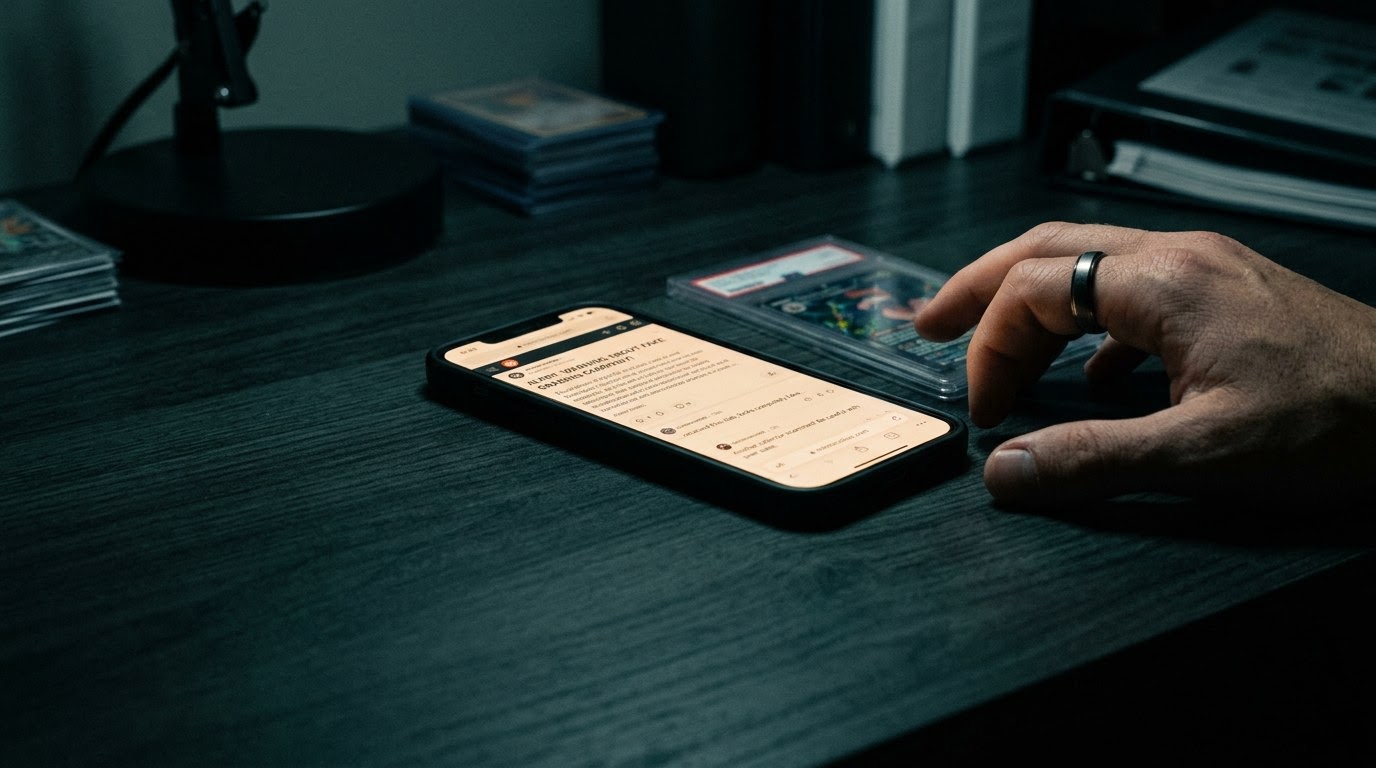
Fake trading card grading scams target peer collectors through counterfeit authentication holders, forged certificates, and cloned serial numbers, turning high-value face-to-face transactions into financial traps where losses routinely exceed $5,000 to $20,000 per trade. Scammers exploit the authority of third-party grading companies like Professional Sports Authenticator (PSA), Beckett Grading Services (BGS), and Certified Guarantee Company (CGC) by encapsulating worthless reprints into replica acrylic cases that pass initial visual inspection. FTC data from 2024 revealed that imposter and fraud reports involving collectibles and peer payment networks reached over $1.1 billion in total reported consumer losses. As high-value sports, Pokémon, and Magic: The Gathering cards continue to trade hands outside formal auction houses, criminal syndicates are manufacturing deceptive grading slabs designed specifically to bypass the quick visual checks common in peer swaps.
How Fake Trading Card Grading Scams Target Peer Collectors: The Playbook
How Fake Trading Card Grading Scams Target Peer Collectors follows a structured playbook where fraudsters locate targets in peer-to-peer collector communities, present convincing counterfeit acrylic slabs with cloned serial numbers, and force rapid in-person or direct-payment transactions. By mimicking authentic grading cases from leading authentication companies, scammers create a false sense of security that overrides standard due diligence. The goal is to secure irreversible payment before the buyer performs detailed forensic checks on the slab's structural integrity or label security features.
- Target Selection and Baiting: The fraudster monitors social media trading groups, Discord servers, and local classifieds to identify collectors seeking iconic cards, such as a 1986 Fleer Michael Jordan rookie, a Pokémon 1st Edition Shadowless Charizard, or a vintage baseball artifact. The scammer posts high-resolution photographs of a graded card priced at 15% to 25% below current market value. A typical sequence involves the seller claiming they need immediate cash for a sudden personal repair or a private purchase at an upcoming card show. The attractive price creates immediate fear of missing out (FOMO) among local buyers.
- Fabrication of Clone Slabs and Certificates: Behind the scenes, the fraudster sources empty replica holder shells manufactured overseas, alongside high-grade counterfeit cards printed on modern offset presses. The scammer looks up genuine certification numbers on public databases provided by PSA, BGS, or CGC. They print cloned insert labels complete with matching bar codes, QR codes, and certification numbers. The fake card and fake label are placed into the replica plastic holder, which is then sealed using custom ultrasonic welders or cold-solvent bonding agents to mimic authentic tamper-evident seams.
- Establishing Urgency and Proposing Off-Platform Transactions: Once a buyer expresses interest, the fraudster refuses to use platform-protected payment methods or third-party escrow services, citing high fee structures or processing delays. According to FBI IC3 reports from 2024, online purchase fraud and counterfeit goods schemes accounted for more than $330 million in losses across peer transactions. The scammer insists on a fast, face-to-face meetup in a public space, such as a coffee shop, gas station parking lot, or hotel lobby adjacent to a sports card convention, intentionally selecting locations with sub-optimal lighting and noisy environments that hinder careful physical inspection.
- Staging the Meetup and Manipulating Social Trust: During the meeting, the fraudster acts knowledgeable, friendly, and deeply embedded in the collecting community. They hand the slab over for inspection while engaging the buyer in constant conversation about card market trends, recent auction results, and personal collection histories. This deliberate distraction technique prevents the buyer from focusing closely on subtle physical defects in the plastic holder, such as altered frosting along the edge seams, improper plastic clarity, or slight alignment errors on the printed paper label.
- Executing the Irreversible Payment Exchange: The scammer encourages the buyer to scan the QR code printed on the label using their smartphone camera. When scanned, the QR code redirects to the authentic grading company's official lookup page, showing the real card details stored in the company database. Reassured by the online match, the buyer pays using cash, non-refundable peer-to-peer payment applications (such as Zelle or Venmo), or cryptocurrency. The scammer takes the payment, completes the exchange, and departs immediately.
- Post-Transaction Severance and Discovery: Hours or days later, the buyer examines the purchase under proper lighting, uses a magnifying loupe, or submits the card for high-end vault storage or cross-grading. Only then do they discover that the acrylic case lacks micro-printing features, the label lacks ultraviolet ink security marks, or the card inside is a modern digital reprint worth less than five dollars. When the buyer attempts to contact the seller, they find the user profile deleted, the phone number disconnected, and all communication channels permanently closed.
Who Gets Targeted and Why
Scammers target mid-level and high-value card collectors, active marketplace traders, and local hobbyists who rely on third-party grading slabs as absolute proof of authenticity. Victims are drawn in by psychological hooks such as fear of missing out, perceived arbitrage opportunities, and misplaced trust in acrylic encapsulation. The scam works because collectors often examine the grade on the label rather than verifying the physical slab construction or counterparty identity.
As of August 2026, the secondary market for graded trading cards operates largely on trust in third-party grading companies. Collectors have been conditioned for decades to believe that once a card is sealed inside a hard plastic holder with an assigned grade (such as a Gem Mint 10), the item is 100% authentic and tamper-proof. Fraudsters exploit this cognitive shortcut. They understand that most peer buyers inspect the assigned grade number on the label rather than verifying the structural integrity of the plastic case or the identity of the person holding it.
Targeted demographics span two major groups: experienced collectors seeking rare high-tier grails below market value, and newer entry-level investors who lack deep technical knowledge of slab security features. A 2025 BBB report showed that counterfeit physical goods scams increased by 22% compared to previous years, heavily impacting high-value collectible trading markets. The psychological driver in both groups is urgency combined with community intimacy. Because trading card communities pride themselves on peer-to-peer camaraderie, buyers frequently lower their fraud defenses during direct, face-to-face interactions with fellow hobby enthusiasts.
Scam Stages, Verbal Tactics, and Realities
Understanding the progression of a grading slab scam requires matching the fraudster's scripted excuses with their actual underlying operational tactics. Scammers use specific phrases to explain away below-market pricing, pressure fast cash settlements, and discourage thorough physical inspection. Recognizing these linguistic patterns alongside physical slab anomalies allows collectors to break the scammer's momentum before any payment is initiated.
| Stage of the Scam | What the Scammer Says | What's Actually Happening |
|---|---|---|
| Initial Bait & Contact | "Selling below market value because I need cash today to finance another card purchase at a convention." | The scammer sets a competitive price to induce FOMO and bypass standard buyer caution regarding off-market deals. |
| Verification Pushback | "You can scan the QR code on the slab right now; it links directly to the official registry database." | The cloned QR code points to a genuine registry entry, but the physical slab in hand is a replica housing a worthless counterfeit card. |
| Payment Selection | "I only take cash or instant peer-to-peer transfers. Escrow and marketplace apps take too long to clear." | The fraudster insists on non-reversible payment mechanisms so funds cannot be disputed or clawed back when the fake is discovered. |
| Physical Inspection | "Please don't handle the slab roughly or take too long, I have three other buyers waiting in line behind you." | The fraudster manufactures artificial time pressure to prevent you from examining edge welds, label fonts, or using a UV light. |
| Post-Transaction Delay | "I will send you a digital receipt and tracking info for the insurance certificate as soon as I get home." | The scammer buys time to leave the meeting site, shut down their burner accounts, and disable communication channels. |
How to Recognize It Before Money Moves
You can recognize a fake trading card grading scam before money changes hands by scrutinizing the physical attributes of the slab, checking certification databases directly, and verifying the personal identity of the seller. Key signals include altered frosted borders, mismatched label fonts, invalid QR code redirects, and sellers who refuse transparent identification steps. Asking critical screening questions and utilizing verification protocols stops fraudulent trades before cash or digital transfers occur.
To protect your capital during high-value face-to-face or direct peer transactions, evaluate every proposed trade against these critical warning questions:
1. Does the physical construction of the slab match authentic manufacturer standards?
Authentic grading slabs from PSA, BGS, and CGC utilize proprietary ultrasonic welding methods that produce consistent, clear seams. Counterfeit holders often show uneven frosting, stress cracks, glue residue, or visible pry marks along the side edges. Additionally, authentic slabs feature embedded micro-printing, optical variable ink, or holographic logo badges that reflect light in specific patterns. If the plastic feels lightweight, scratches easily under fingernail pressure, or lacks distinct holographic reflection on the label, step away immediately.
2. Is the certification lookup data completely consistent with the card in your hand?
Do not rely solely on scanning the QR code printed on the label, as scammers routinely code fake labels to direct your phone browser to the official lookup URL. Instead, open a browser manually, navigate directly to the official grading company website, and type in the certification number yourself. Compare the high-resolution scan in the official database against the physical card. Look closely at centering, sub-grade distribution (for BGS), card surface defects, print dots, and the exact positioning of the card inside the inner sleeve.
3. Is the seller willing to verify their identity before meeting?
Fraudsters operating high-value counterfeit slab networks rely heavily on anonymity, disposable social profiles, and fake online handles. Running a TrustCheck early narrows the question to one thing: whether the details you were given describe a real, consistent identity. Plenty of scams are run by people using their own names, so treat the result as evidence about the details, not a verdict on the person. If a seller refuses to verify their real name, uses an account created just days ago, or refuses to speak on a recorded phone call, cancel the transaction.
4. Does the transaction environment permit proper physical testing?
Never perform high-value cash transactions in dim lighting, parking lots, or high-distraction environments. Insist on conducting trades inside secure, well-lit spaces such as bank lobbies or police department safe-trade zones. Bring essential verification tools: a 10x LED jewelry loupe, a handheld ultraviolet (UV) blacklight flashlight, and a digital jeweler's scale. Authentic labels and acrylic plastics exhibit specific fluorescence under UV light that counterfeit desktop prints cannot match.
If It Has Already Happened
If you have fallen victim to a counterfeit card slab scam, immediate action within the first 72 hours is vital for preserving digital evidence, filing formal law enforcement claims, and attempting financial recovery. You should report the fraud to federal authorities, document all communications and slab serial numbers, and notify trading platforms or financial institutions involved. Swift reporting establishes an official record that aids anti-counterfeiting investigations and prevents the perpetrator from targeting others.
Take these concrete steps immediately following the discovery of a counterfeit grading slab transaction:
- Document All Evidence: Take macro photographs of the fake slab from multiple angles, focusing on edge seams, label typography, barcode patterns, and the card itself. Take screenshot captures of all chat logs, listing pages, social media profiles, payment confirmations, and email exchanges. Preserve the physical slab in a ziplock bag without cleaning or modifying it, as physical finger prints or material composition may serve as evidence.
- Report to Law Enforcement and Federal Agencies: File an official complaint with local law enforcement where the physical meetup occurred. Next, file an internet fraud report directly with the Federal Bureau of Investigation's Internet Crime Complaint Center at ic3.gov. Additionally, submit a detailed report regarding the deceptive business practice to the Federal Trade Commission at reportfraud.ftc.gov.
- Check the Details You Were Given: After the fact, a TrustCheck tells you only whether the contact details held together as one identity. That is context, not evidence, and investigators will not treat it as documentation. Report what happened to your bank and to the FTC at reportfraud.ftc.gov, and keep your own records of the messages and payments.
- Alert Financial Institutions and Payment Networks: Contact your bank, credit union, or payment platform immediately to report the transaction as fraudulent purchase scheme. While peer-to-peer wire applications rarely offer buyer protection for authorized cash transfers, establishing a formal fraud dispute record is necessary for law enforcement tracing and potential tax loss documentation.
- Notify Grading Companies and Community Registries: Contact the customer support and security divisions of PSA, BGS, or CGC to report the fraudulent use of their certification numbers. Providing the stolen serial numbers allows grading services to flag the cloned certifications in their public lookup databases, alerting future collectors and disrupting the scammer's distribution loop.
Frequently asked
What is a fake trading card grading slab scam?
A fake trading card grading slab scam involves fraudsters placing counterfeit cards or low-grade reprints inside replica acrylic authentication cases. These cases feature cloned labels and registry numbers from legitimate grading services like PSA or Beckett to trick buyers into paying top market prices during peer-to-peer transactions.
How can I tell if a card grading slab is counterfeit?
Examine the slab's edge seams under bright light for uneven frosting, glue residue, or cracking. Use a magnifying loupe and UV light to inspect label micro-printing and watermarks. Manually enter the serial number on the grading company's official website to compare database images against the physical card.
Why do scammers use cloned QR codes on fake slabs?
Scammers print QR codes that link directly to genuine registry entries on official grading websites. When a buyer scans the code, their phone displays authentic database records, creating a false sense of legitimacy while hiding the fact that the physical slab in hand is a counterfeit replica.
Can financial institutions recover money lost in peer-to-peer card scams?
Recovery is difficult if funds were transferred via cash or instant payment applications like Zelle or Venmo, as these transfers are treated as authorized settlements. However, reporting the fraud immediately to your bank, filing an IC3 report, and documenting seller details improves law enforcement tracing chances.
Where should I report counterfeit trading card grading fraud?
Report incidents immediately to your local police department, file an online crime complaint with the FBI's IC3 at ic3.gov, and submit a deceptive practice report to the Federal Trade Commission at reportfraud.ftc.gov. You should also notify the affected grading service.
More in Scams
- How Fake Fine Wine Provenance Certificates Scam Peer Collectors
October 12, 2026
- How Fake Camera Lens Swap Scams Target Marketplace Buyers
October 10, 2026
- How Fake Exotic Car Rental Deposit Scams Target Vacationers
October 8, 2026