How Scammers Use AI Deepfake Video Calls in Romance Cons
· 9 min read
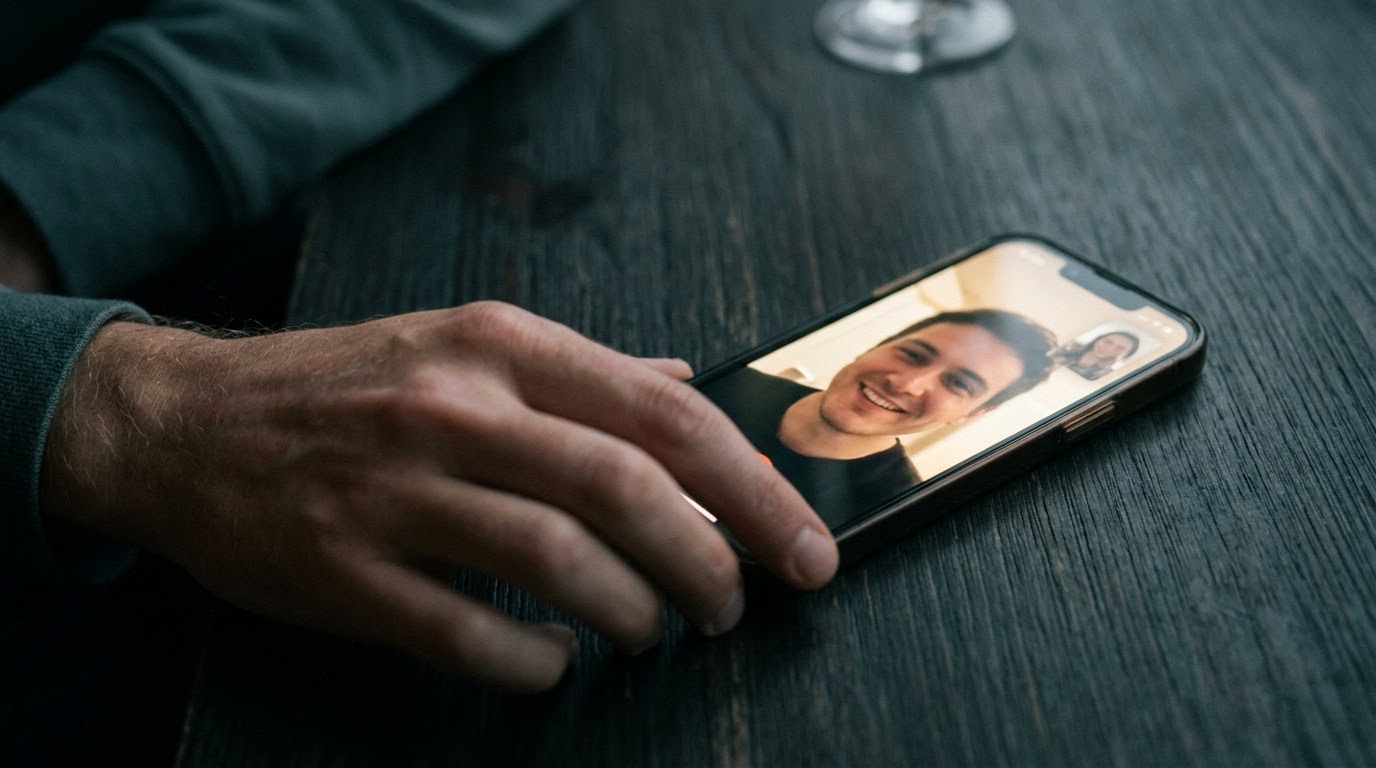
As of August 2026, the online dating world has undergone a dramatic transformation due to accessible generative artificial intelligence. The live AI deepfake romance scam represents the newest evolution of online courtship deception, where fraudsters overlay real-time digital face masks onto their camera feeds during live video calls. According to FTC reports from 2025, romance scams led to over $1.1 billion in total losses as fraudsters integrated generative AI into their playbooks. Victims who once relied on live video verification as the ultimate test of authenticity now find themselves tricked by high-definition synthetic avatars controlled by organized cybercrime syndicates.
How the Scam Unfolds: The Live Deepfake Playbook
The AI deepfake romance scam follows a rigorous, multi-phase operational strategy designed to systematically break down a target's healthy skepticism through technological proof before executing financial extortion. By using real-time face-swapping software during brief, carefully controlled video interactions, scammers simulate physical presence and foster intense emotional intimacy, paving the way for lucrative investment schemes or emergency money requests.
- Step 1: Profile Creation and Strategic Hook. Scammers start by scraping social media profiles or generating synthetic faces using advanced image diffusion models. They build compelling personas—often depicting overseas military officers, international civil engineers, or high-net-worth investors—and deploy them across mainstream dating applications and social media platforms. A typical sequence begins with a warm, flattering direct message designed to initiate rapid rapport. Within hours of initial contact, the fraudster shifts conversations away from the platform's monitored environment toward encrypted messaging tools such as Telegram or WhatsApp.
- Step 2: Preemptive Trust-Building and Unsolicited Video Verification. Traditional romance scammers actively avoid video calls, making targets naturally suspicious when excuses arise. Modern deepfake operators invert this dynamic by proactively offering short video clips or voice notes. These media assets are generated using voice cloning tools and pre-rendered AI video models. By sending a custom 5-second video saying "Good morning, thinking of you," the fraudster disarms the victim's defenses early, establishing an illusion of total transparency without requiring a live interaction.
- Step 3: The Orchestrated Live Deepfake Call. When the target eventually asks for a live video call, or when the fraudster decides to solidify trust, the operator launches specialized open-source software such as DeepFaceLive integrated with virtual camera drivers like OBS Studio. The call is kept deliberately brief—often lasting between 15 and 45 seconds. A common pattern involves the scammer placing the camera in a dimly lit room, holding the device at a distance, and maintaining a relatively static head posture. When visual artifacts occur—such as spatial flickering around the nose, unnatural eye blinking, or edge clipping near the jawline—the scammer blames a weak cellular signal or regional internet throttling before abruptly hanging up. Despite the brevity, the target leaves the interaction convinced they spoke with a real, living person matching the profile photos.
- Step 4: Intensification of Psychological Attachment. Having cleared the video verification hurdle, the fraudster accelerates the emotional timeline. They deploy intense affection, future-pacing techniques (discussing upcoming vacations, marriage, or home purchases together), and daily multi-hour text conversations. The victim's critical reasoning drops significantly because their brain has verified the contact's physical face on live video. The fraudster creates an exclusive, insulated emotional world where the target feels uniquely understood and valued.
- Step 5: The Financial Trap Deployment. Once the emotional bond is secured, the scammer transitions to the monetization phase. The request rarely begins as a direct plea for cash. Instead, fraudsters frequently employ the "pig butchering" method, casually demonstrating their alleged wealth accrued through a proprietary cryptocurrency trading platform or arbitrage algorithm. Alternatively, they fabricate a sudden, high-stakes personal crisis—a seized shipment of industrial equipment at international customs, an emergency surgery for a family member, or frozen banking assets requiring legal clearance fees. Data published by the FBI Internet Crime Complaint Center in 2024 revealed that complaints involving romance scams linked to investment fraud reached an all-time high of $3.5 billion in total victim losses.
- Step 6: Systematic Extinction and Ghosting. When the target sends the initial payment via cryptocurrency, wire transfer, or gift cards, the scammer does not disappear immediately. Instead, they introduce secondary complications requiring additional funds, such as unexpected tax obligations, bank conversion fees, or bribe payments to officials. The cycle repeats until the target exhausts their savings, attempts to withdraw profits from a fake platform, or expresses unshakeable suspicion. At that point, the fraudster deletes the messaging accounts, severs all digital tracks, and leaves the victim financially devastated and emotionally shocked.
Who Gets Targeted and Why
AI deepfake romance scams primarily target middle-aged and older adults who possess accumulated retirement assets, home equity, or liquid savings alongside a desire for companionship. Fraudsters exploit the psychological false sense of security associated with video confirmation. Because society taught internet users that video calls prove real identity, seeing a moving face completely neutralizes standard fraud awareness, leaving targets exceptionally vulnerable to manipulation.
A 2024 AARP study found that nearly 70% of online dating users over the age of 50 believed that a live video call was sufficient proof of a match's identity. Cybercrime syndicates leverage this widespread belief systematically. They select demographics who may experience social isolation, recent bereavement, or divorce, knowing these individuals are more likely to prioritize emotional connection over technical scrutiny. Furthermore, targets with modest technical literacy are unlikely to recognize digital rendering glitches, such as temporal smoothing, unnatural light reflections in pupils, or audio latency mismatch, making them ideal subjects for real-time face-swapping exploits.
How to Recognize It Before Money Moves
Detecting a live deepfake video call requires focusing on physical artifacts, behavioral anomalies, and hardware constraints that real-time AI rendering algorithms cannot fully resolve. By asking specific operational questions and demanding real-time physical actions during video interactions, you can expose synthetic face-swaps instantly before any financial resources are compromised.
Ask yourself these critical diagnostic questions during any suspicious video interaction:
1. Does the person's face warp or glitch during rapid lateral movement? Real-time AI face-swapping software relies on landmark tracking across the eyes, nose, and mouth. When a user turns their head past a 45-degree angle or quickly passes a hand in front of their face, the rendering filter often drops keypoints. Look for sudden blurs, double eyebrows, flickering skin textures near the ears, or momentary reveals of the operator's actual face underneath the digital overlay.
2. Is the lighting on their face inconsistent with their surroundings? Deepfake algorithms usually source lighting profiles from the original dataset photos rather than the real-time room environment. If the background shows a dark room, but the lighting on the face features bright studio-style reflections, or if shadow angles shift unnaturally when the subject tilts their head, you are viewing a synthetic projection.
3. Are they willing to perform a specific, unscripted physical gesture? Scammers rely on scripted movements. Ask the person to perform a custom action live on camera: wave a hand directly in front of their nose, turn completely sideways to show their profile, or blink five times rapidly. A real person can fulfill these requests immediately. A deepfake operator will panic, cite audio failure, claim insult, or abruptly disconnect the call because hands disrupt the landmark tracking mask.
4. Does the audio synchronization lag or sound artificially smoothed? Real-time voice cloning often produces robotic cadence, missing breath sounds, or noticeable delays between lip movement and vocal delivery. Pay close attention to mouth shapes during hard consonants like 'P', 'B', and 'M', where face-swap algorithms frequently struggle with lip occlusion.
5. Has running an independent verification check flagged synthetic details? Running a TrustCheck early narrows the question to one thing: whether the details you were given describe a real, consistent identity. Plenty of scams are run by people using their own names, so treat the result as evidence about the details, not a verdict on the person. Cross-referencing registered phone numbers, image histories, and digital footprints reveals whether the individual operating behind the screen matches the established public record of the person depicted in the video call.
Comparing Scam Stages: Words vs. Reality
Understanding the operational mechanics of deepfake romance scams requires looking past emotional scripts to examine the technical reality occurring behind the camera feed. The table below outlines how scammers use specific verbal pretexts to mask technical limitations and advance their financial traps.
| Stage of the Scam | What the Scammer Says | What's Actually Happening |
|---|---|---|
| Initial Contact & Grooming | "I prefer messaging on WhatsApp/Telegram; dating app chats glitch on my phone." | The scammer moves off-platform to avoid automated safety algorithms and platform moderation. |
| Preemptive Proof | "I made this quick video so you know I'm real. I hate long calls!" | Pre-rendered AI video models generate short clip files to build early trust without live risk. |
| Live Deepfake Verification | "My connection is terrible here, so I can only turn the video on for a few seconds." | The operator restricts call duration to prevent rendering glitches from exposing the digital mask. |
| Testing Gesture Requests | "Why don't you trust me? I don't need to do silly tricks on camera to prove my love." | The fraudster rejects live hand gestures because physical occlusion breaks the face-swap filter. |
| Financial Pivot | "I have an urgent clearance fee for my overseas equipment, but my accounts are locked." | The syndicate initiates the extortion phase using fabricated emergencies or fake crypto portals. |
If It's Already Happened: Immediate Recovery Steps
Discovering that a romance partner is an AI deepfake operator can trigger deep emotional distress alongside severe financial panic. Taking decisive, structured action within the first 72 hours is critical to stopping ongoing financial loss, securing remaining personal assets, and providing official investigative bodies with actionable digital forensic evidence.
Follow this immediate post-discovery action protocol:
1. Cease All Communication and Secure Financial Accounts. Immediately stop responding to the scammer. Do not confront them about the deepfake technology, as this alerts them to clean their digital tracks. Immediately contact your bank, wire transfer services, or cryptocurrency exchanges to freeze compromised accounts and request fraudulent transaction reversals.
2. Document All Technical and Conversational Evidence. Take clear screenshots of all chat logs, phone numbers, crypto wallet addresses, transaction receipts, and social media handles. Save any recorded video snippets or voice notes, keeping raw media files intact so forensic analysts can evaluate file metadata for synthetic generation traces.
3. Verify the Real Persona Identity. After the fact, a TrustCheck tells you only whether the contact details held together as one identity. That is context, not evidence, and investigators will not treat it as documentation. Report what happened to your bank and to the FTC at reportfraud.ftc.gov, and keep your own records of the messages and payments. Identifying that stolen photos belong to an innocent third party helps solidify legal claims when dealing with fraud departments.
4. File Formal Reports with Federal Authorities. Submit comprehensive complaints directly to government cybercrime portals. File a report with the Federal Trade Commission at reportfraud.ftc.gov and submit technical details, wallet addresses, and communication records to the FBI Internet Crime Complaint Center at ic3.gov.
5. Protect Your Personal Identity and Credit. If you shared sensitive documents—such as passport scans, driver's licenses, or banking details—place an immediate fraud alert and credit freeze with major credit bureaus (Equifax, Experian, TransUnion) to prevent unauthorized account creation.
Frequently asked
How do scammers make deepfakes live during a video call?
Scammers use real-time software like DeepFaceLive combined with virtual camera tools such as OBS Studio. The software captures the scammer's real-time facial movements and overlays a target's face onto the video stream instantly before routing it to apps like WhatsApp or FaceTime.
Can AI deepfake video calls bypass regular dating app verification?
Yes, basic liveness verification systems that rely on static selfies or simple head tilts can be tricked by advanced deepfake models. Scammers render synthetic faces in real time to satisfy automated prompts, making human skepticism and behavioral checks essential.
What is the single best way to test if a video call is a deepfake?
Ask the person to hold their hand in front of their face, turn completely sideways, or wave their fingers across their nose. Real-time deepfake algorithms struggle with physical occlusion and extreme angles, causing the digital mask to distort or vanish instantly.
Are voice notes sent by online matches always authentic?
No, scammers frequently use generative voice cloning software. By feeding just a few seconds of target audio into an AI model, fraudsters can generate highly convincing, custom voice notes uttering any script without needing to speak live.
Where should I report a deepfake romance scam?
Report the fraud immediately to the FTC at reportfraud.ftc.gov and file a detailed cybercrime complaint with the FBI at ic3.gov. Include all chat transcripts, wallet addresses, phone numbers, and saved video files in your reports.
More in Scams
- How Fake Fine Wine Provenance Certificates Scam Peer Collectors
October 12, 2026
- How Fake Camera Lens Swap Scams Target Marketplace Buyers
October 10, 2026
- How Fake Exotic Car Rental Deposit Scams Target Vacationers
October 8, 2026