How the Fake Stranded Traveler Scam Exploits Trusting Online Daters
· 9 min read
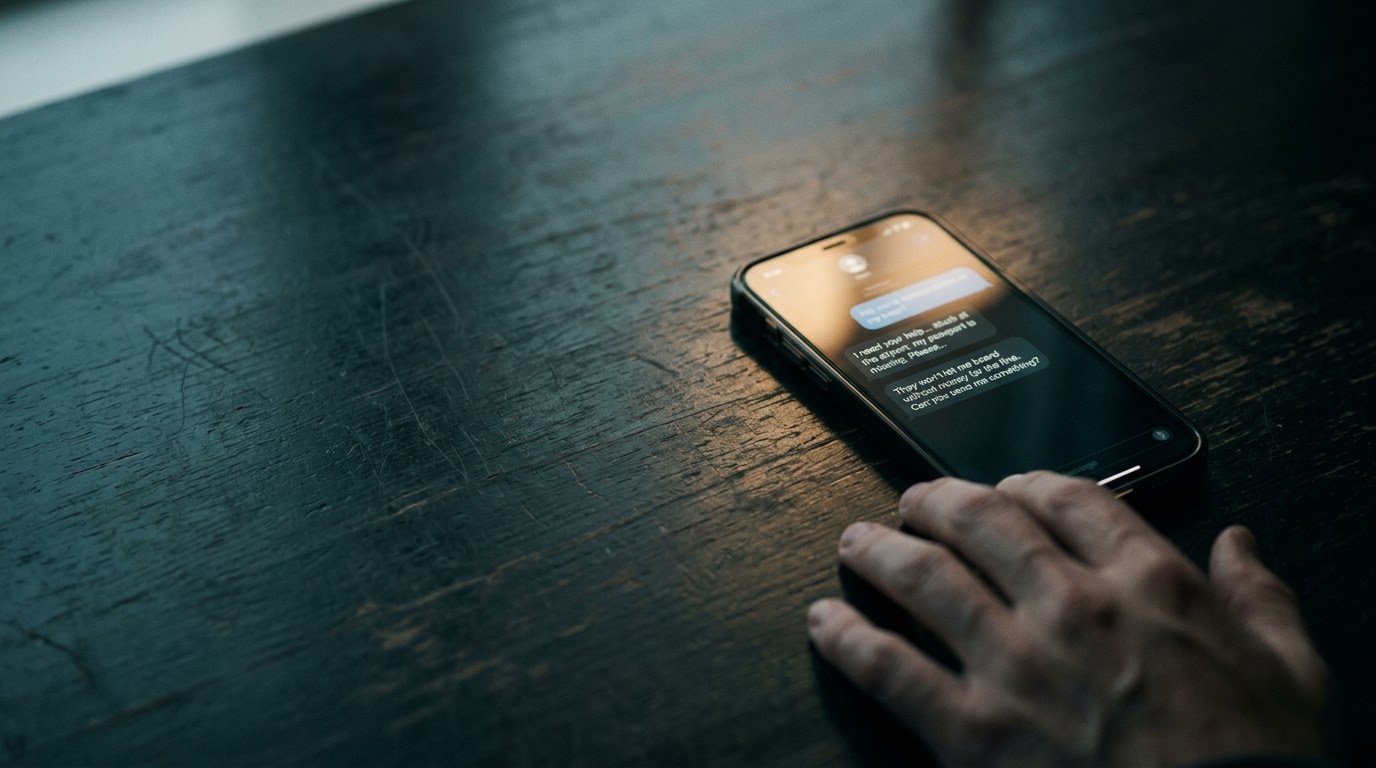
How Does the Fake Stranded Traveler Scam Work?
The fake stranded traveler scam is an identity deception scheme where cybercriminals groom dating app users over several weeks, establish deep emotional intimacy, and then fabricate an urgent overseas transit emergency. Scammers claim they are detained at foreign customs, stranded at international transit hubs, or facing unexpected airport taxes, using the emotional bond to demand immediate, non-refundable payments under the guise of emergency bail or clearance fees.
Unlike simple phishing attempts that ask for immediate cash, this tactic relies on long-term psychological investment. A typical sequence begins when a criminal creates an appealing online persona, such as an international civil engineer, offshore contractor, corporate consultant, or traveling executive. The individual appears genuine, cultured, and financially stable, effectively neutralizing initial safety concerns.
Once the scammer establishes control over the target's emotions, they introduce an international journey. The trip serves a dual purpose: it creates a physical distance that explains why a real-life meeting cannot happen immediately, and it sets the stage for a dramatic emergency in a foreign jurisdiction where standard local rules do not seem to apply.
FBI data reveals that IC3 received over 17,000 romance scam complaints totaling more than $650 million in losses in 2024. These figures highlight the scale at which organized criminal rings operate across borders using automated scripts and psychological manipulation tactics.
The manipulation relies heavily on isolation. Scammers work quickly to isolate targets from supportive social circles, advising them to keep their financial assistance confidential to avoid outside intervention. When targets consult friends or family members, the deception is frequently identified before funds leave the account.
How the Scam Unfolds Step by Step
Cybercriminals execute the stranded traveler playbook through a sequence designed to dismantle skepticism and exploit emotional empathy. The attack moves systematically from initial match and off-platform migration to deep emotional grooming, sudden international travel, a manufactured customs crisis, and escalating demands for untraceable funds. Recognizing these distinct chronological phases enables dating app users to identify financial manipulation before sending wire transfers.
The playbook follows a disciplined, predictable structure. Understanding each phase helps you spot behavioral deviations that signal an active scam.
-
Step 1: Profile Creation and Tactical Matching
The scammer establishes a polished profile on a popular dating app. The photos depict an attractive, professional individual—frequently posing in high-end business attire, working on major engineering projects, or standing in international airports. The profile bio emphasizes values like commitment, family, and high emotional maturity. The scammer actively targets users who list clear relationship goals or express deep empathy in their profile responses.
-
Step 2: Rapid Migration Off-Platform
Within hours or days of matching, the scammer urges you to move the conversation off the dating app to an encrypted messaging service like WhatsApp, Telegram, or Signal. They claim they rarely check the dating app or prefer direct messaging for personal privacy. Moving off-platform removes the safety monitoring tools built into dating applications, making it harder for platform administrators to detect suspicious accounts or issue safety warnings.
-
Step 3: Emotional Grooming and Love Bombing
The criminal initiates intense, round-the-clock communication. They send frequent morning messages, inquire about daily routines, and share detailed, stolen stories about their family, career, and future aspirations. They declare strong romantic feelings within weeks, framing the relationship as unique and destiny-driven. This phase creates emotional obligation, ensuring you feel deeply invested in their personal health and safety.
-
Step 4: The Abrupt Overseas Travel Announcement
After establishing strong trust, the scammer announces a sudden, mandatory international trip. Common stories involve an urgent contract in Europe, an international oil rig inspection, a high-value art transaction, or an unexpected inheritance settlement abroad. They promise that as soon as this brief business trip concludes, they will fly directly to meet you in person to start a life together.
-
Step 5: The Fabricated Transit Crisis
While allegedly traveling home or transiting through a foreign airport, the scammer contacts you in visible distress. They claim customs authorities have detained them due to unexpected import duties, unpaid transit taxes, administrative passport fines, or legal issues regarding corporate assets. They insist they are trapped in an airport holding room or local hotel, unable to board their flight home until fees are cleared.
-
Step 6: The Urgent Demand for Non-Refundable Funds
The scammer claims their primary bank accounts are locked due to international security flags or local banking restrictions. They ask you to wire funds directly to a foreign third-party account, money transfer service, or cryptocurrency wallet. They frame the request as a short-term loan, promising full reimbursement upon arrival. They utilize intense time pressure, claiming delays will lead to formal arrest or indefinite detention.
-
Step 7: The Endless Escalation or Disappearance
If you send the initial sum, the crisis does not end. The scammer immediately invents secondary complications: additional legal clearance fees, medical emergencies while in detention, or bribes demanded by corrupt airport officials. The demands continue until you refuse or run out of money. Once you stop sending funds, the scammer cuts off communication, deletes their social profiles, and vanishes.
Who Gets Targeted and Why?
While cybercriminals target individuals across all adult demographics, victims are predominantly singles aged 40 and older who possess accumulated personal savings and exhibit high empathy on dating platforms. Scammers exploit psychological vulnerabilities including social isolation, romantic optimism, and the natural human instinct to assist a partner in peril, effectively disabling standard critical thinking during a high-stress, artificial emergency.
A 2024 AARP study found that roughly 30% of romance fraud victims were targeted through popular online dating applications. Scammers specifically seek out individuals who demonstrate high trust, financial capacity, and emotional availability. Middle-aged and older adults are targeted because they are more likely to have accessible lines of credit, liquid retirement savings, or home equity that can be liquidated quickly under emotional distress.
The success of the stranded traveler angle relies on artificial urgency and emotional leverage. When a target believes someone they love is trapped in a foreign airport without food, medical care, or freedom, cognitive processing shifts from logical evaluation to emergency rescue mode. Scammers systematically exploit this state of heightened anxiety to rush money transfers before you have time to consult family members, trusted friends, or financial advisers.
Criminal organizations frequently employ team-based tactics. One operative manages the daily emotional conversations, while another acts as an official customs officer, diplomat, or legal counsel sending forged documentation via message attachments. This multi-actor approach creates a false perception of official verification, convincing targets that the airport emergency is authentic.
How to Recognize It Before Money Moves
Recognizing a stranded traveler scam requires evaluating communication patterns against known red flags before authorizing any money transfers. Suspicious indicators include consistent refusals to participate in live video calls, rapid romantic acceleration, demands to chat on private messaging apps, and sudden requests for emergency funds sent to third-party accounts. Asking targeted diagnostic questions exposes fake identities before financial assets are put at risk.
To evaluate whether a match is authentic, ask yourself the following diagnostic questions during the first few weeks of conversation:
- Have we ever verified each other through a clear, live video call where the person answers questions in real time?
- Is the person asking for financial assistance for an emergency in a country they claimed to visit on short notice?
- Does the payment destination involve third-party bank accounts, cryptocurrency wallets, or peer-to-peer apps that offer zero consumer protection?
- Are they pushing for immediate payment while urging you not to consult your family, friends, or financial advisors?
- Does their professional background sound overly complex or involve high-value foreign projects that require sudden cash outlays?
A TrustCheck is one input, and it is not a promise of safety. It tells you whether a name, phone, email and address hold together as one person; it cannot tell you what that person intends to do.
BBB statistics show that the median financial loss for romance scam victims reached $2,000 in 2025, with many stranded traveler victims losing substantially higher sums due to repeated emergency requests. The table below outlines how scammers translate artificial scenarios into direct financial demands.
| Stage of the Scam | What the Scammer Says | What's Actually Happening |
|---|---|---|
| Initial Bonding | "I have never felt a connection like this before. Let's move to WhatsApp so we can talk constantly without distraction." | The scammer moves you away from dating platform safety filters to isolate you from safety alerts and automated monitoring. |
| The Overseas Announcement | "I just got called overseas for a multi-million dollar contract. As soon as I finish, I am coming straight to see you." | The scammer establishes a plausible physical distance to justify why real-life dates cannot occur while setting up a foreign scenario. |
| The Airport Emergency | "Customs officials at the transit hub are holding my legal papers. My accounts are locked internationally—I need $3,500 immediately." | The scammer creates panic to override your logic, demanding untraceable money transfers to stolen or offshore accounts. |
| The Secondary Demand | "The airport authorities charged an unexpected legal tax fine. If I don't pay another $5,000 in two hours, I will be placed in jail." | The scammer maximizes financial extraction while you remain caught in high-stress emotional rescue mode, continuing until assets are depleted. |
If It's Already Happened: Recovery and Action Steps
If you have sent money to a fake stranded traveler, taking immediate protective action within the first 72 hours is crucial to limit financial damage and potentially freeze stolen funds. You must immediately notify your financial institution's fraud desk, submit reports to federal law enforcement databases, secure all personal online accounts, and break off contact with the scammer. Fast execution of banking recall protocols offers the highest probability of asset recovery.
Take these critical steps immediately upon realizing you are dealing with a fraud scenario:
- Contact Your Financial Institutions Immediately: Call your bank, wire service, or credit card issuer. Request an immediate wire recall or fraudulent transaction chargeback. Specify that you are a victim of an active international fraud scheme.
- File Official Law Enforcement Reports: Submit a detailed report with the FBI Internet Crime Complaint Center at ic3.gov and the Federal Trade Commission at reportfraud.ftc.gov. These filings document the crime for potential financial recovery and cross-border law enforcement tracking.
- Preserve All Communication Evidence: Save full chat logs, phone call records, email headers, wire transfer receipts, account numbers, and profile screenshots before deleting any apps or messages.
- Cease All Contact with the Fraudster: Immediately block the scammer across all messaging apps, email addresses, and social channels. Do not confront them; doing so alerts them to delete evidence or change bank accounts.
- Verify Identity Information: Running a TrustCheck afterwards can show you that the name, phone and email you were given never resolved to one consistent person — useful for your own notes, but not proof of anything. It does not identify whoever was actually on the other end. The reports that matter go to your bank, the platform, and the FTC at reportfraud.ftc.gov.
Be aware that victims of romance fraud are routinely targeted by secondary recovery scams. Fraudulent entities monitoring public forums or social media will offer to retrieve lost funds for an upfront processing fee. Legitimate government entities and law enforcement agencies never charge fees to investigate crimes or assist in financial recovery efforts.
Implement comprehensive credit freezes across major credit bureaus like Equifax, Experian, and TransUnion if you shared sensitive personal identifiers, such as driver's license photos or tax documents, during the grooming phase. Securing your accounts prevents secondary identity theft attempts.
Frequently asked
What is the fake stranded traveler scam?
The fake stranded traveler scam occurs when a cybercriminal builds a romantic relationship on a dating application and then fabricates an overseas emergency, such as an airport customs detainment or passport fine. The scammer urgently requests non-refundable wire transfers or cryptocurrency to resolve the crisis.
Why do stranded traveler scammers refuse video calls?
Scammers refuse video calls because they utilize stolen photos or synthetic identities that do not match their true physical appearance. They routinely make excuses about poor airport Wi-Fi, restricted official environments, or damaged phone cameras to prevent targets from seeing who is behind the messages.
What payment methods do fake stranded travelers request?
Scammers insist on non-refundable, rapid payment methods such as wire transfers, cryptocurrency, peer-to-peer payment apps, or gift cards. They avoid standard bank transfers because irreversible payment rails prevent targets from canceling transactions once the scam is discovered.
Can money lost to a fake stranded traveler scam be recovered?
Asset recovery depends on speed and payment method. Contacting your bank's fraud desk within 72 hours of a wire transfer offers the highest chance of reversing transactions. Payments sent via cryptocurrency or gift cards are rarely recoverable once claimed by perpetrators.
How can I verify if an online dating match is real?
Verify matches by insisting on live video calls early in communication and performing reverse image searches on profile pictures. Verifying identity details across official public registries confirms whether a person matches their claimed identity before emotional or financial commitment occurs.
More in Scams
- How Fake Fine Wine Provenance Certificates Scam Peer Collectors
October 12, 2026
- How Fake Camera Lens Swap Scams Target Marketplace Buyers
October 10, 2026
- How Fake Exotic Car Rental Deposit Scams Target Vacationers
October 8, 2026