How to Safely Buy a Used ATV From a Private Seller
· 11 min read
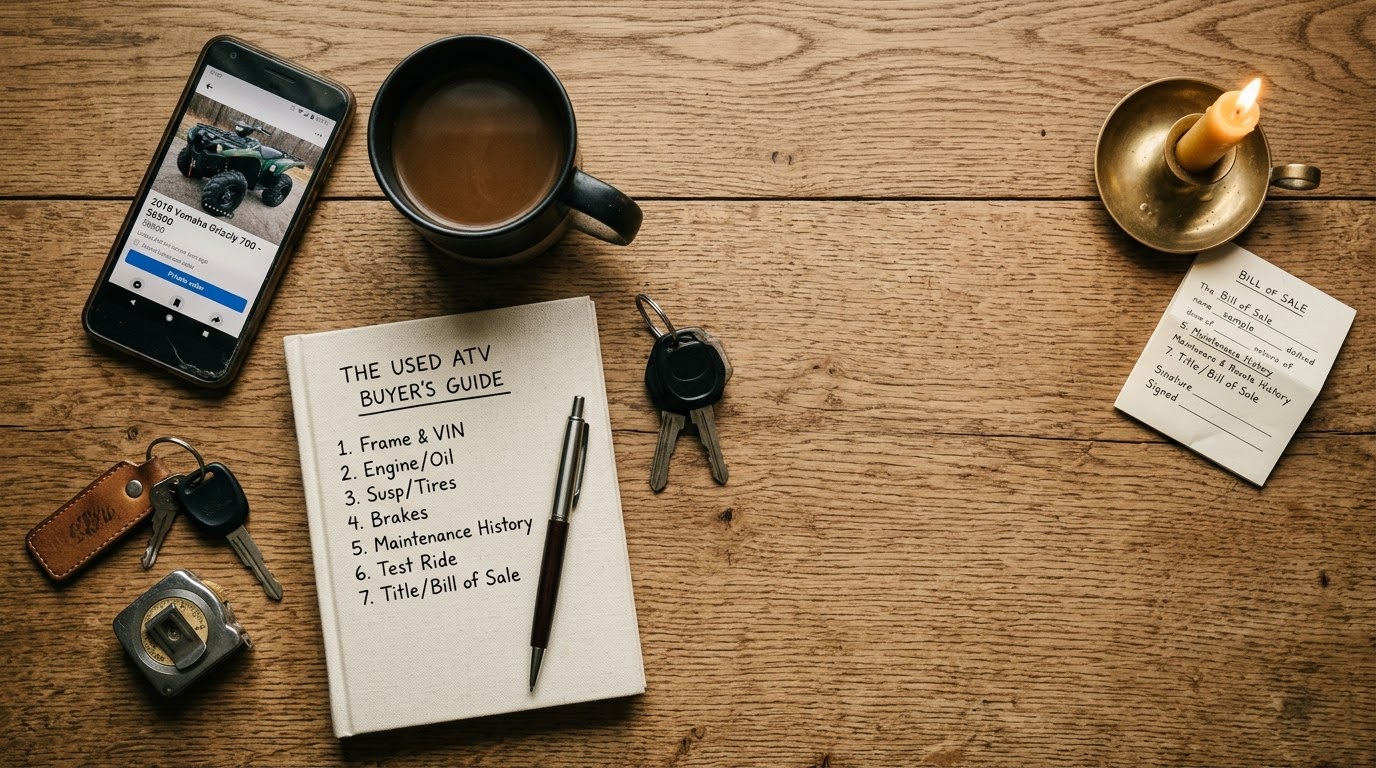
Apply this checklist whenever you prepare to purchase a used all-terrain vehicle from an individual seller on Facebook Marketplace, Craigslist, or local classifieds. Using identity verification tools like TrustMatch alongside physical vehicle checks ensures you pay the rightful owner and avoid buying stolen or damaged off-road equipment.
1. Run a TrustCheck on the Seller
Run a quick identity check on the private seller before giving out personal details or agreeing to an in-person meeting. Enter the seller's first name and phone number or email address into TrustMatch to generate a comprehensive TrustScore and risk verdict in under a minute. This step instantly confirms whether you are communicating with a real, local individual or an offshore scammer operating a fake listing stolen from a legitimate power sports marketplace.
Private seller fraud in the powersports market frequently begins with stolen photos and fake listings. Scammers post attractive prices on popular quads—such as Honda Ranchers, Yamaha Raptors, or Polaris Sportsmans—and ask for advance deposit payments to hold the vehicle. Federal Trade Commission report data indicates that online private sales scams and fraudulent deposit schemes caused over $100 million in reported consumer losses in 2024.
Obtain the seller's mobile phone number during your initial conversation. Request a good callback number to coordinate trailering and inspection details. Input that phone number into TrustMatch alongside their given name. The verification tool checks line ownership, risk signals, and identity markers to ensure the seller is genuine. If the risk verdict indicates a high threat level, suspicious VoIP line, or location mismatch, cancel the transaction immediately.
2. Match the Title and Frame VIN
Locate the 17-digit Vehicle Identification Number (VIN) stamped directly onto the ATV frame rail and cross-reference it against the paper title and state registration. You must verify that the VIN on the frame matches the title documentation exactly without missing digits, ground-off numbers, or fresh paint covering the metal stamping. Achieving a perfect match proves legal ownership and guarantees that the machine is not listed as stolen on national law enforcement databases.
Do not accept excuses regarding missing or lost titles. If the seller claims the title was lost, insist that they order a duplicate title from their state motor vehicle department before you inspect the machine. In states where off-road vehicles are non-titled, demand the original certificate of origin, active state trail registration card, and previous bill of sale traced back to the original dealership purchase.
Find the physical VIN stamping on the frame. On most quads, manufacturers stamp this 17-digit sequence onto the lower frame rail near the front A-arms, near the rear axle housing, or on the main frame spar beneath the seat. Bring a flashlight and a wire brush to clear away trail dirt or mud. Compare every character on the frame to the title document, line by line. Inspect the metal surrounding the VIN for grind marks, fresh aerosol paint, or uneven metal stamping, which indicate a stolen frame with a altered identity.
Verify that the seller's government-issued photo identification matches the name printed on the front of the paper title. If the title lists a financial institution as a lienholder, demand a signed, official lien release letter from the bank. Never pay cash for an ATV where the seller's name does not match the title or where an active bank lien remains outstanding.
3. Request a Live Video Walkaround
Ask the seller to record a live 5-minute video walkaround showing the cold engine start, VIN plate, and real-time operation of all lighting and controls. Require the seller to state your name and today's date aloud on camera while starting the machine from a cold exhaust header. Performing a live video call validates that the seller physically possesses the vehicle and prevents you from traveling to an empty location or falling for phantom vehicle listings.
Schedule a quick video call using FaceTime, Google Meet, or WhatsApp prior to hooking up your trailer. Instruct the seller to begin the video at the front of the quad. Ask them to touch the engine exhaust header pipe with an gloved hand to prove the engine is completely cold. Cold starts reveal crucial engine health indicators, such as weak batteries, worn starter solenoids, valve clatter, or blue exhaust smoke indicating worn piston rings.
Use the live video stream to inspect functional components. Ask the seller to operate the following features while you watch:
- Flip the headlight switch between low beam and high beam modes.
- Engage the front and rear hand brake levers to verify brake light activation.
- Shift the transmission through forward, neutral, and reverse gears.
- Toggle the electronic four-wheel-drive switch or mechanical diff-lock lever.
- Operate the electric winch spool controls in both directions.
If the seller refuses to perform a live video walkaround, cites technical excuses, or offers only pre-recorded video clips, end contact. Legitimate private sellers eager to complete a fair sale will gladly spend five minutes on camera to confirm the machine exists and functions as advertised.
4. Inspect the ATV Mechanical Systems in Daylight
Perform a full hands-on mechanical inspection of the ATV outdoors during daylight hours to uncover hidden frame damage, flood exposure, or severe drivetrain wear. Inspect the A-arms, CV joint boots, air filter housing, oil dipstick, and brake calipers for signs of neglect or hard trail abuse. A successful inspection confirms that the vehicle requires no immediate expensive engine overhauls or structural frame welding before it can be safely ridden on public trails.
Arrive at the inspection site during full daylight. Bring a tire pressure gauge, multi-meter, clean shop rags, flashlight, and floor jack if possible. Break down your physical inspection into targeted component categories:
Frame and Suspension Integrity: Crouch down and inspect the underside frame tubes. Look for deep dents, flattened frame rails, cracked factory welds, or aftermarket reinforcement plates welded over bend points. Grab the top of each front tire and shake it firmly back and forth. Excessive play indicates failed wheel bearings, worn upper or lower ball joints, or sloppy tie-rod ends.
Engine, Airbox, and Fluids: Pull the engine oil dipstick. Fluid that appears milky or resembles chocolate milk indicates coolant contamination from a blown head gasket or water entry from deep river crossings. Remove the seat and open the air filter airbox cover. Look for standing water, caked mud inside the intake tract, or missing air filters. Mud downstream of the air filter proves the engine ingested abrasive grit, which destroys internal cylinder walls.
Drivetrain and Brakes: Squeeze the rubber Constant Velocity (CV) boot boots on all four drive axles. Cracked or torn CV boots allow grease to escape and dirt to enter, ruining expensive axle joints. Inspect the brake rotors for deep scoring and check pad thickness. Verify that brake master cylinder reservoirs contain clear fluid without leaks around banjo fittings.
Test Ride Execution: Conduct a test ride on flat ground before entering off-road terrain. Test straight-line tracking by momentarily relaxing your grip on the handlebars at low speed. If the quad pulls hard to one side, suspect bent steering stems or misaligned A-arms. Test acceleration response, reverse gear hold, and full-stop braking power.
5. Verify Clean Payment and Transfer Documentation
Execute the financial exchange using secure, traceable payment methods alongside a signed, notarized bill of sale at a bank or neutral facility. Ensure the bill of sale lists the exact purchase price, VIN, engine serial number, seller's full legal name, and residential address. Validating payment and transfer paperwork guarantees that legal title transfers cleanly to your name at the state motor vehicle agency without unrecorded tax liabilities or back fees.
Never bring large wads of cash to an initial meeting or isolated location. Refuse payment requests involving digital gift cards, wire transfers, or unknown online escrow services. Scammers frequently set up fake escrow websites designed to mimic legitimate financial intermediaries.
Plan to finalize payment inside a local bank branch or credit union. If paying with cash, have the bank teller count and verify the bills in front of the seller. If paying by cashier's check, have the bank officer print the check directly in front of both parties. This process eliminates counterfeit currency risks for the seller and provides you with an official bank record of the funds transfer.
Prepare two copies of an official bill of sale document. Fill out the following required fields completely:
- Exact calendar date of transaction.
- Seller's full legal name, physical address, and driver's license number.
- Buyer's full legal name and address.
- Year, make, model, displacement (cc), and color of the ATV.
- Complete 17-digit frame VIN and engine serial number.
- Hour meter reading and odometer mileage (if equipped).
- Agreed final purchase price written in both numbers and spelled words.
- Signatures of both buyer and seller.
6. Meet in a Designated Safe Zone
Schedule the physical meeting and vehicle pickup at a designated safe exchange zone, such as a police department parking lot or financial institution. Select a public, well-lit location equipped with active security cameras and high foot traffic during normal daytime business hours. Choosing a monitored safe exchange location deters armed robbery, protects your physical safety, and creates official surveillance footage of the entire transaction process.
Avoid meeting sellers at secluded private residences, wooded rural properties, or unlit parking lots behind closed commercial strip malls. Scammers utilize remote locations to ambush buyers carrying thousands of dollars in cash. Propose a police station parking lot specifically designated for online marketplace transactions. Honest sellers accept safe exchange locations without hesitation.
Bring a companion along for the pickup. Having a second person present adds physical security, provides an extra set of eyes during mechanical checks, and assists with trailer loading. Keep your vehicle doors locked and window glass rolled up until you confirm that the seller's physical appearance matches their photo identification.
Prepare your transportation equipment in advance. Bring heavy-duty ratchet tie-down straps, ramp sets rated for the quad's wet weight, a trailer lighting board test tool, and a wheel chock. Secure the ATV to your trailer or pickup bed immediately after completing documentation before departing the safe exchange zone.
ATV Verification Summary Matrix
Review this reference matrix before contacting sellers or traveling to inspect a private party all-terrain vehicle. This structured summary breaks down each critical step of the acquisition process, highlighting the precise elements you must verify and the specific red flags that mandate walking away immediately from a questionable deal.
| Step | What to verify | Red flag if missing |
|---|---|---|
Quick Checklist for Buying a Used ATV
Follow this sequential checklist on your mobile device while evaluating off-road vehicles listed by individual private owners. Completing these numbered actions in exact order keeps your personal safety intact, protects your funds, and guarantees that you bring home a reliable, legally titled machine ready for trail riding.
- Perform a TrustScore check on the seller using their legal name and mobile number.
- Demand a 5-minute live video walkaround showing a cold engine header start.
- Cross-reference the frame VIN against the paper title and national theft databases.
- Confirm the seller's government photo ID matches the name printed on the paper title.
- Schedule the inspection during daylight hours at a police station safe exchange zone.
- Inspect frame welds, suspension joints, engine oil purity, and airbox cleanliness.
- Execute a test ride checking straight tracking, braking, and 4WD drive engagement.
- Sign a notarized bill of sale and transfer verified funds inside a local bank branch.
Red Flags During This Process
Recognize mid-transaction red flags immediately so you can disengage safely before losing money or putting yourself in physical danger. Walk away from any deal where the seller changes the agreed meetup location to an unlit rural area, demands advance deposit fees, or refuses to present photo identification matching the paper title. Terminating a suspicious interaction early protects your savings and prevents you from acquiring stolen or hazardous property.
Pay close attention to changes in communication tone or sudden transaction alterations. Watch out for these critical warning indicators:
- Out-of-State Deployment Stories: The seller claims they are currently deployed overseas, working on an offshore oil rig, or selling the quad for a deceased relative, requiring third-party shipping handling.
- High-Pressure Urgency: The seller claims multiple cash buyers are traveling right now with trailers, demanding an immediate Zelle or Venmo deposit to hold the machine.
- Pre-Warmed Engine: You arrive at the meetup site and find the ATV engine block already piping hot, masking underlying starter motor failures, carburetor issues, or heavy valve noise.
- Title Third-Party Transfers: The seller presents a title signed by a previous owner but never registered in the current seller's name, leaving you open to open-title penalties and tax fraud issues.
- Below-Market Pricing: A late-model 4x4 quad listed at 70% below average trade-in book value indicates a scam, stolen property, or a severely damaged engine.
As of October 2026, combining physical vehicle checks with an upfront TrustMatch identity verification protects your hard-earned funds while keeping the private purchasing process safe, transparent, and respectful for honest sellers.
Frequently asked
What should I do if a private seller does not have a title for the ATV?
Walk away from the transaction unless your state does not issue titles for off-road vehicles and allows registration via a certified bill of sale. If a title state seller claims the document was lost, require them to apply for a duplicate title at their local DMV before you hand over any cash.
Where is the VIN typically located on a used ATV?
Look at the lower frame rails near the front suspension A-arms, behind the front bumper, or on the rear frame tube near the hitch receiver. On many quad models, the 17-digit VIN is also stamped onto the left crankcase area of the engine. Check for scratches, fresh paint, or grind marks that indicate tampering.
Is it safe to pay a private seller with Zelle, Venmo, or cash apps?
Avoid using peer-to-peer payment apps when buying high-value items like off-road vehicles from strangers. These payment platforms offer zero buyer protection for private vehicle purchases. Complete the payment inside a bank branch using cash or a verified cashier's check once all paperwork is signed and physical possession is transferred.
How can I tell if an ATV engine has been warmed up before my inspection?
Reach out and carefully touch the exhaust header pipe with your bare hand before the seller starts the ignition key. If the exhaust metal feels warm, the seller started the engine earlier to mask hard starting issues, severe valve noise, or cold engine smoke. Ask why it was warmed up before proceeding.
Why should I use identity verification before meeting a private vehicle seller?
Identity verification confirms that the individual behind the online listing is a real person located near you rather than an offshore scammer using stolen photos. Verifying seller details on TrustMatch before setting up a meeting protects you from robbery traps, fake escrow operations, and fraudulent deposit demands.