How to Safely Buy a Used Designer Wedding Dress From a Private Seller
· 10 min read
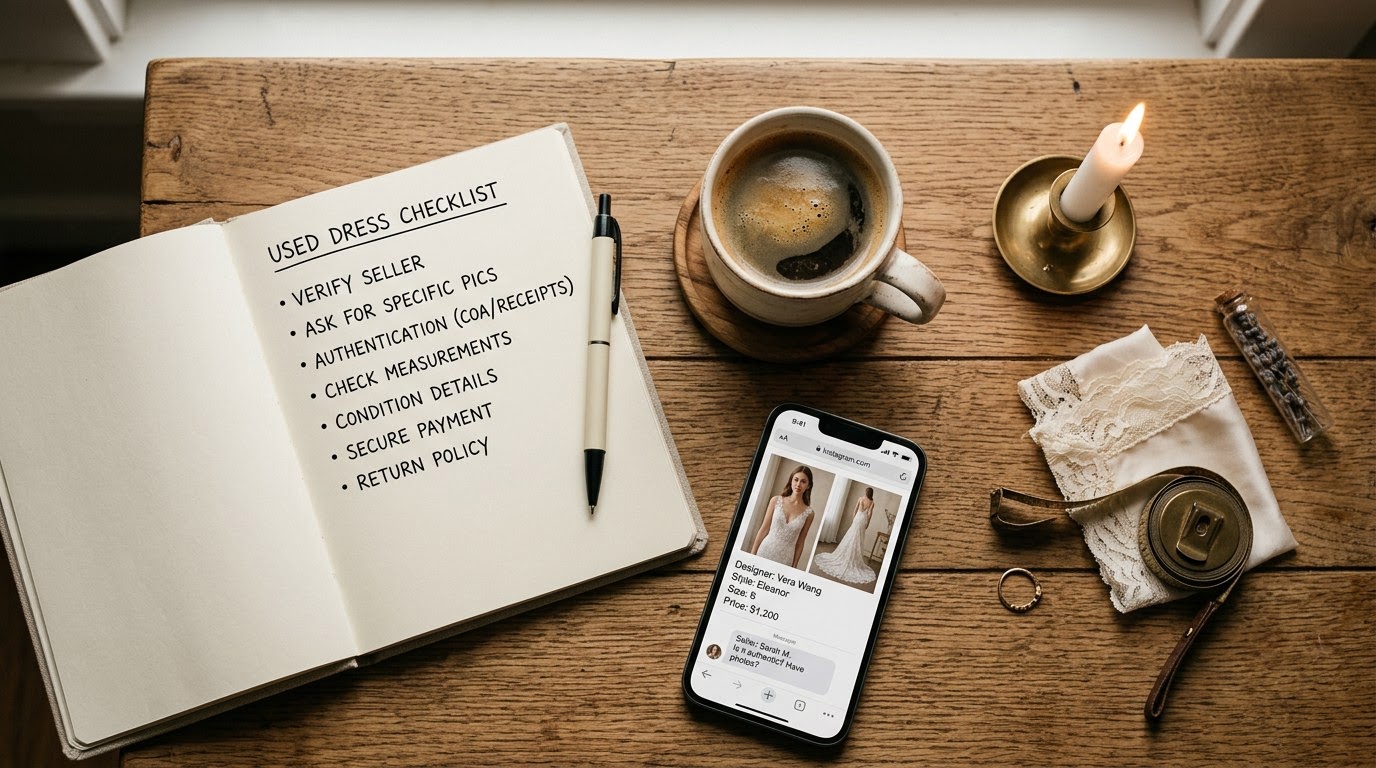
Use this guide when negotiating with an independent online seller to purchase a pre-owned designer bridal gown. Running a quick TrustMatch verification before transferring funds ensures you are dealing with a legitimate seller rather than an online fraudster.
1. Run a TrustCheck on the Seller
To run a TrustCheck on a seller, enter the individual's first name and their phone number or email address directly into the verification tool. TrustMatch processes these basic details to return a clear TrustScore and risk verdict in under a minute. This initial lookup confirms whether the seller's contact details match a verified identity history, protecting you from fraudulent profiles and burner accounts before you enter detailed negotiations.
Start your transaction by gathering the seller's primary contact details. Ask for their legal first name and the active phone number or email address they use for communication. Open your verification workspace, input the information, and submit the search query. Review the returned TrustScore and associated safety indicators immediately.
A positive verdict indicates an established digital footprint tied to real identity records. If the tool flags suspicious risk factors or returning unmatched data, pause communication. Fraudulent sellers routinely rely on voip phone numbers, newly generated email accounts, and anonymous profiles to orchestrate scam listings across social marketplaces and classified sites.
According to 2024 FTC data, online shopping scams accounted for over $390 million in reported consumer losses. Running identity verification first stops scammers before they persuade you to bypass secure trading protocols or send non-refundable deposits.
2. Request a 5-Minute Live Video Inspection
Requesting a 5-minute live video call allows you to inspect the wedding dress in real time while confirming the seller actually possesses the physical garment. Ask the seller to tilt their camera toward key design elements, show current date proofs, and display specific seams or tags. This live interaction eliminates the risk of stolen listing photos, pre-recorded video clips, and phantom inventory commonly used by online scammers.
Schedule a quick video call using standard platforms like FaceTime, Zoom, or WhatsApp. Ask the seller to hold up a piece of paper displaying today's date and your name written in ink next to the gown. Request that they zoom in on critical structural areas of the dress, including the neckline, underarms, zipper track, and bottom hemline.
Watch how the gown moves and hangs under natural light during the call. Scammers frequently harvest image galleries from luxury bridal boutiques or previous resale listings. A seller who refuses a brief live video call or claims their camera is broken poses an extreme fraud risk.
A 2023 BBB report indicated that over 40% of non-delivery fraud reports involved second-hand luxury goods and apparel. Verifying physical possession through live video eliminates stolen photo scams instantly.
3. Inspect Designer Authenticity Markers and Internal Labels
Inspect designer authenticity markers by requiring detailed photos of the brand label, care tags, inner lining stamping, and unique serial numbers or receipt documentation. High-end bridal gowns from brands like Vera Wang, Monique Lhuillier, or Galia Lahav feature precise embroidery, structural boning, and specialized woven brand tags. Comparing these physical details against verified manufacturer standards confirms the gown's origin and screens out counterfeit garments.
Direct the seller to take still photographs of all interior tags under bright lighting. Look specifically for the primary brand label attached inside the bodice, the secondary care instruction tag sewn into an inner skirt seam, and any sizing labels. Check for crisp, symmetrical stitching on the main brand label; authentic luxury gowns rarely exhibit loose threads, crooked tags, or uneven typography.
Request images of the original purchase invoice, boutique receipt, or certificate of authenticity if available. Match the style name, color code, and designer collection year on the documentation against the physical tags. Be aware that counterfeiters produce knockoff gowns using cheap polyester tulle, flimsy boning, and glued-on lace appliques that differ significantly from authentic designer construction.
4. Verify Specific Measurements and Professional Alteration History
Verify gown measurements by asking the seller to film a continuous tape-measure assessment of the bust, waist, hips, hollow-to-hem length, and train. Bridal sizing differs significantly from standard street sizing, and unrecorded alterations can reduce a dress by multiple sizes. Obtaining exact flat lay tape measurements ensures the altered garment will actually fit your body and prevents unfixable fit disasters upon delivery.
Instruct the seller to lay the gown completely flat on a clean surface. Have them lay a fabric measuring tape across the narrowest point of the waist, across the fullest part of the bust, and across the hip area. Ensure they measure from the top of the center collarbone seam down to the front hem to record the exact hollow-to-hem distance.
Ask detailed questions about structural alterations. Inquire whether seams were trimmed or simply taken in, whether hem fabric was cut or tucked, whether a bustle was added, and whether cup pads were sewn into the bust. A gown that has been trimmed significantly cannot be let back out, making precise measurement verification essential before spending thousands of dollars.
5. Review Professional Cleaning Records and Fabric Conditions
Review cleaning records by requiring proof of professional eco-friendly dry cleaning or specialized bridal preservation invoices before completing the purchase. Inspect detailed photos of high-wear areas, including the hemline, train underside, underarm linings, and neckline for residual makeup, tan stains, or fabric tears. Verifying these records ensures you are not paying top dollar for a gown requiring expensive restoration work.
Ask the seller for a copy of the receipt from a certified bridal dry cleaner or textile preservation specialist. High-end silks, delicate french lace, and intricate beadwork require specialist cleaning methods that cost upwards of $300 to $600. If the gown has not been cleaned since the wedding event, negotiate a price deduction to cover professional cleaning expenses.
Examine photos of vulnerable fabric areas under direct light. Ask for close-ups of the inner armpit lining to check for perspiration discoloration or self-tanner transfer. Have the seller photograph the entire bottom perimeter of the train to detect snagged lace, dirt buildup, or drag tears caused by outdoor venues.
6. Use a Protected Payment Gateway With Buyer Protection
Transfer funds exclusively through buyer-protected payment channels such as PayPal Goods and Services, escrow services, or platform-native checkout options that hold funds until delivery. Avoid peer-to-peer bank transfers, wire transfers, crypto payments, or peer payment apps marked as family transfers. Protected payment systems provide formal dispute resolution and full refund mechanisms if the dress arrives damaged, counterfeit, or not at all.
Select a payment platform that explicitly includes physical goods protection. When using PayPal, select "Goods and Services" and never "Friends and Family." Write a comprehensive description of the item in the payment memo box, including the designer name, dress style, size, agreed condition, and return terms.
Consider using a licensed online escrow service for transactions exceeding $2,000. Escrow services receive your funds, hold them securely while the seller ships the gown, and only release money to the seller after you inspect and accept the dress within a pre-agreed timeframe.
FBI reports from 2025 show that non-payment and non-delivery scams generated over $300 million in losses for online marketplace users. Protected payment channels remain your strongest financial safety net.
7. Establish Written Return Terms and Insured Shipping Rules
Establish written return and shipping terms by documenting agreement details via email or messaging before sending money. Require the seller to ship the gown using a major carrier with mandatory signature confirmation, full declared value insurance, and tracking capabilities. Specifying a clear 48-hour inspection window upon receipt ensures you have contractual recourse if the delivered dress does not match the agreed condition.
Draft a concise transaction summary and email it to the seller for formal agreement. State the final purchase price, shipping carrier details, tracking requirements, and inspection timeline. Require the seller to purchase shipping insurance covering the full agreed purchase price to protect against loss or damage during transit.
Specify that the seller must use signature-required delivery upon arrival. This prevents parcel delivery drivers from leaving a high-value bridal gown unattended on a front porch. Agree in writing on a 24-to-48-hour return window after tracking confirms delivery, allowing you time to inspect fabric, seams, and fit.
Step-by-Step Verification Summary
Verifying a high-value pre-owned designer dress requires checking specific physical attributes and transaction records against standardized criteria. By systematically reviewing contact details, authenticity tags, alteration logs, and payment protection terms, you eliminate common purchasing risks. Use the summary matrix below to evaluate seller compliance and identify critical warning signs before finalizing any financial transactions with an independent seller.
| Step | What to verify | Red flag if missing |
|---|---|---|
| Identity Check | Seller phone, email, and name match TrustMatch identity records | Seller uses voip number, unverified profile, or refuses search |
| Live Video Call | Physical dress possession and real-time custom date proof | Seller declines call or shows pre-recorded video clip |
| Authenticity Review | Designer woven tags, care labels, serial numbers, and boutique receipt | Tags are cut out, missing, crooked, or show low-grade stitching |
| Alteration Audit | Tape-measure video of bust, waist, hips, and hollow-to-hem length | Seller relies solely on original designer size chart without measuring |
| Condition Inspection | Dry-cleaning receipts and close-up photos of hemlines and linings | Unexplained staining, undisclosed fabric tears, or heavy odor |
| Payment Setup | PayPal Goods and Services or formal escrow service transfer | Seller demands Zelle, Venmo Friends, wire transfer, or gift cards |
| Shipping Protocol | Fully insured transit, tracking number, and signature requirement | Uninsured standard parcel shipping without delivery confirmation |
Quick Checklist Before Sending Funds
Run this quick pre-payment checklist immediately before issuing funds to a private bridal dress seller. Confirming each verification milestone in sequence protects your financial investment and guarantees delivery of an authentic gown. Complete every check in order to ensure your seller is verified, your dress condition is fully documented, and your payment is completely protected against non-delivery or fraud.
- Confirm the seller passes your TrustMatch identity check with a clear TrustScore and verified contact history.
- Complete a 5-minute live video call to inspect the dress, care tags, and handwritten date proof in real time.
- Review clear photo documentation of designer brand labels, internal structural boning, and original purchase receipts.
- Obtain flat-lay tape-measure photographs showing exact bust, waist, hip, and hollow-to-hem dimensions.
- Verify professional dry-cleaning receipts or calculate negotiated cleaning costs into the final purchase price.
- Send payment strictly through PayPal Goods and Services or an accredited escrow platform with detailed item notes.
- Secure written confirmation of insured carrier shipping with mandatory signature delivery and a 48-hour inspection period.
Red Flags During This Process
If red flags arise during your seller interaction, pause the transaction immediately and demand full resolution before proceeding with payment. Common warning signs include rushed payment demands, refusal to conduct video calls, inconsistencies in item photos, or requests for off-platform payment transfers. Halting the deal at the first sign of deception protects your savings and prevents transaction loss.
Pay close attention to changes in communication behavior. As of October 2026, peer-to-peer online sales scams frequently involve sudden urgency tactics, such as claiming another buyer is making an immediate cash offer. If a seller pressures you to skip verification steps or transfer money via non-refundable wire methods to hold the dress, walk away from the deal immediately.
Watch for inconsistent visual evidence across listing images. If listing photos show different lighting backgrounds, varying carpet patterns, or shifting dress proportions, the seller is likely aggregating images from multiple web sources. Demand a new live video call to confirm the dress shown in photos exists in their immediate possession.
Stop the transaction if the seller requests that you split payments across multiple peer payment accounts or send money as a gift transfer. Fraudulent sellers use these splits to obscure transaction amounts and bypass platform fraud protection thresholds. Always insist on a single, documented transaction covered by complete buyer protection safeguards.
These verification steps protect you AND respect a real person—they are not surveillance, but a clear framework for building mutual trust when using TrustMatch for high-value private sales.
Frequently asked
Why should I run an identity check on a private dress seller?
Running an identity check verifies that the seller is a real person with a legitimate contact history. It protects you from phantom listings, fake seller accounts, and non-delivery scams before you transfer money for a high-value bridal gown.
How do I confirm a designer wedding dress is authentic?
Inspect inner brand tags, care labels, serial numbers, and original purchase receipts. Request high-resolution photos of stitching quality, inner boning, and fabric texture, comparing these against verified designer production standards to rule out cheap knockoffs.
What payment method is safest when buying a dress privately online?
Use PayPal Goods and Services or a licensed online escrow service. Protected payment systems hold funds or provide buyer protection rights, ensuring you can claim a full refund if the item is counterfeit, damaged, or never delivered.
Why are exact flat-lay measurements necessary for used gowns?
Bridal sizing runs small, and most pre-owned dresses have been altered for a specific body shape. Obtaining exact tape-measure readings for bust, waist, hips, and length ensures the altered dress can fit you, avoiding unfixable sizing errors.
What should I do if a seller refuses a live video inspection?
Refuse to proceed with the transaction. A seller who declines a quick video call or refuses to show handwritten date proof likely does not possess the physical garment and poses an immediate risk of non-delivery fraud.