How to Safely Buy a Used Boat From a Private Seller
· 11 min read
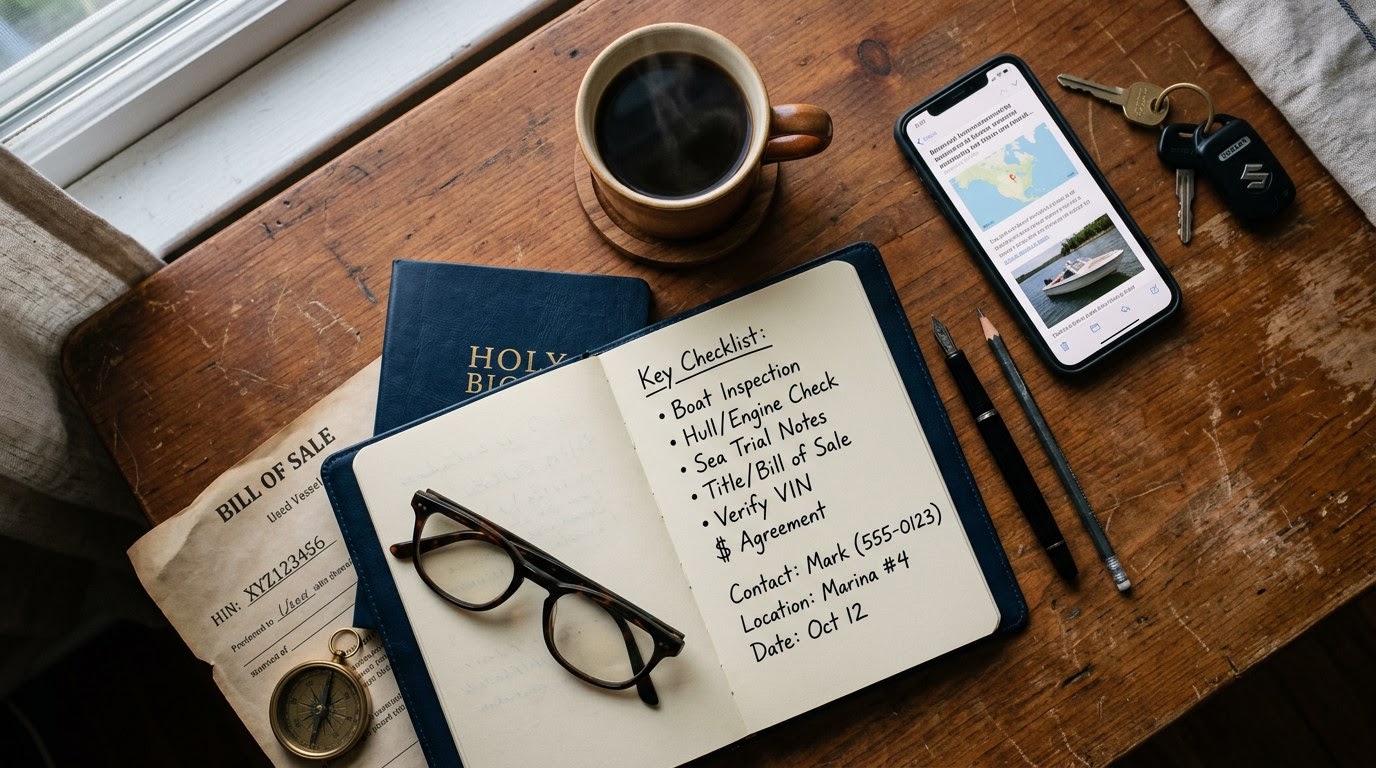
Apply this verification guide when evaluating a pre-owned vessel listed by a private seller on an online marketplace, classified site, or local marina board. Running an identity verification check through TrustMatch before transferring deposits protects your investment from non-titled hulls, stolen vessels, and fictitious escrow scams.
1. Run a TrustCheck on the seller
Verify the person behind the listing before spending time or money on a physical marine inspection. Enter the seller's first name along with their mobile phone number or email address into TrustCheck to generate a TrustScore and risk verdict in under a minute. This identity check confirms whether the phone number matches a verified individual, checks for associated online fraud reports, and validates that the seller maintains an authentic, established digital footprint.
Do not accept screenshots of driver's licenses or utility bills as proof of identity. Scammers routinely steal legitimate boat owners' identification photos from compromised email accounts and attach them to fraudulent online listings. Demand that the seller confirm their identity through a direct risk lookup. As of August 2026, peer-to-peer marine listing platforms report high rates of impersonation where offshore fraudsters pose as local boat owners looking for urgent sales due to military deployment or sudden relocation.
Data published by the Federal Trade Commission in 2024 revealed that peer-to-peer payment fraud and vehicle purchase scams resulted in consumer losses exceeding $1.2 billion. Running a direct identity verification step upfront establishes clear accountability before you share personal contact details, schedule a trip to an unfamiliar dock, or negotiate pricing terms.
2. Validate the Hull Identification Number and state title
Request clear photos of the 12-digit Hull Identification Number stamped into the starboard transom and the matching physical title document before visiting the vessel. Cross-reference the HIN format against Federal Coast Guard standards to ensure it matches the boat's claimed year, manufacturer, and model. A authentic title must show the seller as the registered owner with no unreleased financial liens listed on the face of the document.
Locate the physical HIN on the starboard upper corner of the transom outside the hull. Federal regulation requires every recreational vessel manufactured after 1972 to carry a standardized 12-character HIN. The first three characters represent the Manufacturer Identification Code (MIC), followed by five serial characters, the month and year of production, and the model year. Verify that the HIN stamped into the fiberglass or metal plate matches the title document character for character without signs of tampering, grinding, or altered digits.
Inspect the physical state title document carefully in hand. Verify that the title paper features official state watermarks, security threads, and clear printing. Refuse transactions where the seller presents a copy, a bill of sale without a title, an open title signed by a previous owner, or a title marked duplicate without verification. If the seller claims the state does not title boats, check your state's Department of Motor Vehicles or Department of Natural Resources guidelines immediately to confirm whether title exemption applies to that specific hull length and engine horsepower.
3. Demand a live video walkthrough of the vessel
Schedule a five-minute live video call using FaceTime or WhatsApp to inspect the vessel in real time before traveling to the marina. Instruct the seller to start the outboard engines, open the engine compartment, and focus the camera on the HIN plate and state registration decals. Live video confirms the seller physically possesses the boat at the claimed location and eliminates the risk of bait-and-switch listings relying on stolen internet photos.
Use the live video connection to test seller authenticity and vehicle accessibility. Direct the seller to perform specific actions on camera, such as turning the steering wheel full lock, opening the center console, raising the engine hatch, or pointing out specific hull features you request on the spot. If the seller refuses to host a live video call, claims their camera is broken, or insists on communicating only via text or email, break off negotiations immediately.
Confirm the location of the vessel during the call. Request that the seller show the surrounding marina slip, storage yard, or driveway landmark on camera. Compare the location shown on video with the seller's claimed address or dock assignment. A 2025 Better Business Bureau report highlighted that over 35% of online vessel and vehicle listing scams involved fraudulent escrow services managed by remote impostors who did not physically possess the assets listed for sale.
4. Perform an in-person hull inspection and sea trial
Inspect the boat out of the water to examine the lower unit, propeller, fiberglass hull, and transom for structural cracks, osmosis blisters, or gelcoat repair work. Hire an accredited marine surveyor to perform a thorough engine compression test and electrical systems assessment prior to finalizing any purchase agreement. Complete a twenty-minute sea trial under full load to test throttling, maneuvering, steering response, bilges, and electronics in operational open water conditions.
Arrange for the vessel to be hauled out on a trailer or travelift before completing any contract. Examine the keel, skeg, rudder, and underwater fittings. Tap fiberglass sections with a plastic mallet to listen for dull thuds indicating delamination, moisture intrusion, or rotten transom cores. Inspect outdrives and outboard lower units for milky gear oil, which signals failed propeller shaft seals and internal water contamination.
Execute a comprehensive sea trial with the engine fully warmed up. Verify that the engine starts smoothly from a cold start without excessive smoke or abnormal knocks. Advance the throttle to full open throttle (WOT) to verify the engine reaches its manufacturer-rated maximum revolutions per minute (RPM) without overheating or losing oil pressure. Test all navigation lights, bilge pumps, VHF radios, GPS chartplotters, hydraulic steering systems, trim tabs, and livewells under active load.
5. Confirm lien status with state authorities and the Coast Guard
Verify that the vessel has a clean title clear of unpaid marine mortgages, mechanic liens, or tax encumbrances with your local Department of Motor Vehicles or state Department of Natural Resources. For documented vessels, request an Official Abstract of Title directly from the United States Coast Guard National Vessel Documentation Center. Confirming clear ownership status guarantees that outstanding debt held by former owners will not transfer to you upon taking possession.
Distinguish between state registration and federal Coast Guard documentation. Larger recreational boats (typically 25 feet and longer) may be federally documented rather than state-titled. For documented boats, obtain the Official Number stamped on an interior structural member and order an Abstract of Title from the USCG NVDC. The abstract reveals all recorded Preferred Ship Mortgages, maritime liens, and historical owner transfers recorded against the vessel.
Check trailer ownership title documents separately from the boat hull title. In most states, boat trailers require independent titles, license plates, and registration certificates. Confirm that the vehicle identification number (VIN) stamped on the trailer frame matches the trailer title exactly. A boat purchase is incomplete if you receive a clean hull title but cannot legally tow the trailer on public highways due to missing trailer documentation or unpaid back taxes.
6. Draft an official bill of sale and title transfer
Draft a legally binding marine bill of sale detailing the full purchase price, serial numbers for all outboard engines, trailer VIN, hull ID number, and explicit inclusion of all accessories. Ensure both buyer and seller sign two copies in the presence of a licensed notary public to validate legal ownership transfer. Verify that the seller signs the title document exactly as their legal name appears on their government-issued identification card.
Itemize all components on the bill of sale document. List the hull, primary engines, secondary auxiliary engines, trailer, electronics packages, anchors, safety gear, and tender separately with individual values if required by your state for sales tax calculation. Specify that the transaction is contingent upon clear title delivery and successful passing of the marine survey inspection.
Execute the title assignment in front of a notary public. Match the seller's signature against their government photo ID card to verify legal authority to sell. Ensure any co-owners listed on the title with an "AND" conjunction sign the title transfer documents alongside the primary seller. Keep signed, original paper copies of the bill of sale, lien satisfaction releases, and reassigned title certificates in a secure location during transport.
7. Secure the transaction with licensed escrow services
Never transfer high-dollar deposits or full payments through non-refundable methods like wire transfers, cashier's checks, peer-to-peer payment apps, or cryptocurrency. Utilize a reputable, licensed marine escrow service that holds your purchase funds safely in a regulated trust account until you physically receive the boat, title, and registration documents. Escrow protection eliminates payment fraud by ensuring funds release only when all contractual obligations and inspection contingencies are satisfied.
Avoid fake escrow websites set up by online scammers. Verify that the escrow company is independently licensed, bonded, and registered with state financial regulatory authorities. Federal Bureau of Investigation internet crime statistics from 2024 indicated that non-delivery scam reports surged by 22% for high-value recreational assets, primarily driven by fraudulent payment sites mimicking legitimate escrow platforms.
Set clear escrow disbursement triggers before funding the account. Require the escrow provider to release funds to the seller only after you confirm in writing that you have received the physical vessel, verified the HIN and engine serial numbers, inspected state title certificates, and received physical possession of the trailer key and vessel keys. Never release escrow funds while the boat is in transit or stored in a facility controlled solely by the seller.
Summary of boat verification steps and safety checks
Use this reference table to evaluate every verification milestone during a private boat purchase. Following this standardized inspection framework protects your investment capital, validates seller identity credentials, and eliminates payment fraud risks before signing a binding purchase agreement or transferring funds. Check each step off in sequence during negotiation.
| Step | What to verify | Red flag if missing |
|---|---|---|
| 1. Identity Check | Seller full name, phone number, and TrustScore match. | Seller uses VOIP burner numbers or refuses digital identity verification. |
| 2. HIN & Title Verification | 12-digit transom HIN matches title certificate and Coast Guard records. | HIN plate shows grinding marks, missing digits, or title is listed as duplicate without proof. |
| 3. Live Video Walkthrough | Real-time video showing engine start, HIN stamp, and dock location. | Seller refuses video calls, claims broken camera, or insists on text messaging only. |
| 4. Hull & Sea Trial | Out-of-water hull condition, transom core integrity, engine compression, sea trial RPM. | Water in gear oil, cracked transom, engine overheating, or refusal of sea trial. |
| 5. Lien Search | Clear title status from state DNR, DMV, or USCG Abstract of Title. | Outstanding marine mortgage, unpaid mechanic liens, or missing trailer VIN title. |
| 6. Bill of Sale & Notary | Itemized bill of sale signed by registered title holder in front of notary. | Seller signature does not match ID, or open title signed by unknown third party. |
| 7. Escrow Payment | Funds deposited into a licensed, regulated third-party escrow account. | Seller demands gift cards, wire transfer, Zelle, CashApp, or fake escrow links. |
Quick checklist before handing over funds
Run through this mandatory action list immediately prior to releasing any deposit or final payment to a private boat seller. Executing these final confirmation items ensures that title documents, vessel condition, hardware serial numbers, and identity credentials line up perfectly before completing your purchase transaction.
- Perform a TrustCheck risk lookup using the seller's mobile number to verify authentic identity and confirm the absence of prior fraud reports.
- Examine the physical title certificate in person to verify that watermarks are intact and no active liens appear on state or Coast Guard records.
- Inspect the 12-digit HIN stamped on the starboard transom to confirm it matches the title document and state registration card character for character.
- Obtain a certified marine survey report confirming engine compression numbers, structural hull integrity, and electrical system safety.
- Conduct a complete 20-minute open-water sea trial reaching full throttle operating RPM without engine overheating or mechanical failures.
- Verify that the trailer carries a clear, separate state title with matching VIN plate numbers attached to the frame.
- Execute an itemized bill of sale in the presence of a notary public with matching government identification shown by both parties.
- Deposit funds exclusively into a state-licensed third-party escrow service with clear written release conditions.
Red flags during this process
Halt the transaction immediately if the seller exhibits suspicious behaviors or refuses standard verification procedures during your negotiation. Identifying these high-risk warning signs early prevents financial loss from fake escrow services, stolen vessels, or undisclosed hull damage. Trust your instincts whenever a seller pushes for unusual payment terms.
Watch for sellers who rush the sale or offer unrealistic discounts under the guise of an emergency. Scammers often claim they are deployed overseas, going through an urgent divorce, or relocating immediately, requiring a quick bank wire transfer before you can inspect the boat in person. Never send holding deposits to hold a boat for a seller who refuses an in-person meeting or live video inspection.
Be alert to title irregularities such as "skip tracing" or open titles. If the person selling the boat is not the individual named on the front of the title, they have no legal right to sell the vessel. Purchasing a boat with an unsigned or improperly transferred title leaves you unable to register the hull, leaving you vulnerable to repossession by the true legal owner or law enforcement.
Reject seller-provided escrow links or payment platforms. Fraudulent sellers frequently send email links pointing to counterfeit escrow websites designed to harvest your bank credentials and steal wire transfers. Independently navigate to a trusted, state-regulated escrow provider by typing their web address directly into your browser rather than clicking links provided by the seller.
If any verification check fails during the process, walk away immediately. Legitimate private sellers who own clear title to a sound vessel will happily cooperate with identity checks, hull inspections, marine surveys, and escrow payment holds.
Executing these verification steps through TrustMatch protects your financial capital while maintaining a professional, respectful interaction with legitimate boat sellers.
Frequently asked
How do I verify a boat seller's identity before paying a deposit?
Enter the seller's first name and mobile phone number into TrustCheck to perform a digital identity verification. This check validates that the contact information belongs to an authentic individual, flags known online scam activity, and generates a TrustScore in under a minute so you can evaluate risk safely.
What is the best way to verify a boat's Hull Identification Number?
Locate the 12-digit HIN stamped into the upper starboard transom of the hull. Compare every character against the physical state title certificate, registration card, and USCG documentation records. Ensure there are no signs of metal grinding, fiberglass alteration, or mismatched digits across registration paperwork.
Can I buy a used boat safely without hiring a marine surveyor?
Hiring an accredited marine surveyor is essential for any high-dollar boat purchase. A professional surveyor assesses hidden structural hull defects, performs engine compression testing, checks electrical systems, and verifies transom core integrity. Skipping a professional marine survey exposes you to costly hidden repair bills and dangerous sea conditions.
How do I avoid escrow scams when buying a boat from a private seller?
Never use payment links or escrow websites provided directly by the seller. Select an independent, state-licensed escrow company and navigate directly to their official web domain. Ensure funds are held in a regulated trust account and released only after you inspect the boat, title, and trailer in person.
What state title documents do I need when purchasing a private vessel?
Require an official state title certificate signed by all registered owners listed on the document. Verify that the title shows no outstanding financial liens or encumbrances. Ensure you also receive a separate state title for the boat trailer and an itemized marine bill of sale signed before a notary public.