How to Safely Buy Rare Collectibles From Private Online Sellers
· 11 min read
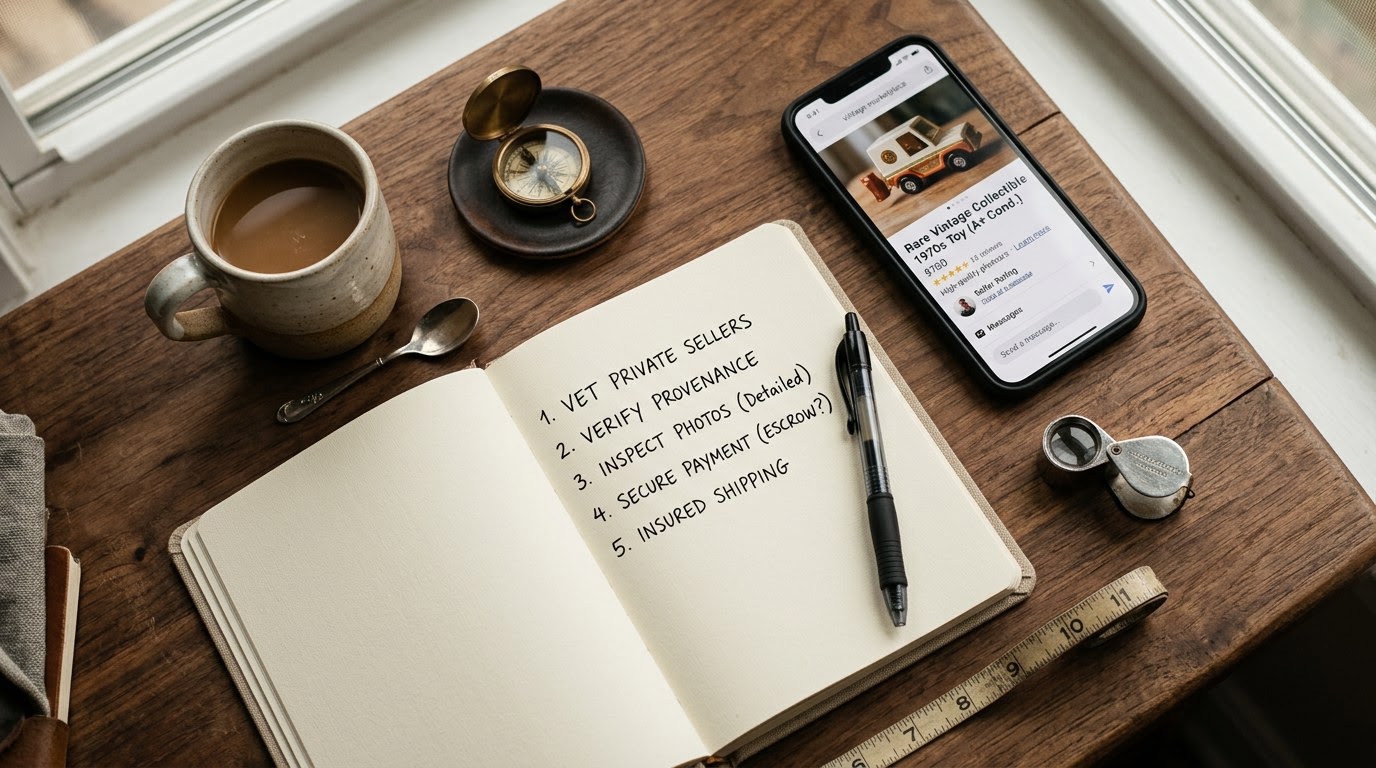
Use this guide when you are about to buy a high-value rare collectible—such as a vintage trading card, luxury watch, retro video game, or rare comic—from a private seller on Discord, Reddit, or forum marketplaces. Before sending money to an unverified individual online, follow this checklist alongside TrustMatch identity verification to protect your funds and ensure item authenticity.
1. Run a TrustCheck Verification on the Seller
Execute an identity check on the private seller using TrustMatch before discussing payment details or shipping terms. Input the seller's first name and phone number or email address into the verification portal to generate an instant TrustScore and risk verdict in under a minute. This step immediately separates genuine collectors operating transparently from anonymous scammers using fake personas across social platforms and forum channels.
As of August 2026, high-value collectible fraud across peer-to-peer communities relies heavily on throwaway social media accounts and hijacked forum credentials. Request the seller's primary contact details early in your negotiation. Frame the request as standard operating procedure for high-value transactions. Frame it plainly: "To protect both of us on a purchase of this size, I run a fast identity check before finalizing payment details."
When you enter the seller's first name along with their phone number or email address into TrustMatch, the platform checks those details against identity records and returns a TrustScore and a verdict. An authentic seller operating from a long-standing mobile number registered under their true legal identity generates a strong confidence score. Conversely, VOIP numbers, newly activated virtual SIMs, burner emails, or mismatched country codes trigger immediate risk warnings.
If a seller flatly refuses to provide a verifiable phone number or email address, treat that refusal as an absolute stop sign. Legitimate collectors who regularly buy and sell high-value assets understand that counterparty verification is standard practice. They willingly provide contact details to complete a legitimate transaction. Anonymous sellers insisting on communicating exclusively through end-to-end encrypted messaging apps while hiding their true identity pose an unacceptable risk to your funds.
2. Demand Specific High-Resolution Macro Proof Photos and Video
Request targeted, custom photos and a short video clip of the collectible alongside a handwritten paper slip containing today's date, your username, and a unique word you specify. Inspect microscopic details, edge wear, serial numbers, printing artifacts, and serial stamps in full light. Authentic sellers who own the item will gladly capture fresh angles within minutes, whereas scammers relying on stolen images will stall, refuse, or offer excuses.
Fraudulent sellers routinely extract high-resolution photos from old auction listings, Instagram posts, and archived forum threads. To verify physical possession, demand custom photographic angles and lighting conditions that are impossible to replicate using pre-existing media. Ask the seller to place a blank slip of paper directly beside the collectible containing handwritten proof details.
Specify a random, distinct word alongside the current date and your platform username. For example, instruct the seller to write "Obsidian Falcon - August 14 - [Your Username]". This simple requirement stops scammers from using pre-written proof slips or recycling photos created for prior buyers. Demand high-resolution macro photography focusing on critical authentication features specific to the item category:
- Trading Cards: Close-up macro shots showing edge centering, corner wear, surface gloss, back print color balance, and rosette printing dots under 30x magnification.
- Luxury Timepieces: Detailed photos showing serial numbers etched between case lugs, dial font consistency, hands alignment, crown engraving, and movement execution if equipped with an exhibition case back.
- Vintage Comic Books: High-resolution captures of spine stress marks, staple condition and placement, page edge oxidation, cover gloss, and interior splash page color saturation.
- Rare Coinage: Clean close-ups displaying mint marks, rim denticles, edge reeding, surface wear patterns, and digital scale weight readings precise to hundredths of a gram.
Run a reverse image search on every image provided by the seller using tools like Google Lens, TinEye, and Yandex. If the search reveals the exact photo posted in a completed transaction from three years ago on a separate forum, terminate discussions immediately. Additionally, inspect image EXIF metadata using free online file analyzers to confirm the photo was taken recently and has not been processed through photo-editing suites or artificial intelligence rendering software.
3. Cross-Examine Community References and Off-Platform Reputation
Verify the seller's transaction history across specialized community forums, Reddit vouch threads, Discord trade logs, and collector databases before making an offer. Reach out directly to past buyers listed in positive feedback threads to confirm their actual experiences and payment methods used. Established community members maintain verifiable digital footprints spanning years, while fraudulent accounts feature sudden activity spikes, generic praise, or zero prior completed trades.
Collector ecosystems operate on interconnected trust networks. Whether trading on specialized subreddits or private forum message boards, conduct thorough background research on the account's operational history. Examine account age, submission consistency, and overall karma or point totals. Be wary of accounts created five years ago that remained silent until suddenly posting a $10,000 rare collectible. Account hijacking represents a primary tactic executed by organized fraud rings targeting peer-to-peer marketplaces.
When reviewing feedback logs or vouches, do not accept surface-level comments at face value. Scammers frequently operate syndicates of alternate accounts that post glowing reviews for one another to simulate legitimate commerce. Direct message three to five past buyers listed in the seller's feedback threads. Ask those past buyers specific questions: What exact item did you purchase? What payment method did the seller request? Did the payment recipient name match the seller's verified identity?
Cross-examine the seller's handle across independent digital platforms. Legitimate collectors usually maintain consistent usernames across Instagram, YouTube, collector forums, and online marketplaces. If a seller boasts about an extensive ten-year trading history on eBay, request that they send you a brief confirmation message directly through eBay's internal messaging system. If they make excuses about lost account access or technical errors, treat the reputation claim as completely fraudulent.
4. Select Protected Payment Rails and Independent Escrow Services
Pay strictly through protected payment channels such as PayPal Goods and Services or commercial third-party escrow platforms designed for high-value collectibles. Avoid peer-to-peer payment transfers like Zelle, Venmo Friends and Family, wire transfers, or cryptocurrency payments that lack purchase protection policies. Legitimate private sellers understand buyer protection overhead and accept protected payments when you offer to cover the standard processing fee.
Payment execution represents the definitive point of vulnerability in private transactions. Deceptive sellers deploy convincing excuses explaining why they cannot accept protected payment channels, frequently citing account freezes, immediate financial hardships, or tax compliance concerns. Never let urgency, emotional pressure, or steep price discounts lure you into sending non-refundable funds.
According to 2025 FTC reports, online shopping scams involving private seller transactions resulted in over $390 million in reported consumer losses. A 2024 BBB study revealed that non-delivery of merchandise comprised over 30% of all online purchase scam reports. FBI Internet Crime Complaint Center data from 2024 indicated that non-payment and non-delivery scams cost victims more than $330 million annually.
When using PayPal, insist exclusively on "Goods and Services" processing. Never transfer money under "Friends and Family." PayPal Goods and Services provides essential buyer remedies covering non-delivery and goods that arrive significantly different from listing descriptions. Offer to cover the standard 3% to 4% merchant fee so the seller receives their full agreed asking amount. For purchases exceeding $2,500, insist on utilizing a certified third-party escrow service like Escrow.com. Under an escrow arrangement, the neutral service holds your funds securely and only releases payment to the seller after you receive, inspect, and approve the collectible.
Remain vigilant against invoice spoofing schemes. Fraudulent sellers may agree to PayPal Goods and Services but send an email link leading to a fake payment interface designed to steal financial credentials. Always sign into your official PayPal portal directly via browser or mobile application to review and satisfy outstanding invoices rather than clicking embedded hyperlinks inside private messages.
5. Establish Insured Shipping and Inspection Protocols
Mandate tracked, fully insured shipping with signature confirmation upon delivery, establishing explicit terms for a pre-agreed inspection window prior to release of funds. Require the seller to film the packaging process, including applying tamper-evident tape and clear label displays. Open and inspect the package on camera immediately upon receipt to document condition, serial numbers, and weight match before signing off or releasing escrow funds.
Safeguarding high-value physical assets requires rigid transit management. Standard postal coverage frequently excludes rare collectibles, fine jewelry, and numismatic items above minimal dollar limits. Insist that the seller ships via carriers permitting verified high-value coverage, such as FedEx, UPS, or specialized third-party transit insurers like Secursus.
Require adult signature confirmation upon physical delivery. Never permit carriers to leave packages unattended on doorsteps, porch areas, or shared apartment lobbies where package theft occurs. Explicitly agree with the seller in written communications before sending funds that you retain a 48-hour inspection period starting from the official carrier delivery timestamp.
Document the unboxing procedure meticulously. When the parcel arrives, record an uninterrupted, high-definition video of the entire opening process:
- Direct the camera to clearly display the shipping label, including tracking number and sender information.
- Show all six sides of the external carton to demonstrate that factory packaging tape and tamper seals are unbroken.
- Capture the physical opening of the container, removal of packing materials, and extraction of the collectible.
- Film close-up views of serial numbers, structural seams, weight, and key physical authentication attributes on camera.
If the seller delivered a fake item, an empty container, or a damaged piece, this continuous video recording serves as undeniable evidence during financial dispute proceedings with PayPal, credit card issuers, or escrow arbitration boards.
6. Recognize Red Flags During the Transaction Process
Cancel the transaction immediately if a seller pressures you to act quickly, alters payment methods mid-conversation, or refuses basic identity and photo requests. Common signs of active deception include insistence on non-refundable payment apps, mismatched location data, stolen forum photos, and defensive reactions when asking for identity verification. Halting a suspect purchase early prevents financial loss and protects your sensitive personal information from bad actors.
Bad actors exploit psychological triggers, specifically fear of missing out (FOMO), to manipulate buyers. When an exceptionally rare item appears at 30% below established market rates, buyers often bypass essential safety checks to secure the item before competitors intervene. Fraudulent sellers intentionally cultivate artificial time constraints, asserting that multiple secondary buyers are waiting with immediate cash offers.
Monitor behavioral changes during conversation flow. If a seller maintains a pleasant demeanor until you request a TrustCheck identity verification or handwritten video proof, and then turns hostile or evasive, terminate negotiations immediately. Legitimate sellers engaging with high-value buyers expect identity validation requests and have no reason to respond aggressively.
Maintain extreme caution when encountering these specific red flags:
- The seller demands to shift conversations from monitored forum boards to encrypted off-platform channels like Telegram or Signal.
- The seller's payment account name differs from the identity details verified during your identity check.
- The seller supplies a shipping tracking number within minutes of payment, but the weight logged by the carrier does not match the item weight.
- The seller claims they are currently stationed overseas, attending military deployment, or experiencing family emergencies that prevent live video verification calls.
- The listing price is drastically below fair market value, coupled with demands for non-reversible payment apps.
7. Verification Matrix: What to Verify vs. Red Flags
Use this verification matrix to evaluate every stage of your private seller transaction before sending funds. Comparing seller responses against standard safety criteria highlights critical risk patterns and pinpoints immediate transaction red flags. Reference this checklist during negotiations to ensure every identity, photo, payment, and shipping requirement is met before releasing any money.
| Step | What to Verify | Red Flag If Missing |
|---|---|---|
| Identity Check | Valid full name, phone number, and location matching public risk signals via TrustMatch verification. | Refusal to provide phone/email, use of VOIP burner numbers, or mismatched name details. |
| Photo Proof | Custom macro photos and video featuring a handwritten note with today's date, your username, and a custom code word. | Reused archived photos, stock images, digital editing artifacts, or refusal to take fresh photos. |
| Reputation Check | Multi-year forum history, verified past transaction feedback, and confirmation from independent prior buyers. | Brand new or dormant accounts, feedback loop rings, or inconsistent handles across collector platforms. |
| Payment Selection | Protected payment rails like PayPal Goods and Services or commercial escrow services for items over $2,500. | Demands for Zelle, Venmo Friends and Family, wire transfers, crypto, or spoofed invoice links. |
| Shipping Terms | Tracked, fully insured carrier shipping with adult signature confirmation and a written 48-hour inspection window. | Refusal to insure package, uninsured postal shipping, or objections to mandatory adult signature delivery. |
8. Quick Checklist: Private Seller Collectible Purchase Workflow
Follow this sequential checklist whenever you execute a high-value transaction with a private online seller. Completing each operational step in exact order ensures comprehensive identity verification, structural physical authentication, and maximum payment security. Bookmark this guide to review before every private collectible transaction across forums, Discord groups, and social platforms.
- Request the seller's full legal name, phone number, and primary email address.
- Run a TrustCheck identity verification on TrustMatch to review the seller's TrustScore and risk signals.
- Demand high-resolution macro photos and video displaying a handwritten note with today's date and unique code word.
- Execute reverse image searches on all provided media to verify original ownership.
- Cross-reference the seller's trading history and independently message past community buyers.
- Agree in writing to secure payment via PayPal Goods and Services or Escrow.com with an agreed 48-hour inspection window.
- Require tracked, fully insured carrier shipping with mandatory adult signature confirmation.
- Record a continuous, uninterrupted unboxing video upon arrival to document condition and serial numbers.
9. Safe Trading Protocol Summary
Applying structured identity verification and physical authentication protocols transforms risky online collectible purchases into secure, transparent transactions. By establishing clear verification boundaries before transferring money, you protect your capital while identifying genuine sellers who value integrity. Integrating TrustMatch into your buying routine ensures that every peer-to-peer trade meets rigorous trust standards before funds change hands.
Trading in private peer-to-peer collectible markets requires disciplined execution of safety steps. Genuine collectors understand the necessity of buyer protection and willingly comply with verification requests to establish mutual trust. When a seller demonstrates complete transparency across identity checks, custom proof media, and protected payment channels, you can proceed with total confidence in your acquisition.
These verification steps protect your hard-earned capital while respecting real sellers who share your passion for rare collectibles, creating a safe trading routine rather than invasive surveillance.
Frequently asked
What should I do if a private seller refuses to do an identity check?
Walk away from the transaction immediately if a seller refuses identity verification. Genuine collectors selling high-value items expect basic buyer verification steps and have no reason to hide their contact information. Refusing a fast identity check or objecting to TrustMatch verification strongly indicates that the seller is operating under a fake persona or using stolen account credentials to execute a fraud scheme.
Is PayPal Goods and Services completely safe for buying rare collectibles?
PayPal Goods and Services offers strong buyer protection covering non-delivery and items that are significantly not as described. However, you must maintain thorough evidence, including custom time-stamped proof photos and an uninterrupted unboxing video recorded upon delivery. If a seller sends a counterfeit or empty box, this detailed documentation ensures PayPal claims adjusters decide disputes in your favor promptly.
How can I detect if a collectible photograph has been modified or stolen?
Perform reverse image searches using Google Lens, TinEye, and Yandex to determine if the photo exists elsewhere online. Always demand custom macro photos featuring a handwritten slip displaying today's date, your username, and a random code word. Additionally, inspect image EXIF metadata using free online tools to verify the photo creation date and check for photo-editing software signatures.
When should I use an escrow service instead of standard payment apps?
Use a certified escrow service like Escrow.com for any private collectible purchase exceeding $2,500 in value. Escrow services protect both parties by holding funds in a secure neutral account until the buyer physically receives, inspects, and approves the item. This eliminates payment fraud risks while giving sellers confidence that funds are verified and secured before shipping.
What steps should I take if a delivered item turns out to be counterfeit?
Immediately file a dispute with your payment provider or escrow platform and submit your unboxing video along with seller communication logs as evidence. Contact an accredited third-party authentication service to obtain a formal certificate of non-authenticity if required by the dispute arbitrator. Never alter, clean, or attempt to repair the counterfeit item while the dispute remains active.