How to Safely Coordinate Home Pickups With Buy Nothing Group Members
· 10 min read
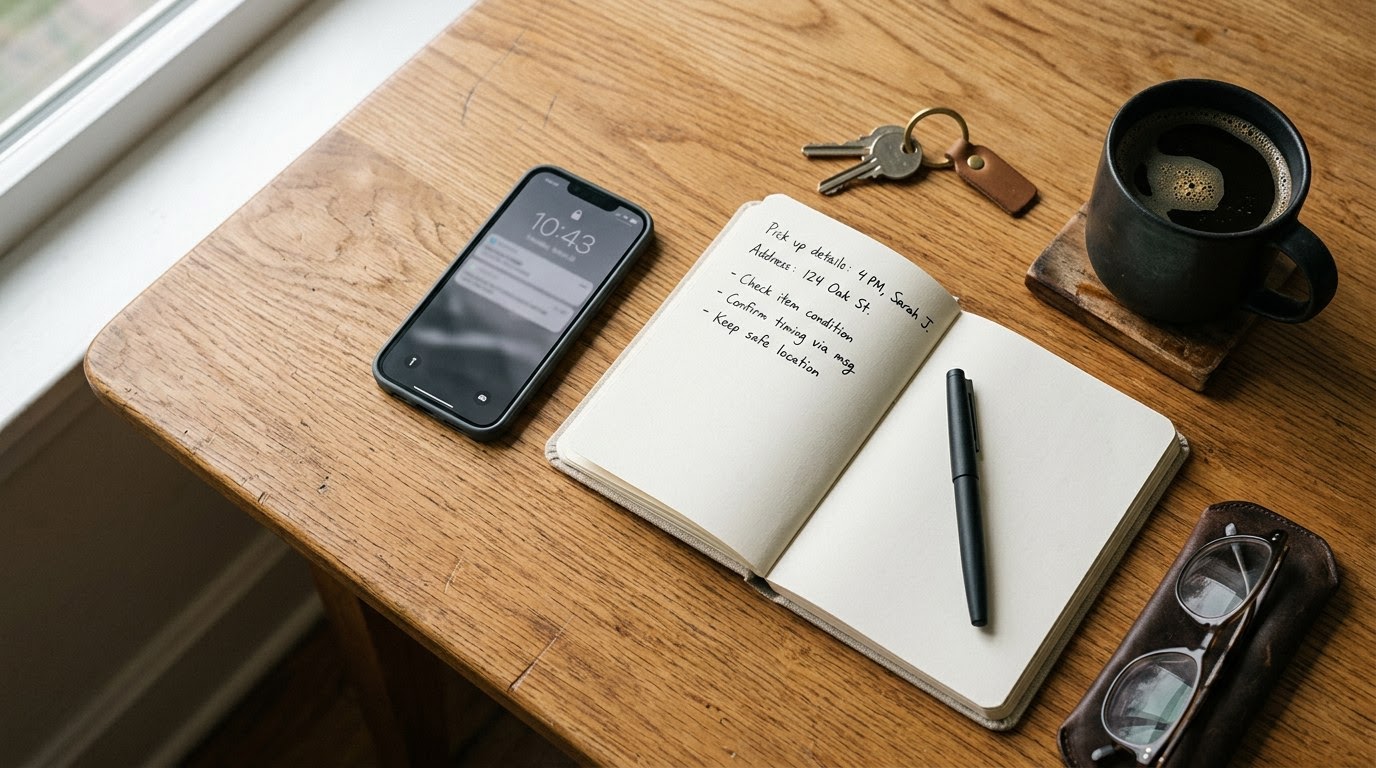
Use this step-by-step guide whenever you arrange to hand off or collect free items at a private residence with Buy Nothing group members. By completing quick identity checks through TrustMatch prior to scheduling, you protect your household while supporting vibrant local reuse communities.
1. Verify identity using TrustMatch before sharing your address
Run a TrustCheck by entering the Buy Nothing member's full name and phone number or email address into TrustMatch before sharing your residential street address. Within 60 seconds, you receive a TrustScore and identity verdict confirming whether their identity matches active public records. A successful verification yields a clear verdict, allowing you to proceed with scheduling your pickup while minimizing exposure to fake profiles or predatory actors.
Never hand out your home address to an unverified online contact. While local gifting groups foster neighborhood generosity, public social media platforms remain vulnerable to account takeovers, burner accounts, and imposter profiles. A 2024 BBB report indicated that over 45% of online marketplace scams originated through unverified social media profiles.
To perform this verification step effectively, request the member's mobile phone number under the pretext of sending pickup coordination texts. Open your TrustMatch account, input the details provided, and evaluate the verification report. A valid profile will show consistent name matches, geographic alignment with your region, and an active phone carrier line. If the check returns high-risk flags, mismatched names, or VOIP burner numbers, stop the transaction immediately and select a different recipient from your group post comments.
Save verified contact details in your phone notes alongside the scheduled item details. Having verified identity data on hand ensures accountability before anyone arrives at your doorstep. If you are picking up an item from another member's house, running a quick check on the host provides equal peace of mind before walking up to an unfamiliar residence.
2. Audit the member profile on the host platform
Inspect the member's profile by clicking their group avatar and checking their join date, mutual neighbors, and prior post history within your local Buy Nothing group. Look for active participation, genuine comments, and consistent location details across previous neighborhood threads. Success means confirming the individual has an established, positive presence in your immediate area rather than a brand-new profile created specifically to gather residential addresses.
Begin by viewing the member's main social profile. Look for account creation dates, public photos spanning several months or years, and real interactions from local friends. Be cautious of profiles created within the last 30 to 90 days, accounts lacking profile pictures, or profiles displaying generic stock photos. Group administrators try to screen incoming members, but fraudulent profiles routinely slip past basic admin entry questions.
Next, use the search function inside your specific Buy Nothing group. Type the member's name into the group search bar to view their historical activities. Check if they have successfully gifted or received items in the past, left thank-you notes, or answered community requests. Members with a consistent record of giving and receiving represent significantly lower safety risks than silent profiles that instantly claim high-value electronics or furniture.
Pay attention to geographic consistency. If the member claims to live three blocks away but their public profile lists a city three states over, request clarification. If the user evades simple questions about their neighborhood cross-streets, treat the interaction as high risk and cancel the pickup agreement.
3. Require all communications to stay inside official group channels
Keep all logistics messages inside the main Buy Nothing platform or official group messaging thread until identity verification is complete. Do not switch to external chat applications, encrypted messaging platforms, or personal email addresses upon initial request. Success looks like a complete, traceable communication trail within the group interface, ensuring group administrators can inspect the conversation history if any safety or boundary concerns arise during coordination.
Scammers and bad actors often attempt to move conversations off-platform immediately. Moving to third-party apps allows dishonest users to hide their actions from group moderators and avoid platform account bans. Tell the member directly that you conduct all scheduling through the group message thread for tracking and safety purposes.
Document every detail of the agreement within the message thread. Explicitly state the item description, pickup date, exact timeframe window, and designated collection point on your property. Having a clear written trail prevents misunderstandings regarding item condition, pickup locations, or arrival expectations.
According to Federal Trade Commission data from 2025, imposter scams and fraudulent marketplace schemes accounted for over $2.7 billion in reported consumer losses. Restricting initial interactions to traceable community channels adds a critical barrier against automated bots and out-of-area scammers harvesting local residential addresses.
4. Conduct a 60-second video or phone verification call
Request a quick 60-second voice or video confirmation through the group application before disclosing your house or apartment number. Ask the member to verify the item details and confirm their estimated time of arrival during this brief interaction. Success occurs when the person on the call matches their profile photos and voice profile, providing real-time assurance that you are coordinating with a genuine local neighbor.
Frame the request as a routine logistics step rather than an interrogation. Say: "I like to do a quick 30-second call to confirm pickup time and vehicle type so I can have the item sitting right out front for you." Authentic community members will readily agree to a brief voice chat to streamline the handoff process.
Use the call to collect specific pickup logistics. Ask what make, model, and color of vehicle they will drive to your home. Confirm whether they will have a secondary person helping them load heavy furniture, or if they are arriving alone. These details allow you to identify their arrival from your window without stepping outside unprepared.
If the member refuses a brief call, makes excuses about broken microphones, or insists on communicating solely via vague messaging apps, consider this a safety failure. Terminate the arrangement politely within the group chat and offer the item to the next interested neighbor in line.
5. Implement a strict daylight-only arrival window
Schedule all item exchanges between 9:00 AM and 5:00 PM while placing items on a front porch, driveway, or apartment lobby bench prior to arrival. Keep your front doors locked and instruct the member to grab the item without knocking or entering your dwelling. Success means a smooth, zero-contact physical transfer where the item is collected safely while your living space remains entirely private and secure.
Set firm, narrow time windows for pickups rather than open-ended arrangements. Give the member a specific two-hour window, such as "Saturday between 10:00 AM and 12:00 PM." Narrow windows prevent unexpected visitors from lingering around your property at unannounced times or turning up late at night.
Prioritize contact-free porch pickups whenever possible. Place the item on your front porch, doorstep, or driveway prior to the agreed window, clearly labeled with the member's name. Message the user once the item is outside, and instruct them to collect it without ringing the doorbell or knocking on the door.
If you live in an apartment complex or gated community, designate the main building lobby, manager office area, or visitor parking lot as the pickup zone. Never provide building access codes, garage clickers, or key fob entries to incoming group members. Keep common areas secured and meet only in well-lit, publicly visible access points.
6. Set up safety boundaries and buddy checks
Inform a family member, neighbor, or friend about the scheduled pickup time and share the member's verified profile details prior to arrival. Lock all windows and entry points, place pets in designated rooms, and keep your mobile device in your hand during the exchange window. Success looks like full situational readiness where a trusted person knows your status and your physical perimeter remains locked.
Establish a simple buddy system check-in protocol. Send a quick text message to your safety contact 10 minutes before the pickup window opens, including the member's name, vehicle description, and verified details. Set a timer on your phone for 15 minutes after the scheduled pickup time to send an "all clear" text to your contact.
Prepare your home interior before the pickup window begins. Ensure your deadbolts are engaged, screen doors are latched, and interior window blinds are pulled down. If you must open the door to hand over a bulky item, ensure a secondary family member or housemate stands nearby within sight of the doorway.
Never permit a stranger to cross your home threshold. If an item is too large for one person to move, transport the item into your garage, open carport, or front yard prior to the buyer's arrival. If the recipient arrives alone and demands help moving furniture out of an upstairs bedroom or basement, decline immediately and reschedule for a time when you have your own assistance present.
7. Reference the home pickup verification matrix
Review the verification matrix below to cross-reference each coordination phase against essential safety criteria before releasing your address. Use this structured decision table to evaluate whether a member meets physical and digital security standards prior to pickup day. Success looks like checking off every verification requirement and halting the transaction immediately if any mandatory criteria fail.
| Step | What to verify | Red flag if missing |
|---|---|---|
| Identity Check | Match name and phone number via TrustMatch report | Refusal to provide phone number or invalid line |
| Profile Audit | Active group post history and established profile age | Account created less than 30 days ago with zero local history |
| Channel Security | All messaging remains inside official group thread | Insistence on switching to encrypted apps or external email |
| Voice Confirmation | Brief voice/video check confirming vehicle and arrival time | Refusal to speak on phone or mismatched voice demographics |
| Logistics Window | Specific daylight pickup time and porch placement agreement | Demands for late-night pickup or unannounced arrival times |
Use this decision matrix as a standard protocol for every item you give away or pick up. If an interaction fails even one verification gate, pause the coordination process. Re-evaluating risk factors early protects your personal safety and keeps physical boundaries secure.
8. Follow the quick checklist for safe home pickups
Execute this chronological checklist in order every time you give away or claim items from private residences. Complete each action item sequentially before moving to the next stage of coordination to eliminate security vulnerabilities. Success means executing every step from initial contact through post-pickup follow-up without skipping safety protocols or compromising your home privacy.
- Request the member's full name and mobile phone number inside the group messaging thread.
- Run an identity check in TrustMatch to verify profile details and confirm safety scores.
- Review the member's local group participation history, profile age, and mutual contacts.
- Conduct a 60-second voice or video call to confirm vehicle description and arrival time.
- Schedule a specific daylight pickup window between 9:00 AM and 5:00 PM.
- Share the pickup details, vehicle info, and expected timeframe with your safety buddy.
- Place the labeled item in a secure, contact-free exterior zone like a front porch or driveway.
- Lock all primary house doors and monitor the pickup from inside your residence.
- Confirm item collection via message and send an "all clear" update to your safety buddy.
Make this checklist your standard procedure for all local peer-to-peer exchanges. Standardizing your approach eliminates hesitation and removes emotional pressure when dealing with persistent or unusual requests from strangers online.
9. Identify red flags during this process and take immediate action
Identify critical warning signs during coordination, such as sudden address changes, pushy demands for entry inside your home, or refusal to verify identity. If a member displays suspicious behavior, cancel the pickup immediately, block the user, and report the profile to group moderators. Success is prioritizing your personal safety over item disposition by terminating interactions that trigger your risk thresholds.
Watch for pushy behavior or pressure tactics. If a member insists on coming over immediately outside your preferred hours, demands entry past your front porch, or changes pickup times repeatedly without notice, stop communicating. Urgent, demanding language is a primary sign of an untrustworthy user trying to catch you off guard.
Be alert to third-party pickups. If the verified member suddenly states they are sending an unannounced "courier," "mover," or "friend" to collect the item, pause the transaction. Require the person picking up the item to undergo the same identity verification process, or insist that only the primary group member attends the pickup.
Pay attention to odd financial requests. Buy Nothing groups operate exclusively on free exchanges. If a member offers to pay cash for priority, asks you to pay a "shipping fee" or "holding deposit" via money transfer apps, or sends fake digital payment receipts, block the user immediately. Report these profiles to local group admins and platform support to protect other neighbors from financial fraud.
Trust your instincts during every stage of the exchange. If something feels wrong when a vehicle pulls up, do not open your door or step outside. Keep your deadbolts turned, call a neighbor or local law enforcement if necessary, and exit the interaction safely.
As of August 2026, safe community sharing relies on clear personal boundaries and practical identity verification tools like TrustMatch. These proactive measures protect your home and household while respecting real neighbors who make local gifting groups work, serving as smart personal safety protocols rather than invasive surveillance.
Frequently asked
Why should I run an identity check for a free Buy Nothing item?
Even though no money changes hands, sharing your home address exposes your physical residence to strangers online. Identity verification ensures the person arriving at your doorstep is a legitimate local neighbor with verified public record credentials rather than a fake account harvesting private address data.
What should I do if a Buy Nothing member refuses a phone call?
Politely inform the member that voice confirmation is your standard requirement for home pickups. If they continue to refuse, cancel the arrangement within the platform thread and pass the item to the next interested neighbor in line without compromising your personal safety guidelines.
Is it safe to let a Buy Nothing member inside to move heavy furniture?
No. You should never allow unverified strangers into your private residence. Move heavy furniture items into a garage, covered porch, or driveway before their arrival, or require the recipient to bring their own secondary assistance while keeping your interior living spaces off-limits.
How do I handle a third party showing up instead of the verified member?
Do not open your door or engage directly with unannounced third parties. Message the verified member inside the group platform to confirm the change. If you did not approve a secondary person in advance, decline the transfer and ask them to reschedule.
What should I do if a member asks for cash or shipping fees?
Buy Nothing groups prohibit money transfers of any kind. If a member asks for shipping fees, holding deposits, or digital payments, refuse the request immediately, block their account, and notify group administrators to prevent scam operations within your local community.