How to Safely Meet a Private Workout Partner Discovered Online
· 10 min read
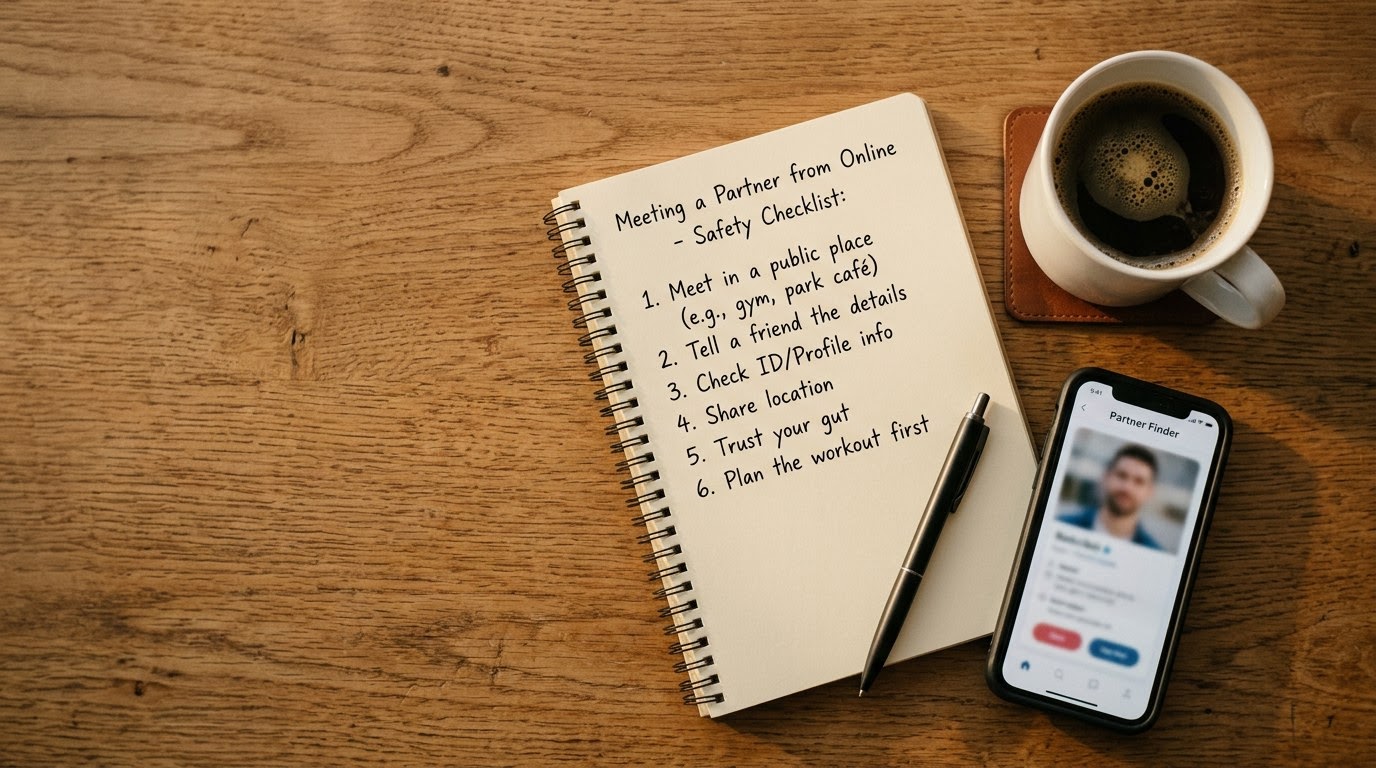
Use this step-by-step guide when arranging an in-person training session with a workout partner met on social media, fitness forums, or online classifieds. Before meeting someone to lift weights, run trails, or practice sparring, utilize TrustMatch to confirm their identity and minimize your personal risk.
1. Run a TrustCheck Identity Verification
Run an identity verification check on your prospective training partner before sharing your daily routine or preferred workout locations. Enter their first name and phone number or email into TrustMatch to generate a comprehensive TrustScore and risk verdict in under a minute. This step ensures that the person messaging you matches their online profile and has no history of deceptive digital activity.
As of August 2026, peer-to-peer fitness matching has grown rapidly across social platforms and dedicated training apps. While finding a training partner online helps you stay accountable and hit personal records, meeting strangers for physical training carries inherent personal safety risks. Online profiles are simple to forge, photos can be stolen, and individuals may misrepresent their identity, fitness background, or intentions.
When you ask a potential training partner to run a quick check, pay attention to their reaction. Legitimate fitness enthusiasts who value safe training environments will understand and cooperate. Someone who becomes defensive, insists on keeping details secret, or provides temporary burner numbers is revealing an immediate cause for concern. Never skip this initial digital verification stage regardless of how friendly or experienced the person appears in text messages.
2. Ask for a 5-Minute Video Call
Schedule a brief video conference on FaceTime, Zoom, or WhatsApp at least 24 hours prior to your planned workout session. Use this live conversation to confirm that your partner matches their photos, discuss your training goals, and assess their communication style. If someone refuses a video call under the pretense of broken cameras or technical glitches, cancel the session immediately.
A short live interaction serves multiple crucial functions beyond basic physical identity confirmation. It allows you to gauge their actual knowledge of exercise technique, equipment usage, and safety protocols. Ask specific questions about their current training routine, their preferred gym facilities, and how they handle spotting or heavy lifting assistance. Pay close attention to whether their answers align with what they wrote in their online profile or bio.
Watch for red flags during the video conversation, such as video feeds that appear pre-recorded, persistent frozen screens, low lighting intended to obscure their face, or reluctance to turn on their camera. Verify that the person talking to you is located where they claim to be. A genuine workout partner will welcome the opportunity to connect for five minutes to ensure your athletic goals, schedules, and personalities are compatible before meeting in person.
3. Select a High-Traffic Public Gym or Park
Select a neutral, heavily populated athletic facility or well-traveled public park with active staff and surveillance coverage for your initial workouts. Avoid private home gyms, secluded garage setups, isolated trail runs, or unlit outdoor tracks until you establish long-term trust. Choosing a commercial gym during peak operating hours guarantees immediate access to staff and bystanders if safety issues arise.
Public venues offer structural protections that private settings lack. Commercial fitness chains, community recreation centers, and university facilities feature staff members, security cameras, and clear emergency protocols. When selecting a venue, pick a location that you already know well so you are familiar with emergency exits, staff desks, and locker room layouts. If you do not belong to the same gym facility, purchase a single-day guest pass or choose a public park with heavy foot traffic, active runners, and open visibility.
Never agree to meet a new workout partner at their residential gym, apartment complex facility, or private garage gym for early sessions. Private residential locations remove public oversight and create situations where you are isolated with someone you barely know. If your prospective partner insists exclusively on training at their home facility or private space, treat that insistence as an absolute dealbreaker and decline the meeting.
4. Establish Strict Personal Safety Boundaries
Set clear personal boundaries regarding transportation, financial transactions, and communication hours before your first workout. Drive yourself to and from the facility, purchase your own day pass, and keep your personal belongings inside locked gym lockers. Establishing firm physical and operational boundaries ensures you maintain full control over your movement and privacy throughout the encounter.
Maintain complete independence over your transit to and from the training location. Do not accept rides from a new partner, and do not offer to pick them up at their home or job site. Arrive at the facility on your own, park in a well-lit area close to the main entrance, and ensure your vehicle is locked. Keep your wallet, identification, car keys, and phone secured inside a rental locker rather than leaving them unattended on the gym floor or in an unlocked bag.
Be equally strict regarding financial interactions and personal information sharing. Do not send cash advance payments for gym passes, supplements, coaching fees, or equipment rentals prior to meeting. Keep your conversations strictly focused on workout routines, sets, reps, recovery strategies, and athletic goals. Avoid revealing your home address, specific workplace hours, or financial details during your initial interactions.
5. Share Your Real-Time Location with a Trusted Contact
Enable real-time location sharing on your smartphone and send session details to a family member or trusted friend before leaving home. Provide your contact with your partner's verified name, workout location, expected duration, and scheduled check-in times. According to FBI data published in 2024, personal fraud and impersonation scams resulted in more than $1.3 billion in direct financial losses, highlighting the importance of verifying online contacts before meeting off-grid.
Set up an explicit safety protocol with your designated contact before heading out. Send them a screenshot of your partner's profile, their verified phone number, the precise address of the fitness facility, and the exact time you expect your workout to wrap up. Establish a mandatory check-in window—for instance, texting your contact exactly 45 minutes into the session and immediately upon concluding the workout.
Use built-in smartphone features such as Apple Find My or Google Maps location sharing to broadcast your exact location continuously throughout the session. Define a specific emergency code word or signal phrase with your safety contact. If you send that phrase or fail to check in within 15 minutes of your agreed deadline, your contact should immediately attempt to reach you and, if necessary, contact facility staff or emergency services.
6. Execute a Public Trial Session Before Private Workouts
Treat your initial meetup as a standalone trial session dedicated exclusively to evaluating compatibility and safety. Focus on standardized exercises in public areas while observing how your partner handles boundaries, instruction, and physical space. Conclude the workout cleanly at the scheduled time without agreeing to immediate secondary plans or private location shifts.
During the workout, evaluate your partner's behavior, physical control, and social conduct. Observe how they handle exercise spotting, whether they respect your physical space, and if they adhere to established gym rules. Pay attention to how they manage weights or equipment—an experienced and respectful lifting partner focuses on safety, proper technique, clear communication, and mutual encouragement rather than pushing you into dangerous loads or uncomfortable situations.
Limit your first session to 45 to 60 minutes. Once the planned exercise routine is finished, wrap up the meeting inside the public area of the gym. Thank your partner for the session and state that you will touch base later via message to discuss future workouts. Refrain from accepting spontaneous invitations to eat at their home, go to a secondary location, or ride together somewhere else immediately after the gym session.
Verification Summary and Warning Signs
Use this comparison matrix to evaluate your prospective workout partner at every stage of the setup process. Comparing baseline verification steps against expected answers helps you spot red flags early and pull out before entering a vulnerable situation.
| Step | What to Verify | Red Flag if Missing |
|---|---|---|
| Identity Check | Legal name, phone number, and verified profile history match. | Partner uses VoIP numbers, false names, or hides identity details. |
| Video Call | Live face match, clear speech, alignment with stated fitness goals. | Refusal to turn on camera, pre-recorded video, or evasive answers. |
| Location Selection | Staffed, high-traffic commercial gym or major public park during peak hours. | Insistence on private garage gyms, home setups, or secluded trails. |
| Transportation | Independent travel arrangements for both parties to and from venue. | Demanding to pick you up at home or asking for rides before meeting. |
| Financial Boundaries | Direct payment to facility for guest passes; zero cash transfers to partner. | Requests for upfront payments, gym fees, or supplement money online. |
| Safety Protocol | Active location sharing and pre-arranged check-ins with trusted contact. | Pressure to turn off phone, hide location, or keep session secret. |
Red Flags During This Process
Recognize warning signs during your initial setup or training session to prevent safety incidents before they escalate. Pay close attention to sudden changes in behavior, pushy requests for private venues, or evasive answers about identity and training experience. Trust your instincts and end the workout immediately if any of these critical red flags appear.
Safety risks can emerge in subtle ways before or during an in-person training session. Being alert to behavioral red flags allows you to take action before putting your physical safety or personal privacy in jeopardy. Watch closely for the following indicators throughout your interaction:
- Refusal of Basic Verification: The person becomes hostile, defensive, or dismissive when you ask for a full name, phone number, or brief video call.
- Pressuring for Isolated Venues: They repeatedly reject commercial gyms or public parks, insisting on training at a private residence, isolated basement gym, or remote outdoor trail.
- Financial Demands: They ask for money via peer-to-peer payment apps for gym memberships, guest passes, transport expenses, or specialized training equipment prior to meeting.
- Inappropriate Physical Boundaries: During workout spotting or physical demonstrations, they make unnecessary, uninvited, or uncomfortable physical contact.
- Erratic or Intimidating Behavior: They demonstrate extreme mood swings, aggressive competitive behavior, disregard for equipment safety, or intense frustration when you set limits.
- Inconsistent Fitness Experience: Their real-world knowledge of exercise techniques, lifting safety, or training load fails to match the expert credentials claimed online.
- Disregarding Time Boundaries: They show up late, attempt to alter agreed plans mid-workout, or pressure you to extend the session to private locations afterward.
If you encounter any of these red flags, prioritize your personal safety immediately. Leave the facility, alert gym staff if necessary, notify your safety contact, and block the individual across all communication channels.
Quick Checklist for Your First Fitness Meetup
Follow this numbered checklist on the day of your workout to ensure every safety measure is active and operational. Completing each task in sequential order provides maximum personal protection before, during, and after your exercise session.
- Confirm your partner's identity through TrustMatch and verify their details match their online profile.
- Complete a 5-minute video call to verify their physical appearance, discuss training plans, and confirm compatibility.
- Finalize a public meeting spot at a staffed commercial gym or busy public park during daylight peak hours.
- Send your workout schedule, partner info, and gym address to your designated safety contact.
- Turn on real-time location sharing on your phone and establish explicit check-in reminder alarms.
- Arrange independent transportation to arrive at and leave the facility on your own terms.
- Secure your personal belongings, keys, wallet, and phone in a locked gym locker upon arrival.
- Conduct the trial workout in open, populated facility areas while observing physical and social boundaries.
- Check in with your trusted contact immediately after concluding your training session.
A TrustCheck is one input, and it is not a promise of safety. It tells you whether a name, phone, email and address hold together as one person; it cannot tell you what that person intends to do. Taking sensible precautions allows you to build productive athletic partnerships while maintaining total control over your physical safety.
These safety steps protect your personal well-being while respecting your training partner, ensuring mutual safety without crossing into unwanted surveillance.
Frequently asked
Why should I verify a workout partner before meeting in person?
Verifying a workout partner before meeting in person protects you against identity fraud, physical danger, and potential harassment. Online profiles can easily feature fake photos or deceptive details. Running a quick verification check ensures that the person you plan to exercise with is genuine, accountable, and serious about maintaining a safe training environment.
What should I do if a potential workout partner refuses a video call?
If a potential workout partner refuses a short video call, treat it as an immediate red flag and decline to meet them. Legitimate fitness partners will happily spend five minutes confirming their identity and discussing workout goals. Excuses about broken cameras or privacy concerns often indicate an attempt to conceal their true identity or intentions.
Is it safe to train with an online partner at a private home gym?
Training at a private home gym with someone you met online is unsafe for early sessions because it isolates you in an unmonitored environment. Always host initial workouts in public, staffed commercial gyms or well-populated parks. Only consider private facilities after establishing long-term trust and completing multi-step identity verifications.
How do I handle financial arrangements when meeting a new lifting partner?
Handle all financial matters independently by paying the commercial facility directly for your own guest pass or membership. Never transfer cash, prepay for guest passes, or buy supplements through a partner met online prior to meeting. Keep financial transactions completely separate to prevent advance-fee scams and identity theft.
What emergency steps should I take if a fitness partner acts unprofessionally?
If a fitness partner behaves unprofessionally or crosses physical boundaries during a workout, end the session immediately. Move into a populated gym area, notify facility staff or management, and inform your safety contact. Block the individual across all messaging platforms and submit a report to the online platform where you initially connected.