How to Safely Rent a Private Parking Space Met Online
· 10 min read
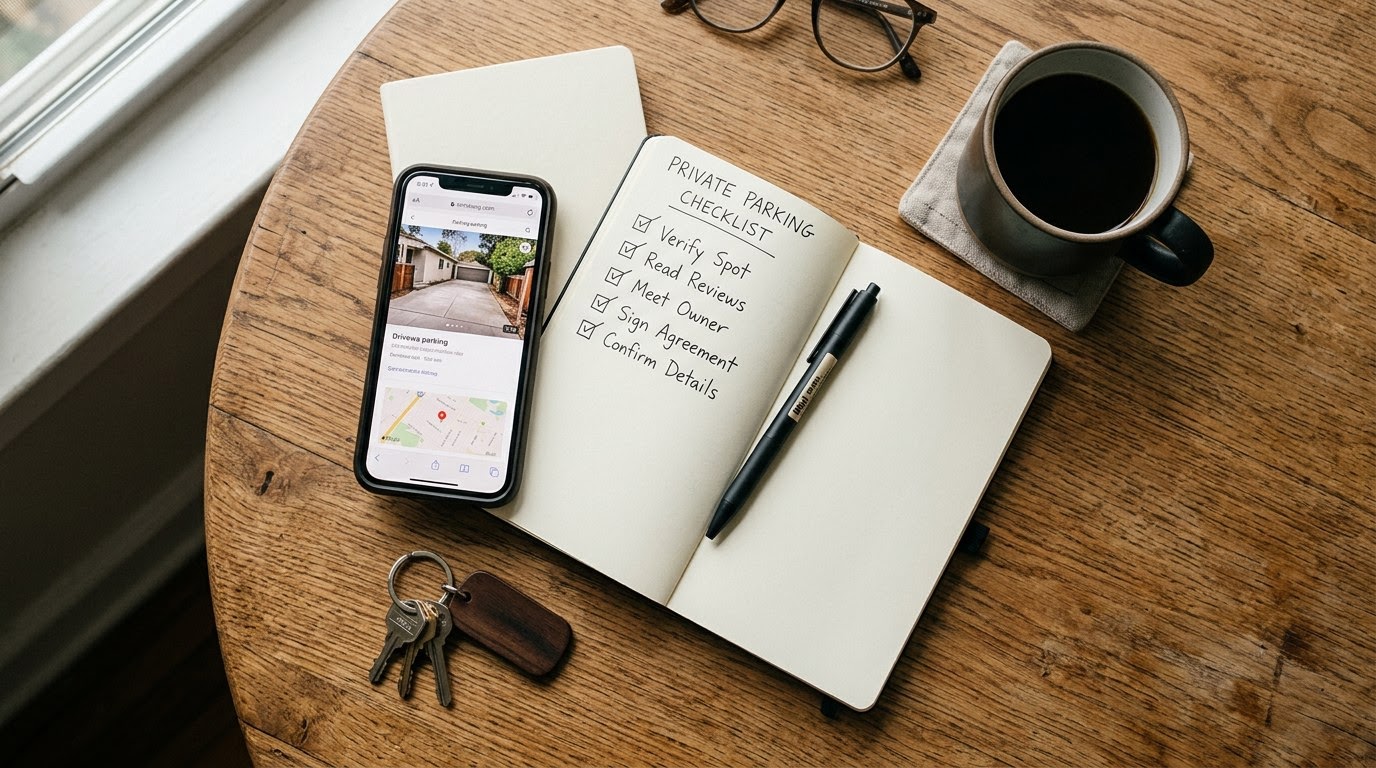
Use this guide when you find a private driveway, garage, or reserved parking spot listed on Craigslist, Facebook Marketplace, or local classifieds and need to secure it safely. TrustMatch helps you instantly verify the identity of private hosts before you transfer rental deposits or share personal details.
1. Verify property ownership through public county records
Verify property ownership by searching the local county tax assessor or property appraiser database using the street address of the parking spot. Confirm that the listed owner's full legal name matches the name of the individual offering the space for rent. If the names do not match, demand official documentation showing sublease authority or property management rights before proceeding.
As of August 2026, fake rental listings represent a primary risk when booking private parking online. Scammers routinely photograph real driveways, construct convincing advertisements, and collect advance security deposits for properties they have no legal right to control. Accessing public property records takes under three minutes and acts as your first firewall against impersonation schemes.
Open your target county's official GIS mapping portal or tax assessor website. Type in the exact street address, including unit numbers if applicable. Review the deed records and tax billing address. If the property owner is listed as an LLC or corporate entity, cross-check the entity name on your state's Secretary of State business search portal to identify the managing members. Never accept verbal claims of ownership without matching public documentation.
When renting a garage inside an apartment complex or homeowners association (HOA), standard property tax records may only list the master building owner. In these situations, demand to see the host's lease agreement or deed schedule that explicitly identifies their assigned parking stall number. Request a written confirmation from the building management company or HOA board confirming that tenant subleasing of parking spaces is permitted under community bylaws.
2. Run a TrustCheck on the host
Run a TrustCheck on the listing host to verify their real-world identity before scheduling a meeting or sending money. Enter the person's first name along with their mobile phone number or email address into the search system. Within under a minute, you will receive a comprehensive TrustScore and identity verdict that confirms whether their digital footprint matches the claims in their listing.
Identity impersonation is common across digital peer-to-peer rental platforms. Fraudulent operators often use disposable VoIP numbers, stolen social media profiles, or burner emails to evade detection. Running an instant identity check ensures that the individual communicating with you has a consistent, verifiable history attached to their contact information.
Pay close attention to the identity risk flags flagged in the generated report. A high TrustScore confirms that the phone number is tied to a legitimate mobile carrier and matches the declared legal identity of the host. Conversely, a low score or a flag indicating a recently provisioned virtual number suggests heightened risk.
If the report reveals a mismatched legal name or flags the contact information as disposable, pause negotiations immediately. Ask the host to explain the discrepancy. Honest property hosts will readily provide context—such as using a spouse's phone number or a business line—while scammers will typically offer evasive answers or attempt to rush the payment process.
3. Conduct a live video call before visiting or paying
Schedule a five-minute live video call using platforms like FaceTime, Zoom, or WhatsApp before visiting the physical property or sending any agreement. Ask the host to walk out to the driveway or garage while on camera to show you the parking space in real time. Compare the visual details in the video stream against the original photos provided in the online listing.
A live video tour eliminates the possibility that the host is working from a remote location using stolen photographs downloaded from real estate platforms. Scammers operating overseas or out of state cannot fulfill a request for a real-time live video walk-through from the physical location.
During the call, request that the host demonstrate key operational details of the space. Ask them to press the garage door opener, point out the exact property line boundaries, and highlight any overhead height clearance obstacles. Watch for visual consistency between the surrounding neighborhood landmarks and the satellite imagery of the target address.
Pay attention to the host's demeanor during the call. If they refuse a video call under the pretense of a broken camera, technical difficulties, or extreme schedule constraints, treat it as a significant warning sign. Legitimate hosts seeking reliable long-term renters are consistently willing to spend five minutes on video to establish mutual trust.
4. Cross-reference satellite imagery and mapping databases
Cross-reference the provided parking address across multiple high-resolution satellite mapping platforms and street-level imaging tools before traveling to the location. Analyze the physical layout, entrance angles, curb markings, and adjacent structure positioning. Confirm that the dimensions and access pathways shown in the listing accurately reflect actual ground conditions.
Online parking listings often misrepresent the convenience or accessibility of private spaces. A listing described as a spacious two-car driveway might actually be a narrow shared alleyway that risks damage to larger vehicles. Examining overhead satellite feeds allows you to verify physical accessibility independently.
Check street view imagery for municipal parking restriction signs near the driveway entrance. Look for red painted curbs, fire hydrant setbacks, or neighborhood permit zone signs. If parking in the driveway blocks a public sidewalk or encroaches on municipal right-of-way, local law enforcement may issue citations or tow your vehicle, regardless of your private rental contract.
Evaluate neighborhood access routes and security factors. Examine street lighting placement, nearby alleyways, and sightlines from the primary residence. Verify that the parking space is not situated in a flood zone or directly beneath decaying tree canopies that present hazard risks during severe weather events.
5. Inspect the physical space and test access controls in person
Inspect the physical parking space in person during daylight hours before signing any lease or making a deposit. Park your vehicle directly in the assigned spot to confirm physical clearance, turning radius, and gate access functionality. Verify that all key fobs, physical keys, or digital entry codes open the gated entrance or garage door flawlessly.
Never complete a parking space rental based solely on online communications. Physically visiting the site allows you to verify that the host has physical control over the property. A genuine host will meet you on site or provide real-time remote access to let you test the gates and doors yourself.
Test every piece of hardware provided by the host during your walkthrough. If the rental includes a garage clicker, operate it three consecutive times to confirm battery life and signal strength. If entry relies on a smartphone app or keypad code, test the code while the host is standing beside you. Verify that access codes are personalized and not generic factory default combinations.
Measure the space dimensions directly if you drive an oversized vehicle, SUV, or truck. Ensure your vehicle does not extend past the property boundary line onto public sidewalks or neighboring driveways. Note existing concrete oil stains, wall scrapes, or structural damage on your phone camera to prevent the host from claiming you caused pre-existing damages when your contract ends.
6. Execute a written private parking contract
Execute a simple, written private parking contract that outlines the rental terms, monthly cost, exact stall assignment, and termination rules before transferring funds. Include specific clauses detailing access hours, liability coverage, maintenance responsibilities, and security deposit return conditions. Ensure both parties sign and retain digital copies of the document.
Verbal agreements offer zero legal protection if a property owner suddenly revokes your access, sells the home, or hauls your vehicle away. A structured agreement creates legal clarity for both parties and prevents misunderstandings regarding property usage rights.
According to the Better Business Bureau, fake rental listing and online deposit scams resulted in over $1.2 billion in consumer losses in 2024.
Draft your agreement to include explicit rules regarding snow removal, leaf clearing, and surface maintenance. Define who holds responsibility if overhead garage doors malfunction while your vehicle is parked inside. Mandate a minimum 30-day written notice period for rent increases or contract terminations by either party.
Specify the exact vehicle details covered under the contract, including make, model, year, color, and license plate number. Note that only the specified vehicle is authorized to occupy the space to prevent host disputes over unauthorized secondary vehicles or guest parking usage.
7. Send payments exclusively through traceable, protected channels
Send all rental payments and security deposits using traceable payment methods that incorporate purchaser protection features. Utilize electronic bank transfers, credit card portals, or established rental platforms that provide detailed transaction receipts and dispute resolution mechanisms. Refuse requests for cash payments, wire transfers, prepaid debit cards, or cryptocurrency.
Scammers consistently steer victims toward irreversible payment methods once trust is established. Once money moves via wire transfer, gift card code, or non-refundable peer-to-peer rails, recovering those funds is virtually impossible if the parking space proves fake or inaccessible.
A 2025 FBI report indicated that non-payment and non-delivery online fraud schemes caused over $330 million in direct financial damages.
When making your first payment, label the transaction memo clearly with terms like "Driveway Rental Deposit - [Property Address] - [Month/Year]". Request an immediate written or digital receipt signed by the host acknowledging payment receipt. Never pay more than one month of rent plus a standard security deposit in advance when dealing with a private individual met online.
Store all receipt records, text communications, and payment confirmations in a dedicated digital folder. If a host later claims non-payment or attempts to lock you out of the parking space early, your documented payment history serves as clear evidence for bank disputes or small claims resolution.
Step-by-step verification matrix
Use this verification matrix to evaluate every private parking space offer before signing agreements or transferring money. Cross-referencing each verification step against common red flags ensures you identify fraudulent listings before experiencing financial loss.
| Step | What to verify | Red flag if missing |
|---|---|---|
| Property Ownership | County tax record or deed matching the host's full name. | Host claims to act for a relative but cannot provide proof of authorization. |
| Identity Check | Verified phone number and high TrustScore via digital check. | Host uses a VoIP number and refuses identity confirmation. |
| Live Inspection | In-person walkthrough or live video showing the driveway and working clicker. | Host makes excuses to avoid live video or physical access before payment. |
| Contract Terms | Signed written agreement specifying stall number, rate, and termination terms. | Host insists on verbal arrangements or informal text-only agreements. |
| Payment Rails | Traceable electronic bank payment or protected platform transaction. | Host demands upfront payment via wire transfer, Zelle, or gift cards. |
Quick checklist for online parking space rentals
Follow this quick ordered checklist sequentially when evaluating a private parking spot met through online classifieds or social marketplaces. Executing these actions in sequence keeps your transaction secure and legally sound.
- Confirm the property address on county assessor public records to establish true ownership.
- Run an instant digital identity verification to ensure the host's contact details are authentic.
- Request a live video walkthrough or schedule an in-person physical inspection of the stall.
- Test garage clickers, access codes, and vehicle clearance on-site before finalizing terms.
- Draft and sign a simple written parking contract covering liability, rate, and notice rules.
- Transfer funds exclusively using traceable, protected electronic payment methods.
Red flags during this process
Recognize warning signs early to protect your money and vehicle from rental scams. If you encounter any of the following behavior patterns during negotiations, suspend all interactions immediately and seek an alternative space.
Be immediately suspicious if the host pressures you to send a security deposit before you have inspected the physical spot or verified property ownership. Urgency tactics—such as claiming three other drivers are offering cash today—are designed to bypass your logical evaluation process.
Watch out for hosts who claim to be working abroad, serving on military deployment, or out of town for a medical emergency. Scammers frequently use emotional stories to explain why they cannot meet in person or conduct a live video call. Legitimate property owners living out of area typically utilize professional local management companies to handle physical handoffs.
Reject payment requests that require non-refundable payment apps, bank wire transfers, or gift cards. Federal Trade Commission reporting from 2024 revealed that wire transfer fraud accounts for hundreds of millions in untraceable peer-to-peer rental losses annually.
If the host provides an address that differs from the location shown in their listing photos, stop the transaction. Mismatched garage doors, missing house numbers, or contrasting curb styles indicate that the host harvested images from random online real estate listings.
Final guidance on renting private parking safely
Renting a private driveway or garage space directly from an individual offers significant savings and convenient commuter access. Performing thorough property checks, verifying host identity, and securing written contracts ensures your vehicle remains safe and your rental arrangement stays trouble-free.
Using TrustMatch to verify your host calibrates your personal safety while respecting the real person on the other end, protecting both parties without resorting to unnecessary surveillance.
Frequently asked
How do I verify a parking space host's ownership if they rent an apartment?
Ask the host for a copy of their master lease agreement showing their designated parking space number, along with a recent utility bill. Additionally, request written confirmation from the apartment building manager or HOA board verifying that subleasing parking stalls to external drivers is allowed under building rules.
Is it safe to pay for a private parking space with Zelle or Venmo?
Paying via peer-to-peer apps like Zelle or Venmo carries high risk unless you have already inspected the space, verified the owner's identity, and signed a legal contract. These services usually treat payments as instant cash transfers without buyer protection, making recovery impossible if the listing is fraudulent.
What should I do if the parking garage clicker or gate code stops working?
Contact the host immediately using the communication line established in your rental contract. Your contract should stipulate that the owner must replace malfunctioning remotes or issue updated access codes within 24 hours. Keep digital copies of your receipts to prove your active rental status if building security intervenes.
Can I rent out my own driveway or garage space legally online?
You can rent out your driveway or garage if local municipal zoning laws and residential ordinances permit private parking sub-leases. Check local parking regulations, verify homeowner insurance rules regarding tenant vehicle liability, and ensure your property lines do not encroach on public sidewalks or neighboring spaces before creating your online listing.
How far in advance should I pay for a monthly private parking spot?
Never pay more than one month of rent plus a single security deposit in advance to a private host. Standard rental practice requires monthly payments made on the first of each billing cycle. Avoid hosts who demand six months or a full year of upfront payment before you move your vehicle into the spot.