How to Safely Sell a Used Car to a Private Buyer Online
· 12 min read
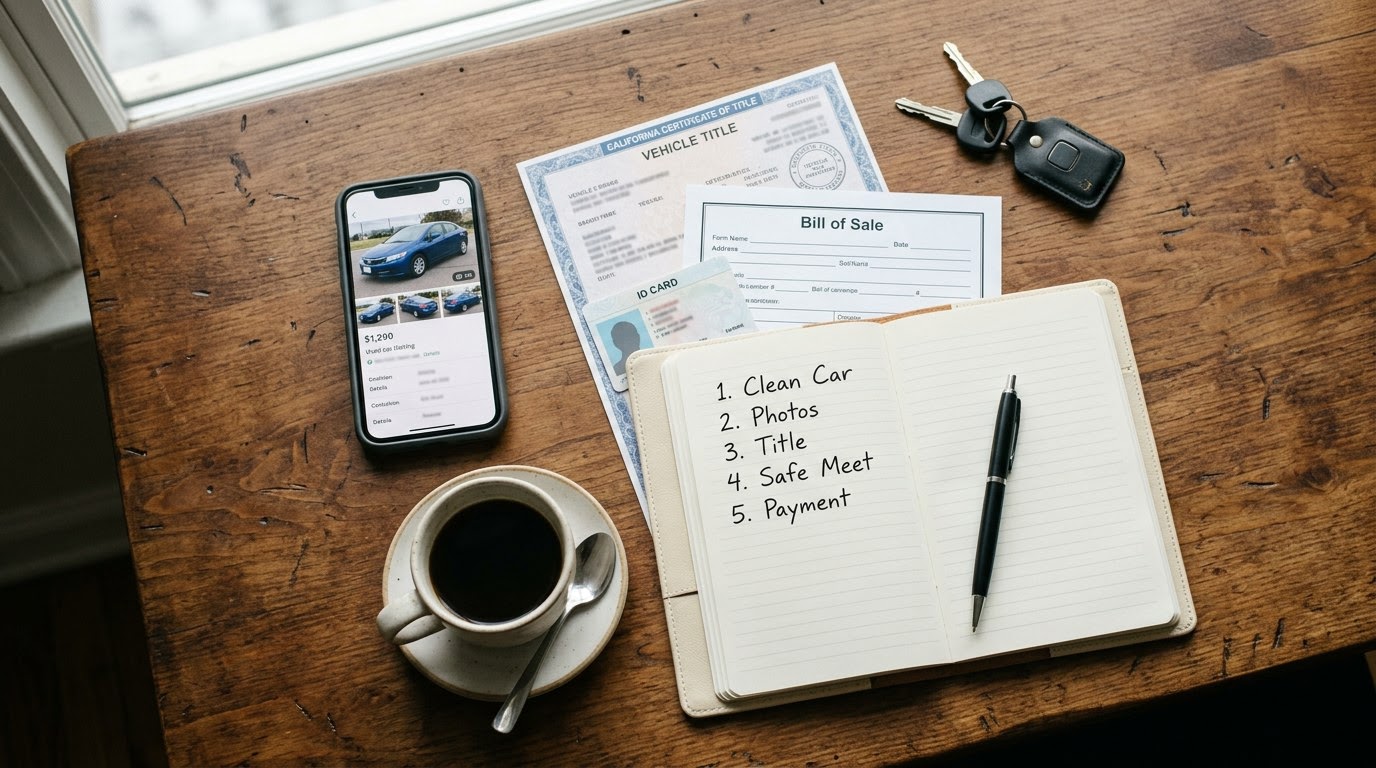
Use this playbook when you list a vehicle on platforms like Facebook Marketplace, Craigslist, or AutoTrader and receive inquiries from private buyers. TrustMatch provides this verification playbook to keep your personal safety, vehicle title, and bank account secure throughout the entire selling process.
1. Screen the buyer's initial communication and digital footprint
Screen every incoming inquiry by reviewing the buyer's account age, profile details, and communication style before providing vehicle details or location data. Legitimate buyers ask specific questions about the car's maintenance history, VIN, and mechanical condition rather than pushing for immediate offline communication. Require a primary phone number early in the dialogue, and cross-reference their stated name against public records. Identifying automated accounts or stolen profiles early prevents wasted time and isolates legitimate buyers.
When you list a used car online, your first defense is initial message filtering. Fraudulent accounts often send generic, copy-pasted messages such as "Is the item still available?" followed immediately by requests to move the conversation to text messages or encrypted apps. As of August 2026, buyers who refuse to communicate through the listing platform's messaging tool or who cannot provide a legitimate mobile phone number represent a severe security risk.
Examine the buyer's social media or platform profile carefully. Look for profiles created within the last 30 to 90 days, profiles with no friends or local connections, or accounts displaying mismatched location details. Federal Trade Commission data from 2024 shows that private marketplace and imposter scam losses reached $10 billion nationwide. If a buyer claims to be buying the car for a family member, relative, or overseas client, halt the transaction immediately.
Send a direct text message or platform response establishing your communication rules. Use a standardized template to maintain boundaries and set clear expectations before giving away any personal information:
"Thanks for your interest in the vehicle. To protect both parties from online fraud, I conduct a brief identity check and a quick 3-minute video call before scheduling physical test-drives. Please reply with your full legal name and mobile number to proceed."
2. Run a TrustCheck on your prospective buyer
Run a rapid identity check on your prospective buyer before scheduling a physical meeting or sharing your address. Enter the buyer's first name and phone number or email into TrustMatch to generate a TrustScore and risk verdict in under a minute. This step validates whether the phone number links to a real person, checks for VOIP burner lines, and flags associated fraud histories. Receiving a clear TrustScore gives you objective confirmation to move forward safely.
Never share your residential street address, workplace location, or daily schedule until you complete identity verification. Scammers frequently collect seller addresses to stage fake wire transfers, target home driveways for vehicle theft, or execute identity theft schemes using your personal records.
When you input the buyer's details into the verification system, evaluate the risk markers returned in the verdict:
- Phone Line Type: A legitimate buyer uses a standard mobile carrier (such as Verizon, AT&T, or T-Mobile). A temporary VOIP or web-based virtual number (Google Voice, TextNow) signals potential identity hiding.
- Name Matching: The subscriber name on the mobile account should match the name on the buyer's messaging profile and driver's license.
- Risk Signals: High-risk flags indicate associated scam reports, recent account creation spikes, or synthetic identity patterns.
If the buyer's details generate a low TrustScore or indicate a mismatched burner line, inform them that you require a standard mobile number connected to a verified account to arrange an in-person meeting. Honest buyers understand identity safety and will readily provide standard contact details.
3. Require a 3-minute video verification call
Schedule a brief video call via FaceTime, Zoom, or WhatsApp to confirm the buyer matches their provided identity and digital profile. Ask the buyer to hold up their driver's license to the camera so you can verify their full name, photo, and expiration date before sharing meeting details. Real buyers gladly complete this quick security step to prove their interest, while scammers making fake bank draft threats will immediately make excuses or drop out.
Video verification eliminates remote scammers, fake out-of-state buyers, and identity impersonators. Set up the call during daylight hours and keep the conversation professional and direct. Use this script during the call:
"Hi [Buyer Name], thanks for jumping on this quick call. I require all test-drive participants to verify their identity on camera for safety. Please hold your driver's license up to the screen so I can confirm your name and photo match your profile."
During the video interaction, verify three distinct visual indicators:
- Facial Match: Ensure the live person on camera matches the photo printed on the government-issued driver's license.
- Document Authenticity: Check that the license has valid state markings, a visible hologram or crest, and has not expired.
- Location Consistency: Confirm the buyer is physically located in your region or has a logical explanation for traveling to purchase the vehicle.
Pay close attention to excuses. Scammers often claim their camera is broken, their internet connection is too poor for video, or that they are currently deployed or working on an offshore oil rig. Treat any refusal to appear on camera as an immediate deal-breaker.
4. Establish strict physical meeting and test-drive protocols
Set up physical vehicle viewings exclusively in high-visibility public locations, such as local police department safe exchange lots or busy bank parking areas during daylight hours. Hold the buyer's physical driver's license and take a photo of it on your phone before handing over the vehicle keys for a test-drive. Bring a friend or family member to ride along or observe the interaction from a short distance, ensuring you retain total control over the vehicle at all times.
Never allow a buyer to come to your home address or meet you in an isolated parking garage. Many local law enforcement agencies offer dedicated "Safe Exchange Zones" monitored 24/7 by surveillance cameras specifically for peer-to-peer online sales.
Execute this physical security protocol upon arrival at the meeting site:
- Inspect the License in Person: Take physical possession of the buyer's driver's license. Verify the physical texture, state seal, and expiration date. Take a clear smartphone photo of the front and back of the card, and text it to a trusted contact before handing over your car keys.
- Confirm Automobile Insurance: Ask the buyer to show digital or physical proof of active auto insurance that covers test-driving secondary vehicles.
- Control the Route: Pre-determine a 10-minute test-drive route that stays within well-traveled public roads.
- Maintain Supervision: Ride in the passenger seat during the test-drive. If you feel uncomfortable riding along, hold the buyer's phone, license, and car keys to their primary vehicle while they complete a short loop around the monitored parking area.
According to a 2025 Better Business Bureau report, fraudulent cashier's checks and vehicle payment schemes caused over $4,000 in average losses per target. Setting strict in-person protocols deters physical carjackers and organized vehicle theft rings.
5. Finalize payment through verified bank-to-bank settlement
Require all transaction payments to occur via direct electronic wire transfer or an in-person cashier's check drawn directly in front of a bank teller. Meet the buyer inside their local bank branch where the teller can verify funds, issue an official bank draft, or execute a wire transfer directly into your account before you hand over keys or sign the title. Avoid mobile payment apps, personal checks, or unverified cashier's checks presented outside a financial institution.
Fake cashier's checks are among the most prevalent frauds in private car sales. Modern counterfeit checks feature authentic-looking bank logos, routing numbers, and watermarks that easily fool individuals. When you deposit a fake check at your bank, your financial institution may tentatively release the funds within 24 to 48 hours. However, when the check clears through the issuing bank several days later and bounces, your bank reverses the full amount, leaving you without your vehicle or your money.
Follow these mandatory rules for closing the payment phase:
- In-Bank Cashier's Check Creation: Stand at the bank teller window inside the buyer's bank branch while the teller prints and hands the cashier's check directly to you.
- Direct Wire Transfer: If using a bank wire, wait inside the bank until your receiving bank confirms the funds have settled into your account as cleared, non-recallable capital.
- Cash Verification: If accepting cash for lower-value vehicles, count the money and run it through a counterfeit detection pen inside the bank before releasing the vehicle.
- Avoid Peer-to-Peer Apps: Do not accept Zelle, Venmo, Cash App, or PayPal for vehicle purchases. Scammers use stolen credit cards or compromised bank accounts on these platforms, leading to sudden chargebacks weeks after the transaction closes.
FBI Internet Crime Complaint Center data from 2024 documented over 18,000 cases of non-payment and non-delivery scams involving online private vehicle transactions. Verifying settlement directly with a bank teller eliminates payment reversal risks.
6. Complete title transfer and official release of liability
Sign over the vehicle title, complete a detailed bill of sale, and immediately file a state notice of transfer or release of liability upon receiving confirmed payment. Remove your personal license plates and toll transponders from the vehicle before letting the buyer drive away, protecting yourself from future parking tickets, tolls, or liability claims. Provide the buyer with a signed copy of the bill of sale while keeping the original document for your personal records.
Do not sign the vehicle title until full payment has completely settled in your presence. Complete every field on the title clearly using black ink, ensuring no erasures or white-out marks appear on the document, as state motor vehicle departments will reject altered titles.
Follow this administrative checklist to finalize the legal transfer:
- Draft a Comprehensive Bill of Sale: Include the exact sale date, final sale price, current odometer reading, vehicle identification number (VIN), buyer's legal name and address, seller's legal name, and explicit "As-Is" warranty disclaimer language.
- Sign the Title Correctly: Fill out the seller assignment section on the title document. Ensure all sellers listed on the title (if joined by "AND") sign the release line.
- File State Release of Liability Immediately: Submit your state's Notice of Transfer and Release of Liability online through your local Department of Motor Vehicles (DMV) website on the same day. This legally severs your association with the vehicle.
- Strip Personal Property: Remove license plates (in states where plates stay with the seller), garage door openers, aftermarket toll tags, and wipe all personal data or Bluetooth profiles from the vehicle's digital infotainment system.
Verification requirements by transaction stage
Verifying a buyer requires systematic checks at every stage of the sale, moving from initial online contact to final legal transfer. Following a structured verification schedule ensures that identity discrepancies, payment risks, and physical security threats are caught before you give up custody of your vehicle. Compare each buyer's actions against mandatory verification benchmarks to identify red flags immediately.
| Step | What to verify | Red flag if missing |
|---|---|---|
| 1. Initial Contact | Digital account footprint, primary mobile phone number, local area matching. | Account created under 30 days ago, buyer insists on communicating via encrypted apps, generic copy-paste inquiries. |
| 2. Identity Verification | Phone line subscriber verification, name matching against public records. | VOIP/virtual phone number, mismatched identity details, refusal to provide a phone number. |
| 3. Video Screening | Live face match against government ID, document authenticity, physical location. | Refusal to join video call, broken camera excuses, claim of overseas deployment or third-party pick-up. |
| 4. Physical Meeting | Physical driver's license in hand, active auto insurance, public safe-exchange location. | Reluctance to meet at a police station or bank, refusal to let seller take a photo of ID, driving alone without ID. |
| 5. Payment Processing | Direct bank wire confirmation or teller-issued cashier's check made in your presence. | Pre-printed cashier's check brought from home, offer of mobile app payments, overpayment checks with refund requests. |
| 6. Title Assignment | Completed bill of sale, accurate odometer entry, state release of liability filing. | Buyer asks for an open/unsigned title ("title flipping"), requests leaving license plates on car, hesitates on legal name details. |
Quick checklist for private vehicle sales
Review this quick checklist before every private vehicle interaction to keep your transaction on track and protected against fraud. Executing these steps in order eliminates common vulnerabilities like stolen cashier's checks, identity spoofing, and test-drive thefts. Keep this list active from your initial listing response through final DMV registration filing.
- List your vehicle on reputable platforms and require buyers to provide a primary mobile phone number before sharing vehicle location details.
- Run a quick online identity verification check to confirm the buyer's phone number links to a real person without fraud flags.
- Conduct a mandatory 3-minute video verification call to inspect the buyer's driver's license and confirm their physical appearance.
- Schedule the test-drive meeting during daylight hours at a designated law enforcement safe exchange zone or local bank parking lot.
- Inspect and photograph the buyer's physical driver's license before allowing them to enter or operate the vehicle.
- Accompanied test-drives only: Ride along on a short pre-planned route, or retain the buyer's primary vehicle keys and phone at the meeting site.
- Complete payment transactions inside a bank branch via teller-issued cashier's check or direct confirmed wire transfer.
- Sign the title over using permanent ink, complete an "As-Is" bill of sale, and immediately remove your license plates and toll tags.
- File an online Notice of Transfer and Release of Liability with your state DMV immediately after handing over the keys.
Red flags during this process
Watch for specific behavioral indicators during buyer communications that signal potential fraud, identity theft, or payment scams. Recognizing these warning signs allows you to halt the sale immediately before risking physical harm or financial loss. Never ignore deviations from your standard security protocol, even if the buyer offers above asking price.
Be prepared to walk away from a deal if you observe any of the following warning behaviors during the selling workflow:
- Overpayment Schemes: The buyer sends a check or draft for more than your agreed asking price and instructs you to wire the excess funds to a "shipping company" or "transport driver." This is always a fraudulent draft scheme.
- Third-Party Pick-Up Agents: The buyer claims they are currently out of the country, deployed overseas, or managing a medical emergency, and states that a "courier," "shipping agent," or "hauler" will pick up the vehicle. Never hand a car or title over to someone who has not personally completed identity verification and video screening.
- Fake Payment Screenshots: The buyer shows you a digital image or email confirmation on their smartphone claiming a wire or electronic bank transfer was sent. Money is only secure when your receiving bank confirms the cleared balances directly within your own banking application or via a live bank teller.
- Title Flipping Requests: The buyer asks you to leave the buyer section on the title blank so they can sell the car to someone else without registering it or paying state taxes. This practice, known as title jumping, leaves you legally liable for damages, abandoned vehicle fees, or criminal misuse of the vehicle.
- Pressure Tactics: The buyer creates artificial urgency, claiming they must buy the car within two hours or offering extra cash if you skip the bank verification phase or meet them in an unmonitored location late at night.
If something feels wrong at any point in the routine, terminate contact, keep your keys, and move on to the next prospective buyer.
A TrustCheck is one input, and it is not a promise of safety. It tells you whether a name, phone, email and address hold together as one person; it cannot tell you what that person intends to do.
Frequently asked
Why should I avoid accepting a pre-printed cashier's check for my vehicle?
Fake cashier's checks look highly authentic and can take several days or weeks to fail bank clearance. If you accept a counterfeit check, your bank will reverse the temporary credit, leaving you responsible for the full amount while the fraudulent buyer keeps your car.
How does meeting at a bank protect both the seller and the buyer?
Meeting inside a bank allows a professional teller to verify funds, produce an official cashier's check, or execute a wire transfer securely. It also provides a safe, camera-monitored environment with trained staff, eliminating physical theft risks during the financial exchange.
What should I do if a buyer refuses to complete a video verification call?
If a buyer refuses a quick video verification call, cancel the meeting immediately. Honest private buyers willingly complete a brief video identity check for mutual safety, whereas fraudulent accounts and out-of-state scammers always make excuses to avoid showing their face.
Do I need to take my license plates off the car when selling privately?
In most states, sellers must remove their license plates before transferring custody of a used vehicle. Leaving your plates on the car makes you vulnerable to toll violations, parking tickets, and potential legal liability if the buyer commits a crime before registering the car.
What is title jumping and why is it dangerous for private sellers?
Title jumping occurs when a buyer asks you to leave the buyer section of the vehicle title blank so they can resell it without paying taxes. Signing an open title leaves you legally recorded as the vehicle owner, exposing you to liability for accidents or impound fees.