How to Safely Verify a Stranger Who Messaged You on Instagram
· 10 min read
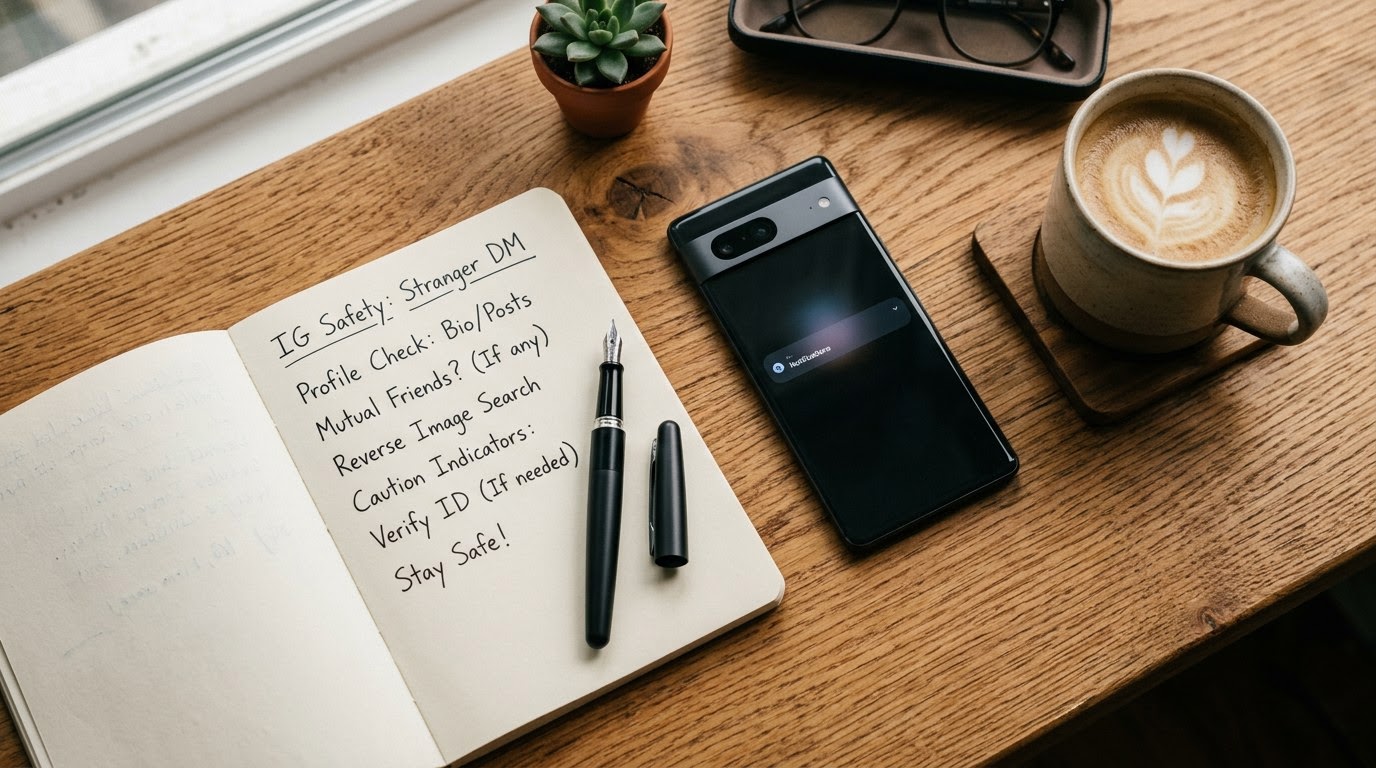
Use this guide on how to safely verify a stranger who messaged you on Instagram whenever an unsolicited direct message turns into a potential date, private sale, or off-platform chat. Follow these steps in order—including a fast TrustMatch check—before sharing your phone number, sending money, or agreeing to meet in person.
1. Inspect the Instagram "About this account" history
Open the sender's profile, tap the three-dot menu in the top corner, and select "About this account" to inspect when the profile was created, its current country, and any prior username changes. As of November 2026, Instagram surfaces this transparency log directly on public and many private profiles. A legitimate profile shows a stable location matching their story, an older creation date, and zero or minimal handle changes.
Pay close attention to accounts created within the past few months or profiles with three or more former usernames. Scammers frequently buy aged profiles from inactive users and rebrand them overnight to look established. If the sender claims to live in Chicago while their account lists another continent without a plausible travel explanation, stop engaging immediately.
For example, a romance scammer may take over an old hobby page, wipe the original posts, and upload ten stolen portraits in a single afternoon. FBI data shows reported losses from confidence and romance fraud exceeded $650 million in 2023, and hijacked social profiles remain a primary entry point.
2. Audit follower ratios and comment authenticity
Scroll through the stranger's posts, tagged photos, and follower list to confirm real human interaction rather than bought engagement or staged activity. Tap their tagged tab to see whether real friends or local venues actually tag them in candid moments. Success looks like varied comment conversations from real local accounts, consistent timestamps spanning months or years, and authentic tagged photos that match their stated lifestyle.
Watch for lopsided metrics, such as an account following thousands of strangers while having only a handful of genuine replies on its photos. Click into several commenter profiles to confirm they belong to real people rather than empty bot accounts posting generic emojis. Look closely at post dates as well.
A real person usually builds a gallery gradually over years with uneven lighting, group shots, and local landmarks. An impersonator often uploads a polished batch of photos within days, disables comments on older posts, and hides every tagged image from public view.
3. Reverse-search profile and feed photos
Save or screenshot three to four distinct photos from the account—including their main portrait, a casual full-body shot, and a travel or pet picture—and run each through Google Images, Bing Visual Search, and TinEye. Crop out Instagram borders and captions so search engines focus strictly on the image itself. A genuine profile returns either zero matches or links tied directly to that same person's real social accounts.
Do not stop after testing just the profile avatar, because experienced scammers often edit or flip headshots to evade basic image matching. Test secondary lifestyle photos like gym selfies, restaurant meals, or vacation backdrops, which impersonators rarely think to alter. Run the same photos across at least two search engines since each indexes different sites.
If a photo traces back to a model portfolio, a foreign lifestyle blogger, or a military officer's public bio under another name, you have caught a stolen identity. Even stock-style studio portraits with zero everyday snapshots are a strong signal to walk away.
4. Stay on Instagram before moving to another app
Keep all early conversations inside Instagram direct messages for at least several days, and decline immediate requests to switch to WhatsApp, Telegram, Signal, or SMS. Scammers push targets off Instagram quickly because automated safety systems suspend fake profiles fast, and off-platform chats protect their ongoing access to you. A real person respects your boundary without arguing and keeps chatting comfortably inside the app.
Moving to a messaging app early also hands a stranger your active phone number, which enables caller spoofing, spam targeting, and unsolicited contact long after you block their Instagram handle. Notice how the sender reacts when you say you prefer keeping chats on Instagram until you know each other better.
FTC data shows consumers lost more than $1.1 billion to romance scams in 2023, with many schemes starting in social media direct messages before shifting to encrypted chat apps. Anyone who pressures you to leave Instagram within the first ten messages is prioritizing control over trust.
5. Run a TrustMatch identity check
Once basic profile checks look clean and you are considering meeting up or sending money, ask for their first name and a phone number or email address, then run a TrustMatch identity check. Enter their first name plus their phone number or email into TrustMatch to receive a TrustScore and verdict in under a minute. A passing result confirms real-world identity consistency and flags disposable burner numbers or mismatched contact records.
Use this step before paying for a private item, booking shared travel, or investing emotional energy in someone you only know through a screen. For example, if a stranger selling concert tickets gives you a local phone number that resolves to a newly registered virtual VoIP line with no consistent name match, pause the transaction immediately.
Treat the TrustScore and verdict as an objective safety signal rather than an invasive dig into someone's private life. You only need minimal contact details to confirm the person behind the handle actually matches the identity they claim.
6. Verify their identity with a live 5-minute video call
Schedule a brief, unscripted 5-minute video call before committing to a date, sending a deposit, or sharing sensitive personal details. Ask the person to wave, turn slightly toward natural light, or answer a casual spontaneous question about their surroundings during the chat. A real person shows fluid facial movement, synced audio, and ordinary background sound, whereas an impersonator stalls endlessly or sends pre-recorded clips.
Pay close attention to unnatural lighting halos around the jawline, robotic lip-sync delays, or short looping clips that repeat after ten seconds—all signs of stolen video overlays or deepfake filters. Watch out for chronic excuses like a broken front camera, strict employer rules banning video, or poor Wi-Fi that conveniently allows voice calls or texts.
For instance, if someone claims to be on a quiet coffee break yet their video stays frozen on a dimly lit ceiling while audio cuts in and out, end the call. Legitimate people who want to meet you will find five clear minutes on camera.
7. Cross-check public digital footprints independently
Search the stranger's full name alongside their stated city, employer, or hobby directly in your browser rather than clicking any links they send inside DMs. Look for independent corroboration across public sources like LinkedIn profiles, local club rosters, university directories, or community event pages. Success means finding a coherent, multi-year trail that matches the timeline and details they shared in conversation.
Verify details passively and safely without visiting phishing sites or logging into third-party portals sent by the stranger. If they claim to run a local design studio or perform at weekend markets, check the venue's official calendar or business directory directly to confirm they appear there.
FTC reports from 2024 show imposter scams caused over $2.9 billion in consumer losses, often relying on fabricated careers and cloned LinkedIn pages. When a person's claimed profession leaves zero public trace—or uses a stock company name that resolves nowhere—do not trust their narrative.
8. Lock down your first in-person meetup rules
If every previous step passes and you decide to meet, choose a busy, well-lit public venue during daylight hours and arrange your own transportation both ways. Share the stranger's verified name, Instagram handle, phone number, and your live location with a trusted friend before leaving home. A respectful date or local seller welcomes public daytime settings and never pushes to switch locations to a private residence at the last minute.
Never send upfront money for gas, rideshares, babysitters, event tickets, or security deposits before shaking hands in person. For private marketplace deals, meet inside a police-monitored safe exchange zone or a busy bank lobby rather than a parking lot after dark.
Set a timed check-in text with your friend 30 minutes after the meetup starts so someone expects to hear from you. If the stranger arrives looking different from your video call or pressures you to get into their car, leave immediately.
Verification steps and warning signs at a glance
Use this reference table to track each verification stage in order before escalating an Instagram conversation to a phone number, money transfer, or live meetup. Work through the rows sequentially so low-effort profile checks catch obvious fakes before you share any personal contact details. If any row triggers a warning sign, stop the verification routine right there rather than giving the sender another chance to explain it away.
| Step | What to verify | Red flag if missing |
|---|---|---|
| 1. Account history | Creation date, country, and prior usernames | Recent join date, mismatched country, or frequent name changes |
| 2. Follower authenticity | Real comments, local tags, and post timeline | Bots in comments, hidden tags, or photos uploaded all at once |
| 3. Reverse image check | Zero matches or matching real owner profiles | Photos linked to models, influencers, or different names |
| 4. On-platform chat | Willingness to keep messaging on Instagram | Urgent pressure to move to WhatsApp, Telegram, or SMS |
| 5. Identity check | First name plus phone or email consistency | Unverified VoIP numbers, burner emails, or mismatched identity |
| 6. Live video call | Real-time lighting, synced audio, and motion | Broken camera excuses, looping clips, or visual glitches |
| 7. Public footprint | Independent job, school, or community records | No public trace or links leading to suspicious login pages |
| 8. Public meetup | Daylight public venue and zero upfront cash | Last-minute address changes or requests for travel money |
Quick checklist before you reply or meet
Run through this ordered recap one final time before moving off Instagram, booking plans, or completing a private transaction with someone you just met online. Completing these actions in sequence ensures you rely on verified facts rather than gut feelings or curated profile photos. Every single item below takes just a few minutes and keeps you firmly in control of the pace.
- Check the "About this account" log for creation date, location, and prior username changes.
- Confirm real local comments, genuine tagged photos, and natural posting dates across their feed.
- Reverse-search three or four distinct photos across multiple search engines.
- Keep conversations inside Instagram direct messages until early red flags clear.
- Verify their first name and phone or email to confirm identity consistency.
- Complete an unscripted 5-minute live video call with clear lighting and audio.
- Confirm a public daytime meetup spot and share your live location with a friend.
Red flags during this process
Stop replying immediately if the stranger turns defensive, plays the victim, or refuses any basic check during your routine. Legitimate people understand why strangers verify one another online, whereas scammers use guilt, urgency, or flattery to rush past your boundaries. Block the account, report it inside Instagram, and never send money, gift cards, crypto, or private photos to prove you trust them.
Watch closely for these common mid-routine derailment tactics and act decisively the moment one appears:
- Manufactured emergencies: A sudden customs fee, hospital bill, or locked bank account right before a planned meetup means you are talking to a scammer.
- Shaming your caution: Remarks like "If you do not trust me, why talk?" are manipulation designed to make you drop your safeguards.
- Financial pivots: Any sudden shift toward crypto trading, exclusive investment tips, or urgent wire transfers ends the conversation immediately.
- Evasive scheduling: Repeatedly cancelling live video calls minutes before start time signals a stolen identity behind the screen.
If you already shared banking details or paid a scammer, contact your bank immediately, report the fraud to the FTC, and place a free credit freeze with the major bureaus to protect your own accounts.
Before you step out the door or finalize plans, run that quick TrustMatch verification so you know the person behind the handle matches the name and contact details they gave you. These steps protect you and respect a real person—they are not surveillance.
Frequently asked
How can I tell if an Instagram DM is from a scammer?
Check the sender's account creation date, country, and previous usernames in Instagram's About this account menu. Watch for recent join dates, multiple name changes, generic bot comments, or urgent pressure to move the chat to WhatsApp or Telegram. A real person shows consistent multi-year activity, handles reverse image searches cleanly, and agrees to a brief live video call without excuses.
Why do Instagram strangers ask to move to WhatsApp or Telegram?
Scammers push conversations to WhatsApp or Telegram quickly because Instagram actively detects and suspends fraudulent accounts. Once you leave the platform, they retain direct access to you and often collect your phone number for future targeting. Keeping early chats inside Instagram direct messages protects your personal contact details while you verify who is actually behind the profile.
What does a TrustMatch identity check confirm before a meetup?
Entering a stranger's first name along with their phone number or email address into TrustMatch generates a TrustScore and verdict in under a minute. This check confirms whether the contact details align with a real, consistent identity rather than a disposable burner line or mismatched alias, helping you spot impersonators before sharing personal plans or meeting up.
What should I do if a stranger refuses a quick video call?
Treat repeated excuses about broken cameras, poor connections, or strict workplace rules as a clear warning sign. Impersonators avoid live video because stolen photos cannot hold up in real time without visual glitches or mismatched audio. If someone declines a casual five-minute video chat before a planned meetup, pause engagement and do not share money or personal plans.
Is it safe to meet someone from Instagram in person?
Meeting someone from Instagram can be safe once you confirm their account history, pass reverse image searches, complete a live video call, and verify their contact consistency. Choose a busy daytime public venue, arrange your own transportation, and share their verified details plus your live location with a trusted friend before leaving home.
More in Guide
- How to Build a First Date Safety Plan for Online Matches
November 20, 2026
- How to Safely Sell High-End Trading Cards to In-Person Buyers
November 15, 2026
- How to Safely Conduct a Video Verification Call Before a First Date
November 13, 2026