How to Safely Vet a Potential Roommate Met on Social Media
· 11 min read
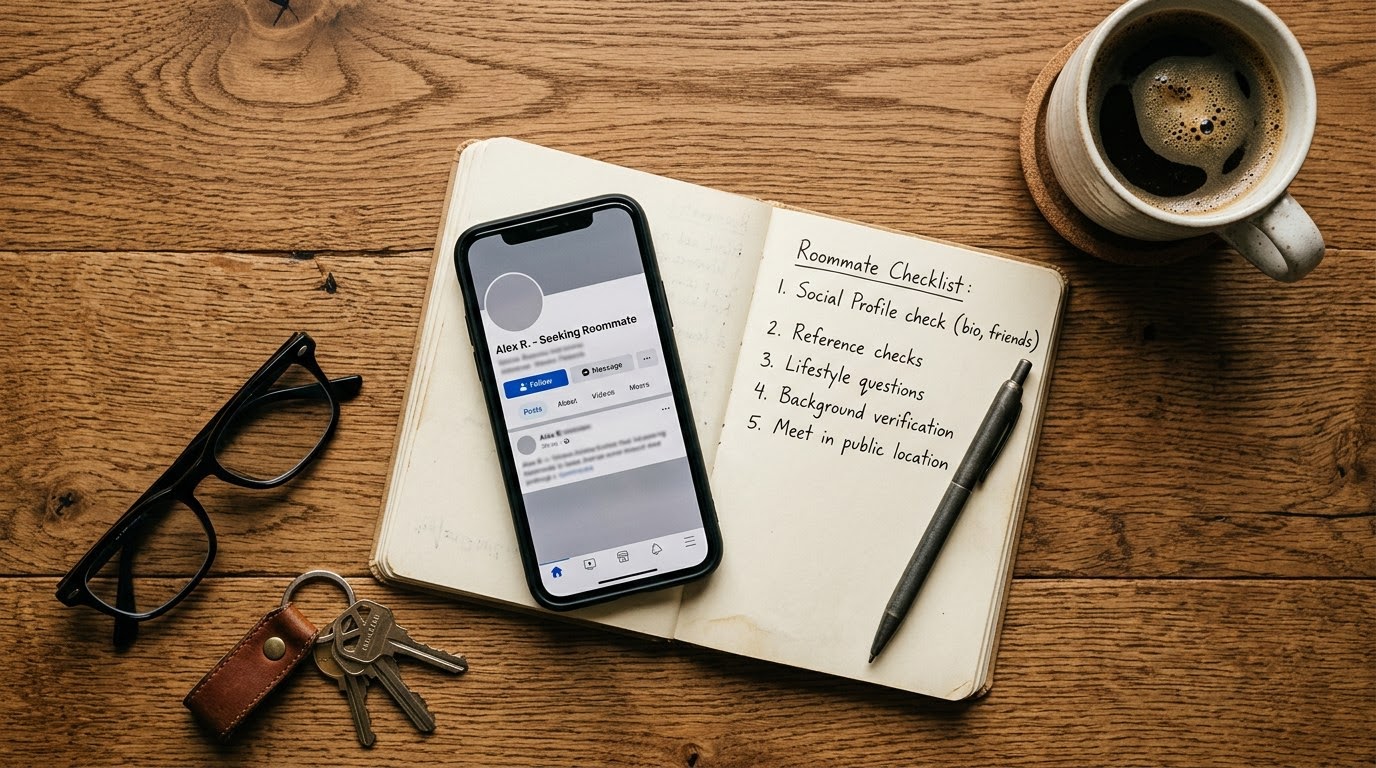
1. Run a TrustCheck on the prospective roommate
To verify a potential roommate met on social media, open TrustMatch, enter their first name and phone number or email address, and review the resulting TrustScore and verdict in under one minute. This instant identity check validates that the contact details match a real individual with an established digital identity, ensuring you are not communicating with a burner account or identity thief before proceeding with living arrangements.
Executing an identity check as your very first step saves time and eliminates fraudulent profiles instantly. Scammers operating on social media frequently rely on stolen profile photos combined with temporary VoIP phone numbers or newly registered disposable email addresses. When you run an initial search, you verify whether the digital footprint associated with that phone number or email aligns with the name and details the person provided on social media.
Send a direct, neutral message to the candidate explaining your verification requirement before proceeding further. Frame this request as a standard safety protocol that you complete for anyone you consider living with. A straightforward message sets clean boundaries immediately.
Use this script when requesting contact details for verification:
"Thanks for reaching out about the room! Before we set up a video chat or schedule a walkthrough, I run a quick identity check on TrustMatch for everyone I meet online. Could you share your full name, primary email, and mobile number so I can run that check?"
If the person refuses, makes excuses about lacking a phone number, or becomes defensive, discontinue communication immediately. Genuine candidates understand that sharing a living space requires mutual transparency. A legitimate prospective roommate will willingly provide basic contact information to establish safety and trust.
Review the results generated by the search. Look for a verified identity match and a high trust indicator. If the system flags a brand-new prepaid burner line, mismatched identity records, or high-risk digital markers, flag the candidate for elevated scrutiny or cease contact completely. The Federal Trade Commission reported that imposter scams and online impersonation fraud resulted in over $2.7 billion in total consumer losses in 2023.
2. Schedule a live video call and virtual tour
To confirm the prospective roommate physically exists and has access to the space, request a 5-minute live video call through FaceTime, Zoom, or WhatsApp while they walk through the rental property. Success means seeing the person interact in real time with the home environment, answering unscripted questions about the layout, and matching the face shown on their social profiles.
Never accept pre-recorded video tours or recorded walk-throughs sent via direct message. Fraudulent actors routinely download recorded home tours from real estate websites and re-upload them to deceive room seekers. Demand a real-time, interactive video session where you control the trajectory of the camera.
During the call, ask the person to complete simple, real-time actions that prove live interaction. Ask them to step out onto the balcony, open a specific kitchen cabinet, or turn on the faucet in the shared bathroom. These simple, live requests prevent scammers from playing pre-recorded videos or looping stolen media files during the call.
Observe the match between the individual on video and the photos on their social media profile. Ensure the physical environment matches the photos posted in the social media advertisement. Pay attention to subtle details such as seasonal weather outside windows, street signs visible from the apartment, or electrical outlet types if dealing with long-distance arrangements.
A 2024 Better Business Bureau report indicated that roughly 40% of online apartment and roommate listings contain deceptive or completely fraudulent listing information. Conducting a live video verification filters out remote scammers who have never set foot inside the physical property they claim to share.
3. Cross-reference their social media footprint
To validate the person’s online history, review their social media profiles across multiple platforms for account age, consistent tagged photos, and organic peer interactions over time. Success looks like an account created several years ago with active comments from real connections, rather than a newly established profile with zero historical engagement or mismatched reverse-image search results.
Social media accounts created within the past few weeks or months carry high risk. Examine the creation date of the profile on Facebook, Instagram, or LinkedIn. Look for a continuous history of posts, tagged photos from friends, and natural conversations spanning multiple years.
Perform a reverse-image search on the candidate's profile picture and listing photos. Save the image files and upload them to Google Images, TinEye, or Yandex. If the search reveals that the profile picture belongs to a model, an influencer, or an online clothing catalog, end all interactions immediately.
Evaluate the depth of their online network across secondary platforms. Search for their name and location on LinkedIn to confirm employment history or educational background mentioned during early messaging. Cross-check whether their listed employer aligns with the city where the apartment is located.
Check mutual connections and tagged photos. Fake accounts often feature thousands of random followers but lack organic, localized comments on their photos. Look for authentic interactions from local family, coworkers, or friends who interact naturally on their posts.
4. Verify primary lease documentation directly with the building manager
To ensure the prospective roommate has lawful authorization to add an occupant or sublet the space, contact the building’s master landlord or property management office directly using publicly listed phone numbers. Success means receiving independent, written confirmation that the individual is a legitimate leaseholder authorized to take on a roommate.
Scammers routinely rent short-term vacation rentals for a single weekend, stage them as long-term apartments, and pose as master tenants taking on new roommates. They collect upfront deposits from multiple prospective roommates in a single day and vanish before the short-term rental booking expires.
Request to see a redacted copy of the primary lease agreement showing the prospective roommate’s name as the primary tenant. Look specifically for clauses regarding subletting, room additions, or secondary occupancy. Ensure the address on the document matches the location of the unit exactly.
Do not rely on contact information provided directly by the candidate to confirm landlord approval. Scammers often provide a phone number belonging to a co-conspirator posing as a helpful property manager. Look up the property management company independently using official public records, municipal property registers, or verified corporate websites.
Call the official management office directly and ask a straightforward verification question:
"Hello, I am coordinating shared living arrangements with [Candidate Name] at [Address, Unit Number]. Can you confirm that this individual is currently on the master lease and authorized to add a co-occupant to the dwelling?"
5. Conduct an initial meeting in a public location
To protect your physical safety when meeting an online contact for the first time, select a busy daytime location like a local coffee shop or public plaza before visiting a private residence. Success involves confirming their physical appearance matches their verified identity profile, establishing rapport, and observing behavioral cues in a safe environment without isolation.
Never agree to meet a potential roommate for the first time inside a private home, isolated park, or remote location late at night. Choose a location with high foot traffic, bright lighting, and clear exits. Public coffee shops, library lobbies, or neighborhood cafes during daytime hours provide the safest environment.
Set up a buddy safety protocol before heading to the meeting. Inform a trusted friend or family member of the exact time, address, and name of the person you are meeting. Share your live mobile GPS location via iOS Find My or Android Location Sharing for the duration of the meeting.
Set a strict time limit for the initial public meetup, such as 30 minutes. Use this brief window to evaluate the candidate's demeanor, communication style, and consistency. Compare what they share in person with the information gathered during earlier identity checks.
If the meeting goes smoothly and you both decide to view the private living space, walk or drive to the property separately. Do not get into a vehicle with someone you have just met online. Maintain independent transportation at all times during the evaluation phase.
6. Utilize trace-supported payment methods for security deposits
To safeguard your funds against peer-to-peer financial scams, send holding deposits or first month's rent exclusively through traceable methods such as bank transfers or cashier's checks tied to a formal written contract. Success means securing a formal receipt and signed roommate agreement before any funds leave your possession, completely avoiding untraceable wire transfers or prepaid gift cards.
As of August 2026, peer-to-peer rental fraud remains one of the fastest-growing categories of online deception across social networking platforms. Scammers demand immediate cash deposits, Zelle payments, Venmo transfers, or cryptocurrency payments under the guise of "holding the room" against competing applicants.
Data from the FBI Internet Crime Complaint Center showed that non-payment and non-delivery scams accounted for more than $330 million in losses in 2022. Demanding untraceable payment methods before signing a formal contract is the definitive hallmark of an online scammer.
Never transfer any money until three absolute conditions are met simultaneously: you have completed identity verification, you have physically walked through the property, and both parties have signed a written roommate agreement detailing rent terms, deposit refund conditions, and house rules.
Use trace-supported payment mechanisms such as direct ACH bank transfers, official cashier's checks, or secure online tenant portals. These methods establish an undeniable paper trail tied to verified financial institutions, allowing legal recourse or bank intervention if fraud occurs.
Demand a written, signed receipt for every payment made. The receipt must state the date, precise dollar amount, legal names of both parties, the address of the property, and the specific purpose of the payment (e.g., "Security deposit for Room B at 123 Main Street").
Verification roadmap for social media roommates
To streamline your screening protocol, reference this summary table to identify what key details to verify at each phase and what immediate red flags signal an active scam or identity spoofing attempt. Success means clearing every verification milestone before making commitments or moving into a shared living space.
| Step | What to verify | Red flag if missing |
|---|---|---|
| 1. Identity Check | Matches full legal name, phone number, and digital footprint using TrustMatch. | Unwillingness to provide contact info, burner line usage, or mismatched identity records. |
| 2. Live Video Tour | Real-time interaction inside the apartment showing unscripted room features. | Refusal to do live video, static camera, pre-recorded footage, or technical excuses. |
| 3. Social Cross-Check | Multi-year social account history, tagged photos, and consistent geographic activity. | Profile created days ago, stock photos, reverse-image search hits, or zero friends. |
| 4. Lease Verification | Written authorization from master landlord or property management office. | Refusal to share management contact or landlord number provided is fake/unresponsive. |
| 5. Public Meeting | In-person appearance matching profile pictures in a high-traffic coffee shop. | Insistence on meeting alone in private, changing locations, or suspicious behavior. |
| 6. Secure Payment | Traceable bank transfer or check tied to a signed written agreement. | Demands for wire transfers, peer-to-peer app cash rushes, or gift card requests. |
Quick checklist
To execute a flawless peer verification process before moving in with a stranger met online, follow this sequential step-by-step operational checklist. Success requires checking off every item in exact numerical order without skipping safeguards or making exceptions for urgent sob stories.
- Run an initial TrustCheck using the candidate's primary phone number and full name to confirm digital footprint validity.
- Conduct a live 5-minute video call requesting real-time camera movements inside the physical living space.
- Perform reverse-image searches on profile pictures and cross-reference multi-platform social media creation dates.
- Contact the property management company via independently sourced phone numbers to verify sublet and occupancy permissions.
- Arrange a 30-minute face-to-face meeting at a busy daytime coffee shop while sharing your live GPS location with a friend.
- Draft and sign a written roommate agreement detailing rent splits, utility obligations, and deposit refund terms.
- Transfer deposit funds using traceable bank channels only after obtaining physical keys and signed contracts.
Red flags during this process
To recognize danger signals during the roommate evaluation process, monitor for behavioral tactics designed to bypass identity verification, rush financial transactions, or limit direct communication. Success means immediately terminating contact whenever a potential roommate exhibits high-risk evasion tactics or refuses standard safety checks.
Pay close attention to emotional manipulation and artificial urgency. Scammers frequently claim they are out of town for a family emergency, military deployment, or business trip, demanding immediate deposit payments to hold the room while promising to mail keys. Never send money to someone who cannot meet you or complete a live video tour due to travel claims.
Watch for aggressive resistance to basic safety protocols. If a prospective roommate becomes hostiles, accuses you of lacking trust, or attempts to make you feel guilty for running an identity check or asking to call management, discontinue contact immediately. Legitimate roommates respect safety precautions and welcome mutual screening.
Be alert to price discrepancies and deals that seem significantly below market value. If an apartment in a high-rent neighborhood is listed for half the average rate, it is almost certainly a fraudulent scheme designed to generate a high volume of rushed deposit payments from desperate apartment hunters.
Notice inconsistencies in communication channels. If a contact insists on moving the conversation off the initial social media platform to encrypted messaging apps like Telegram or WhatsApp, and then deletes their social media profile, cease all interaction. Scammers delete burned social profiles to prevent victims from reporting them to platform moderators.
Never ignore your instincts if something feels wrong mid-routine. If physical appearance does not match profile photos, if stories about lease terms change unexpectedly, or if the individual pressures you to make cash payments before paperwork is finalized, walk away immediately. Your physical safety and financial security take total priority over securing a room quickly.
Calibrating your approach with clear boundaries protects your personal safety and finances while respecting the privacy of a genuine candidate, ensuring that tools like TrustMatch facilitate mutual trust rather than unnecessary surveillance.Frequently asked
Why should I run an identity check before meeting a potential roommate in person?
Running an identity check before an in-person meeting ensures the individual you met on social media is using authentic contact information. It filters out anonymous scammers, burner accounts, and imposter profiles before you share personal details or enter an unfamiliar private location alone.
What should I do if a potential roommate refuses a live video call?
If a potential roommate refuses a live video call, treat it as an immediate red flag and stop communications. Legitimate occupants easily grant a brief live walk-through. Refusals usually indicate that the individual does not have physical access to the property or is concealing their identity.
How can I verify a sublet is legal without alerting the landlord prematurely?
Review the master lease document directly with the tenant to check for subletting clauses. However, to guarantee safety, you must contact the building management or landlord directly to confirm occupancy authorization, as unauthorized sublets can lead to immediate eviction for both occupants.
Is it safe to pay a roommate deposit using Venmo or Zelle?
Paying roommate deposits through peer-to-peer apps like Venmo or Zelle is risky because these platforms do not offer buyer protection for personal transfers. If you fall victim to a scam, the funds cannot be recovered. Always use traceable bank transfers tied to signed contracts.
How can I safely tell a roommate applicant that I am verifying their background?
Be direct, calm, and professional. Explain that you perform standard identity verification and lease checks for all prospective roommates met online as a non-negotiable safety routine. Honest candidates will respect your boundaries and willingly cooperate with standard identity verification.