How Wire Fraud Scammers Intercept Earnest Money Deposits From Home Buyers
· 10 min read
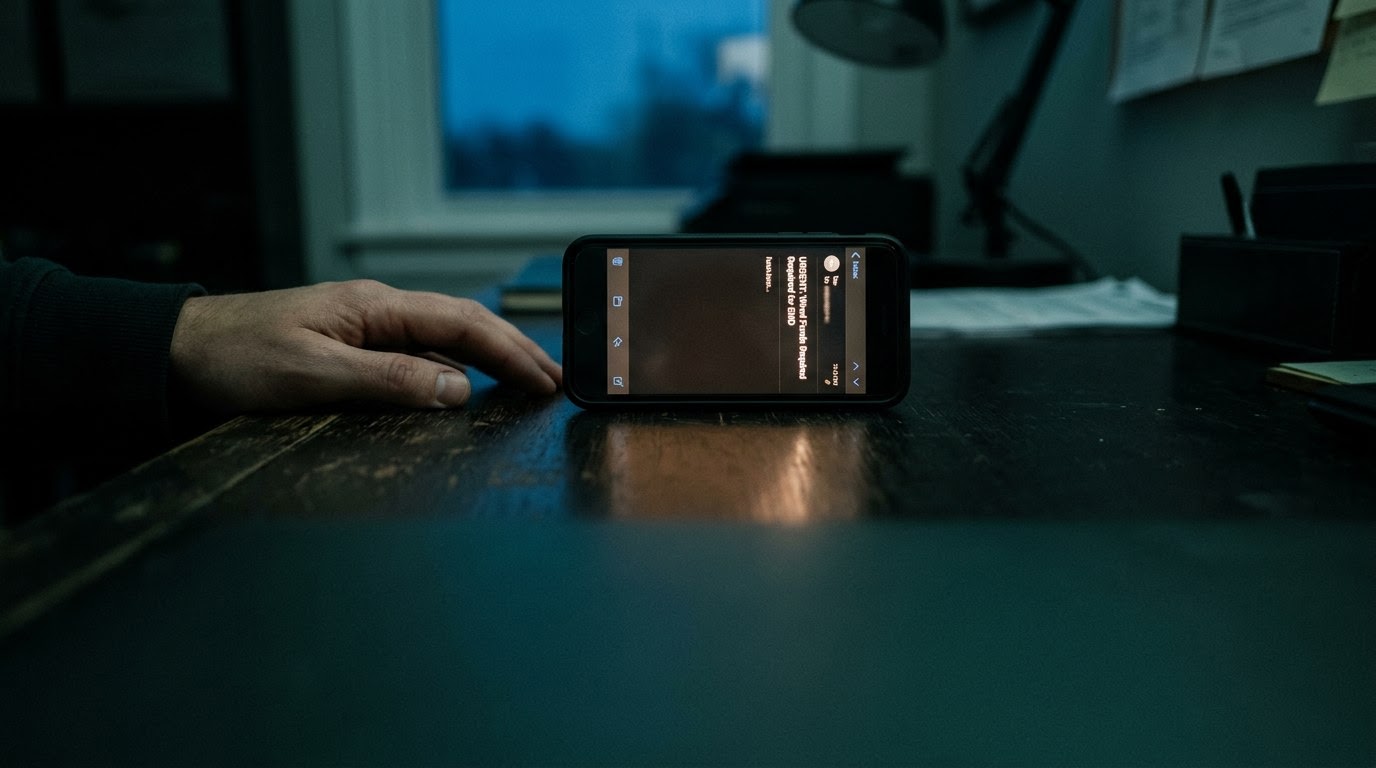
Real estate wire fraud—often categorized as Business Email Compromise (BEC)—is an aggressive cybercrime where fraudsters infiltrate communication channels between home buyers, real estate agents, title companies, and escrow agents to steal earnest money deposits and down payments. The average victim loses tens or hundreds of thousands of dollars in a single transaction, effectively wiping out life savings intended for a primary residence. As of August 2026, cybercriminals rely on increasingly sophisticated domain-spoofing techniques and automated email surveillance to catch buyers at their most vulnerable moment. According to the FBI, real estate wire fraud victims reported losses exceeding $446 million in 2023. A 2024 FTC report revealed that imposter scams involving wire transfers resulted in median losses of over $10,000 per targeted victim.
How the Scam Unfolds: Step-by-Step Playbook
How wire fraud scammers intercept earnest money deposits from home buyers involves a calculated sequence starting with compromised real estate staff emails, silent thread monitoring, domain spoofing, and timed intervention right before closing. Scammers wait until an escrow deadline approaches, then send convincing fake bank wire instructions from a near-identical email address. Money wired to these fraudulent accounts is instantly routed offshore or split into untraceable cryptocurrency transfers before the buyer realizes the breach.
- Network Infiltration and Mailbox Compromise: The playbook begins long before a home buyer receives fraudulent wiring instructions. Scammers execute targeted phishing campaigns directed at real estate brokerages, independent title agencies, and escrow firms. Using credentials stolen from credential-harvesting landing pages, attackers gain unauthorized access to a real estate professional’s email account. In one common pattern, the attacker sets up covert inbox rules. These inbox rules automatically forward outgoing and incoming messages containing keywords like "escrow," "earnest money," "closing disclosure," "wire instructions," and "purchase agreement" to an external server controlled by the scammer.
- Silent Reconnaissance and Calendar Mapping: Rather than revealing their presence immediately, the attacker conducts silent reconnaissance for weeks. During this period, the fraudster reads private contracts, notes transaction timelines, identifies loan officers, and maps out the exact closing date. In a typical sequence, the scammer studies the tone, greeting style, and email signature formatting of the real estate agent or title officer. They take note of expected earnest money amounts—such as a $25,000 earnest deposit or a $120,000 closing down payment—so their eventual demand matches official closing documents down to the penny.
-
Domain Registration and Lookalike Address Creation:
As the closing date or earnest deposit deadline approaches, the cybercriminal registers a lookalike domain name (typosquatting). For example, if the legitimate title company uses
apex-title.com, the scammer might purchaseapex-titIe.com(substituting a capital 'I' for a lowercase 'l') orapextitle-closing.com. They configure the email accounts on this fraudulent domain with the exact display name, profile photo, and phone numbers of the escrow agent. To an unsuspecting home buyer viewing the email on a mobile device, the incoming sender address appears completely identical to prior legitimate correspondence. - Crafting the Interception Email: When the home buyer is scheduled to wire their deposit, the scammer steps into the email thread. They intercept the legitimate thread or originate a new message from the lookalike domain. The message incorporates existing email headers, past conversation history, and real contract attachments to establish immediate authenticity. A typical sequence involves the scammer writing: "Good morning! Attached are the updated wiring instructions for your earnest money deposit due tomorrow. Please confirm once the transfer is completed."
- Injecting Faked Urgency and Routing Changes: To prevent the home buyer from verifying details with their bank or agent, the fraudster injects artificial urgency and a pretext for changed banking details. The scammer might claim that the primary trust account is undergoing an end-of-month financial audit, or that a sudden clearinghouse delay requires routing funds to a secondary commercial account. The payment instructions list a fraudulent bank account held by a domestic money mule or an overseas shell corporation. The scammer explicitly instructs the buyer not to call the office due to "out-of-office meetings" or "system maintenance," urging them to communicate strictly over email.
- Executing the Fraudulent Wire and Instant Laundering: Trusting the email thread, the home buyer visits their local bank branch or logs into online banking to execute a domestic wire transfer. Because wire transfers settle almost immediately, the funds land in the scammer's destination account within hours. The moment the wire hits the receiving account, automated systems or human accomplices (money mules) immediately initiate secondary transfers. The stolen funds are fragmented across multiple offshore accounts, converted into unbacked cryptocurrency wallets, or withdrawn as cash across various financial institutions.
- Delayed Discovery and the Disappearing Act: The fraud remains invisible until the legitimate escrow officer contacts the buyer several days later to ask why the earnest deposit or down payment was never received. When the buyer produces their wire receipt, the parties realize the funds were sent to an unauthorized account. By this time, the lookalike domain has been abandoned, the inbox rules have been deleted, and the stolen money has moved through several layering accounts, making immediate bank recovery extremely difficult.
Who Gets Targeted and Why
Home buyers of all demographic backgrounds get targeted by wire fraud scammers because real estate transactions involve massive, one-time financial transfers combined with high emotional pressure and unfamiliar closing procedures. Cybercriminals specifically target buyers who are actively communicating with escrow officers or real estate agents over unencrypted email channels. The psychological hook relies on creating sudden artificial deadlines, exploiting a buyer's fear of losing their dream home if money isn't sent immediately.
First-time home buyers and individuals making high-value residential investments are particularly vulnerable because they lack familiar baseline routines for sending large sum wires. Real estate purchases inherently involve multiple independent entities—real estate agents, mortgage brokers, title officers, closing attorneys, and inspectors—who communicate primarily via standard email. Scammers capitalize on this fragmented communication structure.
The primary psychological lever used by scammers is catastrophic loss aversion. In competitive housing markets, buyers understand that missing an escrow deposit deadline can cause a contract default, resulting in the loss of the property to a backup offer. When an email arrives asserting that a wire must be executed within four hours to retain the property, buyers often bypass standard safety protocols, such as calling the agent to double-check routing numbers, in order to meet the perceived deadline.
Stage of the Scam: What They Say Versus What Is Happening
Recognizing the gap between a scammer's scripted statements and their actual backend activities allows home buyers to pause transactions before sending money. During a real estate transaction, fraudsters manipulate communication to prevent direct telephone verification, frequently claiming system upgrades or sudden banking policy shifts. Understanding these verbal tactics reveals that behind every sudden request for updated routing numbers lies an active email interception scheme designed to siphon escrow funds into fraudulent accounts.
| Stage of the Scam | What the Scammer Says | What's Actually Happening |
|---|---|---|
| 1. Initial Infiltration | "Please confirm receipt of our updated closing disclosure documents." | The fraudster has breached the agent's mailbox and is creating covert email forwarding rules to monitor your closing schedule. |
| 2. Mid-Transaction Quiet | "We are finalizing underwriting approval. Stand by for wiring directions." | The scammer is registering lookalike domain names and tracking your contract deadlines to time their intervention perfectly. |
| 3. The Interception | "Our primary credit union account is undergoing a routine audit. Use the updated wire instructions attached below." | The attacker sends a fraudulent email from a lookalike domain, directing your funds to a money mule's account. |
| 4. Creating Urgency | "Your earnest money deposit must post by 3:00 PM today or the seller will terminate the purchase agreement." | The scammer creates panic to stop you from picking up the phone to verify the routing details with your settlement officer. |
| 5. Post-Wire Stalling | "We received your transfer confirmation. Receipts take 24 to 48 hours to clear system validation." | The criminal stalls you to buy time while money mules split and transfer your funds offshore or into cryptocurrency. |
How to Recognize It Before Money Moves
Recognizing real estate wire fraud before money moves requires asking critical questions about email domain structures, last-minute changes to payment instructions, and communication channels. Buyers should verify every wire instruction over a known, independently sourced phone number, never relying on telephone numbers printed within an unverified email. Spotting subtle character swaps in email addresses and refusing to execute wires under sudden pressure are the most effective defenses against earnest money interception.
Protecting your closing funds requires evaluating every financial request against strict verification protocols. Before signing off on any wire authorization at your bank, run through these essential safety questions:
- Did the wiring instructions arrive via email unexpectedly or change mid-transaction? Title companies rarely change their clearing bank or wire details in the middle of a transaction. A 2025 Consumer Financial Protection Bureau survey noted that nearly 20% of wire fraud targets received altered payment instructions within 48 hours of closing. Consider any last-minute change in bank name, account number, or routing details an active fraud attempt until proven otherwise.
- Is the sender's email domain an exact match? Inspect the full email header, not just the display name. Look for extra letters, altered hyphens, or subtle domain swaps (such as
.netinstead of.com). Scammers rely on visual tricks that are easy to miss on mobile screens. - Does the email insist on strict email-only communication? If an email explicitly requests that you do not call to verify details—citing staff meetings, severe office delays, or system upgrades—it is overwhelmingly likely to be a scam. Real estate professionals encourage verbal confirmation before large funds transfer.
- Are you verifying details using an independent phone number? Never call the phone number printed on an incoming email or attachment containing wire details. Always look up the real estate agency or title company's public phone number from an independent business card received in person or their official web directory.
- Have you independently confirmed the identity of your counterparty? A TrustCheck is one input, and it is not a promise of safety. It tells you whether a name, phone, email and address hold together as one person; it cannot tell you what that person intends to do.
- Is the receiving bank account held in the name of the title company? If the wire instructions name an individual person, a third-party management entity, or an out-of-state bank unrelated to your local escrow firm, hold the transfer immediately. Escrow deposits belong exclusively in dedicated corporate trust accounts.
If It Has Already Happened: Recovery and Reporting Steps
If wire fraud has already occurred, victims must act within the first 72 hours by contacting their sending bank to initiate a Financial Fraud Kill Chain and filing reports with law enforcement. Promptly notifying the receiving bank, local police, and federal investigators increases the likelihood that stolen funds can be frozen before being converted to digital assets or transferred offshore.
The immediate window following a fraudulent wire transfer is critical. Follow this immediate recovery protocol step-by-step:
- Step 1: Request an Immediate Wire Recall and Fraud Kill Chain (0-24 Hours): Call your sending bank's fraud department immediately. State clearly: "I am a victim of real estate wire fraud. I need an immediate wire recall and request that you initiate the FBI Financial Fraud Kill Chain (FFKC)." The FFKC is a specialized federal intervention protocol that allows the FBI to assist banks in freezing fraudulent wire transfers over $50,000 sent to domestic accounts within the last 72 hours.
- Step 2: Contact the Receiving Bank's Risk Management Division: Do not wait for your bank to reach out to the destination institution. Call the receiving bank's fraud department directly, provide the wire transaction reference number, and alert them that the account holder is receiving stolen escrow funds. Request that they freeze the receiving account immediately to prevent further outflow.
- Step 3: File an Official Report with IC3: Submit a detailed report to the FBI Internet Crime Complaint Center at ic3.gov. Include full bank names, account numbers, routing codes, wire transaction numbers, copy-pasted email headers, and the exact timelines of communication. The IC3 uses this data to trigger federal freeze requests.
- Step 4: Report the Crime to the FTC: Log the incident at reportfraud.ftc.gov. The Federal Trade Commission tracks real estate BEC trends and shares data across state and federal law enforcement agencies investigating organized cybercrime rings.
- Step 5: File a Local Police Report: Visit your local police department to file an official criminal report. Request a formal case number. Banks and legal representatives often require a certified police report before sharing fraud investigation files or executing asset recovery procedures.
- Step 6: Confirm Counterparty Identities Post-Incident: Running a TrustCheck afterwards can show you that the name, phone and email you were given never resolved to one consistent person — useful for your own notes, but not proof of anything. It does not identify whoever was actually on the other end. The reports that matter go to your bank, the platform, and the FTC at reportfraud.ftc.gov.
Frequently asked
What is real estate wire fraud?
Real estate wire fraud occurs when cybercriminals hack or spoof email accounts of real estate agents, title companies, or escrow officers. They intercept closing conversations and send fake bank wire instructions to home buyers, redirecting down payments and earnest money deposits into untraceable accounts controlled by fraudsters.
How do scammers get access to real estate email threads?
Scammers gain access using phishing emails that harvest passwords from real estate agents or title officers. Once inside, cybercriminals set up automated email forwarding rules to silently monitor conversations, contract schedules, and deposit amounts without alerting the account owner.
Can a bank reverse a fraudulent wire transfer?
A bank can only reverse a fraudulent wire transfer if the theft is reported immediately and funds remain in the destination account. If reported within 72 hours, banks and the FBI can initiate a Financial Fraud Kill Chain to freeze and recover stolen money.
How can I safely verify wire instructions before sending money?
Verify wire instructions by calling your escrow officer or settlement agent using a trusted phone number obtained from physical documents or official websites. Never call phone numbers listed in an email containing wire instructions, and never rely solely on digital message confirmation.
What are the main red flags of earnest money wire fraud?
Key red flags include last-minute changes to bank routing details, emails urging immediate transfer to avoid contract cancellation, requests to wire funds to an individual or out-of-state bank, and demands that you communicate exclusively through email rather than telephone calls.
More in Scams
- How Fake Fine Wine Provenance Certificates Scam Peer Collectors
October 12, 2026
- How Fake Camera Lens Swap Scams Target Marketplace Buyers
October 10, 2026
- How Fake Exotic Car Rental Deposit Scams Target Vacationers
October 8, 2026