How Fake Agricultural Equipment Deposit Scams Target Independent Farmers
· 9 min read
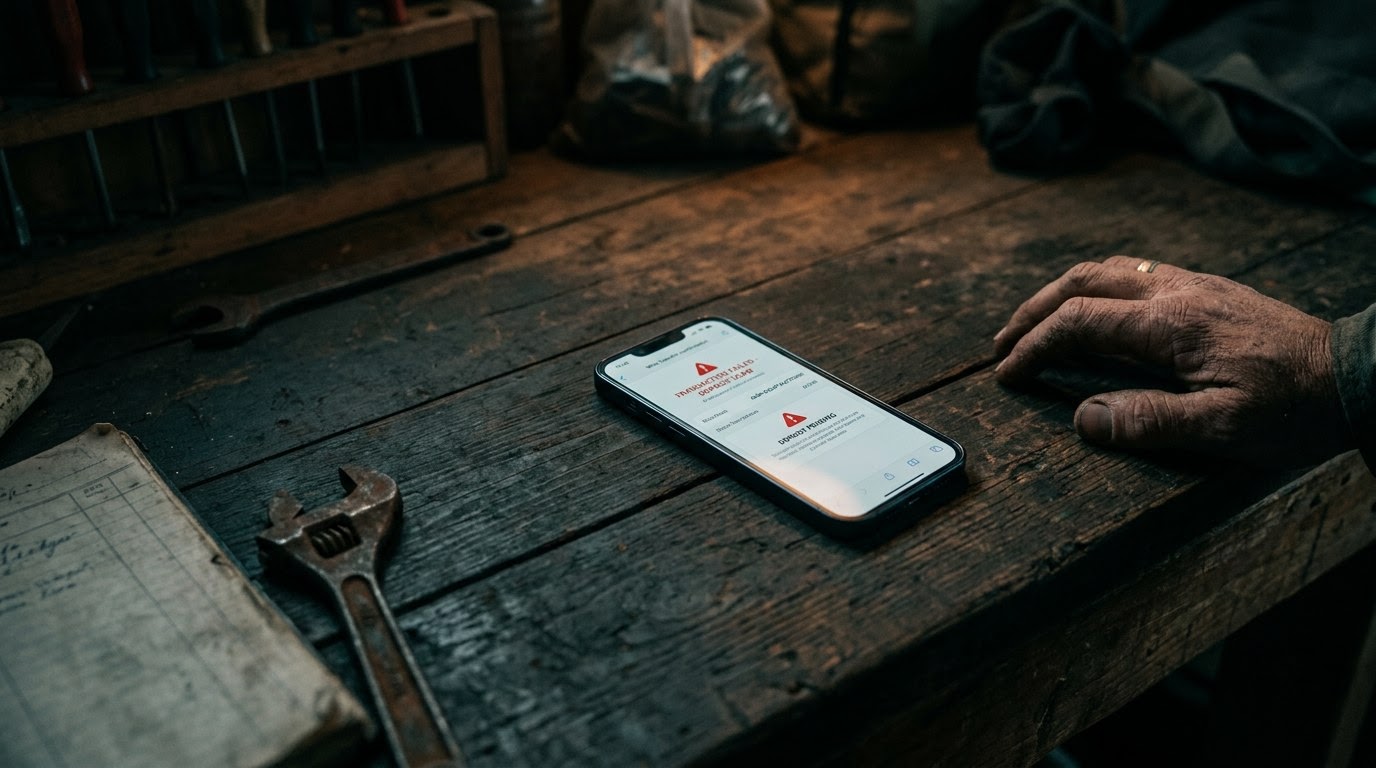
As of October 2026, independent farmers across North America face a growing threat from the fake agricultural equipment deposit scam, a criminal scheme where fraudsters post phantom tractors, combines, and attachments on peer-to-peer marketplaces to steal upfront hold fees. Typical financial losses range from $3,000 hold deposits to full purchase prices exceeding $25,000. In 2024, FTC data showed that imposter and online marketplace scams targeting agricultural buyers caused reported losses exceeding $42 million. Scammers take advantage of regional machinery shortages and time-sensitive farm operations to trick buyers into transferring unrecoverable funds before seeing the machine in person.
How the Fake Agricultural Equipment Deposit Scam Unfolds
The fake agricultural equipment deposit scam unfolds when fraudsters create non-existent machinery listings on peer-to-peer marketplaces, using stolen photos and below-market prices to attract farm operators. Once a buyer expresses interest, the fraudster creates artificial urgency, claiming multiple buyers are competing for the unit. They instruct the victim to wire a refundable hold deposit or transport fee prior to physical inspection, then cut off all communication once the funds clear.
To understand how this operation works in practice, consider a typical sequence involving an independent grain operator searching for a late-model 120-horsepower utility tractor during pre-planting preparation. The scam follows a calculated, multi-stage playbook designed to build trust rapidly and move money before the buyer can perform due diligence.
- Crafting the Phantom Listing: The fraudster scrapes photos, serial numbers, and equipment descriptions from legitimate auction archives, regional dealership inventory pages, or farm liquidation notices. They create fresh accounts on peer-to-peer online marketplaces, agricultural classified portals, or social media sales groups. The advertised price is set roughly 20% to 35% below fair market value—low enough to generate immediate buyer excitement, but high enough to avoid triggering obvious fraud filters.
- First Contact and Identity Spoofing: When a buyer inquires about the equipment, the scammer responds quickly via text, email, or messaging apps. They often adopt the persona of a widowed farm owner selling deceased family property, an estate executor liquidating assets, or a retired equipment operator downsizing their acreage. To eliminate early suspicions, the scammer provides detailed answers about engine maintenance, hydraulic hours, and implement compatibility, having memorized standard equipment specifications.
- Manufactured Competition and Urgency: Once the buyer expresses serious purchase intent, the scammer introduces time pressure. They claim that two other operators from neighboring counties are currently en route or preparing to wire full payment. The scammer offers to hold the machine for the buyer if they place a temporary, fully refundable deposit of $2,500 to $5,000 to lock in the sale.
- The Fake Escrow or Freight Escrow Pitch: If the buyer requests an in-person inspection before transferring funds, the scammer claims the tractor is already loaded onto a third-party logistics trailer or stored in a regional transport depot. They direct the buyer to a professional-looking website representing a fraudulent transport or escrow service. The site features fake tracking portals, live chat agents, and falsified bill-of-lading documents that confirm the equipment is held in protective custody.
- Demanding Payment via Non-Traceable Channels: The seller instructs the buyer to wire the deposit or freight holding fee directly to a commercial account, a peer-to-peer payment app, or an unfamiliar bank routing number. They reassure the buyer that the funds remain protected under a 14-day inspection guarantee. Once the buyer completes the bank wire, the funds are immediately routed through money mule networks or converted to cryptocurrency.
- Post-Payment Delay Tactics and Double-Dipping: After securing the initial deposit, the scammer often attempts to extract additional money. They issue fabricated invoices for insurance bonds, oversized load permit fees, or fuel surcharges, assuring the buyer that these minor costs will be refunded upon delivery. They maintain communication for several days to keep the victim calm while the wire transfer fully settles.
- The Sudden Blackout: When the buyer refuses additional payments or demands an exact delivery time, the scammer terminates all contact. Phone numbers are disconnected, social media profiles are deleted, and the fake escrow website goes offline. The buyer travels to the physical depot address listed on the paperwork only to discover an empty lot or an uninvolved commercial warehouse.
In one common pattern, an independent operator attempting to buy a mid-sized combine harvester was guided through a six-day communication chain involving fake inspection certificates and a spoofed freight invoice. By the time the farmer realized the haulage company was fraudulent, two separate wire transfers totaling $18,000 had been withdrawn from an overseas bank account.
Who Gets Targeted and Why
Independent farmers, smallholders, and rural contractors are primary targets because agricultural operations rely on capital equipment with tight seasonal deadlines. Scammers exploit the pressure of planting or harvest seasons when machinery downtime can jeopardize an entire crop year. Independent operators often buy used equipment across state lines to save money, creating ideal conditions for remote wire transfers and delayed in-person inspections.
According to FBI IC3 data, agricultural equipment and heavy machinery wire fraud reports increased by 38% between 2022 and 2025. This surge is driven by specific structural vulnerabilities inherent to rural businesses and independent agricultural management.
Several distinct factors make agricultural buyers prime targets for organized imposter groups:
- Seasonal Time Pressure: Agricultural schedules are unyielding. If a tractor breaks down right before field preparation, planting, or harvesting, a farmer faces severe financial loss for every day of operational delay. Scammers exploit this anxiety by creating artificially brief decision windows that force buyers to skip standard verification procedures.
- Cross-Border Machinery Sourcing: Specialized equipment is not always available locally. Independent farmers routinely search regional and national marketplaces for specific tractor models, attachments, or vintage restoration parts. Because traveling several hundred miles to inspect a machine requires substantial time and fuel costs, buyers are often receptive to remote holding deposits or third-party freight arrangements.
- High Transaction Values with Cash Flow Variations: Farm equipment purchases involve substantial capital. Transactions ranging from $5,000 to $50,000 are common, making agricultural fraud highly lucrative for criminal networks compared to consumer retail scams.
- Cultural Reliance on Handshake Deals: Rural economies historically rely on trust, personal reputation, and informal verbal agreements. Criminal syndicates intentionally exploit this direct, trust-based culture by adopting polite, practical, and conversational tones that mimic genuine local sellers.
How to Recognize Equipment Deposit Scams Before Money Moves
Recognizing an equipment deposit scam requires evaluating the seller's identity, payment demands, and willingness to accommodate an in-person equipment inspection. Legitimate sellers allow buyers or certified local mechanics to examine high-value machinery before requiring non-refundable wire transfers or escrow deposits. If a seller insists on wire transfers, peer-to-peer payment apps, or third-party holding services while refusing live identity verification, the listing is almost certainly fraudulent.
Data from the BBB in 2025 indicated that over 65% of peer-to-peer vehicle and machinery scam victims were requested to pay via bank wire or peer-to-peer app deposits. To evaluate a listing before transferring any money, ask yourself these essential verification questions:
- Is the price unrealistically low for the hours and condition? Compare the asking price against established industry equipment guides. If a late-model tractor with low engine hours is listed at half its market value, ask why the seller has not traded it into a local dealer for immediate cash.
- Does the seller refuse a live video walkaround or in-person inspection? A genuine seller will gladly accommodate a buyer or an independent local mechanic visiting the yard. If the seller claims the machine is locked in a sealed freight warehouse, unavailable due to medical emergencies, or restricted from pre-purchase viewing, end communications immediately.
- Is the seller insisting on unrecoverable payment channels? Demands for bank wire transfers, peer-to-peer digital apps, gift cards, or untraceable money orders are red flags. Legitimate dealers and private sellers accept cashier's checks upon pickup, verified institutional escrow, or direct bank financing arrangements.
- Is the escrow or transport company independently verifiable? Scammers create fake haulage websites that look authentic at first glance. Search the company name in state business registries, verify their USDOT/MC transport numbers on official government portals, and call the phone number listed on the official state registry rather than the number provided by the seller.
- Has the seller verified their personal or corporate identity? When dealing with unknown individual sellers or non-dealership agents online, running a TrustCheck on the contact in week one catches most variants before any financial risk occurs.
| Stage of the Scam | What the Scammer Says | What Is Actually Happening |
|---|---|---|
| First Contact | "I have had dozens of calls today, but I will hold it for you if you pay a small deposit." | The scammer creates false scarcity to eliminate your time for logical evaluation and research. |
| Inspection Request | "The tractor is in a secure shipping yard ready for dispatch, so in-person viewing isn't allowed until delivery." | The equipment does not exist in that location, and any physical visit would reveal the phantom listing. |
| Payment Request | "Please wire the deposit to our official holding agent's personal bank account for immediate clearance." | Funds are sent to a money mule account where they are withdrawn immediately and converted beyond recovery. |
| Post-Deposit Phase | "The transport company requires an additional $1,200 for oversized load insurance before transit." | The fraudster attempts to extract secondary fees while you still believe the deal is legitimate. |
If It Has Already Happened: Recovery and Reporting Steps
If you have transferred funds to an agricultural equipment scammer, immediate action within the first 72 hours provides the highest chance of financial recovery. Victims should immediately request a wire recall through their bank's fraud department, file official reports with federal authorities, and preserve all digital evidence, including message logs and payment receipts. Prompt reporting also helps law enforcement track cross-border fraudulent networks and intercept pooled funds.
If you suspect that you have sent money to a fraudulent listing, execute the following emergency response protocol without delay:
- Initiate a Financial Wire Recall (0-24 Hours): Contact your sending bank's emergency fraud line immediately. State that you are the victim of wire fraud and request an immediate wire recall or "Financial Fraud Kill Chain" intervention. If the transfer was sent to an domestic receiving bank within the last 72 hours, federal law enforcement and interbank fraud units can sometimes freeze the funds before they leave the correspondent account.
-
File Official Reports with Law Enforcement:
Submit detailed reports to both national consumer protection agencies and local law enforcement:
- File a federal report at reportfraud.ftc.gov to help regulatory agencies track criminal entities and payment rails.
- Submit an internet crime complaint at ic3.gov. Include bank routing numbers, receiving account details, transaction dates, and communication logs.
- Contact your county sheriff or local police department to establish an official police report. Many financial institutions require an official police report file number to process internal fraud recovery claims.
- Preserve Complete Digital Evidence: Save full web pages, email headers, text messages, phone call logs, payment receipts, and fake escrow contracts. Do not delete conversations or social media profiles. Export conversation histories as text files and take clear screenshots showing phone numbers, email addresses, and timestamps. If you suspect you have engaged with a fraudulent listing, running a TrustCheck on the contact confirms the identity is fake and provides documentation you can share with law enforcement.
- Protect Your Business and Personal Credit: If you shared sensitive personal information, tax identification numbers, or bank account details with the scammer during the negotiation, notify major credit bureaus. Place a free fraud alert or security freeze on your credit files through Equifax, Experian, and TransUnion to prevent unauthorized account creation in your name.
By taking immediate action, recognizing the operational patterns of equipment fraud, and verifying every seller before moving money, independent farm operators can safeguard their capital and keep their agricultural operations running securely.
Frequently asked
Why do fake agricultural equipment scams target independent farmers?
Independent farmers are targeted because their operations depend on specialized, expensive machinery tied to strict seasonal schedules. Scammers know that equipment breakdowns during planting or harvest force buyers to act quickly. Furthermore, farmers frequently purchase used tractors or implements across state lines, making remote deposit demands and delayed physical inspections seem plausible during busy farming periods.
What payment methods do equipment scammers typically request?
Scammers almost exclusively request irreversible payment methods, such as bank wire transfers, peer-to-peer payment apps, cryptocurrency, or gift cards. They frequently claim these funds are held in a secure third-party escrow account or cover immediate freight delivery fees. In reality, legitimate equipment dealers and private sellers accept traceable payment forms or facilitate secure escrow services upon in-person equipment inspection.
How can I verify if an online tractor listing is real before paying a deposit?
Request a live video call where the seller shows the equipment running, moves the controls, and shows specific serial numbers or VIN plates on camera. You can also hire a certified local diesel mechanic near the seller's location to conduct an independent pre-purchase inspection. Never send money before confirming the seller's identity and physically validating the machine's existence.
Can bank wire transfers be reversed if sent to an equipment scammer?
Bank wire transfers can sometimes be recalled if you contact your financial institution within 24 to 72 hours under the financial fraud kill chain protocol. However, scammers often withdraw or transfer wire funds immediately upon arrival. The moment you realize a transaction is fraudulent, request your bank's fraud department to initiate an emergency wire recall and file an IC3 complaint.
What should I do if a seller demands a deposit to hold a tractor for inspection?
Refuse to pay any hold deposit without a written, legally binding purchase contract and verified seller identity. Legitimate sellers understand that serious buyers need to inspect high-value farm machinery before releasing funds. If the seller insists that other buyers will take the machine unless you wire money immediately, treat the interaction as an high-risk scam and walk away.
More in Scams
- How Fake ATV Purchase Deposit Scams Target Private Buyers
November 14, 2026
- How Fake Coin Grading Slab Scams Target Peer Numismatic Collectors
November 12, 2026
- How the Post-Sale Smartphone Insurance Blacklist Scam Targets Peer Buyers
November 9, 2026