How Fake Date Safety Bond Scams Target Online Daters
· 10 min read
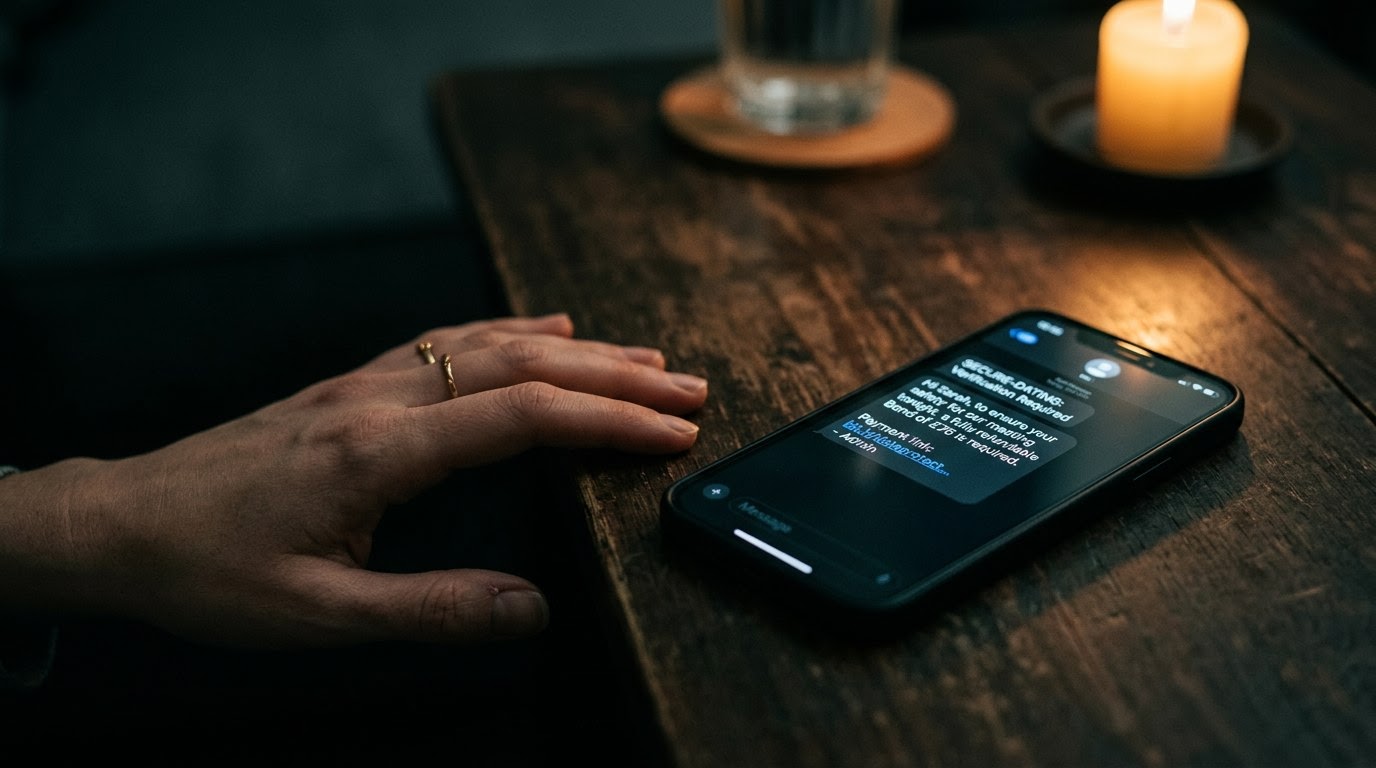
As of November 2026, the fake date safety bond scam has emerged as one of the fastest-growing online dating frauds targeting unsuspecting singles across major platforms. FTC reports show romance scam losses exceeded $1.3 billion in 2024, with fake safety check requests and fake verification portal fees representing a rapidly expanding share of reported incidents. In this scheme, victims typically lose anywhere from $150 to upwards of $3,000 when scammers, posing as protective parents, safety agencies, or dates themselves, demand a refundable security deposit prior to meeting in person.
How Fake Date Safety Bond Scams Unfold Step-by-Step
A fake date safety bond scam unfolds through a predictable sequence where a bad actor builds romantic rapport on a dating app before demanding a financial deposit to guarantee off-platform safety. Impersonating either a protective family member, agency, or site admin, the scammer directs the victim to a fraudulent verification portal or peer-to-peer payment app. Once funds are transferred, the scammer invents secondary processing fees or vanishes entirely, leaving the target financially defrauded.
To understand how these bad actors manipulate their targets, it helps to break down the exact playbook used by criminal networks operating these schemes. The entire operation relies on psychological leverage, rapid escalation, and manufactured social pressure. Below is the step-by-step narrative of how a target experiences this fraud in real time.
-
The Initial Match and Rapid Rapport Building
The encounter begins on a standard dating platform or social media app. The scammer creates an appealing profile using stolen photos of attractive, relatable individuals. Conversations start normally, with the scammer expressing intense interest, asking thoughtful questions, and complimenting the target. Within hours or days, the scammer creates a deep sense of intimacy and mutual trust, making the target feel uniquely valued and comfortable. -
The Quick Shift Away from the Dating App
Before any red flags can trigger automated platform security filters, the scammer urges the target to move the conversation to an encrypted messaging app or SMS. They might claim they rarely check the dating app, that their subscription is expiring, or that they prefer private texting. Moving off-platform isolates the target from built-in moderation tools and safety warnings provided by legitimate dating services. -
Proposing the In-Person Meetup
Once off-platform, the scammer enthusiastically suggests an in-person date. They suggest meeting at a specific public venue, such as a popular coffee shop or high-end restaurant, to establish credibility. The target builds expectations around this event, anticipating a real romantic milestone. This excitement reduces the target's critical analytical defense mechanisms. -
Introducing the Protective Guardian or Security Requirement
Hours before the scheduled meetup, the tone shifts abruptly. The scammer sends a message stating that a protective third party—such as an overprotective parent, an older brother, a personal security detail, or a mandatory date safety organization—insists on a quick pre-date security protocol. Alternatively, a second person texting from another phone number impersonates the protective guardian directly, insisting that their relative cannot meet strangers without a temporary, refundable date safety bond. -
Directing to a Fake Verification Portal or Escrow Agent
The scammer or guardian sends a link to an official-looking website or a peer-to-peer payment profile. They claim this site hosts a secure date verification and insurance bond service. The portal features fake security badges, counterfeit customer reviews, and legal terminology claiming that the money will be held safely in escrow and automatically refunded to the target's bank account as soon as the date ends safely. -
Demanding the Refundable Deposit and Technical Hurdles
The payment request usually ranges from $150 to $500 for the initial bond. If the target complies, the scammer immediately invents technical glitches or administrative hurdles. They claim the verification failed due to an system error, requiring a secondary tax payment, insurance coverage fee, or identity activation deposit. The target is assured that all cumulative payments will be refunded in full once verified. -
Escalation, Phantom Fees, and Final Ghosting
If the victim continues paying, the demands grow larger. The scammer may use threats, claiming that canceling the process will forfeit all previously paid funds or cause legal trouble for failing security compliance. The scam continues until the victim refuses to pay further or realizes the deception. At that point, the scammer blocks the target across all channels, deletes the profile, and vanishes with the money.
Deconstructing the Playbook
| Stage of the Scam | What the Scammer Says | What's Actually Happening |
|---|---|---|
| 1. Initial Setup | "My mom requires all my first dates to register with her safety contact." | The scammer uses family protectiveness to create false moral authority and lower victim defenses. |
| 2. Payment Demand | "It's just a $200 refundable deposit to activate your date authorization code." | A fake portal captures payment details or receives non-refundable P2P money transfers directly. |
| 3. Artificial Friction | "The system flagged your state code. Pay an extra $300 insurance clearance to proceed." | The bad actor tests victim compliance to extract maximum cash before terminating contact. |
| 4. Abrupt Ghosting | "The agent is processing your full refund right now. Meet me at the bar in 20 minutes!" | The scammer blocks phone numbers and deletes social profiles while the victim waits at an empty table. |
Who Gets Targeted by Date Safety Bond Scams and Why
Date safety bond scams target online daters seeking genuine, safety-conscious romantic connections, particularly individuals over 35, recent divorcees, or people new to dating platforms. Scammers exploit the target's sense of empathy, chivalry, and respect for personal safety by weaponizing protective parental figures or safety protocols. By reframing a fraudulent wire transfer as a reasonable, refundable safety measure for a vulnerable partner, fraudsters overcome typical victim skepticism.
According to FBI IC3 reports, romance fraud and impersonation schemes accounted for over $1.2 billion in total victim losses in 2025. These figures demonstrate that cybercriminals are continuously refining their tactics to exploit emotional trust. Understanding the underlying demographic vulnerabilities and psychological hooks helps explain why intelligent people fall victim to these traps.
The primary target profiles fall into three distinct operational categories:
- Empathetic Daters and Respectful Companions: Individuals who pride themselves on being considerate, respectful, and accommodating of a partner's safety boundary. When a scammer presents a safety requirement as a condition for making their date feel secure, the target willingly complies to demonstrate respect.
- Daters Returning to the Single Market: People who have recently re-entered the dating market after long relationships may be unfamiliar with current digital safety protocols. They often assume that third-party verification forms and bond deposits are modern standards established by apps to protect users.
- Time-Constrained Professionals: Daters looking for efficient, straightforward arrangements who want to avoid conflict or cancellations. When told a minor financial fee resolves a safety concern, they often pay quickly without verifying the site authenticity.
Psychologically, bad actors weaponize key cognitive biases to force compliance. The primary lever is safety framing. By disguising extortion as a protective safety measure for a young woman or vulnerable person, the scammer turns victim resistance into perceived hostility. If the target hesitates or questions the payment, the scammer accuses them of not caring about personal safety or being untrustworthy. This creates intense social pressure to comply.
Furthermore, scammers employ the sunk cost fallacy. After a victim pays the initial $150 deposit, they are told that an administrative error prevents the refund unless they pay an additional $200 processing fee. To protect their initial deposit and save the upcoming date, victims repeatedly pay secondary fees, digging a deeper financial hole.
How to Recognize Date Safety Bond Scams Before Money Moves
Recognizing a fake date safety bond scam before transferring funds requires spotting key operational red flags during early interactions. Legitimate dating apps and individuals never require financial deposits, third-party identity registration fees, or safety bonds before an in-person meeting. Suspicious indicators include rapid acceleration to off-platform messaging, third parties demanding money on behalf of your date, and pressure to use irreversible payment methods like peer-to-peer apps, gift cards, or crypto.
A 2025 BBB report revealed that fraudulent safety verification links and fake bond requests accounted for nearly 12% of all digital dating scams. Spotting these maneuvers requires maintaining objective boundaries regardless of how convincing your match appears online.
Before transferring any money or filling out custom web forms, evaluate your situation against these critical questions:
-
Is a third party demanding financial conditions before a first date?
No legitimate parent, security guard, or safety agency demands cash from a romantic partner before a public meetup. If a family member insists on pre-screening, that screening should be a simple phone call or video chat, never a cash transfer. -
Are you being asked to use a custom or unfamiliar website URL?
Scammers create temporary websites that mirror real security portals. Look closely at the web address. Misspelled domain names, random strings of numbers, or recently created sites without verifiable registration details are immediate evidence of fraud. -
Is the requested payment method non-refundable and untraceable?
Demands for payments via Zelle, Venmo, Cash App, wire transfers, prepaid debit cards, or cryptocurrency are massive red flags. Legitimate security platforms never demand non-reversible consumer payment methods for temporary safety bonds. -
Does the person refuse live audio or video calls?
If your match refuses a quick two-minute video call to confirm their identity due to broken cameras, bad reception, or protective guardian restrictions, they are likely using stolen media profiles.
When engaging with someone new online, running a TrustCheck on the contact in week one catches most variants of spoofed profiles and fake aliases before any financial demands occur. Verifying basic identity attributes through established services neutralizes impersonation attempts long before a scammer can initiate money requests.
What to Do If You Already Paid a Fake Date Safety Bond
If you have already sent money for a fake date safety bond, immediate action within the first 72 hours offers the highest chance of mitigating financial losses. Stop all communication with the scammer, contact your bank or payment vendor to dispute the transaction, and freeze affected accounts. Document all messages, URLs, and payment receipts before filing formal reports with law enforcement through reportfraud.ftc.gov and ic3.gov to assist investigation efforts.
Discovering that you have been targeted in a romance security scheme can provoke stress, embarrassment, and confusion. However, acting swiftly increases your financial recovery options and prevents secondary identity theft attempts.
Follow this immediate 72-hour recovery protocol step by step:
-
Step 1: Cut Off Communication and Securing Accounts
Do not confront the scammer or demand your money back. Confronting them alerts them to block you and erase digital evidence. Immediately take high-resolution screenshots of all text conversations, profile pictures, payment handles, phone numbers, and domain URLs. Save these files in a secure folder. Once captured, block the fraudster across all channels. -
Step 2: Contact Financial Fraud Departments Immediately
Call your bank, credit card issuer, or payment app provider right away. Inform their fraud department that you were tricked into sending funds to a fraudulent business entity. Ask for a chargeback or payment recall. If you shared sensitive payment card details on a fake verification website, cancel the card immediately and request a replacement. -
Step 3: Submit Official Reports to Law Enforcement Agencies
Formal reporting creates official paper trails essential for financial disputes and criminal investigations. Submit detailed reports to the Federal Trade Commission at reportfraud.ftc.gov and the FBI's Internet Crime Complaint Center at ic3.gov. Include all transaction identification numbers, domain names, and communication logs. -
Step 4: Protect Your Personal Identity and Credit Profile
If you entered your Social Security number, home address, or driver's license details on the scammer's fake safety site, place a fraud alert on your credit file with major credit bureaus. Consider placing a freeze on your credit reports to prevent bad actors from opening unauthorized lines of credit in your name. -
Step 5: Verify the Identity Status of Suspect Contacts
If you suspect you have interacted with a syndicate operating under stolen identities, a TrustCheck on the contact confirms the identity is fake and prevents ongoing deception across secondary platforms.
Frequently asked
What is a fake date safety bond scam?
A fake date safety bond scam occurs when a scammer poses as a romantic interest or their guardian and demands a financial deposit or fee to guarantee safety before an in-person date. The money is transferred to fraudulent accounts and is never refunded.
Are safety verification fees normal on dating apps?
No. Legitimate dating apps and individuals never charge safety deposits, screening fees, or bond payments to permit a real-life meeting. Any request for financial payment or prepaid voucher before meeting in person is an immediate indicator of a fraudulent scheme.
How do scammers convince victims to pay date bonds?
Scammers manipulate victims by weaponizing personal safety, empathy, and social obligations. They often impersonate protective parents or formal safety agencies, asserting that a temporary refundable bond is standard protocol to protect a vulnerable dating partner.
Can you recover money sent to a fake date bond scam?
Recovery depends on the payment method and speed of action. P2P transfers and gift cards are difficult to reverse, but contacting your bank immediately within 72 hours and reporting to law enforcement offers the best chance for financial recovery.
Where should I report a fake date safety bond scam?
Report the incident immediately to your financial institution and local police. Additionally, submit formal reports to federal investigative databases through reportfraud.ftc.gov and ic3.gov to assist law enforcement in tracking down criminal syndicates.
More in Scams
- How Fake ATV Purchase Deposit Scams Target Private Buyers
November 14, 2026
- How Fake Coin Grading Slab Scams Target Peer Numismatic Collectors
November 12, 2026
- How the Post-Sale Smartphone Insurance Blacklist Scam Targets Peer Buyers
November 9, 2026