How Fake Mobile Mechanic Deposit Scams Target Stranded Drivers
· 11 min read
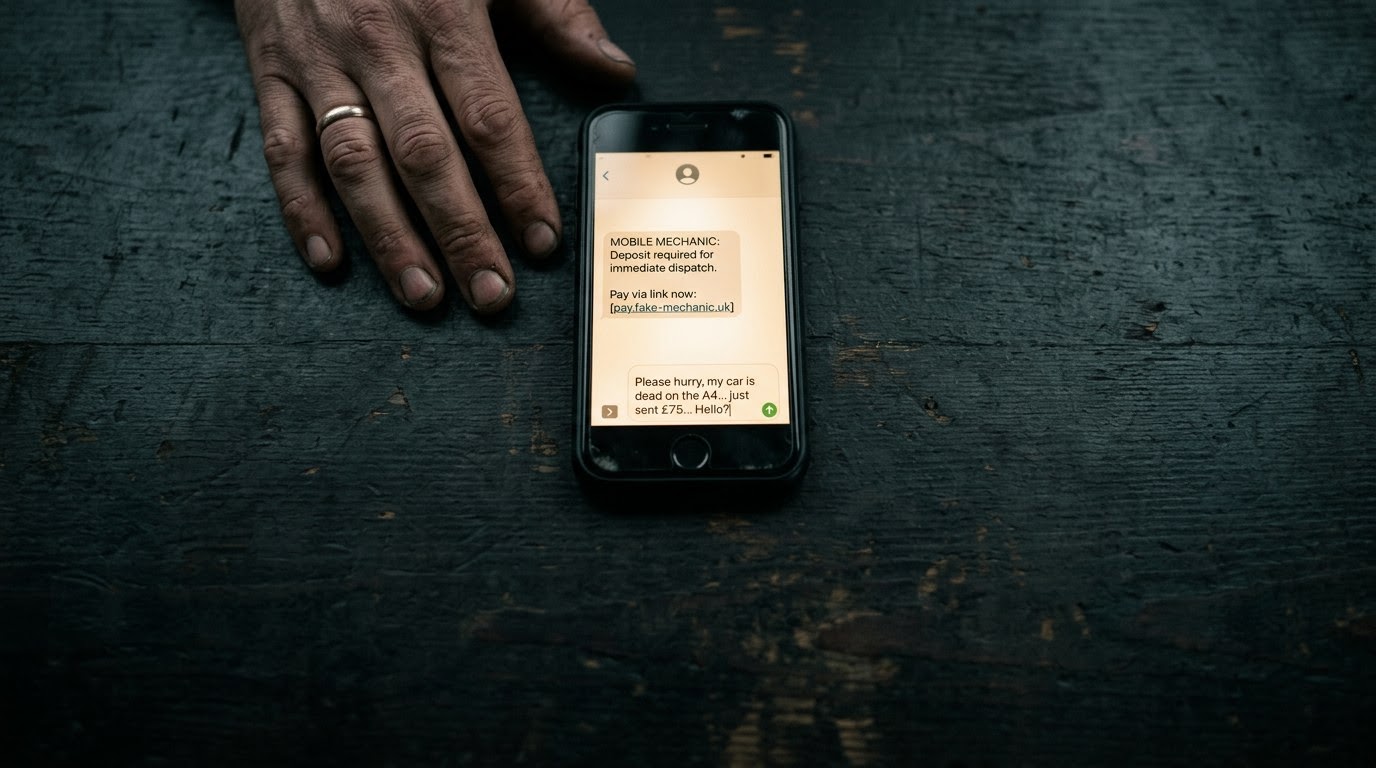
The fake mobile mechanic deposit scam is an emergency advance-fee fraud where scammers post fake roadside repair advertisements to extract instant digital deposits from stranded motorists, typically costing targets between $150 and $600 per incident. A typical sequence begins when a motorist suffers an unexpected breakdown on a remote highway or late at night, leading to a hasty search for local emergency assistance. Federal Trade Commission reports from 2024 show that imposter and service deposit scams accounted for over $300 million in reported consumer losses. As of November 2026, law enforcement agencies warn that fraudulent roadside repair listings are proliferating across online search directories and social marketplaces. Drivers caught in vulnerable circumstances frequently lose money to fake operators who never intend to send assistance.
How Fake Mobile Mechanic Deposit Scams Target Stranded Drivers
Fake mobile mechanic deposit scams target stranded drivers by intercepting emergency online searches with fraudulent local repair listings. Scammers post fake ads across social platforms and search engines, promising immediate on-site assistance for blown tires, dead batteries, or engine failures. When a panicked driver calls, the fraudster creates a false sense of security, demands an upfront digital deposit for dispatch or auto parts, and vanishes once the payment clears without ever sending assistance.
To understand how fake mobile mechanic deposit scams target stranded drivers, you must analyze the deliberate, psychological mechanics of the operation. Scammers do not wait for targets to find them casually; they build active nets across popular digital channels, waiting for vulnerable drivers to fall into high-stress emergency situations.
- The unexpected vehicle breakdown: A driver experiences a sudden failure—such as a blown tire, dead battery, broken serpentine belt, or overheating radiator—often on a rural highway, in an unfamiliar city, or late at night when traditional repair shops are closed.
- The urgent local digital search: In a state of growing stress, the driver turns to their smartphone, searching for terms like "24/7 mobile mechanic near me," "emergency roadside repair," or "cheap mobile mechanic." They click on a sponsored result or a local service ad offering guaranteed 20-minute arrival times.
- The initial phone contact and artificial relief: The stranded driver calls the number listed. The scammer answers professionally, using technical jargon and localized landmarks to project authenticity. They reassure the caller that a service truck is parked nearby and ready to respond immediately.
- The low price anchor and urgency hook: The operator quotes an unusually low fee for the repair work, such as $50 for a service call plus low labor rates. This attractive pricing removes financial hesitation while creating a false sense of relief for the stranded motorist.
- The mandatory upfront deposit demand: Right before dispatching the driver, the phone operator insists on a deposit, claiming it covers gas, locks in the technician’s queue, or pays for a specialized replacement part at a local supply store. They strictly request payment through peer-to-peer digital channels like Cash App, Zelle, Venmo, or Apple Pay.
- The stall, falsified location updates, and ghosting: Once the funds transfer, the scammer provides realistic delays. They text messages like "The mechanic is five miles out" or "Traffic is backed up on the interstate." After 30 to 60 minutes of delay tactics, the fraudster blocks the target's phone number and deletes the listing.
Consider a composite example representing a common pattern observed across consumer complaints. A driver travels through an unfamiliar county at 10:00 PM when their alternator light flashes, and the engine dies on the shoulder of an unlit highway. Panicked by passing semi-trucks and dropping winter temperatures, the driver searches online for immediate roadside help.
They find a listing for "Express Mobile Auto Doctor." The person answering the phone speaks with calm authority, identifying themselves as a regional dispatcher. The dispatcher claims a technician is finishing a call just two exits away. However, because it is past standard business hours, the business requires a $175 deposit via a peer-to-peer payment app to cover the call-out fee and part reserve.
The driver sends the payment immediately. Twenty minutes pass. The driver calls back for an updated estimated time of arrival. The dispatcher answers, stating the mechanic is buying fluid at a nearby gas station and asks for an additional $50 for extra supply costs. Sensing something is wrong, the driver hesitates, but the operator warns that declining payment will cancel the dispatch and forfeit the initial $175. The driver sends the additional money out of fear of remaining stranded. Ten minutes later, the line goes dead, subsequent calls go straight to voicemail, and no mechanic ever arrives.
Who Gets Targeted and Why
This scam specifically targets drivers stranded in vulnerable situations, such as late-night highway breakdowns, severe weather events, or road trips through unfamiliar locations. Scammers exploit the psychological vulnerability of high-stress emergencies where panic overrides cautious decision-making. Drivers facing immediate safety risks or extreme temperatures prioritize rapid solution delivery over verifying business credentials, making them prime targets for upfront deposit fraud.
The target demographic spans anyone operating a motor vehicle, but scammers achieve their highest success rates with specific high-vulnerability groups. Solo night commuters, families traveling with young children, elderly drivers unfamiliar with digital scam mechanics, and college students driving long distances are disproportionately affected. Scammers rely on environmental triggers—such as extreme heat waves, freezing winter weather, or desolate rural stretches—where remaining stranded carries genuine physical risk.
The underlying psychological hook relies on extreme cognitive pressure. Psychologists refer to this state as "urgency bias," where an individual's threat response suppresses critical analytical thinking. When your car breaks down on an unlit shoulder, your primary motivation is immediate safety and resolving the crisis. You want to believe the person on the phone can help you instantly.
Scammers exploit this cognitive state masterfully. They use artificial scarcity, claiming that their single working technician will be assigned to another customer if you do not pay the deposit within five minutes. They match your tone of concern with calm reassurance, making the requested payment feel like a minor administrative step standing between you and safety. By the time suspicion sets in, the scammer has already pocketed the funds and severed communication.
Key Tactics Used in Emergency Service Scams
Recognizing fake mobile mechanics requires comparing their communication tactics against legitimate emergency repair providers. Scammers strictly insist on immediate peer-to-peer transfers, refuse to share precise garage physical locations, and offer prices far below market rates to entice urgent bookings. Legitimate operators provide itemized quotes, accept standard credit cards on-site or after work completion, and maintain verifiable business registration and physical dispatch centers.
To protect yourself on the road, it helps to analyze how legitimate operators act compared to fraudsters during an emergency call. The table below illustrates the exact progression of a roadside repair scam compared to real-world business practices.
| Stage of the Scam | What the Scammer Says | What's Actually Happening |
|---|---|---|
| Initial Contact | "We have a technician right down the street who can reach you in ten minutes flat." | The scammer uses fake location markers to establish urgency and discourage you from calling alternative roadside services. |
| Pricing Estimate | "Our call-out fee is only $40 total, far cheaper than towing companies." | An artificially low quote acts as clickbait to lock in your interest before revealing compulsory upfront fees. |
| Payment Request | "Send a $150 deposit via Cash App right now so I can dispatch the truck and buy parts." | The fraudster insists on irreversible peer-to-peer payment methods that offer zero buyer protection or refund capability. |
| Delay & Escalation | "The tech is stuck in traffic. Send another $50 for part taxes or we must cancel." | Sensing panic, the scammer attempts a secondary extraction to maximize their illegal profit before breaking contact. |
| Post-Payment Contact | "Your call cannot be completed as dialed" or continuous automated busy signals. | The operator has collected the digital funds, blocked your phone number, and moved on to another listing. |
Legitimate repair operations function under strict commercial standards. Real mobile mechanics operate fully equipped service vans carrying common diagnostic tools, batteries, and tire-changing hardware. They provide verifiable business names, registered state business licenses, and official company websites listing a physical commercial address.
Furthermore, legitimate businesses understand customer security concerns. Better Business Bureau data from 2025 indicates that online advance-fee service scams rose by roughly 18% nationwide, prompting legitimate mobile operators to offer transparent payment terms. Genuine mechanics rarely request payment before arriving at your vehicle's physical location. When payments are collected, legitimate operators utilize mobile point-of-sale card readers, accepting major credit cards that provide built-in fraud protections and dispute procedures.
How to Recognize It Before Money Moves
You can recognize a mobile mechanic scam before transferring funds by spotting pressure tactics and unusual payment conditions. Always question operators who demand non-refundable deposits through peer-to-peer payment applications like Cash App, Zelle, or Venmo prior to arrival. Legitimate roadside mechanics possess verified business listings, provide clear corporate licensing, accept credit card payments on arrival, and do not threaten cancellation if you hesitate to send upfront money.
When stranded and evaluating a potential mobile mechanic online, pause and ask yourself these critical evaluation questions before authorizing any financial transfer:
- Is the operator demanding payment strictly through peer-to-peer payment apps? Legitimate commercial entities utilize merchant processing solutions that accept standard credit or debit cards on site. If an operator refuses credit cards and insists on peer-to-peer app transfers, end the call immediately.
- Does the business lack a physical address or verifiable local operating history? Search for the business name online. If the business has no physical workshop address, no state corporate filing, or was created within the last few weeks, you are likely communicating with a fake lead generator.
- Is the dispatcher refusing to provide an itemized digital receipt or work order? A authentic mechanic can text or email an official service order containing company branding, tax registration, and clear terms of service prior to payment.
- Are they using high-pressure tactics linked to dispatch priority? Statements like "Pay within three minutes or your tow tech goes to another call" are psychological traps designed to prevent rational verification.
- Does the phone number match the official business identity? Scammers frequently use VoIP burner numbers that do not match the business name or region advertised on their website. Running a TrustCheck on the contact when booking peer-to-peer roadside services catches most variants before any money changes hands.
In addition to asking these questions, evaluate the general online presence of the service provider. Look closely at customer reviews on third-party platforms. Fake listings often exhibit generic, repetitive five-star reviews posted within a short timeframe, combined with an absence of negative or neutral detailed feedback. If all reviews sound identical or lack specific mentions of local roads and repair details, proceed with extreme caution.
Always prioritize established roadside assistance programs when available. Subscribing to national motor clubs, utilizing roadside assistance benefits bundled with your auto insurance policy, or requesting assistance through official credit card perks connects you with vetted, bonded service networks that do not ask for cash app transfers on the shoulder of the highway.
If It's Already Happened
If you fell victim to a fake mobile mechanic scam, take immediate action to mitigate financial loss and protect your accounts. Contact your bank or financial institution within the first 72 hours to dispute the transaction and secure payment accounts against further unauthorized charges. Document all text messages, phone call logs, and transaction receipts, then report the fraud directly to law enforcement and regulatory authorities to aid ongoing enforcement efforts.
Experiencing financial fraud while stranded is deeply distressing, but taking rapid, structured action improves your chances of minimizing damage. Execute these steps within the first 72 hours following the incident:
- Contact your bank or payment provider immediately: Call the customer support number on the back of your debit or credit card, or open a support ticket within your payment app. Inform them that you were the victim of an advance-fee service scam. Request a transaction dispute or chargeback. If you shared sensitive bank account credentials, ask to freeze your accounts and issue replacement cards.
- Preserve all evidentiary documentation: Take clear screenshots of everything related to the interaction. Save phone call histories showing timestamps and call durations, text message exchanges, digital payment receipts, vehicle location pins, and web addresses of the fraudulent advertisement.
- Secure your safe transport and vehicle towing: Shift your immediate focus back to physical safety. Contact official law enforcement non-emergency lines or state highway patrols. Most state transport departments operate emergency highway service patrols that provide free or subsidized towing off hazardous highway shoulders.
- Report the incident to federal regulatory bodies: Submit formal fraud complaints to public enforcement agencies. File a report with the Federal Trade Commission at reportfraud.ftc.gov and submit an internet crime complaint with the FBI Internet Crime Complaint Center at ic3.gov. These reports feed into national law enforcement databases used to track organized scam operations.
- Flag the fraudulent advertisement: Return to the platform where you discovered the mechanic’s listing—whether Google Maps, Facebook Marketplace, Yelp, or local search ads—and report the listing as fraudulent. This helps platform moderators remove the listing and prevents other stranded motorists from falling into the same trap.
If you suspect an active scammer is continuing to target you or others, a TrustCheck on the contact confirms the identity is fake and provides documented evidence to support bank recovery requests and law enforcement files. Taking prompt action not only safeguards your personal financial profile but also assists consumer protection agencies in dismantling fraudulent service listings across the country.
Frequently asked
What is a fake mobile mechanic deposit scam?
It is an advance-fee fraud where scammers post fake emergency roadside repair ads online. When stranded motorists call for help, fraudsters demand non-refundable digital deposits via payment apps under the guise of locking in dispatch or buying parts, then vanish without rendering service.
Why do scammers insist on peer-to-peer payment apps?
Scammers favor peer-to-peer payment apps because transactions process instantly and are extremely difficult to reverse. Unlike credit card payments, peer-to-peer transfers lack traditional consumer purchase protection, allowing fraudsters to withdraw funds immediately and abandon accounts before banks can intervene.
How can I verify a roadside mechanic while stranded?
Check for a physical business address, verifiable business registration, and valid credit card payment options. Legitimate mobile repair providers do not demand non-refundable app deposits prior to arrival and will gladly provide an itemized corporate invoice before requesting payment.
Can I get my money back if I paid a fake mechanic?
Recovery depends on the payment method. If you paid via credit card or bank transfer, contact your bank within 72 hours to initiate a dispute. Peer-to-peer app transfers are harder to reverse, but reporting the fraud immediately to your bank and app support maximizes recovery chances.
Where should I report a mobile mechanic repair scam?
Report the scam to local law enforcement, state attorney general offices, the Federal Trade Commission at reportfraud.ftc.gov, and the FBI Internet Crime Complaint Center at ic3.gov. Additionally, flag the fraudulent ad on the platform where you found it.
More in Scams
- How Fake ATV Purchase Deposit Scams Target Private Buyers
November 14, 2026
- How Fake Coin Grading Slab Scams Target Peer Numismatic Collectors
November 12, 2026
- How the Post-Sale Smartphone Insurance Blacklist Scam Targets Peer Buyers
November 9, 2026