How Scammers Use Fake Profile Verification Sites to Steal Data
· 10 min read
How Scammers Use Fake Profile Verification Sites to Steal Data
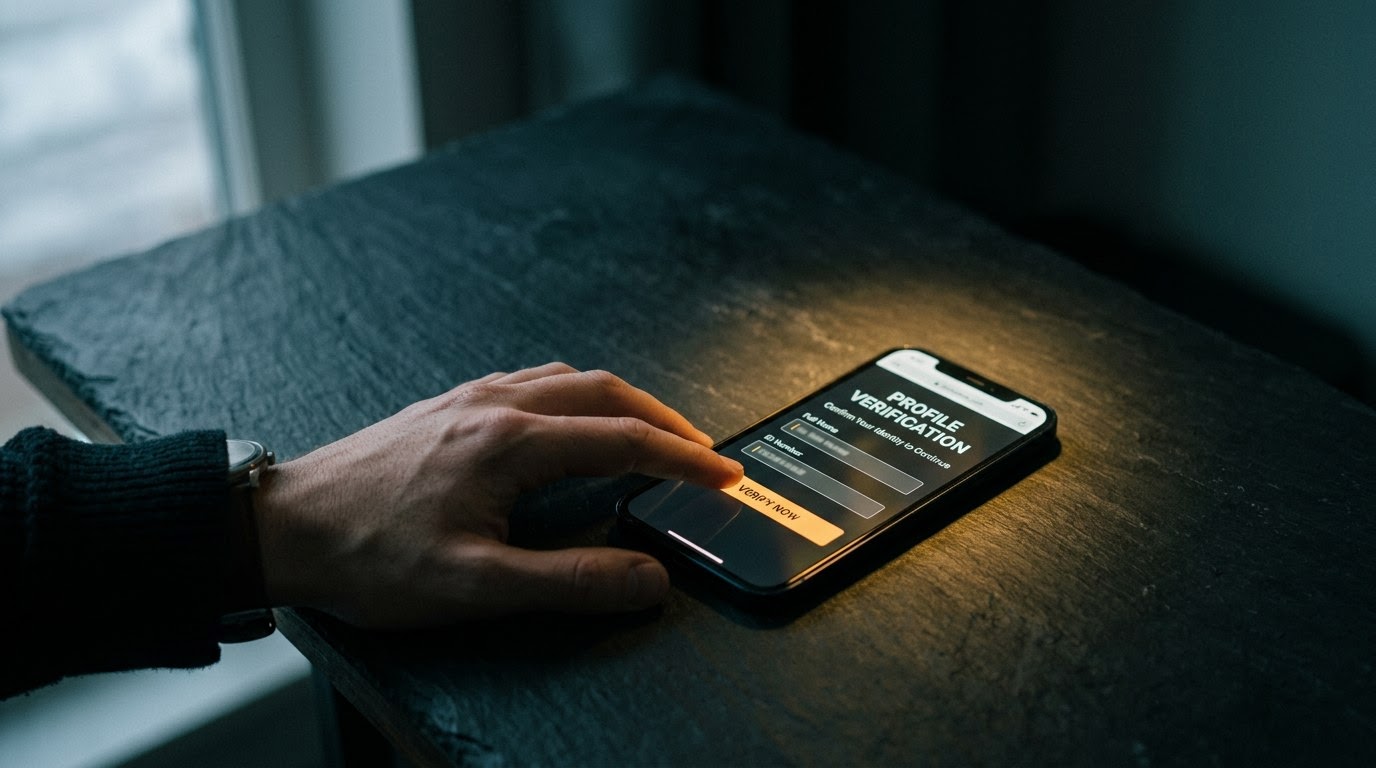
Scammers use fake profile verification sites to steal data by creating fraudulent web portals designed to mimic legitimate safety screening services. After establishing rapport on dating apps, scammers demand that targets verify their non-criminal status or identity before meeting in person. When targets enter their billing information and personal details into the site, scammers capture credit card credentials, enroll them in hidden recurring subscriptions, and harvest sensitive identity data for dark web resale.
To understand the mechanics of this fraud, it helps to examine how digital impersonation operates. Cybercriminals build clone sites that look like official consumer verification platforms or safety networks. These sites often use domain names containing words like "safe," "verify," "date-shield," or "meet-protect." The interface usually features stolen trust badges from security vendors, fake news media logos, and prefabricated customer reviews designed to lower your guard.
When you land on one of these portals, the site prompts you to create a "free" or "low-cost" profile. To complete the process, you are instructed to enter sensitive personal identity data—including your full legal name, date of birth, residential address, mobile phone number, and sometimes your Social Security number. The page then requires a credit card transaction, typically advertised as a nominal $1.00 or $2.00 fee to cover "processing" or "age confirmation."
Once you submit the form, no actual identity check occurs. The scammer’s payment gateway captures your credit card numbers, CVV, and expiration date. Behind the scenes, the site's fine print hidden in terms of service documents automatically enrolls you in hidden monthly recurring billing schemes ranging from $40 to $90 per month. Meanwhile, your personal identity records are routed directly to illicit databases, leaving you exposed to credit fraud and account takeover attacks.
How the Scam Unfolds Step by Step
The scam unfolds through a predictable six-step arc designed to exploit safety concerns and emotional trust. Scammers make initial contact on mainstream dating platforms, quickly move the conversation to unmonitored messaging channels, and propose an immediate physical meetup. They then introduce a safety condition requiring you to complete a quick online identity check. Once you click their custom link, the bogus portal harvests your financial information and personal identity data before the scammer completely vanishes.
Understanding every phase of this playbook allows you to spot manipulative pivots before sensitive financial information leaves your wallet. Here is the sequential progression targets experience when caught in this scheme:
-
Step 1: The Initial Match and Rapid Rapport Building
The scam begins on a major dating app, social media platform, or niche online community. The scammer’s profile features attractive photos, polished bio details, and a plausible local background. Within moments of matching, the scammer initiates energetic conversation, showering you with attention, compliments, and shared interests. The goal is to generate quick emotional investment and lower your logical defenses. -
Step 2: Pushing for Off-Platform Messaging
Within hours or a couple of days, the scammer insists on switching from the dating app to an unmonitored channel like SMS, WhatsApp, or Telegram. They often claim they are "rarely on this app" or that their notification settings are broken. Moving off-platform serves two critical functions: it prevents the dating app's automated safety filters from detecting suspicious link sharing, and it isolates you from community warning systems. -
Step 3: Proposing a Fast In-Person Date
Unlike traditional long-distance romance scams that drag on for months without meeting, profile verification scams move rapidly toward a physical date. The scammer suggests meeting at a specific local venue—a quiet lounge, coffee shop, or restaurant—for drinks or dinner later that night or over the upcoming weekend. This creates enthusiasm and urgency, making the upcoming date feel immediate and tangible. -
Step 4: Introducing the "Safety Requirement" Pretext
Right before finalizing the meeting details, the scammer creates a sudden barrier. They claim a bad past experience, a protective sibling, or general caution requires them to be careful. A typical sequence: "I'm really excited to see you tonight, but after what happened with my ex, I require all my dates to get a free safety badge first." They present this as a non-negotiable boundary, framing compliance as proof that you are a respectful, trustworthy person. -
Step 5: Directing You to a Malicious Custom Link
The scammer provides a direct web address or hyperlink leading to a fake verification site. They assure you that the process takes only two minutes, is completely free, and simply confirms you are not on a offender registry. When you open the link, the webpage displays official-looking logos and a simple form. If you raise concerns about entering a credit card, the scammer becomes defensive, accuses you of disrespecting their boundaries, or threatens to cancel the date entirely. -
Step 6: Data Capture, Financial Drain, and Ghosting
Once you enter your personal data and credit card details to pay the small verification processing fee, the page produces an error message or a generic confirmation screen. The scammer receives your stolen payment and identity details. In some cases, they make excuses to delay the date before blocking your phone number. In other cases, they immediately delete their profile, leaving you with fraudulent credit card charges and compromised personal identity records.
FBI IC3 reports indicated over $650 million lost to online identity and impersonation fraud schemes in 2025. The following summary table illustrates how scammers translate ordinary safety language into technical exploitation tools throughout the exchange.
| Stage of the Scam | What the Scammer Says | What's Actually Happening |
|---|---|---|
| Initial Contact | "I rarely check messages on this app. Add me on WhatsApp so we can talk easily!" | Moving you away from dating platform safety monitors and automated link detection. |
| Setting the Date | "Let's grab dinner this Friday! I know a great spot downtown." | Establishing a realistic, short-term reward to build urgency and excitement. |
| The Verification Pretext | "My roommate insists I verify everyone I meet. Just grab a free safety pass on this site." | Weaponizing personal safety concerns to guilt you into clicking a malicious link. |
| Payment Request | "It asks for a card just to prove you're real. It's only $1 and completely free after." | Capturing active payment card details and enrolling you in recurring billing schemes. |
| Post-Transaction | "The site says your card was declined. Can you try another card really quick?" | Attempting to harvest multiple active credit cards before severing contact completely. |
Who Gets Targeted and Why
Dating app users across all age brackets are targeted by fake verification scams, but individuals seeking serious relationships or prioritizing personal safety are most vulnerable. Scammers exploit your desire to be a responsible, considerate dating partner by turning standard safety precautions into a weapon of psychological manipulation. By framing the fake check as a reasonable boundary, scammers force targets to choose between compliance or appearing untrustworthy.
A 2024 BBB study found that roughly 25% of romance scam victims were tricked through bogus third-party safety links. Scammers deliberately choose targets who show high empathy, responsiveness, and enthusiasm in early chat conversations. Profiles indicating recent divorces, relocations to new cities, or busy professional schedules are frequently singled out because these individuals are often eager to streamline the dating process.
The core psychological hook relies on boundary inversion. In modern online dating, respecting boundaries is recognized as a vital sign of maturity. Scammers leverage this social norm against you. When they demand a profile verification badge, they position it as their personal safety boundary. If you hesitate, hesitate to share financial details, or question the legitimacy of the URL, they immediately accuse you of invalidating their trauma or ignoring their safety needs. This creates immediate guilt, prompting targets to comply rather than ruin a promising connection.
Furthermore, scammers exploit the desire for convenience. By assuring targets that the identity check is quick, cheap, and standard practice across modern dating circles, they minimize the perceived risk. Victims assume they are completing a simple registration step, unaware that the underlying web platform is designed solely for malicious data extraction.
How to Recognize It Before Money Moves
To recognize a fake verification scam before money moves, evaluate the request against core operational red flags. Legitimate dating app matches never require you to pay a fee or enter credit card information on an external website to prove your identity prior to a first date. Question any match who refuses to video chat, insists on using obscure third-party links, or creates urgent pressure around a safety check.
Protecting yourself requires active evaluation when a match introduces external software, websites, or identity requirements. Ask yourself the following diagnostic questions whenever someone you met online requests an action before meeting:
- Is the match refusing to verify their identity through direct channels? A legitimate person who cares about safety will gladly agree to a quick two-minute video call on FaceTime, Zoom, or built-in app tools before meeting in person. Scammers using stolen photos will refuse video calls every time, relying on fake links instead.
- Does the web link point to an unfamiliar domain name? Examine the full URL closely. Fake sites often use top-level domains like .xyz, .top, or .site, or insert misspellings of real security brands. Look out for hyphenated, unnatural web addresses like "safe-date-verification-pass-2026.com."
- Is financial payment required for personal safety verification? No legitimate dating app or safety protocol requires a user to enter a credit card number to verify that they are safe for a casual date. Any requirement asking for a card number, even for a "refundable trial fee," is an absolute scam indicator.
- Are you feeling artificial time pressure or guilt? Scammers use artificial deadlines, claiming they will give the date spot to someone else or block you if you do not complete the sign-up within thirty minutes. Emotional manipulation is a signal to stop communicating immediately.
When you encounter a new contact whose profile seems slightly off or who pushes suspicious external requests early on, taking a beat to verify facts protects your privacy. No identity check can guarantee a safe transaction. A TrustCheck tells you whether the details someone gave you are consistent with one real identity — the judgement, and the risk, stay with you.
If It's Already Happened: Recovery and Reporting
If you entered information into a fake verification site, take immediate action to limit financial damages and protect your identity profile. Contact your bank to cancel compromised credit cards, dispute unauthorized charges, and request a fraud hold. File formal reports with federal consumer protection agencies like the FTC and FBI, place a freeze on your credit reports with major bureaus, and change passwords on associated online accounts.
Falling victim to a deceptive online scheme can feel overwhelming, but immediate action prevents initial credit card compromises from spiraling into full-scale identity theft. Follow this structured 72-hour recovery protocol to secure your personal records and finances:
- Hour 1 to 12: Secure Financial Accounts
Call your bank or credit card issuer immediately. Tell them you entered card details on a fraudulent website. Cancel the compromised card number, request a replacement card with a new number, and instruct the bank to decline any recurring subscription charges associated with that merchant. If you provided bank login details or account routing numbers, close those accounts immediately. - Hour 12 to 24: Secure Personal Identity Data
If you entered sensitive identity records like a Social Security number or date of birth on the scam site, place a security freeze on your credit files at all three major credit bureaus: Experian, Equifax, and TransUnion. A credit freeze prevents fraudsters from opening new credit cards, personal loans, or mobile phone accounts in your name. Update passwords and enable two-factor authentication on your primary email, banking apps, and social accounts. - Hour 24 to 48: File Official Law Enforcement Reports
Document all interactions by saving text screenshots, dating app profile info, email records, and payment receipts. File an official federal report through the Federal Trade Commission at reportfraud.ftc.gov. If you suffered financial loss or identity compromise, submit a complaint to the FBI Internet Crime Complaint Center at ic3.gov. These filings build official evidentiary records used by federal agencies to track and dismantle online fraud networks. - Hour 48 to 72: Clean Up Online Profiles and Validate Contacts
Report the scammer's profile to the dating app where contact originated so administrators can ban associated accounts and IP addresses. A TrustCheck can tell you whether the details you were given trace back to a consistent identity, which is worth writing down for your own record of what happened. It cannot confirm that someone is a scammer, it will not tell you who was really behind the profile, and it is not evidence. Report the incident to your bank, to the platform where you met, and to the FTC at reportfraud.ftc.gov.
Remember that you are not alone, and reporting these crimes helps law enforcement disrupt fraudulent sites, shut down illegal payment processors, and protect other online searchers from falling victim to similar data theft traps.
Frequently asked
What is a fake profile verification site?
A fake profile verification site is a bogus portal created by scammers to capture credit card numbers and personal identity data. Scammers direct dating app matches to these sites under the pretense of running a quick safety check before meeting in person.
Why do scammers ask for a credit card for a free verification check?
Scammers claim credit card details are needed to confirm your age or pay a small processing fee. In reality, entering your card captures your billing data, triggers hidden recurring monthly subscription fees, and exposes your financial accounts to ongoing fraudulent activity.
Can a fake verification site steal my identity?
Yes. If you enter sensitive personal identity data such as your legal name, home address, date of birth, or Social Security number into these portals, scammers aggregate this information and sell it on dark web marketplaces for identity theft.
How can I tell if a date verification link is fake?
Check the URL carefully for odd domain extensions like .xyz, misspellings, or complex hyphenated words. Any platform demanding payment, refusing video chat confirmation, or forcing immediate registration through an external link before a first date is a fake site.
What should I do if I already submitted my credit card details?
Contact your credit card company immediately to cancel the card and dispute all charges. Freeze your credit files with Equifax, Experian, and TransUnion if you shared personal identity numbers, and report the incident to reportfraud.ftc.gov and ic3.gov.
More in Scams
- How Fake Land Plot Sale Deposits Target Rural Property Buyers
September 21, 2026
- How Fake Bar Tab Scams Exploit Victims During In-Person Dates
September 19, 2026
- How Fake Peer Boat Charter Deposit Scams Target Vacationers
September 17, 2026