How to Safely Buy a Horse From a Private Seller Online
· 12 min read
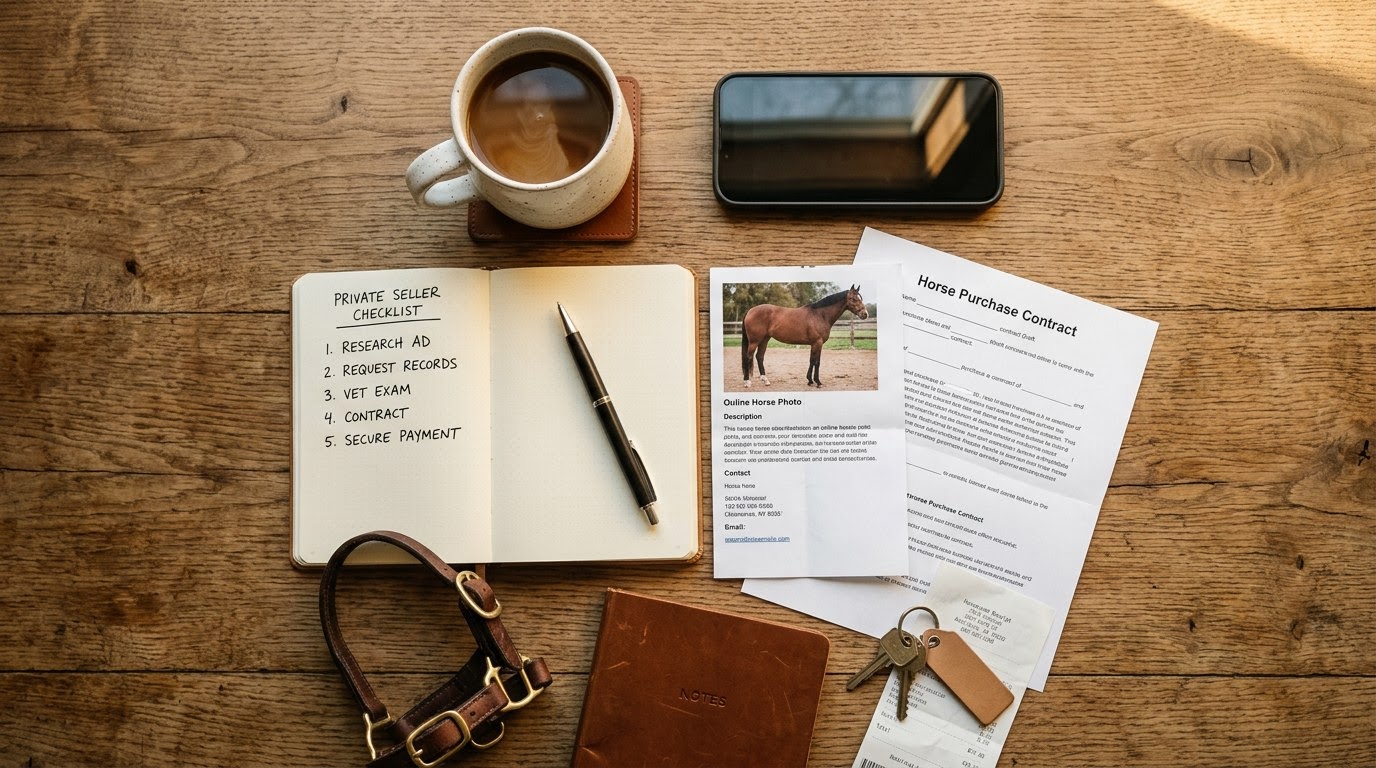
Use this guide when you find a horse listed online by a private seller and are preparing to send a deposit, arrange transport, or travel for a trial. Using TrustMatch to verify the seller's identity upfront protects your money and ensures you deal with a legitimate owner before committing to a purchase.
1. Run a TrustCheck on the private seller
Enter the seller's first name and phone number or email address directly into TrustMatch to verify their identity. You will receive an instant TrustScore and clear verdict in under a minute, establishing whether the seller is a real person with a verified digital footprint. Performing this check immediately eliminates anonymous scammers who scrape photos from legitimate equestrian listings. Never transfer funds or arrange travel until you confirm the seller's real identity matches their listing details.
As of November 2026, private online equine sales represent high target areas for fraudulent listings due to the elevated deposit amounts standard in horse transactions. Scammers regularly scrape real photos from professional show barns, create fake social media profiles, and list premium horses at artificially low prices to entice quick buyers. Conducting an identity check before initiating detailed negotiations ensures you are speaking directly to the real individual named on the advert.
Compare the name provided on the equestrian listing, bill of sale drafts, and payment handles against the name returned in your identity verification report. Discrepancies between the seller's claimed identity and their true digital identity represent a critical risk. If a seller operates behind a temporary Voice over IP (VoIP) number or refuses to provide consistent contact details, stop communications instantly. Honest horse owners and reputable breeders maintain transparent contact histories and readily support identity verification to build mutual confidence.
Save the verified contact details into your purchasing record file. If you are dealing with an agent or trainer selling on consignment, perform separate identity verification checks on both the agent and the legal owner listed on the equine registration papers. Establishing clear identity records for all participating parties prevents complex legal disputes regarding authority to sell or fraudulent agency claims later in the purchasing routine.
2. Request a 5-minute real-time video call
Ask the seller to join a live video call to show you the horse, its living conditions, and specific physical markings in real time. Instruct the seller to move around the horse, pick up a hoof, or call the horse by name while on camera. This live interaction confirms the seller has physical custody of the equine asset and prevents scammers from using pre-recorded footage. If the seller refuses a video call citing technical issues or busy schedules, walk away immediately.
During the video call, ask the seller to demonstrate specific, unscripted actions with the animal. Request that they walk the horse out of its stall, turn the horse in a tight circle, and highlight any distinguishing scars, cowlicks, or brand markings listed on the registration paper. Watch how the horse responds to human handling, which provides immediate insight into temperament, ground manners, and baseline soundness.
Examine the surrounding environment carefully through the live camera feed. Verify that the barn setup, weather conditions, and seasonal vegetation visible in the background match the geographic location claimed by the seller. Scammers operating overseas often broadcast pre-recorded video clips showing summer grass while the seller's claimed address is experiencing freezing winter conditions.
Record the video call or capture high-resolution screenshots of unique physical identifiers for your records. If the seller uses excuses such as poor cellular reception, camera failure, or personal privacy concerns to avoid a live stream, do not proceed. Legitimate private sellers who have dedicated time to caring for a horse will gladly take five minutes to showcase their animal live to a serious buyer.
3. Verify ownership documentation and registration papers
Examine the horse's original registration certificate, passport, Coggins test results, and bill of sale from the previous owner. Contact the breed registry directly to confirm that the registration number matches the listed owner's full name and horse microchip number. Verifying documentation directly with official equine registries prevents you from purchasing a stolen animal or dealing with an unauthorized middleman. Ensure all transfer documents carry the exact legal name of the seller you verified.
Request clear, high-definition digital scans of both sides of the registration certificate issued by associations such as the American Quarter Horse Association (AQHA), The Jockey Club, or United States Equestrian Federation (USEF). Cross-reference the official registration number with the registry's public database or customer service division. Confirm that the listed owner matches your seller and that no active liens, stallion service disputes, or hold notices exist on the horse's file.
Verify health documentation, specifically the official Coggins test certificate (EIA laboratory test report). Check that the laboratory report was issued within the last 12 months (or within 6 months if state transportation rules require it) by an accredited equine veterinarian. The color markings, horse name, breed, age, and microchip number on the Coggins certificate must match the registration papers and live horse exactly.
Require a clear paper trail if the seller is not the individual listed on the official registration certificate. A legitimate seller who purchased a horse without completing the registry transfer must produce a signed bill of sale and transfer report connecting them directly to the last registered owner. If the seller cannot supply a continuous, verifiable chain of legal title, you risk purchasing a horse with encumbered ownership rights.
4. Schedule an independent prepurchase examination
Hire an independent licensed equine veterinarian who has no existing financial or personal relationship with the seller to conduct a complete prepurchase exam. Direct the vet to examine lameness, heart health, and pull blood samples for NSAID and sedative screening. Independent veterinary evaluations provide unbiased medical facts regarding the horse's sound health and age, protecting you from buying an injured or drugged animal. Pay the veterinarian directly rather than reimbursing the seller for a vet report.
Locate an independent practitioner by searching regional equine veterinary associations or contacting registered clinic practices near the horse's location. Explicitly ask the vet if they treat horses for the seller or barn owner. If a conflict of interest exists, select a different practice located in an adjacent district. Never rely on a prepurchase evaluation supplied directly by the seller or conducted by the seller's personal primary veterinarian.
Instruct your chosen veterinarian to execute a full clinical examination, including flexions, lunging under saddle, optical evaluation, cardiac auscultation, and dental wear assessment. Request digital radiographs of high-risk joints such as front feet, hocks, and stifles. Ensure the vet scans for a microchip during the exam and verifies that the microchip number matches the official registration documentation and Coggins form.
Always instruct the veterinarian to draw blood samples for drug testing. Scammers and unethical private sellers sometimes administer long-acting tranquilizers, pain-relieving NSAIDs, or joint injections immediately prior to buyer viewings to mask severe lameness or dangerous behavioral issues. Requesting a standard laboratory drug panel safeguards your investment and deters dishonesty.
5. Confirm facility address and cross-reference satellite imagery
Obtain the exact physical address of the boarding barn or farm where the horse resides and cross-reference it on satellite mapping tools. Search property records and street views to confirm that the farm exists, features appropriate equine fencing, and aligns with the photos in the advertisement. Scammers frequently provide fake farm addresses or list commercial properties unrelated to horse care. Matching physical location data with seller claims confirms the legitimacy of the operation before you visit.
Type the provided street address into mapping platforms and switch to overhead satellite view. Look for standard equine infrastructure such as pasturage fencing, outdoor arenas, barn roofs, run-in sheds, and horse trailers. If the address resolves to a suburban housing lot, a commercial shopping center, or a dense urban apartment building, you are dealing with a fake listing.
Search public county tax parcel records to verify the legal owner of the property. If the farm owner's name differs from your seller, contact the facility manager or head trainer directly using publicly listed barn numbers. Ask the facility manager whether the seller boards the specific horse at their facility. Facility managers readily confirm boarder status and provide objective verification regarding the horse's presence on the property.
Validate transport logistics early in the evaluation stage. Confirm that commercial equine transport haulers can access the farm property safely. Verifying the physical location protects you against phantom listing scams where fraudsters collect non-refundable holding deposits for animals housed at non-existent or fabricated farm locations.
6. Draft a formal purchase agreement and use secure deposit transfers
Execute a written bill of sale that specifies purchase terms, trial periods, return conditions, and payment schedules signed by both parties. Pay deposits exclusively through traceable payment methods or dedicated equine escrow services rather than untraceable wire transfers, gift cards, or peer-to-peer payment apps without buyer protection. According to FTC data from 2024, online shopping and private seller fraud resulted in over $392 million in reported consumer losses. Secure payment methods give you legal recourse if contract terms are breached.
Draft a legally binding purchase agreement that explicitly lists the full purchase price, deposit amount, horse identification details (registered name, registration number, microchip number, breed, age, color), and trial terms. Include clear provisions stipulating that final payment is contingent upon a successful prepurchase examination and clear title transfer. Ensure both parties sign using verifiable electronic signature software or witnessed physical signatures.
Avoid wire transfers, direct bank deposits, cryptocurrency, cash app transfers, or money orders when paying holding deposits or balance payments. Fraudulent sellers routinely push for instant, non-refundable wire transfers to clear out funds before buyers detect issues. A 2024 BBB report found that over 80% of sponsored pet and livestock online ads on social platforms involved fraudulent sellers or non-existent animals.
Utilize an accredited escrow service specializing in livestock or heavy high-value private sales. Escrow services hold your purchase funds in a secure neutral account and only release payment to the seller after you receive the horse, complete your trial window, and inspect physical health documentation. If a private seller refuses to utilize standard escrow services or protected commercial credit channels, cancel the transaction immediately.
Quick checklist for buying a horse from a private seller online
Follow this sequential checklist before issuing any deposit, signing contracts, or scheduling transport for an online horse purchase. Executing each step systematically eliminates fraudulent listings, confirms medical health, and safeguards your financial transactions. Review every verification milestone in order to ensure complete security throughout your transaction. Keep this checklist accessible during your negotiations to maintain control over the buying routine and prevent costly impulse mistakes.
- Perform a TrustCheck identity check using the seller's full legal name and phone number.
- Complete a live, 5-minute video call showing the horse moving and interacting in real time.
- Contact the breed association directly to confirm registration papers match the seller's verified legal name.
- Hire an independent equine vet to perform a prepurchase examination, microchip scan, and blood drug screen.
- Verify the farm facility address on satellite maps and confirm boarding status with property owners.
- Sign a written purchase contract detailing trial terms, health contingencies, and legal warranties.
- Fund all deposits and final balances using a secure, protected escrow service or traceable payment method.
Executing each checklist item in order creates a defensive screen against common online fraud tactics. Skipping even a single validation step leaves you vulnerable to financial loss, undisclosed lameness issues, or illegal ownership transfers. Retain copies of every check result, contract draft, and chat log in your permanent file until the horse arrives safely at your facility.
Verification matrix for private equine transactions
Review this table to identify key verification items required at every stage of the private equine purchasing process. Comparing expected verification standards against specific operational red flags allows you to quickly detect fraudulent activity before committing funds. Use this decision matrix during seller communications, document reviews, and veterinary scheduling to validate seller authenticity. Immediately halt the transaction if any corresponding red flag emerges during your verification routine.
| Step | What to verify | Red flag if missing |
|---|---|---|
| 1. Identity Check | Seller full legal name, phone number, and location match verified records. | Seller uses burner VOIP numbers or refuses identity verification. |
| 2. Video Call | Live video of horse responding to handler, walking, and showing markings. | Seller claims camera is broken or sends pre-recorded videos. |
| 3. Papers & Coggins | Official breed registry records, current owner name, and valid Coggins report. | Registration names do not match seller; missing or altered Coggins. |
| 4. Prepurchase Exam | Independent vet evaluation, lameness examination, and blood drug screening. | Seller insists on using their vet or forbids independent drug sampling. |
| 5. Property Search | Physical farm address matching advertisement verified via satellite maps. | Address leads to a residential suburb, vacant lot, or commercial site. |
| 6. Payment & Escrow | Traceable escrow funding attached to a signed written contract. | Seller demands immediate wire transfers, gift cards, or un-backed cash apps. |
Refer to this matrix prior to sending any earnest money or scheduling transport. Private equine sales involve high capital costs and emotional investments; adhering strictly to verifiable data points protects your finances. If a seller fails to satisfy the verification target for any step, do not negotiate exceptions. Demand complete documentation or walk away from the deal.
Red flags during this process
Pause the transaction immediately if the seller demands rushed wire deposits, resists independent vet exams, or changes payment routing details unexpectedly. Fraudulent sellers routinely create artificial urgency by claiming other buyers are offering cash right now for the horse. Protect yourself by halting all communications, re-running identity checks, and verifying bank details independently if suspicious behavior occurs. Never allow emotional excitement about a horse to override established security protocols during a private online purchase.
Watch for high-pressure sales tactics designed to bypass your verification procedures. If a seller insists that you must send a deposit within the hour to stop another buyer from taking the horse, recognise this as a classic manipulation scheme. Legitimate horse owners allow buyers adequate time to complete identity checks, schedule veterinary evaluations, and set up safe escrow accounts.
Be alert to sudden changes in payment instructions or banking details. If a seller initially agrees to an escrow process but later claims their account is locked and demands a direct wire to a third-party account, cease all money transfers instantly. Re-verify the seller's credentials and insist on utilizing the security protocols outlined in your signed purchase agreement.
Treat any reluctance to allow an independent prepurchase exam or blood screening as a deal-breaker. Unethical sellers may claim the horse is fully healthy while secretly managing severe chronic lameness or metabolic issues with potent medications. If a seller refuses access to independent veterinarians or prohibits blood sampling, cancel the purchase immediately regardless of how attractive the deal appears.
These verification steps protect your hard-earned financial investment and personal safety while remaining a fair, transparent standard that any honest equine seller will gladly honor.
Frequently asked
Why should I run an identity check on a private horse seller?
Running an identity check verifies that the private seller is a real person matching their advertised identity. It confirms contact details and digital history, eliminating anonymous scammers who post fake horse listings, steal photos from professional farms, and collect non-refundable deposit checks from unsuspecting buyers.
What should I look for during the live video call?
Demand unscripted, real-time actions during the video call. Ask the handler to walk the horse, show hooves, highlight unique markings, and scan the microchip. Check that the farm environment and weather match the seller's claimed location, confirming physical custody of the horse.
How do I verify equine registration papers and ownership?
Obtain clear scans of registration certificates, passports, and Coggins reports. Contact breed registries like AQHA or The Jockey Club directly to confirm registration numbers match the seller's verified legal name. Require a continuous signed chain of title if the seller is not listed on papers.
Why is an independent vet exam essential for online horse purchases?
An independent equine vet provides an unbiased assessment of health, age, and lameness without seller bias. Instructing the vet to run blood screens for sedatives and pain medication prevents you from buying animals with masked health conditions or artificially subdued temperaments.
What payment methods are safest when buying a horse privately online?
Use accredited livestock escrow services or buyer-protected electronic transfers tied to a signed legal agreement. Escrow holds your deposit safely in neutral custody until you inspect the horse and clear trial conditions. Never send wire transfers, gift cards, or non-refundable peer-to-peer payments.
More in Guide
- How to Safely Sell High-End Trading Cards to In-Person Buyers
November 15, 2026
- How to Safely Conduct a Video Verification Call Before a First Date
November 13, 2026
- How to Safely Buy a Used Tiny House From a Private Seller
November 11, 2026