How to Safely Buy a Used Tiny House From a Private Seller
· 11 min read
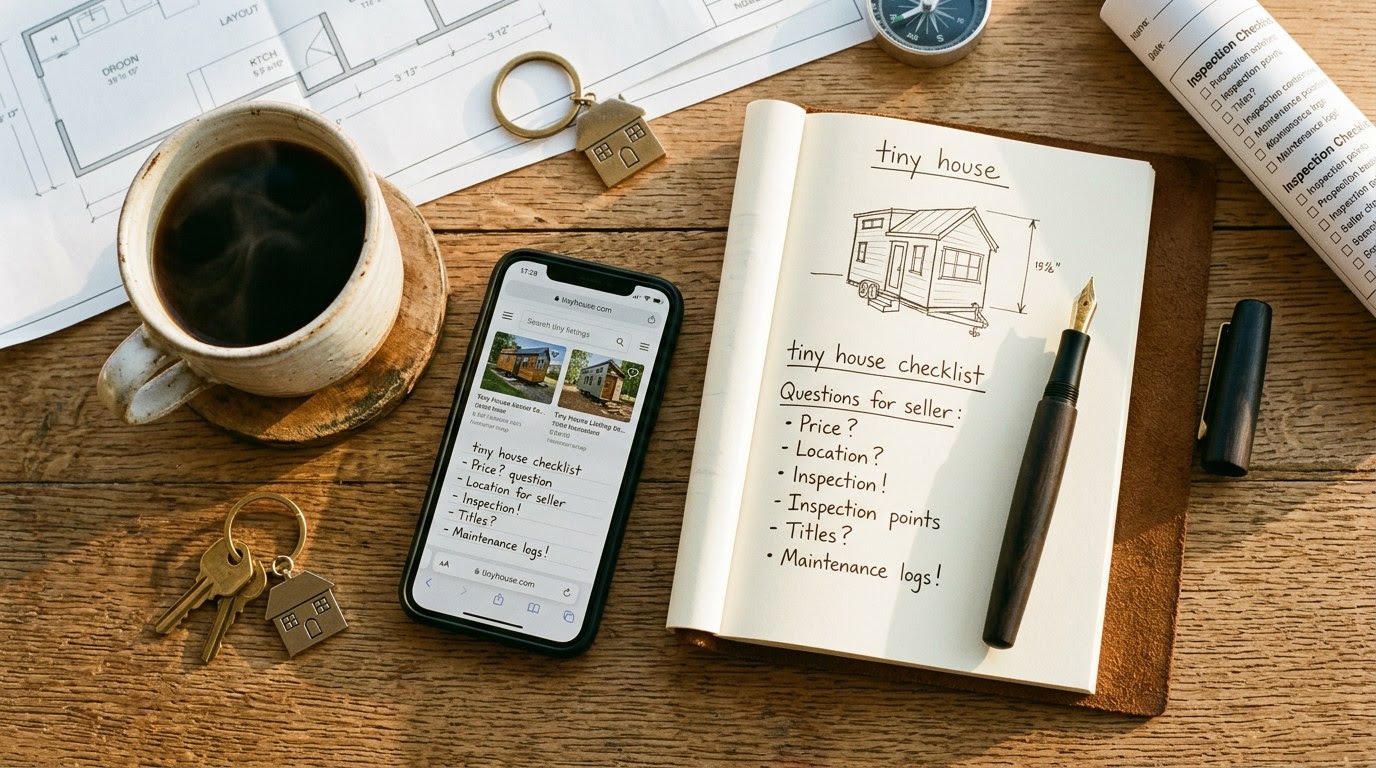
Use this guide when purchasing a used tiny home on wheels or moveable structure directly from a private seller on an online marketplace. Before traveling to view the home or transferring high-value funds to a stranger, use TrustMatch to confirm the seller is a verified individual rather than an anonymous online scammer.
1. Run a TrustCheck Identity Verification on the Seller
Run a fast identity check on the seller using TrustMatch before agreeing to meet in person or negotiating price terms. Enter the seller's first name along with their mobile phone number or email address into the verification portal. TrustMatch cross-references real-time databases to calculate a TrustScore and deliver a definitive risk verdict in under a minute. This verification confirms that the person managing the listing is who they claim to be, eliminating remote impersonators early in the transaction.
Private sales involving off-grid assets and non-traditional housing attract fraud due to high purchase prices and complex title structures. According to FTC data published in 2024, consumers reported over $10 billion in fraud losses, with online purchase scams ranking among the top reported fraud categories. Fraudsters often copy legitimate tiny house listings from real estate portals, post them at discounted rates on social media marketplaces, and demand wire deposits before vanishing.
Do not accept screenshots of driver's licenses or utility bills as proof of identity. Scammers routinely alter digital images using basic software. TrustMatch checks authentic mobile carrier data, public records, and associated digital footprints to validate the seller's true name and geographic location. If the seller refuses to provide basic contact details or fails identity validation, stop communication immediately.
Request that the seller's validated legal name matches the name printed on the property deed, trailer title, and bank account designated for final payment. Discrepancies between the identity report and payment details indicate potential third-party escrow fraud, illegal subleasing, or middleman flipping operations.
2. Verify the VIN and Ownership Documentation
Verify the tiny house trailer Vehicle Identification Number (VIN) against the physical title document and state registry before making an offer. Locate the metal VIN plate stamped onto the trailer tongue or frame rail and cross-reference every character with the seller's official state vehicle title. Request proof of lien satisfaction if a bank financed the original trailer chassis build. Confirming clear title ownership prevents you from acquiring a stolen vehicle, an encumbered asset, or an unregistrable custom road build.
Tiny houses built on wheels (THOWs) are legally classified as travel trailers, recreational vehicles (RVs), or custom utility trailers depending on state legislation. Ask the seller to present a physical title rather than a simple registration card or bill of sale. If the state does not issue titles for older utility trailers, require the original Certificate of Origin from the trailer manufacturer alongside continuous chain-of-ownership bills of sale leading up to the current owner.
Inspect the physical VIN plate directly on the trailer chassis. Look for signs of tampering, such as fresh weld marks around the plate, scratched numbers, or non-factory rivets. Run the VIN through state department of motor vehicles (DMV) databases and national title registries to verify that the trailer holds a clean title free of salvage, flood, or stolen vehicle records.
Confirm whether the tiny house has outstanding bank liens or tax liabilities. If the seller financed the build through a personal loan, RV loan, or specialty lender, the financial institution holds the original title. Never pay money directly to the seller if a lien exists; establish a formal payoff arrangement directly with the lienholder bank to release the title upon purchase.
3. Demand a Live Interactive Video Walkthrough
Require the seller to complete a real-time, live video walkthrough of the tiny house before traveling to inspect it in person. Ask the seller to turn on specific water fixtures, open appliance doors, and display the trailer VIN plate live on camera during your call. Refuse to accept pre-recorded videos, static photo galleries, or excuses regarding poor cellular reception. A live video walkthrough proves the tiny home physically exists in the seller's possession and matches the published marketplace advertisement accurately.
Schedule the video call during daylight hours so you can examine the exterior siding, roof profile, and tire condition clearly. Direct the seller to walk around the perimeter of the structure, showing the underside of the trailer frame, axle assemblies, and tongue jack. Ask them to point the camera at structural high-risk zones, including window corners, roof seams, and utility entry points.
Test the seller's familiarity with the tiny house during the live call. Ask detailed questions about custom systems, such as how to purge the water heater, switch between shore power and inverter solar supply, or empty the gray water holding tanks. Authentic owners who built or lived in the tiny house can answer operational questions instantly, whereas fraudsters using stolen video footage will hesitate or offer evasive answers.
Pay close attention to background surroundings during the live video feed. Verify that the geographic landscape, climate, and visible street signs match the city listed in the sale advertisement. If the listing claims the home is located in Colorado but the video shows palm trees and flat coastal land, cancel your inspection plans immediately.
4. Conduct an In-Person Structural and Utility Systems Inspection
Perform a rigorous in-person physical inspection of the tiny house structure, trailer frame, plumbing, and electrical grid before finalizing the sale contract. Examine subfloor framing, wall moisture levels, roof flashing, trailer axle ratings, braking systems, and solar inverter output under full load. Hire a certified RV inspector or licensed home inspector specializing in alternative structures if you lack technical construction experience. A thorough physical evaluation protects your investment against hidden dry rot, improper wiring, and structural framing failure.
Bring a digital moisture meter, circuit analyzer, and thermal imaging camera to the physical walkthrough. Measure moisture levels along the floorboards near the wheel wells, shower pan, and roof skylights. Water intrusion is the primary cause of structural failure in moveable tiny homes. High moisture readings indicate rotted subfloors or hidden mold colonies within closed wall cavities.
Inspect the trailer frame chassis thoroughly from underneath. Check for frame sag, cracked welds, severe rust corrosion, and inadequate axle ratings. As of November 2026, standard tiny houses weighing between 10,000 and 16,000 pounds require heavy-duty tandem or triple axles rated for proper Gross Vehicle Weight Rating (GVWR). A 2025 BBB study revealed that fake online property listings resulted in average individual losses exceeding $3,500.
Audit the electrical system for safe installation practices. Verify that the breaker panel uses proper wire gauges (such as 10 AWG for 30-amp or 6 AWG for 50-amp main lines) and that solid copper wiring is used throughout rather than unsafe aluminum transfers. Test all GFCI outlets near plumbing fixtures and ensure the ground wire connects properly to the main trailer chassis ground.
5. Confirm RVIA Certification and Building Code Compliance
Check for official RVIA (Recreational Vehicle Industry Association) certification tags or state modular building seals attached to the tiny home exterior. Inspect the breaker panel, wall insulation values, and structural fasteners to verify compliance with National Electrical Code (NEC) and NFPA 1192 standards for mobile dwellings. Confirming structural and electrical code compliance ensures you can legally park, insure, and transport the tiny house in your target municipality or commercial RV park without encountering severe zoning blocks.
Look for the silver metallic RVIA seal or third-party certification plates (such as NOAH or Pacific West Tiny Homes) mounted near the primary entry door or trailer tongue. These badges verify that the builder followed safety regulations covering fire safety, plumbing pressure tests, heating systems, and electrical load balances. Uncertified DIY tiny homes often face complete rejections from commercial tiny house communities and insurance carriers.
Ask the seller for the full set of original architectural plans, electrical single-line diagrams, and framing photos taken during construction. If the tiny house was self-built without professional certification, review wall assembly photographs to confirm that structural tie-downs (such as Simpson Strong-Tie straps) securely fasten the timber wall studs directly to the steel trailer chassis.
Contact your insurance agent with the specific build documentation, trailer VIN, and photo evidence before signing final contract papers. Many major insurance companies refuse to write comprehensive collision or liability policies for uncertified, non-RVIA tiny structures. Securing an insurance quote pre-purchase guarantees you can legally tow the home over public highways without exposing yourself to catastrophic financial liability.
6. Complete Payment via Escrow or In-Person Bank Transfer
Execute your payment using an established licensed escrow service or conduct a direct wire transfer inside a physical bank branch alongside the seller. Never send funds via irreversible peer-to-peer apps, cryptocurrency, gift cards, or wire services to an offshore or unverified account. Release funds only after signing a notarized bill of sale and receiving the physical title, keys, and physical possession of the structure. Controlled payment handling guarantees the seller receives verified funds while protecting your capital until ownership transfers.
Utilize a recognized, licensed online escrow platform for remote private sales. The escrow agent holds your funds securely while you receive and inspect the tiny house. Once you sign off on the delivery condition and title verification, the escrow service releases the funds to the seller. Avoid custom or unfamiliar escrow websites recommended by the seller, as scammers frequently construct fake escrow portals to steal buyer payments.
The CFPB warned in 2024 that non-recourse digital payment platforms offer zero fraud protection for peer-to-peer vehicle and real estate transactions exceeding $1,000. If you are completing the purchase in person, perform the transaction inside the seller's financial institution or your local bank branch. The bank teller can issue a cashier's check or process a wire transfer while a bank notary public verifies both parties' identities and notarizes the Bill of Sale and title transfer documents simultaneously.
Draft a detailed Bill of Sale containing the complete purchase price, trailer VIN, current tire condition, list of included off-grid appliances, solar components, and explicit legal statements confirming the tiny house is sold free of all liens, back taxes, and encumbrances. Both buyer and seller must retain notarized copies of this agreement along with the transferred title receipt.
Overview of Tiny House Safety and Ownership Verification
| Step | What to Verify | Red Flag If Missing |
|---|---|---|
| Identity Verification | Seller's legal name, phone carrier record, address history via TrustMatch. | Seller uses voip numbers, refuses identity check, or name mismatches title. |
| VIN & Title Check | Physical trailer VIN plate matches state title document and DMV records cleanly. | Scratched VIN, missing paper title, salvage record, or unpaid lender lien. |
| Video Inspection | Live daylight video showing operating appliances, VIN plate, and exterior perimeter. | Seller provides pre-recorded clips, claims broken camera, or location differs. |
| Physical Inspection | Frame welds, subfloor moisture levels, 120V electrical wiring, and plumbing leaks. | Moisture readings above 15%, cracked trailer frame welds, exposed wire splices. |
| Certification Check | RVIA, NOAH, or state modular safety seal attached near doorway or frame. | No certification seals, no framing photos, uninsurable DIY construction. |
| Secure Transfer | Payment held in licensed escrow or completed inside bank with notarized bill of sale. | Seller demands instant wire transfers, peer-to-peer app payment, or gift cards. |
Quick Checklist for Tiny House Buyers
- Run an immediate TrustCheck on the seller's full legal name and mobile phone number to validate identity before making travel plans.
- Request digital photos of the title, trailer VIN plate, and registration papers to verify clear ownership and check for active liens.
- Conduct a live interactive video walkthrough to verify physical possession and test major electrical, plumbing, and HVAC systems.
- Perform an in-person structural inspection using a moisture meter, electrical tester, and undercarriage frame check.
- Confirm RVIA or third-party build certification tags to guarantee insurance eligibility and municipal zoning compliance.
- Draft a comprehensive, notarized Bill of Sale listing all structural items, appliances, trailer specs, and solar components included in the purchase.
- Transfer purchase money exclusively through a certified escrow company or inside a bank branch upon receiving the physical title and keys.
Red Flags During This Process
Stay alert for sudden changes in seller behavior or contract terms while negotiating the purchase. If a seller pressures you to transfer a deposit to hold the tiny house before you verify their identity or inspect the physical property, end communication. Fraudsters frequently create artificial urgency by claiming multiple buyers are standing by with cash offers.
Be suspicious if the seller changes payment instructions right before closing. A common scam tactic involves emailing new bank routing details at the last minute, directing wire transfers to offshore accounts or untraceable digital wallets. Always confirm payment instruction modifications in person or via a verified telephone call using the phone number validated in your initial TrustMatch report.
Watch out for refusal to allow an independent physical inspection. If the seller insists that the tiny house is currently in locked storage, located on restricted private property, or undergoing off-site repairs that prevent access, do not send funds. Genuine sellers welcome professional structural inspections because clear reports confirm the house's market valuation.
Treat unreadably low purchase prices as primary warning indicators. High-end, custom-built tiny houses featuring off-grid solar systems, residential appliances, and RVIA seals command fair market prices. Listings offering modern tiny homes for a fraction of standard construction material costs are designed to bait buyers into sending rapid wire deposits.
Executing these safety steps protects your financial investment and respects the legitimate private seller on the other side of the transaction; these steps are about mutual verification, not surveillance.
Frequently asked
How do I verify tiny house trailer ownership without a title?
If the seller's state does not title utility trailers, request the original Certificate of Origin from the chassis manufacturer along with a notarized bill of sale from every previous owner. Verify the stamped chassis VIN directly with the local DMV to confirm the trailer is not reported stolen or encumbered by liens.
Can I get insurance on a used tiny house built by an individual seller?
Insurability depends on build standards and certifications. Certified tiny homes with RVIA or NOAH seals are easy to insure through standard RV policies. Uncertified DIY builds require specialty underwriters who evaluate detailed photos, structural schematics, electrical wiring diagrams, and professional inspection reports before granting coverage.
What is the safest payment method when buying a tiny house privately?
The safest payment method is a licensed third-party escrow service. The escrow company holds your payment until you receive the tiny house, inspect its physical condition, and verify title transfer. Alternatively, complete the transaction inside a bank branch using a cashier's check alongside a notarized bill of sale.
How can I check if a tiny house seller is an online scammer?
Verify the seller's legal identity early by using TrustMatch to cross-reference their phone number and name against authentic public records. Combine identity verification with a required live video walkthrough to prove physical possession of the tiny house before sending money or scheduling an in-person inspection trip.
What structural areas should I inspect first on a used tiny house?
Examine the trailer frame tongue, subfloors, and roof flashing first. Use a moisture meter around skylights, window frames, and shower enclosures to detect hidden water rot. Inspect axle weight ratings and trailer tire date codes to confirm the chassis can safely transport the building weight.
More in Guide
- How to Safely Sell High-End Trading Cards to In-Person Buyers
November 15, 2026
- How to Safely Conduct a Video Verification Call Before a First Date
November 13, 2026
- How to Safely Buy a Used Smartphone From a Private Seller
November 8, 2026