How to Safely Buy a Used Jet Ski From a Private Seller
· 12 min read
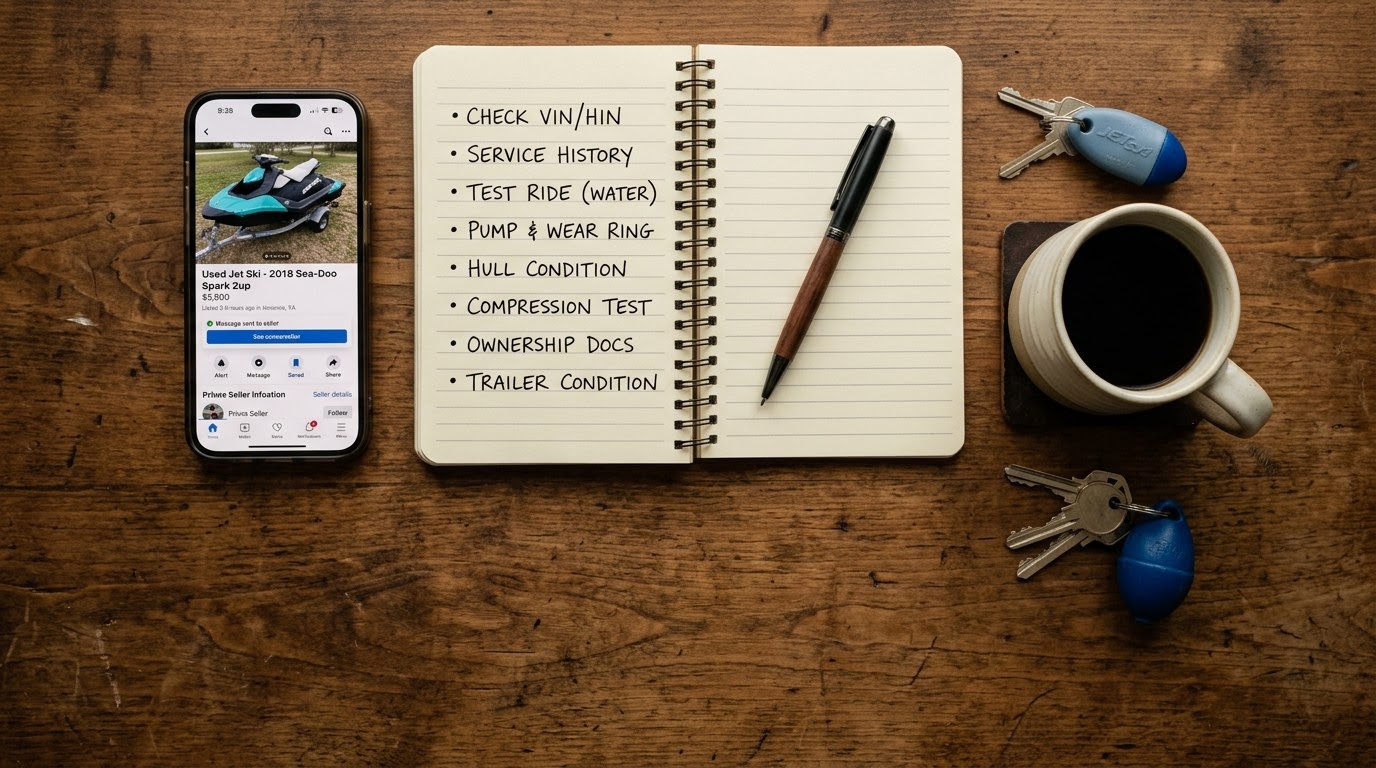
Use this playbook when you find a compelling private listing for a used jet ski on Facebook Marketplace, Craigslist, or OfferUp and need to confirm the deal is legitimate before making an offer. Running an initial TrustMatch check before meeting up ensures you avoid stolen watercraft, paper title fraud, and ghost sellers.
1. Run a TrustMatch Identity Verification
Verify the seller's true identity using TrustMatch before agreeing to meet in person or making a deposit on a used jet ski. Enter the seller's first name and phone number or email address into the TrustMatch portal to generate a comprehensive TrustScore and risk verdict in under a minute. This immediate identity check ensures you are communicating with the actual legal owner rather than a scammer using a hijacked profile or stolen contact details.
Online marketplaces contain thousands of fake personal watercraft listings designed to harvest deposit payments from unsuspecting buyers. Fraudulent sellers often copy photographs from old listings in other states, post attractive below-market prices, and claim they need an immediate electronic deposit to hold the craft. Data published by the Better Business Bureau in 2023 indicated that online purchase scams accounted for nearly 30 percent of all consumer fraud reports. Before spending time traveling to a remote marina, dock, or storage facility, request the seller's direct contact information. Input those details directly into TrustMatch to establish whether the seller's phone line and identity match legitimate records.
When the TrustMatch result confirms an established profile with minimal risk indicators, you can confidently move forward to schedule an in-person meeting. If the search reveals mismatched names, burner phone numbers commonly associated with fraud rings, or a high-risk verdict, decline the meeting. Real private sellers who own valuable personal watercraft will readily provide valid contact details to facilitate a smooth sale.
2. Validate Title and Registration Documentation
Demand to see the physical paper watercraft title and current state registration document before performing any mechanical inspection. Ensure the seller's government-issued photo identification matches the exact name printed on the title, and confirm that no legal liens exist against the hull. Verifying clean title ownership prevents you from unknowingly buying a stolen jet ski or purchasing a vehicle that cannot be legally registered in your state.
Inspect the physical document carefully for signs of alteration, missing owner signatures, or brand markings such as "Salvage," "Junk," or "Rebuilt." Pay close attention to state-specific regulations, as some jurisdictions issue separate titles for personal watercraft and trailers, while others register trailers through bills of sale. Match the Hull Identification Number printed on the title directly against the state registration card and tax receipts. According to Federal Trade Commission report data from 2024, online marketplace purchase scams resulted in over $400 million in losses for consumers buying vehicles and high-value equipment.
Never accept excuses regarding missing titles, such as claims that the document was lost in a move or that the title is held by an unnamed relative. If the seller owes money on an active marine loan, arrange to complete the transaction directly at the lender's local branch office. The bank officer will accept payment, satisfy the outstanding lien balance, and transfer the original title document directly to you. Accepting an unsigned title or a hand-written bill of sale from someone who is not the registered owner creates massive legal headaches when you attempt to title and license the watercraft.
3. Cross-Check the Hull Identification Number (HIN)
Locate the 12-digit Hull Identification Number stamped into the starboard side of the transom and compare it against all official paperwork. Examine the metal or composite plate to ensure the characters are crisp, uniform, and unaltered by grinding or fresh fiberglass work. Validating matching HIN numbers guarantees the physical personal watercraft in front of you corresponds directly to the verified title and registration documents provided by the seller.
Every personal watercraft manufactured after 1972 features a standardized 12-character HIN permanently affixed to the rear right corner of the outer hull. Bring a flashlight and micro-fiber towel to clean away algae, road grime, or salt crust from the transom area. Carefully scrutinize the character formatting; factory-stamped numbers feature consistent depth, spacing, and font alignment. Be suspicious of fresh body filler, uneven gelcoat repair patches, or thick paint around the HIN area, as these indicate attempts to mask tampered or defaced numbers.
In addition to the primary external transom plate, most manufacturers place hidden secondary HIN labels inside the engine compartment, beneath the steering column, or along the deck bond line. Check these internal locations to verify that the internal numbers match the external transom plate. If the physical HIN displays signs of grinding, missing digits, or discrepancies with the title document, stop the transaction immediately because the jet ski may be reported stolen or assembled from salvage parts.
4. Conduct a Static Mechanical and Engine Inspection
Inspect the engine bay, jet pump, steering linkage, and battery while the watercraft sits on its trailer before launching into the water. Remove the seat cushions and engine access hatches to smell for fuel leaks, check oil condition, and examine internal wiring for corrosion or non-standard splices. Performing a thorough static inspection identifies costly engine damage, worn wear rings, or electrical failures before taking the craft to a lake or ocean ramp.
Begin your mechanical evaluation by removing the engine cover and inspecting the bilge area. Check for standing water, thick oil residue, or strong gasoline odors that signal leaking fuel lines or cracked fuel tanks. Pull the oil dipstick to check oil levels and inspect for a milky white appearance, which indicates catastrophic water intrusion through blown head gaskets or cracked engine blocks. Check four-stroke supercharged models for supercharger service records, as neglected supercharger clutch washers can disintegrate and destroy the entire engine assembly.
Perform a cylinder compression test using a spark plug thread compression gauge while cranking the starter motor. All cylinders should read within 10 percent of one another, typically showing between 120 PSI and 180 PSI depending on whether the engine is a two-stroke or four-stroke design. Next, inspect the jet pump at the stern of the watercraft using a bright flashlight. Check the clearance between the stainless steel impeller blades and the plastic or aluminum wear ring; excessive gaps exceeding 0.020 inches cause extreme cavitation, poor acceleration, and slow top-end speed. Inspect the rubber drive shaft boot for tears or play, as a worn carbon seal will flood the bilge during operation.
5. Perform an On-Water Test Run
Launch the personal watercraft into local water to evaluate engine starting, throttle acceleration, cooling flow, and hull stability under load. Test all functions including electronic reverse, trim control, gauge cluster displays, and lanyard safety kill switches while operating at various speeds. Executing an active water test reveals cooling system overheating, hidden cavitation, and drive-line vibrations that cannot be detected while running the craft on a garden hose flush attachment.
Never buy a used jet ski based solely on a short engine start while parked on a driveway trailer. Starting an engine on dry land only proves the starter motor turns and the battery holds charge; it reveals nothing about water cooling, shaft seal leaking, or performance under load. Push the craft off the trailer into calm water, attach the safety lanyard to your life vest, and start the engine. Look back immediately at the cooling water bypass port to confirm a steady stream of water exits the hull within five seconds of starting.
Allow the engine to reach normal operating temperature at idle speed while observing the digital gauge cluster for warning lights, low oil pressure alerts, or high temperature icons. Slowly apply throttle to feel how smoothly the jet ski transitions onto plane. Accelerate to full throttle in a safe open water zone to ensure the engine achieves its rated peak RPM without misfiring, stuttering, or slipping. Execute tight turns to evaluate steering cable tension and test electronic trim adjustments. After ten minutes of test riding, pull up to the dock, turn off the engine, and unlatch the seat to verify the engine bilge remains completely dry.
6. Inspect the Jet Ski Trailer and Trailer VIN
Examine the trailer's structural frame, wheel bearings, tires, lighting harness, and Vehicle Identification Number tag before completing the deal. Check for deep structural rust along frame rails, test signal lights, and feel the wheel hubs after a test drive to detect failing bearings. Inspecting the trailer thoroughly ensures you can safely transport your personal watercraft home without highway breakdowns or registration disputes at the department of motor vehicles.
A damaged, rusty, or untitled trailer turns a great personal watercraft purchase into a hazardous liability. Locate the metal Vehicle Identification Number plate or printed sticker on the trailer's front tongue beam or frame rail. Cross-reference the trailer number against the trailer title or bill of sale to confirm matches. Scrutinize the frame for severe internal rust, particularly on painted steel trailers that have been launched in saltwater environments. Box-tube frames often rust from the inside out, weakening structural integrity until the frame snaps under highway vibration.
Jack up each side of the trailer axle to spin the wheels by hand. Listen for grinding or clicking noises, and push the wheel top and bottom to feel for lateral play that signals shot wheel bearings or spindle damage. Check the manufacturing date codes stamped on the tire sidewalls; marine trailer tires older than five years should be replaced regardless of remaining tread depth because sun exposure and sitting idle cause sudden tire blowout failures. Connect the trailer wire harness to your vehicle to test brake lights, turn signals, and running lights, and inspect the winch strap, bow stop roller, and transom tie-down straps for fraying or mechanical defects.
7. Complete a Secure Payment and Bill of Sale
Execute a detailed bill of sale and exchange funds using a secure, traceable payment method inside a safe public location or financial institution. Record the exact purchase price, date, serial numbers, seller name, buyer name, and detailed condition terms on two printed copies signed by both parties. Using traceable payments like official cashier's checks or verified bank transfers protects both buyer and seller against counterfeit currency and fraudulent payment reversals.
Avoid carrying large amounts of cash to secluded meetup spots or sending non-refundable wire transfers to digital payment apps before inspecting the craft. Arrange to close the deal during business hours inside your bank or at a designated local police department transaction zone. Having the transaction take place at a bank allows you to obtain a certified cashier's check in front of the seller while a notary public verifies signatures on the title and bill of sale documents.
Draft two identical copies of a formal bill of sale. Include the watercraft year, make, model, full 12-digit Hull Identification Number, engine serial number, trailer registration number, agreed sale price, and an explicit clause confirming the seller warrants the craft free of all liens, back taxes, and encumbrances. Sign and date both copies alongside the seller, ensuring both parties retain an original signed document. Hand over the payment check only after receiving the signed title certificate, valid registration cards, trailer paperwork, and all factory physical keys or programmed learning lanyards.
Summary Verification Table
This summary verification table outlines the essential inspection steps, verification targets, and critical red flags when purchasing a used jet ski from a private seller. Use this direct reference side-by-side during your physical inspection to instantly identify missing documentation, mechanical defects, or dangerous fraud indicators before making an offer or paying funds.
| Step | What to verify | Red flag if missing |
|---|---|---|
| 1. Identity Check | Seller legal name, phone number, and TrustScore match verified public records. | Burner phone number, mismatched owner name, or high-risk TrustMatch verdict. |
| 2. Paperwork Check | Clean title in seller's name, active state registration, and zero outstanding bank liens. | Missing title, name mismatch with seller photo ID, or unrecorded bank lien. |
| 3. HIN Check | 12-digit HIN on starboard transom matches title, registration, and secondary internal labels. | Defaced or ground numbers, missing characters, or mismatch with paper title. |
| 4. Static Engine Check | Clean oil, equal cylinder compression, clear bilge, intact fuel lines, and tight wear ring. | Milky oil, unequal compression readings, gas odor, or deep wear ring gouges. |
| 5. Water Test Run | Immediate cooling stream, smooth acceleration to peak RPM, dry bilge after 10 minutes. | Overheating warning, engine hesitation, pump cavitation, or water in engine bay. |
| 6. Trailer Inspection | Matching trailer tag, solid frame rails, healthy wheel bearings, and functional lights. | Missing identification tag, severe frame rust, grinding wheel bearings, or unlisted trailer ownership. |
| 7. Final Settlement | Notarized bill of sale signed inside bank with certified cashier's check transfer. | Seller demands cash in remote location or refuses to sign notarized paperwork. |
Quick Checklist for Jet Ski Buyers
Follow this sequential quick checklist on the day of your personal watercraft purchase to ensure every critical step is executed in order. Reviewing each item systematically prevents missing title discrepancies, mechanical flaws, trailer defects, or identity fraud during private party transactions.
- Run a TrustMatch check on the seller's contact details to verify identity before leaving home.
- Inspect the seller's photo ID and compare it directly against the owner name on the watercraft title.
- Locate and clean the 12-digit HIN on the starboard transom, confirming it matches all paper documentation.
- Remove seat cushions to inspect oil clarity, battery terminal corrosion, bilge cleanliness, and compression PSI.
- Inspect the jet pump nozzle, impeller blades, and wear ring clearance using a bright flashlight.
- Conduct a minimum 10-minute active water test to check cooling, acceleration, reverse gate, and hull seals.
- Examine trailer frame welds, VIN plate, tire date codes, wheel hub temperature, and signal lighting.
- Complete a notarized bill of sale and hand over payment inside a bank branch or police safe exchange site.
Red Flags During This Process
Recognizing immediate red flags during the private sale process protects you from purchasing stolen personal watercraft, buying damaged engines, or falling victim to identity scams. If a seller exhibits suspicious behavior, demands untraceable payments, or refuses standard inspection steps, pause the transaction immediately to prevent financial loss.
Be prepared to step away from the transaction immediately if the seller exhibits deceptive behavior or if physical inspection reveals critical discrepancies mid-routine. Scammers and dishonest sellers rely on buyer enthusiasm and artificial urgency to rush transactions before defects or fraudulent paperwork can be discovered. If a seller insists on meeting in a dark storage center, pressures you to pay a hold deposit via non-refundable wire apps, or refuses an on-water test run claiming the craft is already winterized, cancel the appointment immediately.
Pay close attention to emotional pressure tactics during the physical meeting. If the seller grows aggressive when you pull out a compression tester, attempt to inspect secondary HIN tags, or check the oil dipstick, treat that reaction as a definitive warning sign. Honest owners who take pride in maintaining their personal watercraft welcome thorough checks because clean results validate their asking price. Never allow a seller to convince you that a missing title can easily be replaced by visiting the DMV yourself after the sale; without the registered owner's signature and formal lien release, you cannot obtain legal title in most jurisdictions.
If you encounter any mid-routine red flags, politely inform the seller that you are pausing the evaluation and leave the location safely. Do not attempt to negotiate price discounts on watercraft with tampered HIN tags, structural hull cracks, milky engine oil, or mismatched ownership documents. Your safety and financial protection depend on maintaining strict adherence to these verification protocols without compromise.
Using TrustMatch alongside these step-by-step verification procedures protects your financial safety while respecting the legitimate private seller, ensuring that these steps protect you AND respect a real person. They are not surveillance.
Frequently asked
How do I verify a used jet ski isn't stolen?
Check the 12-digit Hull Identification Number stamped on the starboard transom and cross-reference it with the physical title, registration, and state natural resource database records. You can also run a state police watercraft record query and verify the seller's true identity using TrustMatch to ensure they are the legitimate registered owner before exchanging payment.
Can I buy a used jet ski without a title?
Avoid buying a used jet ski without a clean physical title unless your state specifically does not title personal watercraft. Purchasing a watercraft with a missing title risks acquiring stolen property, buying an asset with unpaid bank liens, or becoming stuck with a vehicle that state agencies refuse to register, license, or allow on public waterways.
Why is an on-water test run necessary before buying?
Running an engine on a hose attachment on dry land fails to test engine cooling under load, jet pump impeller suction, drive shaft seals, or dynamic hull watertightness. An active on-water test run of at least ten minutes reveals hidden cavitation problems, cooling system overheating, steering cable binding, and bilge leaks that only manifest while in the water.
What compression reading should a used jet ski engine have?
Healthy four-stroke and two-stroke personal watercraft engines typically show compression readings between 120 PSI and 180 PSI depending on factory specifications. The most critical factor is consistency across all cylinders; variance between individual cylinder compression readings should never exceed 10 percent, as larger drops indicate worn piston rings, burnt valves, or head gasket failure.
How should I pay a private seller for a used jet ski?
Complete the payment using a traceable method such as a certified cashier's check or official bank wire transfer inside a financial institution or local police department transaction zone. Avoid carrying cash to unverified locations or sending instant digital app transfers before completing paper title sign-offs, verifying trailer numbers, and obtaining signed notarized bills of sale.
More in Guide
- How to Safely Buy a Used Drone From a Private Seller Online
September 16, 2026
- How to Safely Verify a Cashier's Check Before a Private Sale
September 13, 2026
- How to Safely Buy a Used Compact Tractor From a Private Seller
September 11, 2026