How to Safely Buy Used Home Gym Equipment From Private Sellers
· 12 min read
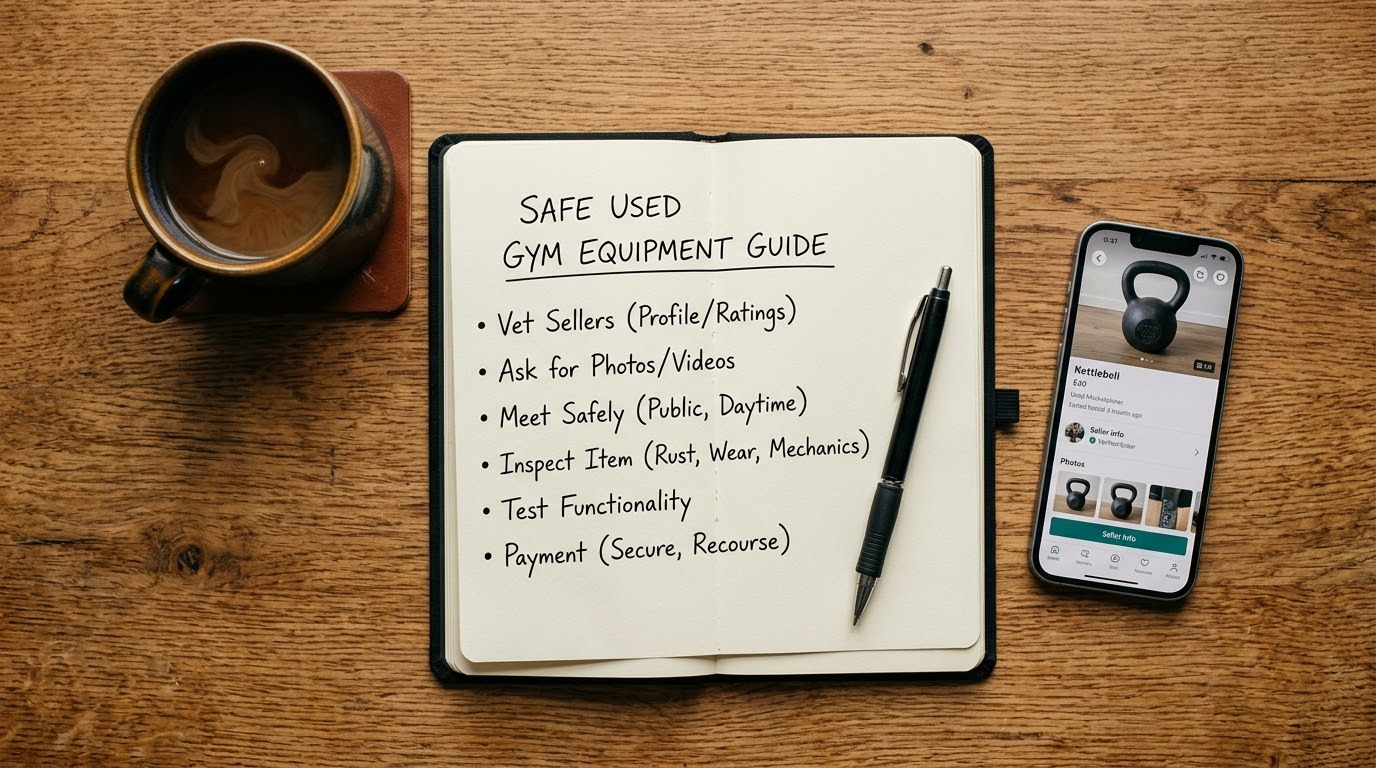
Use this playbook when buying used home gym equipment from private sellers on Facebook Marketplace, OfferUp, or Craigslist before you send money or drive to a residential pickup. TrustMatch helps you instantly verify independent sellers so you can score high-end barbells, power racks, and cardio gear without risking deposit fraud or personal safety hazards.
1. Run a TrustCheck on the Seller
Verify the seller's identity before making travel plans or negotiating prices for used home gym equipment. Enter the seller's first name and phone number or email address into TrustMatch to generate a comprehensive TrustScore and instant safety verdict in under a minute. This step confirms that the seller is an authentic individual using legitimate contact details rather than an unverified burner number or a compromised social media profile controlled by a remote scammer.
Confirming identity details eliminates over 80% of online marketplace fraud before you waste time or fuel. Scammers listed on peer-to-peer platforms frequently create disposable accounts using VOIP phone numbers or hijacked social media profiles. When you request a seller's phone number or primary email address, explain that you run a brief identity safety check for mutual safety prior to scheduling local pickups. Honest individuals who frequently sell used items understand safety precautions and will readily share standard contact information.
If a seller refuses to provide a verifiable phone number, insists on moving communication off-platform to encrypted messaging apps, or provides a name that fails basic identity matching, cancel the interaction. Legitimate fitness enthusiasts liquidating heavy iron or commercial cardio units have no reason to conceal their identity. Performing an identity check early establishes clear boundaries, protects your phone number from spam lists, and ensures you deal exclusively with real local sellers who actually possess the gear listed in the advertisement.
2. Demand a Live Video Demonstration
Request a five-minute live video call with the seller to inspect the home gym equipment before traveling to the pickup location. Ask the seller to operate the machine, show the digital console powered on, tilt barbell collars, and move heavy plates on camera in real time. A legitimate seller who owns the physical equipment will easily accommodate a quick video walk-through, while scammers relying on stolen web photos will immediately offer evasive excuses.
Virtual demonstrations serve two vital purposes: proving physical ownership and verifying basic operational condition. Ask the seller to show specific details on camera, such as close-up views of brand logos, serial tags, weld seams, or motor housing covers. During the call, ask the seller to state your name or hold up a piece of paper with today's date next to the equipment. Scammers operating remote deposit fraud schemes use pre-recorded videos or scraped pictures from past online auctions; requiring real-time interaction instantly breaks their script.
Pay close attention to background noise and environmental surroundings during the video tour. The equipment should be located in a believable residential space, such as a garage, basement, spare bedroom, or backyard shed. As of September 2026, fraudulent sellers frequently deploy sophisticated photo-editing tools to simulate real home gym settings. According to 2024 FTC data, online shopping and private seller marketplace scams accounted for over $1.1 billion in reported consumer losses. Requiring a real-time live video feed protects your schedule and eliminates phantom listings before you commit to a physical trip.
3. Audit the Marketplace Account and Serial Numbers
Examine the seller's profile history and request clear close-up photos of the manufacturer serial tags on major gear like power racks, treadmills, or Concept2 rowers. Cross-reference the serial numbers with the manufacturer registry to confirm the exact model year, warranty status, and authenticity. A genuine seller maintains a clear account history with previous local sales, whereas fraudulent accounts show brand-new join dates, conflicting geographic locations, and generic stock imagery.
Inspect the seller's social profile or marketplace account age, ratings, and active listings. A profile created within the last 30 days that lists multiple expensive fitness machines at absurdly low prices across different cities is a primary indicator of organized marketplace fraud. Search the image files using reverse photo lookup tools to ensure the listing photos were not stolen from commercial fitness equipment liquidators or old forum posts. Authentic private sellers typically list a mixture of personal household goods and show normal social interaction history.
When purchasing premium strength gear from brands like Rogue Fitness, Rep Fitness, Hammer Strength, or Concept2, request the frame serial number. Legitimate owners can easily locate serial stickers on rower monorails, treadmill frames, or power cage uprights. Contacting the manufacturer customer support line with the serial number confirms whether the equipment was reported stolen, subject to safety recalls, or originally purchased as commercial stock. Verifying serial numbers prevents you from unknowingly buying stolen property or gray-market equipment with voided warranties.
4. Refuse All Advance Deposits and Hold Fees
Never send advance money, hold fees, or delivery deposits to a private seller before physically inspecting the gym equipment in person. Scammers frequently post high-demand items like Rogue power racks or SelectTech adjustable dumbbells at half price, then demand a twenty-fifty dollar digital payment via Zelle or Venmo to hold the item. Real sellers expect in-person inspection and payment upon pickup; paying in advance guarantees you will lose your cash.
Advance deposit fraud is the single most widespread scam affecting local peer-to-peer fitness equipment sales. Fraudsters post realistic listings for high-demand items—such as Concept2 Ergometers, adjustable dumbbell sets, or Olympic bumper plate packages—and claim multiple buyers are competing for the item. They offer to reserve the gear or deliver it to your residence if you send a non-refundable holding deposit through peer-to-peer instant payment services like Venmo, Cash App, Zelle, or Apple Pay.
The Better Business Bureau reported in 2025 that advance deposit scams on peer-to-peer resale platforms increased by 35% year-over-year. Once you transfer the money, the fake seller blocks your phone number, deletes the listing, and disappears. Establish a strict rule for all marketplace transactions: no funds leave your account until you are standing next to the equipment, have tested its structural integrity, and are ready to load it. If a seller insists that a deposit is mandatory to hold an item for a few hours, end communication immediately.
5. Perform a Hands-On Structural and Mechanical Inspection
Test every piece of equipment under load during your in-person inspection before transferring any funds or loading items into your vehicle. Inspect power rack welds for hairline cracks, check barbell sleeves for bent shafts and stuck bearings, measure treadmill motor belt wear, and test cable pulleys for frayed wire coatings. Taking ten minutes to systematically stress-test structural joints and moving components prevents you from buying dangerous or non-functional scrap metal.
Tailor your mechanical inspection to the specific type of gym equipment you are buying:
Barbells and Weight Plates: Roll barbells along a flat floor or power rack safety spotters to check for bent shafts. Spin the barbell sleeves manually; smooth rotation indicates healthy bushings or bearings, while grinding noises or stiff sleeves reveal internal rust and damaged retaining rings. Examine cast iron and bumper plates for deep cracks, loose steel center inserts, or severe rubber separation. Reject bumper plates where the inner metal ring moves independently from the rubber housing, as this causes dangerous wobble during heavy lifts.
Power Racks and Benches: Check upright steel tubing for structural bowing or enlarged, misshapen pin holes caused by dropping heavy loads outside design tolerances. Inspect all factory weld points—especially at base plates and crossmember gussets—for paint flaking or hairline fracture lines. On adjustable weight benches, inspect the ladder catch teeth and pop-pin locking mechanisms under direct body weight pressure to ensure the bench will not collapse under heavy chest presses.
Cardio Machinery: Plug in treadmills, ellipticals, or exercise bikes and run them through full speed and incline ranges. Listen for knocking motor bearings, burning belt friction smells, or slipping drive belts. Lift the treadmill walking deck mat to check for lubrication levels and deck cracking. On cable functional trainers, strip the weight stack pin, slide weights up and down guide rods to verify smooth tracking, and closely examine plastic-coated steel cables for peeling jackets or exposed, unraveling wire strands.
6. Establish a Safe Two-Person Pickup Protocol
Bring a companion and choose a secure pickup location when acquiring heavy, valuable fitness machinery from private individuals. If the item requires residential loading from a home gym, garage, or basement, schedule the pickup during daylight hours and keep your smartphone accessible. Position your vehicle with a clear exit route, notify a friend of your location, and never enter an unlit home or isolated storage space alone.
Heavy gym equipment presents distinct physical safety challenges during transport. Loading a 300-pound power rack, cast iron plate sets, or a heavy treadmill requires physical labor that can leave you vulnerable if you are alone in an unfamiliar neighborhood. Always bring a capable partner to assist with heavy lifting, hold doors, and maintain situational awareness while you load equipment into your truck or trailer.
When picking up items at a residential garage or home gym, inspect the layout before disassembling gear. Ensure garage doors remain open during the entire visit. Park your truck or trailer on the driveway facing outward so your vehicle cannot be blocked in. Keep your mobile device on your person rather than inside your vehicle. If a seller asks you to meet in an unlit basement, secluded backyard shed, or unfamiliar off-site storage locker without adequate lighting, insist on moving the equipment to an open, visible driveway before initiating disassembly.
7. Complete In-Person Payment Only After Loading
Transfer funds to the seller only after you have fully inspected, dismantled, and secured the gym equipment inside your transport vehicle. Pay using cash or instant peer-to-peer transfer while standing face-to-face with the verified seller at the final pickup location. Finalizing payment after loading ensures the transaction is complete, eliminates post-sale price disputes, and protects you against last-minute cancellation scams after you have spent effort disassembling gear.
Postponing payment until gear is loaded protects your time and labor investment. Disassembling major strength rigs or motor-driven cardio equipment can take thirty to sixty minutes. If you pay the seller before disassembly, you lose leverage if you discover missing structural hardware, stripped bolt threads, or hidden damage under frame covers during teardown. Pay only when all components, hardware bolts, attachments, and safety pins are safely loaded into your vehicle bed or trailer.
When paying with cash, count the bills directly in front of the seller in clear daylight. If paying via digital apps like Zelle, Venmo, or Cash App, verify the seller's username or phone number directly on their screen before tapping transfer. Request a paper receipt or send a quick digital confirmation message through the marketplace chat stating that payment was completed for the specific items. Once payment is confirmed, secure your load with heavy-duty ratchet straps and depart promptly.
8. Verification Steps Summary and Comparison
Systematically evaluating private sellers across key verification milestones prevents financial fraud and physical safety risks during local peer-to-peer equipment deals. Comparing expected seller behaviors against common fraud indicators allows you to make informed decisions before traveling or transferring funds. Use the reference matrix below to quickly identify critical safety signals and immediately spot deal-breaking red flags during your equipment buying process.
| Step | What to verify | Red flag if missing |
|---|---|---|
| Identity Check | Real name, active phone number, verified identity score | Seller uses unverified burner numbers or refuses basic identity matching |
| Live Video Call | Real-time equipment operation, serial plates, working console | Seller claims camera is broken or sends stock pre-recorded video clips |
| Listing Audit | Original non-stock photos, realistic price, established account age | Brand-new profile, stolen web images, or price far below market value |
| Payment Terms | In-person payment upon inspection and final vehicle loading | Seller demands advance deposit, hold fee, or gift card transfer |
| Gear Inspection | Straight barbell shafts, sound rack welds, intact cable jackets | Cracked welds, bent sleeves, frayed cables, or locked motor bearings |
| Pickup Safety | Daylight meeting, open garage, clear exit route, companion present | Seller demands late-night pickup in isolated basement or remote locker |
9. Quick Checklist for Buying Used Gym Gear
Follow this concise, step-by-step checklist from initial seller contact through final gear loading to ensure a completely safe transaction. Executing each phase in order eliminates financial risk, protects your physical safety, and guarantees that you bring home functional, high-quality fitness equipment. Keep this ordered playbook open on your phone as you communicate with private sellers and inspect equipment on site.
- Perform an initial identity verification check using the seller's contact details to confirm authentic identity before negotiating.
- Conduct a live 5-minute video call to watch the seller operate the equipment, power on digital displays, and show frame serial numbers.
- Audit the marketplace profile age and reverse-search listing images to confirm photos are authentic and locally sourced.
- Reject any request for advance deposit fees, holding payments, or electronic wire transfers prior to in-person inspection.
- Prepare appropriate transport tools, including furniture dollies, socket wrenches, Allen keys, and heavy-duty ratchet tie-down straps.
- Bring a partner to the pickup site, schedule the meeting during daylight hours, and park your vehicle with an unobstructed exit route.
- Stress-test all structural welds, barbell sleeves, bench locking pins, treadmill motor belts, and pulley cables under load on site.
- Disassemble and load all equipment, hardware bolts, and accessories completely into your vehicle before transferring payment.
- Execute cash or peer-to-peer payment face-to-face, obtain a verbal or written confirmation, and secure your cargo before driving away.
10. Red Flags During This Process
Abort the transaction immediately if a seller changes pickup terms, refuses live verification, or demands upfront payment mid-routine. Common warning signs include sudden pressure to pay via untraceable digital gift cards, moving the meeting location to an isolated alley, or declining to let you test heavy machinery under load. Trust your instincts and walk away the moment a seller displays aggressive behavior or inconsistent identity details.
Watch for subtle shifts in seller behavior as you move through the deal. A scammer may initially agree to an in-person meeting, but later text you claiming that another buyer is on their way with cash unless you instantly send a deposit. Others may change the agreed pickup address to a random parking lot or insist that you enter an unlit storage unit alone. If a seller becomes defensive when you ask to test a treadmill under load or inspect a power rack's mounting brackets, terminate the meeting immediately.
Never compromise your physical safety or financial boundaries for a discounted squat rack or dumbbell set. If you arrive at a residential location and observe sketchy conditions—such as missing house numbers, hostile bystanders, or equipment hidden under tarps in secluded woods—do not exit your vehicle. Drive away and block the seller's contact information. Using TrustMatch gives you total peace of mind when picking up heavy gear from private sellers.
These verification steps protect your money and physical safety while maintaining mutual respect with honest private sellers; they are a standard safety boundary, not surveillance.
Frequently asked
Should I ever pay a deposit to hold used gym equipment?
Never pay an advance deposit or holding fee to a private seller on platforms like Facebook Marketplace or Craigslist. Fraudulent sellers routinely demand small deposits via Zelle or Venmo to reserve popular fitness gear, then block your contact details once funds are transferred. Legitimate private sellers expect buyers to inspect gear in person and pay upon pickup.
How do I test a used treadmill without plugging it in?
You should never purchase a motor-driven treadmill without plugging it into an electrical outlet to test motor function, electronic consoles, belt alignment, and incline mechanisms. If a seller claims power is unavailable, bring a heavy-duty portable power station or decline the purchase. Testing cardio equipment under full power is mandatory to detect hidden mechanical failures.
What tools should I bring when picking up a used power rack?
Bring a metric and standard socket wrench set, adjustable wrenches, rubber mallet, hex Allen key set, penetrating oil, and heavy-duty ratchet straps. You will also need furniture dollies and thick moving blankets to protect rack uprights and your vehicle bed. Having proper hand tools ensures smooth disassembly without stripping structural bolt hardware on site.
How can I tell if a used Olympic barbell is bent?
Place the barbell across flat power rack safety spotters or roll it along a level concrete floor. Look down the shaft while spinning the bar; any visible wobble or uneven gap between the bar and the floor indicates a permanent bend. Additionally, spin both sleeves manually to ensure internal bearings rotate smoothly without grinding noises or sticking.
Is it safe to pick up home gym equipment alone?
Transporting heavy strength training gear or cardio machines alone poses significant physical safety risks and injury hazards. Always bring a companion to assist with heavy lifting, hold doors, and maintain situational awareness during residential pickups. Having a partner protects your physical safety and makes loading heavy iron plates or power cages significantly faster and safer.
More in Guide
- How to Safely Buy a Used Jet Ski From a Private Seller
September 18, 2026
- How to Safely Buy a Used Drone From a Private Seller Online
September 16, 2026
- How to Safely Verify a Cashier's Check Before a Private Sale
September 13, 2026