How to Safely Hire a Mobile Mechanic Met on Social Media
· 9 min read
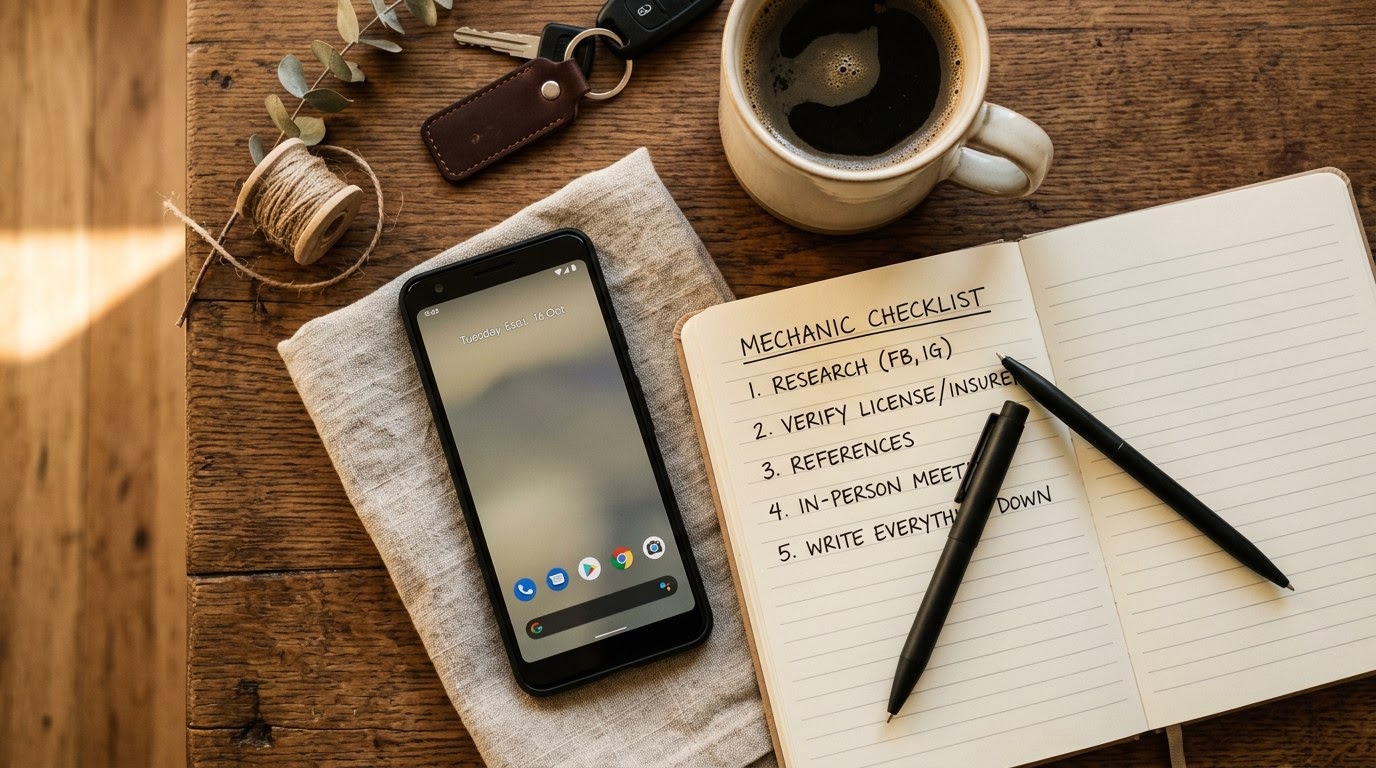
Follow this operational checklist when hiring an independent mobile mechanic found on Facebook Marketplace, Nextdoor, Craigslist, or local community groups. Using TrustMatch to verify unknown contractors protects you against deposit scams, unauthorized vehicle joyriding, and fraudulent repair estimates before you hand over your car keys.
1. Run a TrustCheck on the mechanic's details
Execute an instant identity check using TrustMatch to validate the contact details provided by your prospective mobile mechanic. Enter their first name and mobile phone number or email address into the system to generate a comprehensive TrustScore and risk verdict in under a minute. This step ensures you are communicating with a real person operating under their legal identity rather than an anonymous burner account created by a scammer targeting desperate drivers.
Mobile mechanic fraud frequently relies on anonymous VoIP (Voice over Internet Protocol) numbers generated through free messaging applications. When you input the technician's phone number, verify whether the line routes to a major wireless carrier or a disposable digital service. Scammers register disposable phone numbers to post deceptive repair ads across dozens of local neighborhood groups simultaneously. If the contact name fails to match the owner of the phone line or if high-risk flags appear, stop the conversation immediately.
FTC reported that online marketplace and social media service scams accounted for over $1.4 billion in fraud losses in 2025. Confirming basic identity details before setting up an appointment eliminates the vast majority of low-level scammers who rely entirely on digital anonymity. Record the confirmed legal name and verified phone number in your service records for accountability.
2. Ask for a 5-minute video call before sharing your location
Schedule a brief live video call with the mobile mechanic prior to giving out your home address or current location. Require the technician to show their face, introduce themselves, and display their service vehicle equipped with diagnostic tools or replacement gear. Live video verification immediately eliminates remote scammers who post stolen photos of work vans on social media marketplace listings to extract fake service deposits.
Initiate the call through FaceTime, WhatsApp, or Google Meet after establishing initial text contact. Pay close attention to the background during the video call. Authentic mobile mechanics operate work trucks, vans, or specialized utility trailers loaded with floor jacks, impact wrenches, battery testers, and toolboxes. Be alarmed if the individual makes excuses about a broken camera, low battery, poor signal, or severe shyness.
Observe whether the person on camera matches the photo on their social media profile. Scammers often steal pictures of real auto technicians from legitimate shop websites across the country to build fake local profiles. If the caller refuses to show their face or cannot show their service vehicle, terminate communication and block the profile instantly.
3. Verify business registration and state technical credentials
Cross-reference the mechanic's business name and personal credentials against official state business registries and professional licensing databases. Request their ASE (Automotive Service Excellence) certification number or state repair shop registration details before booking the appointment. Validating official documentation ensures the individual possesses the requisite technical competence to work safely on your vehicle's critical braking, steering, or electrical systems.
Search your state's Secretary of State database or Division of Corporations portal to check if the mechanic's business entity is active and in good standing. Many states mandate that mobile automotive repair operators maintain specific licenses or register as mobile motor vehicle repair facilities. Ask the technician to provide their state tax identification number or registered business DBA (Doing Business As) name.
Verify trade certifications directly through the official National Institute for Automotive Service Excellence online portal using the technician's certification ID number. Uncertified, inexperienced operators who attempt complex jobs like timing belt replacements or transmission overhauls often cause severe engine damage. Verifying credentials prevents unqualified amateur tinkerers from experimenting on your primary transport.
4. Audit social media profile history and community feedback
Examine the social media account publishing the repair ad to assess profile age, recent activity, and genuine local group engagement. Search community groups directly for the mechanic's name and phone number to read uncensored reviews from past local customers. Authentic service providers maintain established profiles with real personal photos, tagged posts, and long-standing interactions across local community boards.
According to BBB data, vehicle repair and home service scams resulted in over $12 million in reported consumer losses in 2024. Scammers exploit local Facebook buy/sell groups by creating fresh profiles, turning off post comments, and instructing interested buyers to send private direct messages. Audit the seller profile by clicking on their join date, main photo updates, and public friend lists.
Search local community groups using the search bar by typing the mechanic's name, business name, and phone number enclosed in quotation marks. Look for posts from previous clients warning others about uncompleted jobs, stolen parts, or fake estimates. If you discover multiple negative complaints, sudden account name changes, or profiles created just weeks ago, look for a different service provider.
5. Inspect commercial insurance coverage and demand a written estimate
Request proof of active commercial general liability and garage keepers insurance along with an itemized written quote before work begins. Obtain a digital PDF or physical document detailing labor rates, diagnostic charges, parts costs, and warranty coverage signed by the technician. Verifying coverage protects your vehicle against catastrophic damage caused by improper repairs while locking in pricing guarantees.
Require the mechanic to send a copy of their Certificate of Insurance (COI) naming their business entity. General liability insurance covers physical injury or property damage caused during service, while garage keepers insurance covers damage occurring to your vehicle while under the mechanic's care. Call the insurance carrier listed on the policy certificate to verify active coverage status before authorizing mechanical repairs.
Demand a complete written quote specifying exactly which auto parts will be replaced, including part numbers, manufacturer details, and labor hours. Never accept vague verbal estimates given over text messages or social media comments. Ensure the document includes a clear 30-day or 90-day parts and labor warranty clause protecting you against premature component failure.
6. Refuse upfront deposits sent via non-refundable payment apps
Reject all demands for advance deposits, part purchasing prepayments, or travel fees sent through peer-to-peer payment platforms like Zelle, Venmo, or Cash App. Require the mechanic to invoice you upon arrival or accept payment only after inspecting the replaced parts and test-driving the repaired vehicle. Legitimate mobile repair businesses carry corporate credit lines for parts purchases or charge through merchant processors offering dispute protection.
A 2024 AARP study found that roughly 25% of victims of peer-to-peer payment fraud never recovered their stolen funds. Scammers regularly state that they need cash upfront to order expensive replacement alternators, starter motors, or brake rotors from local auto supply stores. Once you transfer funds via peer-to-peer applications, the scammer deletes their social media account and blocks your phone number.
If the job requires expensive specialized auto parts, offer to call the local auto parts store directly to pay for the components over the phone under your own name for local pickup by the technician. Authentic service providers will gladly accept this arrangement because it eliminates their cash outlay while protecting your capital. Pay the remaining labor costs using a major credit card or secure credit card invoice link upon completion of the work.
7. Prepare a secure physical workspace and active safety protocols
Position your vehicle in a well-lit, visible driveway or open public space with active foot traffic before the mechanic arrives on site. Ensure a family member, neighbor, or friend remains present or informed of your exact appointment schedule while keeping your home locked. Establishing visible physical security deters potential opportunistic theft, keeps personal spaces safe, and maintains clear professional boundaries during mobile repairs.
Clear all personal valuables, garage door openers, vehicle registration documents, and spare keys from the interior of your car prior to the technician's arrival. Keep your primary home entryway locked throughout the repair session, preventing unmonitored access to your residential interior. Avoid scheduling mobile service sessions in isolated parking lots or quiet side streets late at night.
Inform the mechanic that you will inspect the replaced worn parts before settling the final balance. Request that the technician save all discarded components in a box for your personal verification. Once the work concludes, perform a thorough test drive around the block with the technician to ensure the mechanical issue is completely resolved before issuing final payment.
Verification Matrix for Mobile Mechanics
Consult this structured verification matrix to evaluate critical mobile mechanic credentials against high-risk operational red flags. Comparing identity records, licensing credentials, payment terms, and physical safety indicators allows you to rapidly screen out fraudulent service offers before booking. Use these specific validation criteria whenever evaluating independent mechanics met on Facebook, Nextdoor, or local classified ad channels.
| Step | What to verify | Red flag if missing |
|---|---|---|
| Identity Check | Full legal name match with carrier-backed phone number | VoIP burner number, generic pseudonyms, or unverified profile |
| Live Video Screening | Face match and equipped service van with tools | Refusal to enable camera or continuous camera failure excuses |
| Business Licensing | State SOS registration and valid ASE certification ID | No business tax ID, unregistered entity, or missing trade license |
| Insurance Audit | Active commercial general liability policy certificate | Refusal to show proof of liability insurance coverage |
| Written Estimate | Signed quote with itemized parts, labor, and warranty | Verbal quotes, hidden shop fees, or vague labor costs |
| Payment Method | Post-service payment via credit card or secure invoice | Demand for upfront P2P money transfers or non-refundable deposits |
Quick checklist before booking a mobile repair
Follow this actionable checklist step-by-step prior to allowing any mobile mechanic to begin working on your motor vehicle. Completing each task sequentially ensures complete identity validation, financial protection, and physical safety throughout the entire service transaction. Keep this quick reference guide handy during your initial consultation with independent mechanics.
- Run a TrustCheck on the mechanic's phone number and full name to confirm identity.
- Conduct a live five-minute video call to view the mechanic and service truck setup.
- Search state business registries and the ASE certification database for valid licenses.
- Review local social media community group feedback and account creation dates.
- Obtain a written, itemized price estimate including a parts and labor warranty clause.
- Verify active commercial liability insurance coverage directly with the provider.
- Confirm that full payment is due only upon satisfactory completion and test drive.
- Clean out personal valuables from the vehicle and conduct repairs in daylight.
Red flags during this process
Monitor the mechanic's behavior continuously and halt the transaction immediately if any concerning patterns or pressure tactics emerge mid-process. Refusing to show identification, demanding extra cash halfway through a job, or operating with unmarked, rental vehicles indicates high scam risk. Trust your instincts and terminate the interaction at the first sign of evasiveness or non-compliance with agreed terms.
Be extremely wary if the technician arrives in an unmarked passenger sedan without basic automotive tools, jacks, or diagnostic scanners. Untrained scammers often show up to jobs intending to perform temporary hacks, steal valuable catalytic converters, or substitute inferior parts. If an additional unannounced individual accompanies the mechanic without prior notification, ask them to leave or cancel the service immediately.
Never permit a mobile mechanic to take your car keys for a solo test drive away from your property. Accompany the technician during all test drives to maintain possession of your vehicle at all times. If the technician demands additional funds halfway through the repair while holding your keys, demand the return of your keys immediately and contact local law enforcement if they refuse.
As of October 2026, using TrustMatch and completing these pragmatic screening measures protects your financial welfare while maintaining mutual respect with honest trade professionals.
Frequently asked
Is it safe to hire a mobile mechanic from Facebook Marketplace?
It can be safe if you verify their identity and credentials before booking. Always run a TrustCheck on their phone number, require a live video call, inspect state licensing, and refuse upfront peer-to-peer deposits. Legitimate mechanics will willingly provide written estimates and proof of insurance.
Should I pay a mobile mechanic a deposit for parts upfront?
No, never send money upfront using non-refundable peer-to-peer applications like Zelle or Cash App. If expensive parts are needed, offer to pay the auto parts store directly over the phone under your name. Reputable mobile mechanics carry commercial credit lines or collect payment upon completion.
How do I verify if a mobile mechanic is certified and insured?
Ask for their ASE certification ID number and state repair shop license details, then cross-reference them in official state databases. Request a Certificate of Insurance showing commercial general liability coverage, and call the insurance issuer directly to confirm that the policy remains active.
What should I do if a mobile mechanic increases the price mid-repair?
Do not pay unauthorized price increases. Refer back to your written, itemized estimate signed before work began. Remind the technician that any additional work requires your explicit written authorization first. If they refuse to return your vehicle keys, contact local law enforcement.
Can a mobile mechanic do test drives without me present?
No, never allow a stranger to drive your vehicle alone. Always sit in the passenger seat during the post-repair test drive. Retain possession of your vehicle keys at all times until the job is complete, inspected, and verified to your satisfaction.
More in Guide
- How to Safely Sell High-End Trading Cards to In-Person Buyers
November 15, 2026
- How to Safely Conduct a Video Verification Call Before a First Date
November 13, 2026
- How to Safely Buy a Used Tiny House From a Private Seller
November 11, 2026