How to Safely Meet a Long Distance Dating Partner in Person
· 10 min read
1. Run a TrustCheck Verification
Running a TrustCheck gives you immediate digital confirmation that your long-distance partner's claimed name, phone number, and location match actual public records. Execute this identity check before committing funds to travel or disclosing personal residence details. To complete the check, enter your partner's first name and phone number or email address into TrustMatch to generate a comprehensive TrustScore and clear safety verdict in under a minute. Success means receiving a high match score confirming a legitimate individual.
Execute this verification early in the relationship, well before discussing physical travel arrangements. Request their current mobile number and primary email address during casual conversation. Input these details directly into the verification system to cross-reference carrier registrations, general geographic location, and active identity records. A legitimate partner will match active telecommunication records registered under their provided name.
Analyze the generated score carefully. If the tool indicates VOIP phone usage, unlinked prepaid burner numbers, or location discrepancies spanning multiple states or countries, pause all travel plans immediately. Ask your partner to explain any basic mismatch. Real individuals maintain verifiable digital footprints, whereas fraudulent operators rely on disposable numbers and masked locations to hide their true identity.
2. Demand a Live Interactive Video Call
Requiring a live interactive video call verifies that your partner visually matches their online profile photos and exists in real time without pre-recorded media filters or deepfake overlays. Conduct at least one live video conversation lasting a minimum of five to ten minutes prior to scheduling any long-distance trips. Success looks like a smooth, clear video conversation where your partner follows real-time prompts, answers questions fluidly, and displays consistent physical features.
Schedule the call during local daylight hours and insist on using established platforms such as FaceTime, Zoom, or WhatsApp Video. Request specific real-time actions during the call to defeat pre-recorded video feeds or AI-generated face swaps. Ask your partner to raise a specific hand, turn their head slowly side to side, or hold up a piece of paper with today's date written on it. Generative deepfake software frequently distorts when subjected to rapid lateral movement or occlusion near the face.
Treat technical excuses as severe safety failures. If your partner repeatedly claims a broken camera, low bandwidth, strict military blackout rules, or sudden technical glitches, do not proceed with travel. Catfish and professional scammers routinely promise to meet in person while refusing real-time video verification to conceal their actual age, gender, or appearance.
3. Cross-Reference Digital Footprints and Reverse Image Searches
Cross-referencing digital footprints confirms that your partner maintains an established, organic presence across multiple online platforms over a realistic timeframe. Perform reverse image searches on all profile pictures and examine linked social media accounts for genuine social interactions and aged content. Success means locating consistent public profiles across platforms like LinkedIn, Instagram, or Facebook that span several years and show natural interactions with friends, family, or colleagues.
Upload your partner's primary profile photographs to search engines like Google Lens, TinEye, or Yandex. Look for results showing the same images associated with different names, stock photography sites, or adult entertainment profiles. Scammers frequently steal pictures from lesser-known influencers, models, or foreign social media users to build convincing romantic personas.
Inspect social media profile account creation dates and engagement patterns. Profiles created within the past few months that feature zero local tagged photos, sparse comment histories from real accounts, or locked follower lists warrant extreme caution. Requesting a quick photo of them holding a distinct local landmark or local daily newspaper can also instantly confirm current physical location.
4. Control Your Own Travel and Lodging
Controlling your own travel and lodging ensures you maintain total independence and physical safety throughout your long-distance trip. Book your own round-trip plane or train tickets, secure a private hotel room in your name, and manage your ground transportation directly through reputable apps or rental services. Success means having guaranteed, independent accommodations and immediate exit options at every stage of the journey without reliance on your host.
Never accept flight tickets purchased directly by your partner or allow them to book accommodations on your behalf. Scammers and bad actors can easily cancel ticket reservations remotely after you arrive, leaving you stranded in an unfamiliar city, or use stolen credit cards that result in sudden booking invalidation. Pay for every segment of travel using your own personal credit card so you hold full authority over your itinerary.
Reserve a hotel room or verified short-term rental situated in a central, well-lit district with 24-hour front desk staffing. Do not stay at your partner's private home, apartment, or secluded cabin during an initial trip. Having your own key and private room allows you to retreat safely at any moment if red flags surface during your initial in-person encounters.
5. Select a Neutral Public First Meeting Location
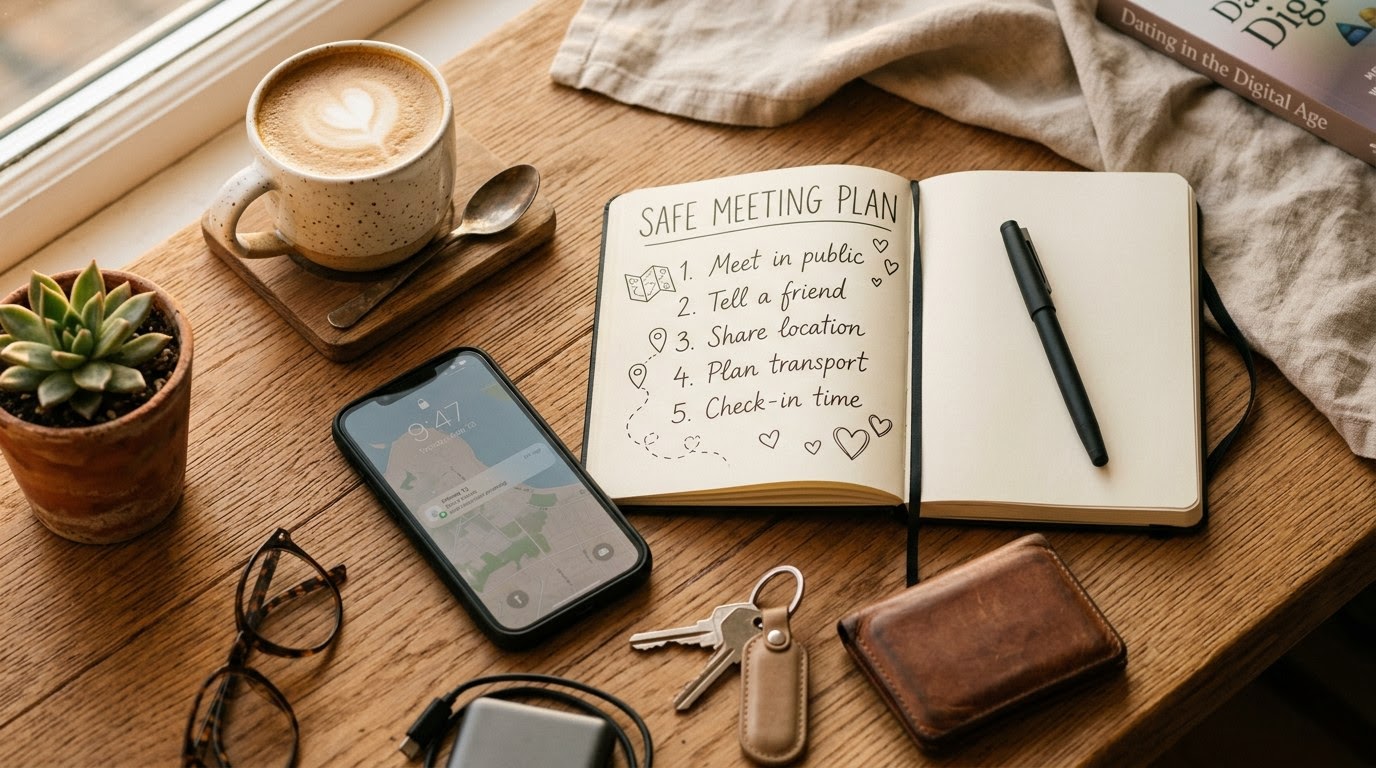
Selecting a neutral public location for your initial meet-up provides physical security, crowded surroundings, and easy access to assistance if needed. Choose busy, high-traffic commercial venues such as popular coffee shops, hotel lobbies, or crowded restaurants located near major transit corridors. Success looks like arriving at a well-lit public space where staff and bystanders are present, allowing you to meet safely without feeling isolated or trapped.
Arrange your own transportation directly to and from the venue. Tell your partner that you will meet them inside the venue rather than allowing them to pick you up from your hotel lobby or airport arrival terminal. Entering a vehicle driven by a person you have never met face-to-face surrenders physical control over your environment before you have verified their in-person demeanor.
Limit your initial meeting to a concise timeframe, such as an hour for coffee or lunch. Keep your mobile device fully charged and visible on the table. Do not accept invitations to move to private residences, quiet parks, or unpopulated areas during the first day of your trip. Establish a firm boundary that all meetings during this initial visit will take place strictly in public settings.
6. Establish a Real-Time Location Sharing Protocol
Establishing a real-time location sharing protocol keeps your trusted friends or family members informed of your exact whereabouts throughout your long-distance trip. Activate continuous GPS tracking on your mobile device and share your live location with at least two trusted safety contacts before meeting your partner. Success means having an active safety net where designated contacts monitor your location, receive regular text check-ins, and know exact response protocols if you miss a scheduled update.
Configure native location-sharing services such as Apple Find My or Google Maps location sharing set to 'Share Indefinitely' or for the full duration of your trip. Send your safety contacts a detailed digital folder containing your host's full verified name, phone number, initial meeting venue addresses, hotel details, and flight itineraries. Include photos of your partner and their vehicle license plate if available.
Set up mandatory check-in code words with your safety contact. Establish one innocent phrase that signifies everything is going smoothly (for example, 'The hotel coffee is great') and a distinct phrase that discreetly signals distress without alerting your date (such as 'Remember to feed the cat tonight'). Agree that if you fail to check in within 30 minutes of a scheduled deadline or send the distress phrase, your contact will call local law enforcement near your meeting location.
7. Maintain Strict Financial Boundaries
Maintaining strict financial boundaries protects you against common long-distance romantic extortion schemes and wire fraud. Refuse any request to transfer money, cover sudden travel emergencies, purchase gift cards, or deposit checks on behalf of your online partner. Success looks like keeping your personal finances completely separate from the relationship, ensuring that no monetary transactions occur before or during your initial in-person visit.
Scammers construct elaborate crisis narratives right before a scheduled meeting to extract urgent funds. Typical lies involve sudden medical emergencies, airport customs detainment, broken down vehicles on the way to the airport, or frozen bank accounts. FTC data published in 2024 demonstrates that reported romance scam losses climbed past $1.3 billion nationwide, proving that financial requests are almost always malicious.
Never send cryptocurrency, wire transfers via Western Union, wire payments through peer-to-peer apps, or digital gift cards. If your partner claims they cannot afford to travel to meet you or demands that you subsidize their expenses, halt communication immediately. A genuine dating partner will never place financial pressure or emergency demands on you prior to establishing a secure in-person relationship.
Verification Summary and Risk Matrix
Reviewing a complete risk matrix allows you to systematically evaluate your partner's profile against key safety metrics before traveling. Use this structured table to compare mandatory safety steps, required verification outputs, and immediate red flags that require canceling your trip. Success means verifying every single metric with zero unresolved red flags before booking tickets or boarding transportation.
Before committing time and money to long-distance travel, audit your partner against the criteria below. Do not ignore individual red flags or assume excuses are harmless. A single unverified metric significantly increases your risk profile during an out-of-town meeting.
| Verification Step | What to Verify | Red Flag if Missing |
|---|---|---|
| Identity Verification | First name, phone number, and location match active telecommunication and public records. | VOIP phone usage, unlinked prepaid burner numbers, or geographic location mismatch. |
| Live Video Screening | Face-to-face video call lasting 5+ minutes with live real-time movement prompts. | Repeated camera glitches, refusal to turn on video, or deepfake facial distortion. |
| Digital Footprint Audit | Reverse image search yields original social accounts spanning multiple years. | Photos tied to stock sites or third-party accounts; newly created social media profiles. |
| Travel Autonomy | Independently booked flights, private hotel reservations, and self-managed transit. | Partner insists on booking tickets, housing you privately, or picking you up alone. |
| Financial Boundary Check | Zero monetary requests, emergency loans, or travel subsidy demands. | Requests for wire transfers, gift cards, emergency cash, or crypto deposits. |
Red Flags During This Process
Recognizing immediate red flags mid-routine enables you to halt travel plans or exit unsafe situations instantly when something feels off. Pay close attention to subtle shifts in communication tone, evasive answers regarding identity, or pressure to bypass your safety protocols. Success means recognizing these danger signs early and terminating contact or changing location before your personal safety is compromised.
Watch for aggressive pushback against your verification requests. If your partner accuses you of paranoia, lack of trust, or disrespect when you ask for a video call or run an identity check, recognize this as defensive manipulation. Legitimate individuals who respect your well-being will gladly cooperate with reasonable safety steps to put your mind at ease.
Be alert to last-minute itinerary alterations once you arrive in their city. If your partner suddenly attempts to switch the meeting location from a busy public restaurant to a remote private house, claims their car broke down and demands you take a rideshare alone to an unfamiliar address, or brings unannounced companions, execute your exit plan immediately. Return to your hotel or board return transportation without hesitation.
Pay attention to monetary requests that surface during transit. Scammers often wait until you are midway through a journey or checked into a hotel to fabricate an urgent crisis. Never send funds under any circumstances, regardless of how convincing or emotional the narrative sounds. Abort the trip and contact local law enforcement or airport security if you feel threatened.
Quick Checklist Before Departing
Completing this final quick checklist ensures you have executed every critical safety requirement before stepping onto a plane, train, or highway. Follow these sequential operational steps in order to confirm that your itinerary, safety protocols, and location tracking systems are fully active. Success means completing all six steps without exception, giving you total confidence and independence throughout your long-distance meeting.
- Execute a complete identity check through TrustMatch using your partner's full name and phone number to verify clear records.
- Conduct a live 5-minute video call using interactive real-time movement prompts to rule out impersonation or deepfakes.
- Book your own round-trip travel tickets and secure an independent hotel room under your name in a central public area.
- Select a crowded, high-traffic public coffee shop or restaurant as the mandatory venue for your initial meeting.
- Share your live smartphone GPS location indefinitely with two trusted friends and provide them with your full itinerary.
- Establish specific check-in times and clear distress code words with your emergency contacts before departure.
Final Safety Calibration
Calibrating your safety approach ensures you strike the ideal balance between practical self-protection and fostering genuine emotional connections during your long-distance dating journey. Implementing these essential verification steps protects your physical safety while respecting a real partner, serving as sensible self-protection rather than intrusive surveillance. By running your checks through TrustMatch and holding firm to your safety protocol, you protect your physical safety while opening the door to authentic human connection.
Frequently asked
How early should I perform identity verification before meeting a long-distance date?
Perform identity verification at least two to three weeks before booking non-refundable travel or committing funds to a trip. Running an early check allows sufficient time to cross-reference public records, request follow-up video calls, and analyze any potential red flags. Never wait until the day before departure to verify an online partner's real name, phone number, and location details.
What should I do if my long-distance partner refuses to do a video call?
Treat a refusal to conduct a live video call as an immediate dealbreaker and halt all travel plans. Impersonators and romance scammers frequently cite bad camera quality, spotty internet, work restrictions, or personal shyness to avoid live video exposure. A genuine dating partner who respects your safety will gladly agree to a brief video conversation to confirm their identity.
Is it safe to stay at my long-distance date's house on the first visit?
No, stay in an independent hotel room or verified short-term rental during your initial in-person meeting. Residing at a stranger's house eliminates your physical privacy and leaves you without a neutral escape route if uncomfortable situations arise. Booking your own lodging ensures you retain total control over your personal schedule, physical security, and travel accommodations throughout the trip.
What is the best way to handle transportation during a long-distance meet-up?
Manage all transportation independently by renting a car, utilizing professional rideshare services, or taking public transit. Do not allow your partner to pick you up at the airport or transport you in their private vehicle during initial meetings. Arriving at public venues on your own guarantees complete mobility and prevents you from being trapped in an unfamiliar city.
How can I explain these safety precautions to my date without offending them?
Communicate your safety steps directly, calmly, and frame them as standard practical protocol for all online meetings. State clearly that verified identities, public meeting spots, and personal hotel bookings protect both individuals equally. A mature, authentic partner who values your comfort will respect your commitment to personal safety and willingly support every step of your verification process.
More in Guide
- How to Safely Buy Fine Art From Private Online Sellers
September 20, 2026
- How to Safely Buy a Used Jet Ski From a Private Seller
September 18, 2026
- How to Safely Buy a Used Drone From a Private Seller Online
September 16, 2026