How to Safely Move From Dating Apps to Personal Phone Numbers
· 11 min read
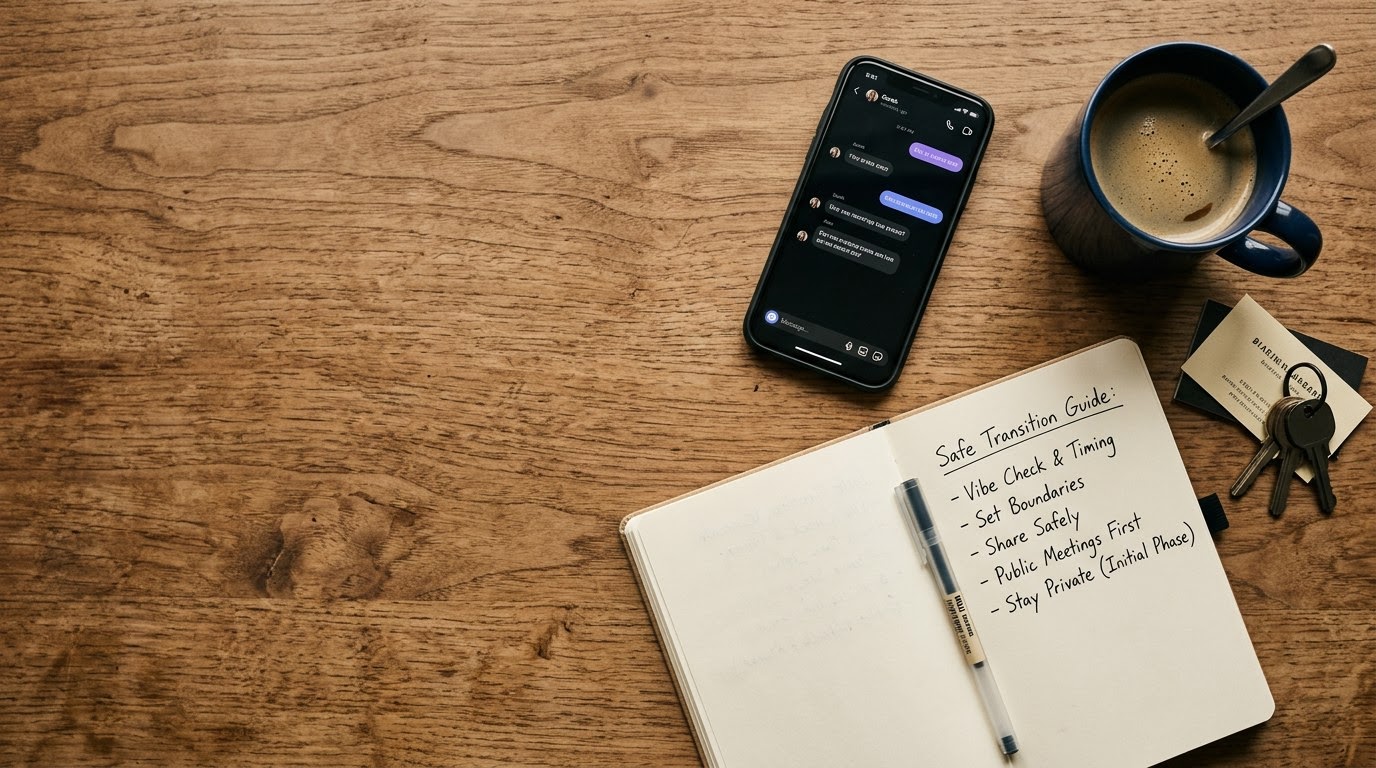
Use this guide when you match with someone on a dating app and want to move the conversation to personal text messages without exposing your real phone number or identity to unknown risks. By combining privacy-first communication tools with TrustMatch identity verification, you can safely confirm who you are talking to before sharing personal contact details.
1. Run a TrustCheck Identity Verification
To run a TrustCheck identity verification, enter your match's legal first name and their provided phone number or email address directly into the TrustMatch search bar. TrustMatch cross-references public signals and digital footprint indicators to generate a clear TrustScore and safety verdict in under a minute. Success looks like a verified name match, an active carrier history, and a high TrustScore that confirms your match is operating under a legitimate, traceable identity before you share your personal number.
Moving off a dating app strips away the safety nets built into platforms like Tinder, Bumble, or Hinge. When you communicate inside an app, moderation systems monitor for spam patterns, illicit links, and reported accounts. The moment you move to SMS or WhatsApp, you lose those automated protections. Scammers push to leave dating platforms quickly precisely because private messaging removes oversight. According to 2024 FTC data, reported romance scam losses climbed past $1.3 billion as scammers increasingly shifted victims off dating apps onto private channels.
Executing an identity check before handing over your mobile number creates an immediate layer of defense. Open the TrustMatch platform and type in the person's claimed first name along with the phone number or email address they provided. The platform analyzes connected public records, domain registries, and risk indicators without alerting the individual. Within 60 seconds, you receive a TrustScore along with a clear risk breakdown. If the phone number links to a known spam cluster, a disposable VoIP account registered hours ago, or a completely different name, you immediately know to keep your distance.
Make identity verification standard practice whenever a match suggests moving to text messaging. This check ensures that you are interacting with a real individual operating under their genuine name rather than an anonymous bad actor using disposable contact info.
2. Cross-Check Profile Images with Reverse Search
To perform a reverse image lookup on a dating match, save two or three of their primary profile photos to your device and upload them into Google Lens or TinEye. Check whether the pictures appear on stock photography sites, modeling portfolios, or social media accounts tied to completely different names. Success looks like zero matches on stock sites, or matches that lead directly to public social media profiles that align with the person's stated name, location, and age.
Catfishing and profile cloning remain widespread issues on dating applications. Fraudulent operators regularly download photos from private Instagram accounts, travel blogs, or public influencer profiles to construct convincing alter egos. A 2023 BBB study showed that over 60% of online romance fraud incidents involved stolen photos or completely fabricated digital personas. Performing a quick image search takes under two minutes and prevents you from falling for stolen media.
Begin by taking screenshots or downloading the clearest photos from your match's dating profile. Select photos that feature clear facial views rather than group shots or heavily filtered portraits. Go to Google Images or TinEye and click the camera icon to upload each file. Search for matching visual patterns across the web. If the exact photo appears on a stock imagery catalog, an international fashion agency, or a social media profile belonging to an individual in another country with a different name, cease communication instantly.
Look out for telltale signs of synthetic AI image generation as well. Inspect hands, jewelry, background geometry, and ear symmetry in profile images. AI photos often suffer from distorted background text, mismatched earrings, or unnaturally smooth skin textures. When your image search yields authentic results linked directly to the match's stated identity, you can move forward with greater confidence.
3. Set Up a Virtual VOIP Phone Number
To protect your real cell phone number, sign up for a free virtual phone number through Google Voice, TextNow, or a similar VOIP service before taking messaging off the dating app. Give your match this virtual number instead of your mobile carrier number. Success looks like receiving texts and calls seamlessly on your smartphone without revealing your real phone number, home address, or cellular carrier account details to a stranger.
As of November 2026, mobile carrier databases link personal cell numbers directly to home addresses, voter rolls, and family records. Handing your primary cell phone number to an unverified stranger allows anyone with access to cheap commercial lookup tools to uncover your full legal name, home address, workplace, and list of relatives. A virtual phone number provides a safe buffer, allowing text messaging and phone calls while keeping your personal records entirely hidden.
To set this up, download a reputable secondary phone number app like Google Voice or TextNow. Select a local area code and choose a dedicated phone number. Route incoming calls and text messages directly to your existing smartphone. When your dating match asks to move off the dating app, provide this virtual number. Continue using this secondary line during all early conversations, text exchanges, and photo sharing.
Only transition to your real mobile carrier number after you have met in person, completed multi-step identity checks, and built established personal trust over time. If a match turns out to be toxic, aggressive, or scam-oriented, you can block or discard the virtual number instantly without changing your actual mobile phone contract or compromising your personal security.
4. Ask for a 5-Minute Video Call
To verify your match's physical identity live, suggest a quick five-minute video call through the dating app's built-in feature or a privacy-safe app like FaceTime or WhatsApp before giving out your personal number. Ask them to wave, mention today's day of the week, or answer a casual question in real time. Success looks like a clear, unglitched video stream matching their profile photos without excuses about broken cameras, low bandwidth, or sudden travel.
A live video conversation serves as the ultimate test for fake profiles, stolen images, and deepfake video streams. While bad actors can easily fake text messages, voice notes, and curated profile photos, sustaining a real-time, interactive video feed requires actual presence. Anyone genuinely interested in dating will welcome a short video chat as a sensible, mutual safety measure before planning an in-person date.
Frame the request casually and positively. Send a brief message such as: "I love chatting here! Let's do a super quick 5-minute video call tonight before we swap numbers and coordinate plans." Utilize the in-app video calling feature built directly into Tinder, Bumble, or Hinge to maintain privacy. During the call, pay attention to video lighting, dynamic facial expressions, and natural conversational responses.
Watch out for common evasive tactics. If your match claims their front-facing camera is suddenly broken, their internet connection cannot support video, or their job prohibits video calls, view this as a major safety concern. Genuine matches understand modern online dating precautions and will happily hop on camera for a quick greeting.
5. Test Contact Consistency Across Messaging Platforms
To verify that your match maintains a consistent digital identity, ask for their professional LinkedIn profile or public social media handles before continuing off-app communication. Review their posting history, mutual connections, and account creation dates to ensure the account has realistic, multi-year activity. Success looks like consistent naming, verifiable work history, and realistic social interaction spanning several years rather than a brand-new profile created a few weeks ago.
Scammers and bad actors operate in the shadows, leaving minimal digital history or relying on throwaway accounts created within the past month. An authentic individual living in your area typically possesses an established digital footprint across professional or social networks. Verifying cross-platform consistency ensures that the story your match tells on their dating profile matches their real-world presence.
Ask your match for their full name or handle on a platform like LinkedIn, Instagram, or Facebook. When reviewing a LinkedIn profile, verify that their stated job title, company location, and educational background match what they communicated during your app conversations. Check the account's connection count and posting timeline. On consumer social channels, look for tagged photos from friends, organic comment threads, and historical posts dating back several years.
Be cautious if you discover freshly minted accounts with zero tagged photos, locked connection lists, or zero local friends. Discrepancies between their dating profile claims and their social footprint warrant an immediate hold on moving off-app until you clear up the conflicting details.
6. Pause Communication at the First Request for Money or Financial Info
To shield yourself from financial fraud, immediately stop all off-app communication if your match asks for money, gift cards, crypto investments, or banking assistance under any pretext. Block the contact number and report the profile to the dating platform right away. Success looks like maintaining strict financial boundaries, keeping your personal accounts safe, and cutting off contact at the very first sign of monetary pressure or investment solicitations.
Financial exploitation represents the ultimate objective of almost every dating app scammer. Fraudsters build rapport over several days or weeks before engineering a sudden crisis or pitching an exclusive financial opportunity. FBI reports from 2024 revealed that romance scams resulted in individual average losses exceeding $15,000 per victim when money requests went unheeded. Establishing absolute zero-tolerance rules around financial requests protects your bank account from severe losses.
Common financial traps include requests for emergency medical bills, fake travel visa fees, stuck customs packages, gift cards for phone credits, or invitations to trade cryptocurrency on specialized trading websites. Never send wire transfers, Zelle payments, Venmo funds, or crypto assets to someone you have not verified thoroughly and met in person multiple times.
If your match introduces financial topics or asks for assistance paying for an emergency, do not negotiate or give them the benefit of the doubt. Immediately terminate all messaging, block their virtual number, block their dating profile, and file a detailed report with the dating platform to protect future users.
Verification Steps Summary Table
Refer to this quick reference matrix to review each step of the verification protocol, what specific data to check, and the exact red flags that signal potential fraud. Use these clear indicators to evaluate whether a match is operating transparently or attempting to hide critical identity information during off-app communication.
| Step | What to verify | Red flag if missing |
|---|---|---|
| 1. TrustCheck Verification | Legal name, carrier record, and safety score | Unlisted carrier, disposable number, or mismatched name |
| 2. Reverse Image Search | Profile photo origin and web usage | Photos found on stock image sites or foreign profiles |
| 3. Virtual VOIP Number | Off-app text compatibility and caller ID secrecy | Match demands your real carrier number or primary line |
| 4. Live Video Call | Real-time visual appearance and voice match | Refusal to appear on camera or claims of broken hardware |
| 5. Social Footprint Check | Multi-year employment and social presence | Newly created profiles with zero tagged photos or history |
| 6. Financial Boundary Enforcement | Strict adherence to zero monetary exchanges | Any request for cash, gift cards, crypto, or account access |
Quick Checklist for Safe Communication Off-App
Follow this sequential checklist whenever you prepare to transition from a dating app to text messaging or direct communication channels. Complete every action step in order to thoroughly protect your phone number, real-world privacy, and financial security before arranging an in-person meetup.
- Perform a TrustCheck identity verification using your match's legal first name and provided phone number or email address.
- Execute a reverse image lookup on primary profile photos using Google Lens or TinEye to check for stolen media.
- Set up and share a virtual VOIP phone number (such as Google Voice) rather than exposing your personal cell number.
- Complete a 5-minute live video call inside the dating app to verify visual identity and rule out deepfakes or stolen photos.
- Review professional or social media handles to confirm cross-platform naming and active multi-year history.
- Block the contact and report the account immediately if any request for financial assistance or gift cards occurs.
Red Flags During This Process
If your match displays suspicious behavior or pushes back against routine safety checks during this verification routine, pause communication immediately and reassess the risk. Genuine individuals who value safety will respect your decision to verify identities and protect personal contact details. Anyone who grows aggressive, guilt-trips you, or demands your private personal number is revealing dangerous boundary pushing before you even meet.
Watch for specific warning signs during the transition process:
- Extreme Urgency to Leave the App: The match insists on leaving the dating app within the first few messages, citing unusual excuses like deleting their account or hating the app interface.
- Refusal of Video Verification: They make repeated excuses to avoid live video calls, claiming dark lighting, poor internet, remote travel, military deployment, or severe camera shyness.
- Pushback Against Virtual Numbers: They become agitated when they realize you are using a virtual number or insist that you share your real mobile carrier contact details immediately.
- Inconsistent Personal Details: The name attached to their phone line, social media handles, or work profile fails to align with the name and story provided on their dating profile.
- Early Declarations of Affection: They express intense emotional attachment, pet names, or grand romantic promises after only a few short days of text messaging.
When you encounter any of these red flags mid-routine, do not attempt to confront or debate the match. Silently block their number across your phone and virtual apps, unmatch them on the dating platform, and submit a safety report detailing their behavior.
By running a quick verification with TrustMatch and taking incremental safety steps, you protect yourself while according real respect to genuine potential partners.
Frequently asked
Why is giving out my real phone number to a dating match risky?
Giving out your primary mobile phone number allows unknown individuals to run reverse lookup searches that reveal your full legal name, home address, workplace, and family contacts. Bad actors can use this private information for harassment, stalking, identity theft, or social engineering attacks before you have established real trust.
How does a virtual VOIP phone number protect my privacy?
A virtual VOIP phone number acts as a secure firewall between a dating match and your personal identity. It allows you to send text messages and make calls from your smartphone without exposing your actual mobile carrier line, billing address, or underlying personal public records to a stranger.
What should I do if my match refuses to do a video call?
If a match repeatedly refuses a brief video call or provides excuses about broken hardware, bad connection, or personal shyness, consider it a serious safety red flag. Politely inform them that video verification is a necessary boundary for you before moving off-app or meeting in person.
How fast does a TrustCheck verification generate results?
A TrustCheck identity check delivers a clear TrustScore and safety verdict in under a minute. By entering your match's legal first name and provided phone number or email address, you instantly receive cross-referenced risk signals without alerting the person or compromising your own personal search privacy.
Is running an identity check on a dating match acceptable etiquette?
Yes, verifying the identity of someone you met online is standard safety protocol in modern digital dating. Protecting your physical, emotional, and financial safety takes priority over avoiding awkwardness. Genuine potential partners who value personal safety will respect and encourage responsible verification practices.
More in Guide
- How to Safely Sell High-End Trading Cards to In-Person Buyers
November 15, 2026
- How to Safely Conduct a Video Verification Call Before a First Date
November 13, 2026
- How to Safely Buy a Used Tiny House From a Private Seller
November 11, 2026