How to Safely Rent a Private Studio Space Met Online
· 9 min read
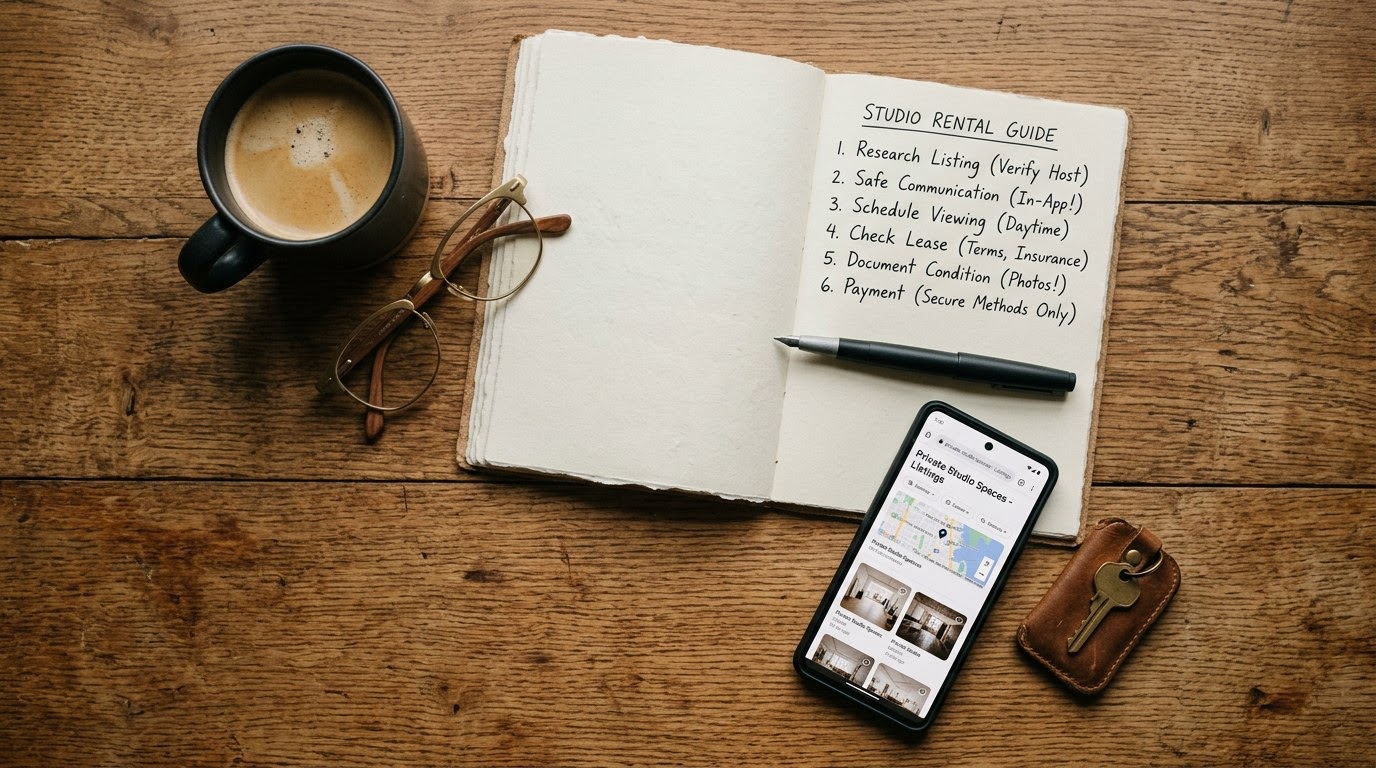
1. Run a TrustCheck on the studio host
To verify a studio host's identity, enter their first name and phone number or email address into TrustMatch to generate a detailed TrustScore and risk verdict in under a minute. This immediate check validates that the phone number connects to a real individual rather than a VoIP burner service, confirms public identity records, and flags suspicious activity patterns associated with high-risk peer-to-peer listing networks online.
Request the host's full legal name, professional contact details, and primary mobile number before discussing rental rates or booking dates. Input these parameters directly into the verification system to evaluate their digital footprint across multiple verified public registries. Authentic studio owners and venue managers maintain consistent public contact records linked to their business name or personal identity. If the host insists on communicating exclusively through encrypted messaging channels without providing a traceable phone number, pause the transaction immediately. A verified identity report gives you confidence that the person claiming to manage the studio is a legitimate operator. Ensure the name provided on payment requests matches the verified identity returned by the lookup tool.
2. Request a live video walk-through of the studio
To confirm a studio space actually exists, ask the host for a live five-minute video tour via FaceTime, Zoom, or WhatsApp before paying any deposit. A real-time walk-through proves physical possession of the venue, allows you to inspect natural lighting, power outlets, soundproofing, and ceiling height, and instantly exposes scammers who rely on stolen listing photos or stock real estate images.
During the live video call, ask the host to perform specific actions in real time. Request that they turn on specific studio lights, open a window, or show close-up views of specialized gear like seamless paper backdrops, audio interfaces, overhead trusses, or grip equipment. Watch for inconsistencies between the live video broadcast and the published photos, such as missing architectural features, different wall colors, or altered floor layouts. If a host refuses a brief live video tour under the pretext of being busy, traveling, or experiencing technical difficulties, treat the listing as potential fraud. Scammers frequently operate from remote locations and rely on stolen imagery from legitimate commercial studio websites to harvest illegal deposits from creative professionals.
3. Cross-reference tax records and property ownership
To verify that the host has legal authority to rent out the property, search local county tax assessor databases or municipal land registries using the studio's physical address. Matching the parcel owner's name with the host's identity confirms legal ownership, while commercial lease certificates or written sublease authorizations prove that tenant managers have proper permission to host third-party creative sessions.
Most municipal governments maintain free online public property databases searchable by street address. Search the county assessor website to retrieve the current deed holder's legal name. If the host operates under a corporate entity or limited liability company (LLC), query your state's Secretary of State business registry to confirm the managing members. If the host is a master tenant sub-leasing the space, require written proof of landlord approval allowing short-term commercial media production. According to a 2025 BBB report, online rental and booking scams accounted for over $18 million in reported individual victim losses. Verifying structural title or sublease rights prevents unexpected lockouts or mid-shoot evictions by property managers who never authorized third-party rentals.
4. Inspect studio location data and satellite images
To validate the studio location, cross-reference the provided address with high-resolution satellite mapping software and street-level imagery tools. Comparing window placement, exterior brickwork, loading dock access, and adjacent buildings against online photos confirms that the advertised interior corresponds to the actual physical building structure at that specific geographic location.
Examine the exterior of the building using satellite imagery services and street view photography platforms. Look for identifying markers shown in interior photos, such as large industrial windows, fire escapes, skylights, loading bays, or distinctive door frames. Check whether the building permits commercial or creative operations, or if it sits inside a restricted gated residential community with strict anti-commercial rules. Verify parking availability and load-in zones for heavy video or photo equipment. If the satellite view reveals a single-family residential house while the host advertises a multi-level industrial loft, terminate communications immediately. Mapping verification ensures you do not travel to an empty lot or non-existent address on production day.
5. Issue payment through protected methods only
To protect your rental funds, pay deposits using credit cards or third-party escrow services that offer robust buyer protection and chargeback guarantees. Never send non-refundable funds via wire transfers, peer-to-peer payment apps set to peer mode, gift cards, or cryptocurrency, as these payment channels offer zero consumer recourse if the studio listing turns out to be fraudulent.
Insist on using secure credit card transactions or commercial invoice platforms that issue itemized receipts detailing the rental date, hours, and security deposit terms. FTC data shows that imposter and private seller scams resulted in more than $2.7 billion in total losses during 2024. If the host requests payment through peer-to-peer apps, insist on marking the transaction under goods and services protection to retain purchase protection. Avoid hosts who demand full payment up front weeks in advance, or who insist on receiving cash upon arrival before letting you inspect the space. A standard arrangement involves a partial deposit to reserve the date, with the balance due upon arrival after inspecting the physical studio environment.
6. Sign a written short-term studio hire agreement
To establish legal protections, execute a written short-term studio hire contract prior to transferring any deposit or booking funds. A formal agreement defines precise rental hours, maximum occupancy, included photography or audio equipment, security deposit refund terms, cleaning protocols, and liability clauses, ensuring both host and renter understand their rights and duties.
Do not rely on informal direct messages or verbal agreements on social media platforms. Use electronic contract signing services to issue a comprehensive agreement containing the host's legal name, business entity, address, contact details, and precise rental conditions. Specify cancellation refund timelines, overtime hourly rates, utility usage limits, and responsibility for pre-existing damage to gear or walls. Ensure the agreement includes an inventory list of all rented equipment present in the studio space. Having a signed contract protects you if a host attempts to withhold a security deposit without justification or falsely claims gear was broken during your production block.
Studio verification reference table
Use this structural reference table to systematically cross-reference every verification stage when evaluating an online studio listing. Comparing required verification steps against corresponding red flags helps you evaluate risk factors quickly, identify missing proof points, and determine whether a private studio host operates a legitimate creative venue before sending deposit funds.
| Step | What to verify | Red flag if missing |
|---|---|---|
| Identity Check | Host full name, phone number, and TrustScore verdict | Host uses anonymous handles, VoIP numbers, or altered names |
| Live Video Tour | Real-time walk-through of interior space and lighting gear | Host refuses live call, claiming technical issues or travel |
| Ownership Records | Deed records or authorized landlord commercial sublease document | Unwillingness to provide physical address or corporate owner name |
| Mapping & Location | Exterior matches satellite imagery and street view details | Address points to empty lot, private house, or non-existent building |
| Protected Payment | Credit card processor or goods-and-services invoice payment | Demand for irreversible wire transfer, gift cards, or cash apps |
| Written Contract | Signed short-term hire agreement with liability and refund clauses | Refusal to sign a written contract or clear receipt of payment |
Quick checklist before sending a studio deposit
Complete this sequential verification checklist before issuing any financial deposit for a private studio space found online. Reviewing each action item ensures you have validated identity credentials, confirmed physical location details, inspected equipment functionality, and secured clear contractual protections prior to committing production budgets to an independent host.
- Run an identity check on the host to confirm their legal identity and verify their phone number.
- Complete a five-minute live video tour to verify the space interior, natural lighting, and gear availability.
- Search county property tax databases or corporate registries to confirm valid venue ownership rights.
- Inspect street-level mapping and satellite images to ensure the address matches advertised photographs.
- Obtain a signed short-term rental contract outlining booking hours, deposit terms, and liability limits.
- Pay the holding deposit using a credit card or buyer-protected merchant channel.
Red flags during this process
Recognize mid-process red flags immediately to prevent financial loss and protect your team when booking non-traditional studio locations. If a host suddenly changes payment methods, rushes deposit deadlines, or alters physical access instructions shortly before your scheduled shoot, pause all transactions immediately and execute secondary verification procedures to ensure host legitimacy.
Be alert for subtle warning signs that appear after initial contact. As of November 2026, scammers frequently attempt to pivot payment methods right before a planned booking. A common scam tactic involves accepting an initial booking request, then messaging hours later claiming their primary payment processing account is disabled and requesting an urgent wire transfer or cash app payment.
Watch for these mid-routine red flags during negotiations:
- The host refuses to meet in person or provide access codes until 100% of the payment is made via an irreversible cash transfer app.
- The address provided in the signed contract differs from the address displayed on the original social media or classified ad listing.
- The host claims that background equipment shown in photos (such as strobe lights, grand pianos, or sound booths) requires an additional cash deposit paid directly to a third party.
- The host requests that you communicate outside off-platform messaging channels while refusing to provide a traceable landline or verified mobile number.
- The host pressures you with fake competing offers, claiming another renter will take your date within the next thirty minutes if you do not wire funds immediately.
If any of these scenarios occur, stop the transaction. Demand a live video check or request to process payment strictly through protected credit channels. If the host refuses, cancel the booking immediately and report the user profile to the listing platform.
Following a systematic verification protocol ensures that your creative projects proceed smoothly while safeguarding your production budget against rental fraud. Performing identity checks with TrustMatch, requiring live video tours, and using protected payment platforms allows legitimate studio hosts to demonstrate their reliability while keeping you secure. These verification steps protect your financial investment and safety while respecting the legitimate property owner's boundaries and peace of mind.
Frequently asked
How do I verify a private studio listing found on Instagram or Craigslist?
Ask the host for their full legal name and mobile phone number, then run an identity check using TrustMatch to verify their contact details. Follow up by requesting a five-minute live video tour to view the interior space in real time. Finally, cross-reference the physical property address with municipal tax records to confirm that the host possesses legitimate rental authority before sending any money.
What should I do if a studio host demands payment through a cash app?
Decline to send non-refundable funds via cash apps set to peer-to-peer mode. Require payment processing through a major credit card or an invoice platform that offers buyer protection policies. If the host insists on peer-to-peer transfers without buyer safeguards, treat the transaction as high risk and refuse to issue a deposit until clear identity verification and contract terms are completed.
Is a verbal agreement legally sufficient for booking a private studio?
No, verbal agreements or informal direct messages do not offer sufficient legal protection for short-term studio bookings. Always execute a signed written contract detailing rental hours, liability terms, cancellation policies, equipment usage rights, and security deposit refund conditions. A written contract establishes binding rules and protects both parties in the event of pre-existing property damage or scheduling disputes.
How can I tell if studio listing photos are stolen or fake?
Request a live video walk-through to view the space in real time and ask the host to show specific room angles or equipment. You can also run reverse image searches on the listing photos to see if they appear on existing commercial studio websites elsewhere. Comparing window layouts with exterior satellite map views helps confirm structural authenticity.
What happens if a host refuses to do a live video tour before booking?
Treat any refusal of a brief live video tour as a major security red flag. Legitimate studio managers welcome the opportunity to show their facility to prospective creative clients. Hosts who claim they are out of town, busy, or experiencing camera issues are frequently scammers operating off stolen photos to collect fraudulent deposit transfers from unsuspecting renters.
More in Guide
- How to Safely Sell High-End Trading Cards to In-Person Buyers
November 15, 2026
- How to Safely Conduct a Video Verification Call Before a First Date
November 13, 2026
- How to Safely Buy a Used Tiny House From a Private Seller
November 11, 2026