How to Safely Verify a Cashier's Check Before a Private Sale
· 8 min read
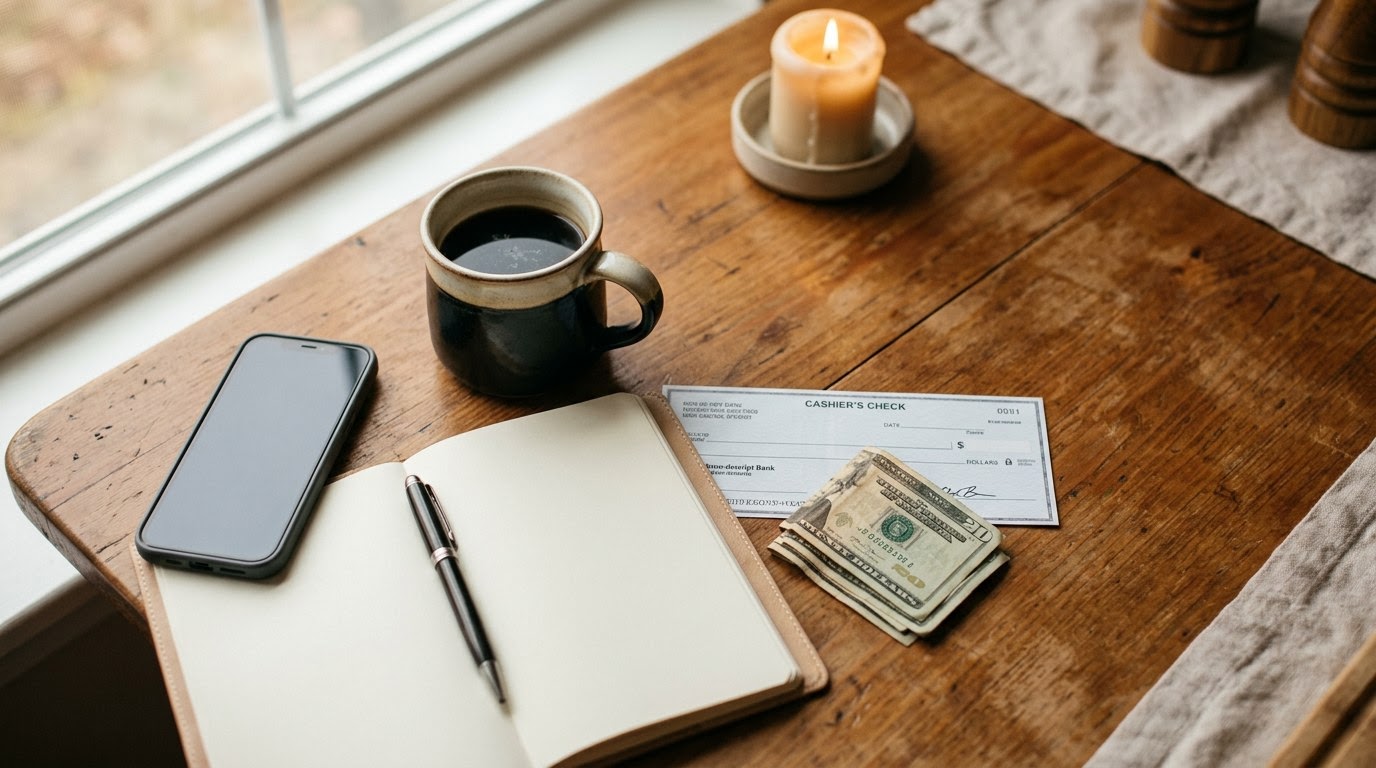
Apply this step-by-step guide whenever you sell a vehicle, artwork, electronics, or high-value asset in a private sale and the buyer offers payment via a bank-issued cashier's check. No identity check can guarantee a safe transaction. A TrustCheck tells you whether the details someone gave you are consistent with one real identity — the judgement, and the risk, stay with you.
1. Run a TrustCheck on the Buyer
Verify the buyer's real-world identity before accepting any cashier's check by running a TrustCheck. Enter the buyer's first name and phone number or email address into TrustMatch to generate a comprehensive TrustScore and risk verdict in under a minute. This immediate identity check ensures you are negotiating with a real, verifiable individual rather than an anonymous fraudster using stolen credentials or a fake persona to push a fraudulent payment instrument.
Start your verification protocol well before meeting in person or handing over property. Ask the buyer for their full legal name, current mobile phone number, and primary email address during initial sale negotiations. Legitimate buyers seeking to purchase high-value items understand the need for mutual trust and will readily provide basic contact details. Input these details into the verification portal to inspect risk flags, identity consistency, and historical digital footprints.
Examine the generated TrustScore to confirm that the buyer's stated name matches their registered phone number and digital identity profile. Fraudulent check schemes depend heavily on buyer anonymity and throwaway burner numbers. If the system flags disposable VoIP numbers, unverified account details, or mismatched names, pause the transaction immediately. Request that the buyer present a government-issued photo ID that matches both their TrustMatch verification profile and the payee name written on the cashier's check face.
2. Inspect the Physical Security Features of the Check
Examine the physical cashier's check in hand to confirm it displays genuine security attributes before taking it to your bank. Check for high-grade security paper with crisp watermarks, precise microprinted text along borders, clean matte routing numbers, and official bank logos. Legitimate bank checks feature specialized anti-fraud technology that counterfeiters struggle to replicate, such as thermochromatic ink or embedded security threads that react under light.
Hold the cashier's check up to direct light to inspect the paper watermark. Genuine watermarks are embedded directly into the paper fibers during manufacturing, showing subtle shading variations and official bank seals when held at an angle. Counterfeit checks often display coarse surface-printed patterns using grey ink that remain visible without light, or lack watermarks entirely. Feel the edges of the document to confirm at least one side features a rough, perforated edge from being detached from a checkbook stub.
Use your smartphone camera to zoom in 3x to 5x on the border lines, check signature line, and endorsement area. Official bank checks place microprinted text—tiny words such as "AUTHORIZED SIGNATURE" or the bank name—along these rules. Microprinted letters appear sharp and legible under magnification, whereas fake checks produced on commercial inkjet or laser printers display blurred, pixelated solid lines. Additionally, rub your thumb firmly across any thermochromatic security icons; genuine heat-sensitive ink fades temporarily under friction heat before returning to its original color.
3. Call the Issuing Bank via an Independent Number
Contact the issuing financial institution directly to verify that the check number, dollar amount, and payee details match an active cashier's check on record. Never use the telephone number printed on the check itself, as scammers print fake contact lines answered by co-conspirators. Search the bank's official website or official routing directories, call their customer support line, and ask the representative to validate the cashier's check serial number and exact dollar balance.
Locate the issuing bank's official customer service line independently using verified corporate websites or regulatory search engines like the FDIC BankFind directory. Scammers routinely print custom toll-free telephone numbers directly onto counterfeit check faces. Dialing numbers printed on suspicious checks connects you to fraudulent call centers operated by accomplice rings designed to give fake verbal authorizations.
When connected to the financial institution's official verification desk, inform the teller or risk manager that you are holding a cashier's check for a private sale. Read off the exact check serial number, issue date, exact dollar amount, payee name, and nine-digit ABA routing number located at the bottom left. Ask the representative to verify that the check serial number was issued for that precise dollar amount to your specific name. Request explicit confirmation that no stop-payment order, fraud flag, or duplicate check record exists against that serial number.
4. Reject Overpayment and Third-Party Wire Demands
Refuse any transaction where the buyer provides a cashier's check made out for more than the agreed sale price and asks you to refund the difference via wire or peer-to-peer apps. Scammers utilize overpayment tactics knowing the bad check will eventually bounce, leaving you responsible for both the lost asset and the refunded funds. Require the buyer to provide a check for the exact agreed-upon purchase amount or cancel the deal immediately.
Recognize the mechanics behind overpayment scams to avoid severe financial liabilities. Buyers frequently concoct elaborate stories explaining why the cashier's check exceeds your agreed asking price. They may claim their accountant accidentally prepared a check covering shipping fees, vehicle transport costs, or international customs taxes. The buyer then instructs you to deposit the check, retain your sale amount, and wire the remaining thousands of dollars to a designated third-party shipping agent or carrier service.
Enforce a strict zero-overpayment rule across all private peer-to-peer sales. If a buyer delivers a check for even one dollar over your agreed sale price, refuse the instrument on the spot. Instruct the buyer to return the incorrect check to their issuing financial institution and obtain a revised cashier's check reflecting the exact purchase figure. Never wire money, transfer gift card codes, buy cryptocurrency, or send Zelle or Venmo payments to any buyer or third-party logistics company as part of a cashier's check transaction.
5. Hold Asset Transfer Until Full Settlement
Keep possession of the vehicle title, key, or private merchandise until your financial institution confirms that the cashier's check has fully settled, not merely posted as available balance. Under federal banking regulations, banks must make funds available quickly, but full collection from the issuing bank takes several business days. Verify with your account manager that the check cleared the paying bank completely before releasing high-value property to the buyer.
Understand the critical legal distinction between provisional funds availability and final payment settlement. Federal Reserve banking guidelines require commercial banks to make funds from cashier's checks available within one to two business days after deposit. Provisional availability is simply a temporary credit extended by your bank before they receive actual payment from the issuing institution. If the check subsequently returns as fraudulent or counterfeit—which can take seven to ten business days—your bank will claw back the full amount from your account.
Protect your assets by retaining vehicle titles, keys, bill of sale documents, and valuable goods until complete settlement occurs. Explain clearly to the buyer upfront that property transfer takes place only after your financial institution confirms final clearing. After five to seven business days post-deposit, speak directly with your bank branch manager or loss prevention department. Ask specifically whether the cashier's check has cleared the paying bank through the Federal Reserve payment system without recourse, ensuring the transaction is irreversibly settled.
Cashier Check Verification Reference Matrix
Review this reference matrix to systematically verify physical cashier check attributes and identity signals against expected standards. Comparing these criteria allows you to distinguish genuine financial instruments from sophisticated counterfeits before accepting payments.
| Verification Step | What to Verify | Red Flag if Missing |
|---|---|---|
| 1. Identity Verification | Name and contact info match TrustMatch TrustScore report | Unverified phone, alias name, or failed identity match |
| 2. Watermark & Paper | Subtle paper watermark visible under light, crisp paper texture | Surface-printed ink pattern or flimsy copy paper |
| 3. Microprinting | Legible microscopic text along borders and signature lines | Solid or pixelated lines visible under phone camera zoom |
| 4. Bank Phone Verification | Independent bank call confirms check number, amount, and payee | Bank phone number on check leads to invalid or private line |
| 5. Check Amount | Exact agreed sale price with zero excess balance | Overpayment with instructions to wire surplus funds back |
| 6. Final Settlement | Bank confirms complete settlement beyond provisional credit | Pressure to hand over title while funds remain provisional |
Quick Checklist for Cashier's Check Verification
Execute this sequential checklist before concluding any private transaction involving a cashier check. Following these six steps in precise order shields your bank balance from check fraud while establishing transparent, accountable boundaries with prospective buyers.
- Request buyer details and run a TrustCheck on TrustMatch to confirm identity credentials before scheduling a face-to-face meet.
- Inspect physical check security attributes including true paper watermarks, microprinted text, and thermochromatic ink features.
- Find the issuing bank's customer service number through official bank directories or verified corporate websites.
- Contact the bank representative to verify the check serial number, date, exact dollar amount, and payee name.
- Refuse any check exceeding the negotiated purchase price and decline all requests to transfer funds to third parties.
- Deposit the check into your financial account and retain title documents until your bank confirms full clearing and final settlement.
Red Flags During This Process
Spot critical warning signs during transaction negotiations to protect your personal assets and stop payment fraud immediately. Detecting these behavioral and physical anomalies allows you to freeze suspicious deals before transferring property or depositing unverified financial instruments.
Pay close attention to sudden behavioral shifts or intense emotional pressure from the buyer during negotiations. Fraudulent buyers frequently exhibit urgency, pushing you to conclude the sale immediately, skip standard identity verification, or hand over keys before bank processing completes. They may cite personal emergencies, military deployments, or overseas travel schedules to justify rushing the transaction. According to FTC data published in 2024, consumers reported total losses exceeding $25 million due to fake check scams, with private peer-to-peer sellers frequently targeted by counterfeit cashier checks.
Watch for physical check irregularities that indicate sophisticated printing fraud or altered documents. Be wary of checks issued by distant out-of-state credit unions, checks bearing misspellings of official bank titles, or checks with payee names that differ slightly from the buyer's government ID. If a buyer refuses a quick live video call to confirm identity, sends a third-party agent to pick up the item, or insists on sending an overpayment cashier check, terminate negotiations immediately. Executing these verification steps protects your financial security while respecting the buyer's genuine interest in completing a fair transaction, ensuring private sales remain secure through TrustMatch.
Frequently asked
How long does it take for a cashier check to clear completely?
While federal regulations require banks to make funds provisionally available within one to two business days, complete settlement between banks takes five to ten business days. Always confirm with your financial institution that the check has fully cleared the issuing bank before transferring property title or merchandise to the buyer.
Can a bank revoke a cashier check after making funds available to you?
Yes. If a cashier check later proves to be counterfeit or fraudulent, your bank will reverse the deposit and deduct the full amount from your account. You remain financially responsible for all drawn funds and overdraft fees even if the bank initially granted provisional access to the check funds.
What should you do if a buyer sends an overpayment cashier check?
Do not deposit the check and never wire back excess money. Inform the buyer that you only accept checks for the exact purchase amount. Instruct them to return the check to their financial institution and obtain a new cashier check for the correct agreed amount before proceeding with the transaction.
How can you tell if a bank telephone number on a check is fake?
Scammers frequently print fake toll-free verification numbers on counterfeit checks that connect directly to conspirators. Always ignore numbers printed on the check itself. Look up the issuing bank's primary customer service line using official search engines or FDIC BankFind directories before making your verification call.
Why is identity check necessary when accepting a cashier check?
Fake check scams rely on anonymity and stolen credentials. No identity check can guarantee a safe transaction. A TrustCheck tells you whether the details someone gave you are consistent with one real identity — the judgement, and the risk, stay with you.
More in Guide
- How to Safely Buy a Used Jet Ski From a Private Seller
September 18, 2026
- How to Safely Buy a Used Drone From a Private Seller Online
September 16, 2026
- How to Safely Buy a Used Compact Tractor From a Private Seller
September 11, 2026